Get in Touch with Taiguo



How a Hot Air Furnace Works: Industrial Types, Selection Criteria, and Fuel-Mix Outlook
Quick Specs: Industrial Hot Air Furnace
| Thermal Output | 100,000–6,000,000 kcal/hr (116 kW – 7 MW) |
| Hot Air Temperature | 80–350 °C (typical 120–250 °C for drying) |
| Thermal Efficiency | 75–92% (varies by fuel and direct/indirect design) |
| Fuel Options | Natural gas, diesel/heavy oil, LPG, biomass pellets, coal, electric resistance |
| Air Volume | 5,000–150,000 m3/hr |
| CFR Threshold | ≥50,000 kcal/hr (58 kW) to qualify as industrial heating equipment |
| Typical Service Life | 15–25 years with scheduled maintenance |
A hot air furnace is a forced-air heating system that heats air through fuel combustion or electric resistance and delivers it via a blower for industrial drying, curing, space heating, or process heat. In residential settings, the same operating principle powers a warm air furnace using natural gas and a thermostat-controlled blower; industrial hot air furnaces work at 5-50x higher capacities and temperatures up to 350 °C. According to Fortune Business Insights, the global industrial furnace market reached USD 10.46 billion in 2025 and is projected to grow to USD 18.84 billion by 2034.
This guide covers the working principle, fuel and design types, comparison with steam boilers and thermal oil heaters, application scenarios, a five-step selection methodology, maintenance practices, and the 2026 fuel-mix outlook — so engineering and procurement teams can specify the right industrial hot air furnace models.
What Is a Hot Air Furnace?
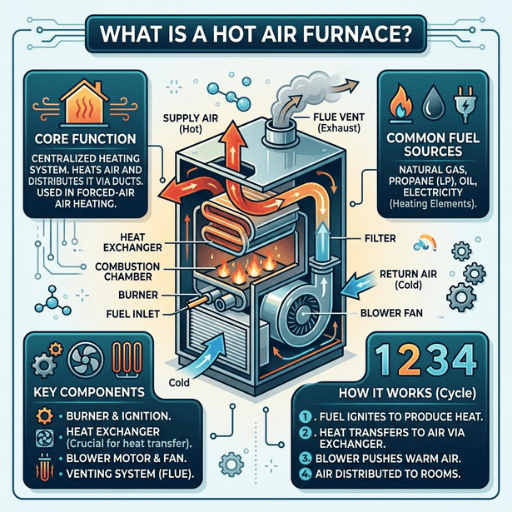
A hot air furnace is a heating system that uses combustion (or, less commonly, electric resistance) to heat air, then forces that heated air into a process or space using a blower. Per the U.S. Code of Federal Regulations definition cited by industrial furnace manufacturers, a unit qualifies as industrial heating equipment when its thermal output exceeds 50,000 kcal/hr (58 kW). In a residential context, the same principle powers a forced air heating system designed to heat your home: a gas furnace burns natural gas, the heat exchanger transfers heat to circulating air, a blower pushes the warm air through ductwork, and a thermostat regulates heat output and the cycle. Residential systems are commonly paired with an air conditioner on the same blower platform, and their efficiency is rated using AFUE (Annual Fuel Utilization Efficiency) — a metric that does not apply to industrial units, which are rated on instantaneous thermal efficiency instead.
The fundamental distinction between residential and industrial use is scale and target temperature. A residential central air system typically delivers 20,000-120,000 BTU/hr to heat your home and maintain indoor air comfort. An industrial hot air furnace delivers 100,000-6,000,000 kcal/hr (~400,000-24,000,000 BTU/hr) and reaches 200 °C or higher to dry grain, cure coatings, heat greenhouses, or supply process heat to drying tunnels. Residential high-efficiency units are rated by AFUE; industrial units use instantaneous thermal efficiency.
How Does a Hot Air Furnace Work?
The operating cycle has four stages:
- Combustion — fuel burns in the combustion chamber, where the burner generates flame temperatures of 400-1,200 °C depending on fuel type.
- Heat exchange — combustion gases pass through a multi-pass heat exchanger, transferring heat to the surrounding air without direct contact (indirect-fired) or by mixing with the process air (direct-fired).
- Forced convection- A centrifugal or axial blower pushes air at ambient or recirculated temperatures across the heat exchanger surface. The forced convection produces a heated air at the desired target temperature.
- Exhaust — combustion exhaust gases exit through the flue or stack; the burner cycles off when the setpoint is reached, while the blower may continue running briefly to recover residual heat.
⚠️ Important — Direct vs Indirect Distinction
In a direct-fired model, combustion gases mix with the heated air stream — efficiency reaches 90-95% but combustion byproducts contact the product air, ruling out food, pharmaceutical, and fine-textile applications. Indirect-fired models route combustion gases through a sealed heat exchanger, separating them from the heated air — efficiency drops to 75-88%, but the air stream stays clean.
Types of Hot Air Furnaces by Fuel and Design
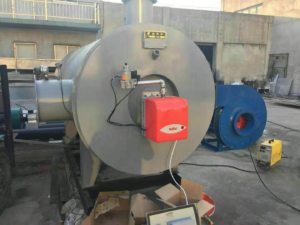
Industrial hot air furnaces fall into two design categories — direct-fired and indirect-fired — and span six common fuel types. Fuel choice drives operating cost, maximum air temperature, output air quality, and installation footprint. The table below summarizes the trade-offs.
| Fuel Type | Thermal Efficiency | Max Air Temp | Output Air Quality | Best Applications |
|---|---|---|---|---|
| Natural gas | 85–92% | 350 °C | Clean (indirect) | Food, pharma, textile |
| Diesel / heavy oil | 82–90% | 400 °C | Moderate | Construction, mining, asphalt |
| LPG / propane | 85–90% | 320 °C | Clean | Mobile, off-grid drying |
| Biomass pellets / chips | 75–85% | 280 °C | Particulate (indirect required) | Wood drying, agriculture, greenhouses |
| Coal | 70–82% | 300 °C | High particulate | Bulk drying, regional industrial heat |
| Electric resistance | 95–99% | 200 °C | Cleanest (no combustion) | Cleanrooms, low-temp curing, lab |
Manufacturers usually offer two product lines split by fuel type. Taiguo’s LRF series is built around coal- and biomass-fired combustion, while the WRF series is configured for gas and oil. The duct system feeding any of these furnaces matters as much as the furnace itself: U.S. Department of Energy data shows that duct losses can run as high as 35% of furnace energy output when ducts pass through unconditioned spaces.
Direct-Fired vs Indirect-Fired: When Each Wins
Direct-fired furnaces inject combustion gases straight into the air stream — they are simpler, cheaper, and more efficient (90-95%), and they fit non-contact heating loads such as warehouse space heating, asphalt drying, and outdoor construction work. Indirect-fired furnaces add a heat exchanger that isolates combustion gases from the process air — capital cost is higher and efficiency drops to 75-88%, but the air output is clean enough for food drying, textile finishing, and pharmaceutical curing where indoor air quality requirements are strict. High-efficiency indirect models with condensing heat exchangers are increasingly chosen for facilities targeting tighter emissions and operating-cost goals. A common procurement myth is that direct-fired is “always better because it is more efficient” — that judgment ignores product-contamination risk and is the most frequent specification error reported by industrial process engineers.
For wood-drying and agricultural processes, biomass-fired indirect models are increasingly favored because of fuel-cost advantages — see the biomass heating system selection guide for sizing and feedstock considerations.
Hot Air Furnace vs Boiler vs Thermal Oil Heater — When Each Wins
The three most common industrial heat-delivery systems — hot air furnace, steam boiler, and thermal oil heater — solve different process problems. Choosing among them is rarely about efficiency alone; it is about the heat carrier (air, steam, or thermal fluid), the temperature window, and how many end-uses must share the system.
| Attribute | Hot Air Furnace | Steam Boiler | Thermal Oil Heater |
|---|---|---|---|
| Heat carrier | Heated air | Steam (water phase change) | Synthetic / mineral oil |
| Max usable temperature | 350 °C | ~250 °C (saturated, >40 bar) | 320–350 °C at low pressure |
| Response time | 5–15 minutes | 30–60 minutes (cold start) | 20–40 minutes |
| Capital cost (per million kcal/hr) | USD 5,000–25,000 | USD 25,000–80,000 | USD 30,000–90,000 |
| Operating pressure | Atmospheric | High (10–60 bar typical) | Low (1–5 bar) |
| Best applications | Drying, curing, space heating | Sterilization, multi-zone process heat | Precise high-temp without high pressure |
| Key limitation | Heat decays quickly with distance | Pressure-vessel certification + water chemistry | Oil degrades, replacement every 5–8 years |
Decision Framework — Which System Fits Your Process
- Need clean hot air for direct product contact (food, pharma, textile): indirect-fired hot air furnace, since the heat carrier is the product air itself and indirect configuration prevents combustion byproduct contact.
- Need a single heat source for sterilization, heating, humidification: steam boiler. If a flexibility to apply the steam to several end-uses by splitting and controlling flow would help, boiler is the choice.
- Need fixed high temperatures and omitting high pressure piping: thermal oil heater, because thermal oil reaches 320-350 °C at near-atmospheric pressure, avoiding the high-pressure vessel code.
- Need rapid startup and the lowest installed cost for a single zone — direct-fired gas hot air furnace, because no heat-exchanger fluid loop is required and warm-up is under 15 minutes.
Industry practitioners commonly point out that the most efficient system within one fuel group is rarely the most economical when comparing across fuels — for example, an electric hot air furnace at 99% efficiency may cost 3-5x more to operate per kcal than an 82% biomass furnace, depending on regional fuel prices. For a deeper comparison of steam-based alternatives, see steam boiler vs thermal fluid heater; for thermal oil specifics, see thermal oil heater working principle.
Industrial Applications at a Glance
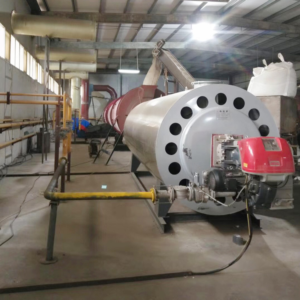
Hot air furnaces serve a wide cross-section of process industries. The table below maps six industries to their typical air temperature window, typical process, and the linked deep-dive guide where each application is covered in full.
| Industry | Air Temp Range | Typical Process | Deep Dive |
|---|---|---|---|
| Food & bakery | 120–220 °C | Drying, baking, snack frying | food processing applications |
| Textile finishing | 150–200 °C | Fabric drying, stenter ovens | industrial drying systems |
| Wood & lumber | 60–100 °C | Kiln drying, MDF curing | biomass heating system |
| Agriculture / greenhouse | 25–60 °C | Greenhouse heating, grain drying | industrial drying overview |
| Construction / asphalt | 100–280 °C | Asphalt drying, surface curing | — direct-fired diesel |
| Pharmaceutical / chemical | 80–180 °C | API drying, granulation | — indirect electric / gas |
Scenario–Dhaka garment factory, 2024. A textile finishing plant with a 180 °C drying tunnel needed 3 metric tons of fabric throughput per hour. Direct-fired gas was cheaper to install, but left residues on white-goods cotton. When total cost over 10-year life was tested against fabric reject average (1-2% from direct contact fine textile), a 1,200,000 kcal/hr heat Indirect-fired gas hot air furnace specification was chosen–capex 18% more, but the elimination of contamination-driven rejects paid back the difference in first fourteen months.
Across 49 years of project deliveries, our installations span more than 100 countries and 12 industrial categories, from grain dryers in Eastern Europe, to greenhouse systems in Central America, to pharmaceutical air handling systems in South Asia.
How to Select the Right Hot Air Furnace for Your Process
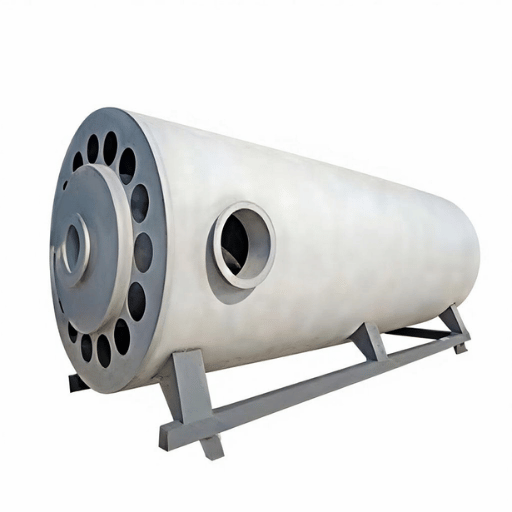
Five factors determine if a hot air furnace will deliver the efficiency, lifecycle cost, and uptime your business case depends on. Missing one is the path to post-installation regret.
- Calculate the heat load — use the air-side energy balance below. Undersizing starves the process; oversizing wastes fuel and stresses components through short-cycling.
- Match fuel to total cost of ownership — compare capex, fuel cost over a 10-year horizon, and emissions compliance. Electric efficiency is highest at 95-99% per energy.gov, but operating cost ranking flips heavily by region — biomass and natural gas typically win on opex per kcal.
- Match direct vs indirect to product-contact requirements — any application where the heated air contacts food, pharma, or fine textile requires indirect-fired design.
- Verify air-volume and ductwork compatibility — long duct runs through unheated spaces lose up to 35% of furnace heat output (per energy.gov). Insulate ducts, minimize length, and seal joints with mastic.
- Spec a level of control–single-stage burner switches on/off, two-stage burner runs at low fire 70% of time, and a modulating burner (with a variable-speed blower) trims fuel use 8-15% versus single-stage burners on partial-load processes.
📐 Engineering Note — Heat-Load Sizing Formula
For a forced-convection hot air furnace, the air-side heat duty is:
Q (kcal/hr) = V × ρ × Cp × ΔT × SF
- V = air volume flow rate (m³/hr)
- ρ = air density ≈ 1.2 kg/m³ at standard temperature and pressure
- Cp = specific heat of air ≈ 0.24 kcal/kg·K (1.005 kJ/kg·K)
- ΔT = temperature rise (process target − ambient inlet, in K)
- SF = safety factor 1.15–1.25 (industry practice)
Worked example: a 50,000 m³/hr drying tunnel raising air from 25 °C to 125 °C (ΔT = 100 K) with a 1.20 safety factor needs Q = 50,000 × 1.2 × 0.24 × 100 × 1.20 ≈ 1,728,000 kcal/hr – round up to a 2,000,000 kcal/hr unit to allow turn-down headroom.
How Much Does an Industrial Hot Air Furnace Cost?
Pricing splits cleanly by capacity tier and fuel system complexity. Indicative ranges for new equipment FOB factory in 2025:
- Small (200,000 kcal/hr, gas-fired direct): USD 5,000–15,000
- Mid (1,000,000 kcal/hr, gas-fired indirect): USD 20,000–60,000
- Large (3,000,000+ kcal/hr, biomass with auto-feed and ash handling): USD 80,000-250,000
The largest cost drivers are fuel-system complexity (auto-feed biomass adds USD 15,000-40,000 over a manual-fed unit), automation level (full PLC and remote monitoring adds USD 8,000-20,000), and heat-exchanger metallurgy (stainless 304 over carbon steel adds 30-50% to the exchanger cost but doubles service life in corrosive environments). Use the hot air furnace sizing calculator to confirm capacity before requesting quotes.
“The single most expensive mistake we see in furnace specification is sizing on peak load alone. Real industrial drying processes operate at 30-60% of nameplate capacity for most of the year. A modulating burner sized 20% above peak demand gives better part-load efficiency than a single-stage burner sized exactly to peak.”
Request a Custom Hot Air Furnace Quote →
Maintenance Practices That Protect Furnace Efficiency
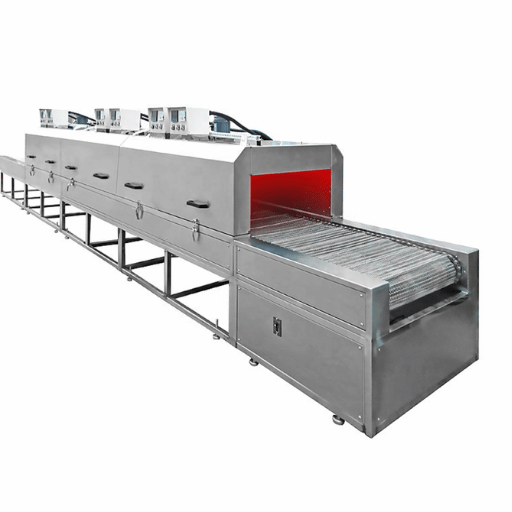
The 85/15 Rule for Industrial Hot Air Furnace Failures
Across post-failure inspection records in industrial drying and process-heating fleets, two root causes account for roughly 85% of premature hot air furnace failures: oversizing (which causes short-cycling and thermal stress) and fuel-air ratio drift (which causes premature heat-exchanger metal loss due to incomplete combustion deposits and corrosive condensate). Correct these two causes and you can reduce unplanned downtime by 40%.
A scheduled maintenance program — daily walks, weekly checks, monthly servicing, and an annual third-party inspection — is the single highest-impact operating practice for sustaining thermal efficiency and energy efficiency. Without it, the furnace heats less air per kg of fuel each year, and thermal efficiency typically drops 2-5% per year as soot accumulates, exhaust pathways through the flue and vent narrow, and combustion drifts.
Maintenance Schedule
- Daily: visual flame check, exhaust gas temperature reading, control-panel alarm scan
- Weekly: blower belt tension, lubrication of bearings, intake filter inspection, duct connection integrity
- Monthly: burner nozzle cleaning, photocell or flame-rod cleaning, fuel-air ratio verification with combustion analyzer, blower wheel balance check, gasket condition
- Annual: third-party CO and NOx emissions test, heat-exchanger crack inspection (visual + dye penetrant), refractory lining check, control-loop calibration, full insulation thermography, end-to-end fuel-train safety check
⚠️ Safety — Heat-Exchanger Cracks
A cracked heat exchanger lets combustion gases — including carbon monoxide — leak into the heated air stream. In a drying-line context, this can contaminate product; in a space-heating context, it is a life-safety hazard. The U.S. Department of Energy maintenance guidance calls out heat-exchanger inspection as a top priority. Schedule it annually, not when a fault appears.
A common procurement myth is that “if the furnace is running, no maintenance is needed.” The data says otherwise — efficiency drift is silent until it shows up on the fuel bill. For an applied efficiency-improvement playbook, see the guide on how to improve hot air generator thermal efficiency.
Industrial Hot Air Furnace Outlook 2026 — Fuel Mix, Decarbonization, and Procurement Risk
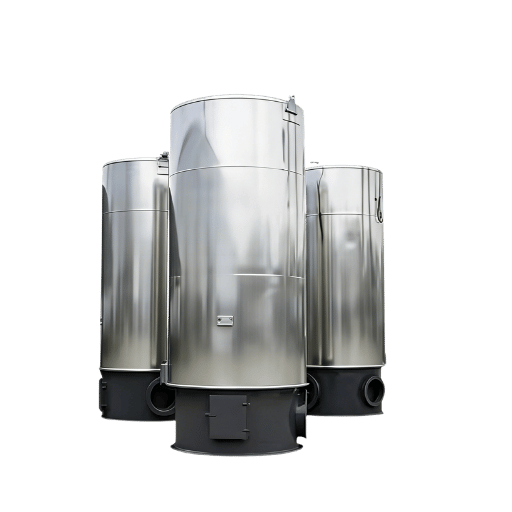
Industrial heating demand is growing, but the fuel mix is shifting. According to MarketsandMarkets 2026, the global industrial process heating market is valued at USD 13.36 billion in 2026 and is projected to reach USD 17.47 billion by 2032 (CAGR 4.6%). The broader industrial heating equipment market stood at USD 75.5 billion in 2025, growing to USD 112.1 billion by 2033 (CAGR 5.3%, Grand View Research). The pressure on hot air furnace specifications, however, is less about volume and more about which fuel they will burn in 2030.
Biogas and biomethane production is projected to expand 22-23% by 2030 globally, with biomethane increasingly substituted for natural gas in industrial process heat (per IEA-aligned reporting). Industrial hydrogen-fueled dryers, while small in absolute volume, are growing at roughly 10.9% CAGR. The U.S. Department of Energy’s Pathways for U.S. Industry report (January 2025) discloses that fuel-switching to biomass, biogas, and hydrogen—not to mention some electrification—is the most influential near-term lever for industrial process-heat decarbonization.
The Electrification Frontier — and Where Combustion Still Wins
Electrification is gaining share in the under-200 °C process-heat range, where renewable electricity is increasingly cost-competitive with natural gas. Hot air furnaces operate in the 80-350 °C window, which puts them in the contested zone: under 200 C, electric resistance and heat pumps compete on lifecycle cost; above 200 C, combustion still dominates because of energy density and the expense of high-powered electric infrastructure. The industrial burner market is forecast to grow from USD 7.01 billion in 2026 to USD 11.91 billion by 2034 — a clear signal that combustion-system upgrades, not whole-system replacements, will be the dominant near-term spend.
What This Means for Buyers Specifying Today
- Stress-test the 7-15 year fuel-cost trajectory against your selected fuel — natural gas, biomass, or electric — before locking in the burner type
- Specify dual-fuel or modular burner upgrade paths — gas-to-biogas conversions are far cheaper at design time than as field retrofits.
- Avoid single-fuel lock-in for assets meant to operate past 2030 — Heat-as-a-Service contract structures are an emerging way to transfer fuel-price risk to the equipment operator (the global Heat-as-a-Service market is forecast to grow from USD 19.8 billion in 2025 to USD 40.2 billion by 2036).
Field Observation — Across 49 Years of Fuel-Mix Cycles
Reflecting on our 49-year manufacturing record (1976-2025), the customer base has migrated through three waves of fuel-mixes: coal-heavy through the 1990s, oil & diesel through the 2000s, 2010s-heavy with natural gas. Since 2020, biomass and dual-fuel installations have grown to roughly 35% of new orders in agriculture, food, and wood-drying segments — a shift that mirrors the global biomass momentum reported in IEA-aligned data. The next wave we are seeing: biogas-ready burner platforms with municipal-feedstock connections, primarily in Europe and Southeast Asia.
Frequently Asked Questions
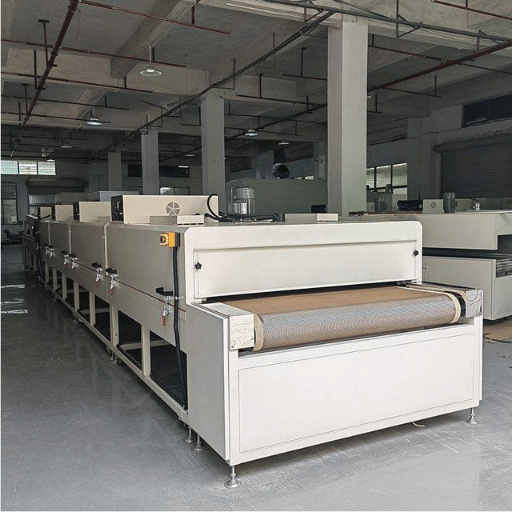
How long does a hot air furnace last?
View Answer
An industrial hot air furnace typically lasts 15-25 years with scheduled maintenance. The dominant failure mode is heat-exchanger thermal-cycling fatigue — short-cycling caused by oversizing accelerates fatigue cracks. Stainless 304 heat exchangers in clean-air service can exceed 30 years; carbon-steel exchangers in corrosive or wet-fuel environments may need replacement at 12-15 years.
Is hot air heating expensive to run?
View Answer
Operating cost depends on fuel choice, thermal efficiency, and duct design. In most regions, biomass currently delivers the lowest cost per kcal, followed by natural gas and coal; diesel and electric resistance are typically the most expensive. A 35% duct loss in unheated spaces (per U.S. Department of Energy data) can double the effective cost — insulation and short duct runs matter as much as the furnace itself. (Note: residential AFUE ratings are not directly comparable — industrial process-heat applications are rated on thermal efficiency at full load.)
What is the difference between a hot air furnace and a hot air generator?
View Answer
The terms are often used interchangeably. “Hot air generator” focuses on a portable / skid-mounted unit, “hot air furnace” on an industrial or semi-permanent residence installation. Functionally however, both heat air through a combustion/ electric resistance (“nozzles”) and deliver it through a blower.
Can a hot air furnace be used for both drying and space heating?
View Answer
Yes—direct-fired models have given us a reliable, flexible solutions for non-contact space heating, warehouse prep and asphalt curing applications. Indirect-fired units are essential where the heated air contacts product (food drying, textile finishing, pharmaceutical curing). Most platforms can be configured for one or the other at order time, but it’s rarely cost-effective to change early field retrofits from direct to indirect.
What fuel type is most efficient for industrial hot air furnaces?
View Answer
By thermal efficiency: electric resistance (95-99%) ranks highest, followed by natural gas indirect (85-92%), then biomass (75-85%) and coal (70-82%). Total cost of ownership ranking is different and region-dependent — biomass and gas usually win on fuel cost per kcal, while electric is highest in opex but lowest in maintenance.
How do I calculate the right furnace size for my facility?
View Answer
Calculate the air-side heat-load using Q = V × ρ × Cp × ΔT × SF, where V is air volume (m³/hr), ρ is air density (1.2 kg/m³), Cp is specific heat (0.24 kcal/kg·K), ΔT is the temperature rise, and SF is a 1.15-1.25 safety factor. Or use the sizing calculator for a guided estimate.
Will biomass replace gas-fired furnaces by 2030?
View Answer
Partial substitution is likely in agriculture, food, and wood-drying — segments where local biomass feedstock is abundant and process temperatures fit the 75-85% efficiency window. Natural gas is expected to remain dominant in high-temperature precision applications and where biomass logistics are unfavorable. Biogas (methane derived from organic waste) is a faster-moving substitute than solid biomass and is projected to expand 22-23% globally by 2030. Specifying a dual-fuel-ready burner now is the most flexible hedge.
Specify with Confidence — Three Ways to Move Forward
From sizing to fuel selection to a custom quote, we have a tool for every stage of your decision.
Why We Wrote This 2026 Outlook
This guide combines public data on industrial process-heating market growth and decarbonization pathways with a 49-year manufacturing record across 100+ countries and 12+ industrial categories. The fuel-mix transition observation in H2-7 — coal-1990s, oil-2000s, gas-2010s, biomass/dual-fuel since 2020 (~35% of new orders in agriculture, food, and wood-drying) — comes from internal order data over five business cycles, not from third-party reports.
References & Sources
- Furnaces and Boilers — Energy Saver — U.S. Department of Energy
- Pathways for U.S. Industry: Unlocking American Innovation (Jan 2025) – U.S. Department of Energy
- Industrial Furnace Market Report — Fortune Business Insights
- Industrial Burner Market Size, Share & Growth Report 2034 — Fortune Business Insights
- Industrial Process Heating Market — USD 17.47B by 2032 — MarketsandMarkets
- Industrial Heating Equipment Market Size Report 2033 — Grand View Research
- Energy Transition: Where Are We Headed in 2026? – Earth.Org (IEA-aligned data)