Get in Touch with Taiguo

Industrial Autoclave Systems — Heavy-Duty Pressure Vessels for Curing, Bonding & Sterilization
ASME & CE certified manufacturer since 1976. Custom autoclaves from 1 m³ to 200+ m³ for rubber vulcanization, composite curing, wood treatment & sterilization.
50+
Years Experience
100+
Countries Served
ASME & CE
Certified
1–200+
m³ Capacity
Types of Industrial Autoclaves
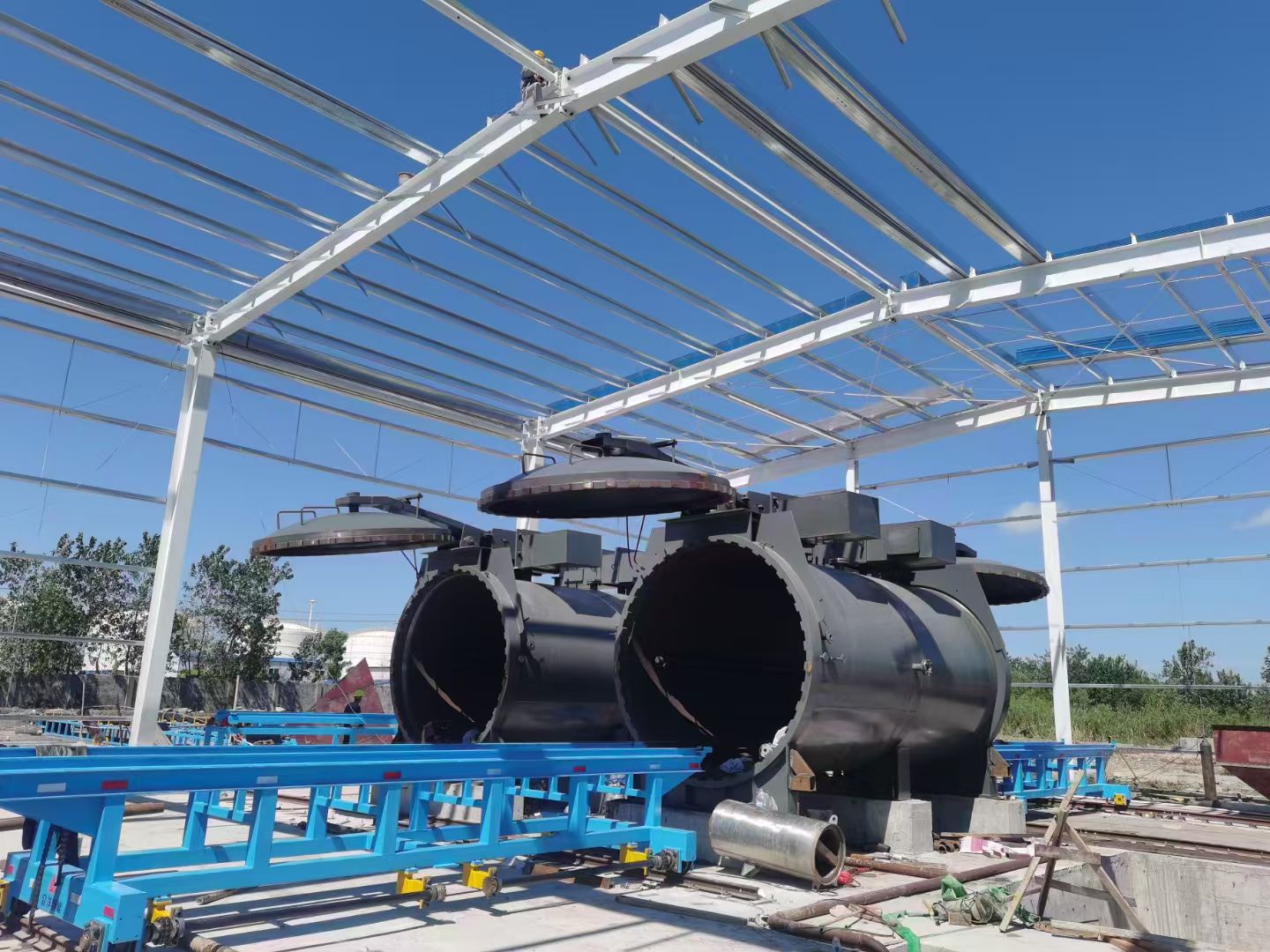
Industrial autoclaves are classified in three key dimensions; basis of heating, carcass orientation and circuit including the type of door and door opening method. Understanding what the differences and appropriate application is important in selecting the right autoclave.
By Heating Method
Steam-Heated Autoclave
Most common configuration for large industrial applications. Fully saturated steam provides the fastest and most even heat transfer rates and can be supplied from a separate boiler or a dedicated steam production system. This type of autoclave is best suited for applications such as rubber vulcanization or wood treatment where high heat transfer rates are desirable. Steam autoclaves usually operate at 0.6–2.5 MPa.
Electrically-Heated Autoclave
Uses electric heating elements in place of a steam supply, thus is more suitable for facilities lacking boiler infrastructure. It is preferred for composite curing operations in aerospace and automotive manufacturing where specific temperature ramp rates are required, and where the partial atmosphere within the vessel is going to be an inert nitrogen rather than a steam interface. Temperature uniformity is assured via forced-convection fans.
By Structure & Orientation
Horizontal Autoclave
By far the most common form of industrial autoclave. Products are placed in trolleys that run on internal rails directly into a cylindrical chamber. Horizontal autoclaves can be manufactured to dauntingly long lengths, so this is the default design for long timber lengths or many rubber moulds in a single load.
Vertical Autoclave
A less prevalent option for bulk processing, vertical autoclaves are used where products are stacked on trays and lowered into a vertical cylinder. Vertical autoclaves take up far less space, and are sometimes preferred when the products being sterilized are small and regular in shape.
By Door Configuration
Single-Door
Generally the most economical option. Products are loaded and unloaded through the same door at one end. This is suitable for batch processing where there is no requirement for A to B loading. Doors frequently utilise a quick-opening hinge or removable swing-bolt system.
Double-Door (Pass-Through)
Configured with doors at both ends of the autoclave, providing the ability to carry out a linear product line from a ‘dirty’ to ‘clean’ loading bay. Pass-through autoclaves are mandatory in many food and pharmaceutical facilities where the environmental zones before and after processing need to be physically segregated to control contamination issues.
Quick-Opening Door
Built for high throughput operations where keeping door-cycle time to an absolute minimum is critical to overall productivity. Structures feature multi-ring clamp closures, radial-lock systems, and hydraulic-assisted hinge mechanisms. Each quick-opening door is externally fitted with an external pressure-sensing interlock to prevent opening when there is still residual internal pressure.
Industrial Autoclave Applications
From vulcanizing rubber, to curing exotic composite materials, industrial autoclaves serve an extremely diverse range of manufacturing disciplines. Here are the primary applications:
01
MANUFACTURING
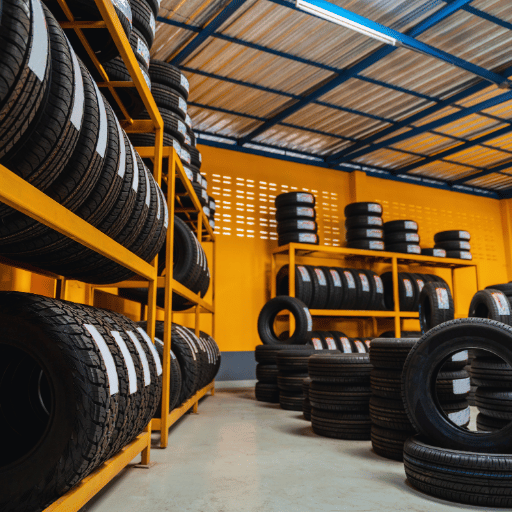
Rubber Vulcanization
Autoclaves supply the tightly-controlled steam heat and pressure needed to vulcanize rubber products – car tires, medical hoses, conveyor belts, and gaskets. This process cross-links the molecules in the raw polymer with sulfur, at a temperature of 140-180C, producing a durable, elastic product. Autoclaves result in much more uniform cross-linking than press-curing for complex shapes.
02
AEROSPACE
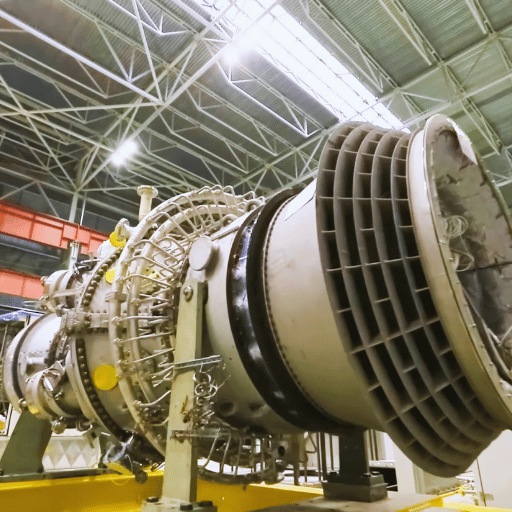
Composite Curing (Aerospace & Automotive)
Using aerospace-grade carbon fiber and ultra-lightweight fiberglass, autoclave curing is accurately controlled in the pressure-temperature cycle. Autoclaves can make composite parts at 120-180 °C and 0.3-0.7 MPa that are free of defects, while hitting the required specifications in high-spec materials for aircraft fuselages, wing skins, satellite components, automotive panels, and ballistic armor.
03
FOOD PROCESSING
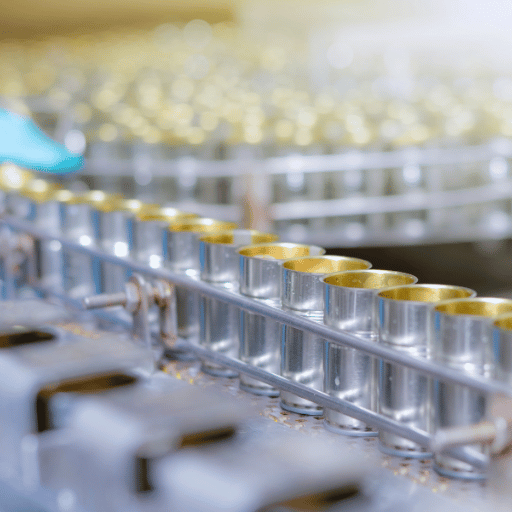
Food Sterilization (Retort Processing)
Packaged foods – tins, pouches, glass jars – are sterilized using autoclaves by applying steam at 121 °C for a calibrated period. This achieves very high levels of micro-biological safety, yet retains the maximum nutritional quality. Food processing autoclaves are generally manufactured from stainless steel (316L) and are fitted with water-spray or steam-air mixing arrangements to apply gentle, uniform heat.
04
TIMBER INDUSTRY
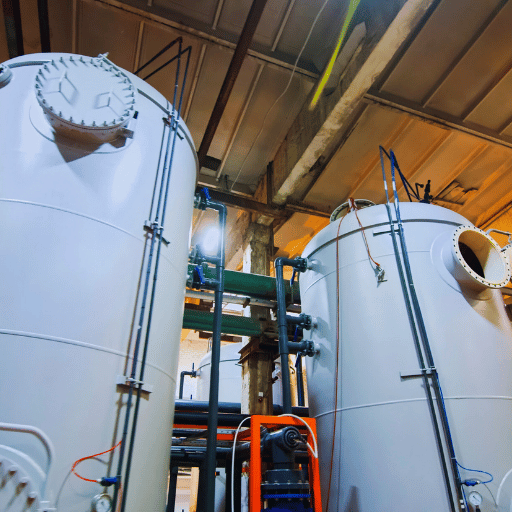
Wood Treatment
Pressure-treated timber is manufactured by precipitating preservation chemicals into the grain in an autoclave. The Bethell (full-cell) and Rueping (empty-cell) processes use vacuum and pressure cycles to achieve required preservative retention. Visit our dedicated guide to learn how autoclaves preserve timber through pressure treatment.
05
GLASS & AUTO
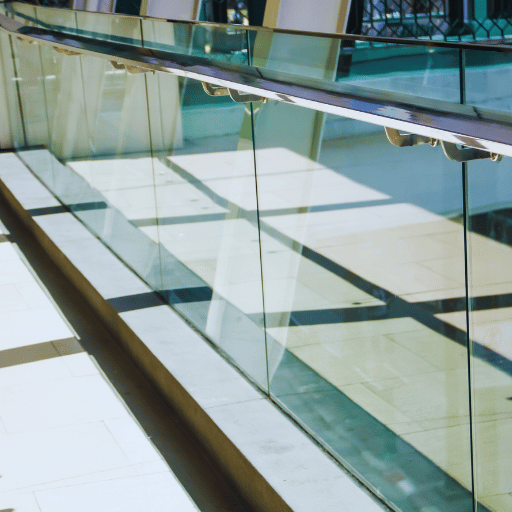
Glass Lamination
Laminated safety glass, for architectural, automotive and security purposes is laminated in an autoclave. It incorporates the application of heat and pressure to roll the PVB or EVA interlayers between sheets of glass together in order to obtain a composite sheet which remains in one piece when broken. Typical conditions are 130-145 °C at 1.0-1.3 MPa for 60-90 minutes.
06
CONSTRUCTION
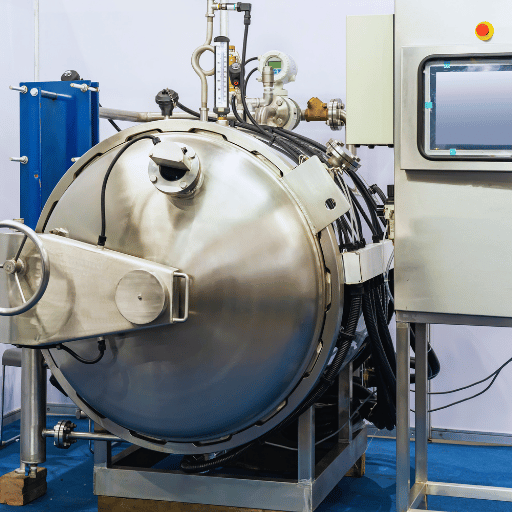
AAC Block Curing
AAC is cured in large steam autoclaves at about 190 °C and 1.2 MPa for 8-12 hours. This autoclave reaction is simply the conversion of lime and silica, which is converted into tobermorite crystals, that present the characteristic strength-to-weight ratio of autoclaved aerated concrete. Find more about our concrete autoclave for AAC block production.
How Industrial Autoclaves Work — Pressure, Temperature & Control
All of the autoclave cycles are guided by a series of pressures and temperatures. Knowing about this cycle and its operation assists in the process development and parameter control.
Step-by-Step Cycle Explanation
Loading
Loading: whether rubber molds, pre-impregnated composite layups or stacked timber, all may be placed on trolleys or racks, and rolled into the autoclave chamber through the use of internal rails. Loading must be correctly done. Overloading restricts steam circulation and creates temperature cold spots.
Sealing
Sealing: Once loading is complete, the door is closed. Contemporary autoclaves have a gasket-sealed closure that energizes itself as internal pressure increases. A control system confirms the door is sealed before allowing any pressure in. This interlock is required for safety reasons.
Vacuum / Pre-heat
Vacuum / Pre-heat: There is an in-line vacuum pump, which evacuates all the air from the vessel, usually to -0.08 MPa or less. One purpose is to remove the air pockets around the product, which would prevent steam from contacting. A second purpose of evacuating the air is for composites curing, where it removes all volatiles and trapped gas that could form voids. Some cycles also use multiple vacuum pulses in addition to injection of steam, namely pulsed vacuum.
Pressurization
Pressurisation: steam- or heated inert gas (for composite processes) is introduced to pressurize to the predetermined value. A steam distribution manifold situated within the vessel used to keep the process uniform. Pressure ramp rate is controlled to avoid shocks particularly in the glass lamination and ceramic processes.
Hold
Hold: The autoclave is allowed to run at the specified temperature and pressure for the specified period of time. This is where the real action takes place—vulcanization reactions finish, prepreg resins establish crosslinks, or microbial kill is achieved. A PLC-based control system continuously examines numerous temperature sensors and modifies the opening of the steam supply valve to maintain conditions within narrow tolerances (often ±2 °C).
Depressurization
Depressurization: Pressure is exhausted through a vent valve at a controlled rate. Almost all processes systematically slowly depressurize the vessel to prevent damage to the products (delaminating composites or cracking the glass). This parameter is controlled in the programming of the cure recipe.
Cooling
Cooling: In some applications, cooling is either passive (venting any remaining steam) or active (water circulated in a jacket or water sprayed inside the vessel). Many of the composite autoclaves are cooled with forced-air or water. This helps to speed up the cycle time without placing the autoclaves into thermal stress.
Unloading
Unloading: Once pressure has equilibrated to atmospheric and the temperature within a safe handling range, the door interlock ceases to function. Cured products are removed for post-cure inspection & processing.
Why the Vacuum Stage Matters More Than Most Operators Realize
In our experience commissioning autoclaves at dozens of sites, the vacuum stage is where the potential for most process issues is. An insufficient vacuum pull creates 2% residual air pockets in composite cure – not noticed without instrumentation, but reduces interlaminar shear strength by 10-15%. We recommend validating the vacuum stage with a leak test rate (pressure rise test) before production begins. A high quality autoclave produces less than 0.5 mbar/min leak rate.
Technical Specifications — Sizing, Materials & Components
Taiguo Boiler offers a selection of standard and custom autoclave models. Below are typical configuration options - all models are customizable to the application.
| Model | Diameter (m) | Length (m) | Volume (m³) | Design Pressure (MPa) | Design Temp (°C) | Material |
|---|---|---|---|---|---|---|
| TG-1520 | 1.5 | 20 | 28 | 1.6 | 204 | Q345R |
| TG-2021 | 2.0 | 21 | 52 | 1.6 | 204 | Q345R |
| TG-2524 | 2.5 | 24 | 95 | 1.6 | 204 | Q345R |
| TG-2826 | 2.85 | 26 | 136 | 1.6 | 204 | Q345R |
| TG-3223 | 3.2 | 23 | 155 | 1.0 | 187 | Q345R |
| Custom | Up to 4.0 | Up to 35 | Up to 350 | Up to 2.5 | Up to 250 | Q345R / 316L |
Note: Q345R is a common Chinese standard low alloy pressure vessel steel. 316L alloy is used where corrosion resistance is necessary - typically in medical, pharmaceutical, or food processing autoclaves. All pressure vessel fabrication, inspection, and stamping follows ASME Section VIII Div.1 and/or GB/T 150.
Key Components of an Industrial Autoclave System
An entire system depends on every component working harmoniously to deliver safe, reliable execution.
01
Pressure Vessel Body
Cylindrical shell, dished end heads, and support saddles. Welded and radiographically inspected per code requirements.
02
Quick-Opening Door
Hinge-mounted with gasket seal. Includes a safety interlock that prevents opening under residual pressure.
03
Steam Distribution
Internal manifold with perforated pipes to ensure uniform steam flow and minimize temperature gradients.
04
Vacuum Pump
Liquid-ring or rotary-vane pump for air evacuation. Sized to achieve target vacuum within the required timeframe.
05
PLC Control Panel
Programmable logic controller with HMI touchscreen. Stores multiple cure recipes and logs all process data.
06
Safety Valves
Spring-loaded pressure relief valves sized per ASME Section VIII. Set to open at 1.1× design pressure.
07
Instruments
Pressure transmitters, thermocouples, and level sensors connected to the control system and local gauges.
08
Condensate Drainage
Steam traps and drain valves to remove condensate, maintaining steam quality inside the vessel.
09
Insulation Layer
Mineral wool or calcium silicate insulation (typically 80–120 mm thick) with aluminum cladding to reduce heat loss and protect operators from contact burns.
Industrial Autoclave Pricing — Cost Factors & Investment Guide
Autoclave cost depends greatly on chamber size, pressure rating, material set, and level of design customization. Here is a general pricing guideline to help with planning your facility. Custom quotes will vary.
Small
$8,000 – $25,000
Under 5 m³
- Compact laboratory or pilot-scale use
- Standard carbon steel construction
- Basic PLC control
- Single-door configuration
Medium
$25,000 – $80,000
5 – 50 m³
- Production-scale industrial use
- Q345R or stainless steel option
- Advanced PLC with recipe storage
- Vacuum system included
Large
$80,000 – $250,000+
50 – 200+ m³
- Heavy-duty continuous production
- Custom dimensions and materials
- Full SCADA integration
- Pass-through / double door options
Key Cost Factors Explained
Chamber size does not proportionally increase cost. Our experience quoting and building hundreds of autoclave units lists the key factors that influence price:
Size & Dimensions
Larger diameter and length require thicker shell plates and heavier components, increasing both material and shipping costs.
Design Pressure
Higher pressure ratings demand thicker vessel walls, larger flanges, and heavier-duty closure mechanisms. A 2.5 MPa autoclave costs substantially more than a 1.0 MPa unit of the same volume.
Material Grade
316L stainless steel autoclaves cost approximately 2–3× more than equivalent Q345R carbon steel models, but are mandatory for food-grade and pharmaceutical applications.
Control System
A basic PLC with a text display is at the low end; a full SCADA-integrated control system with data logging, remote access, and multi-zone temperature control adds significant value but also cost.
Door Mechanism
Quick-opening and double-door pass-through configurations are more expensive than standard side-swing doors due to additional engineering and safety components.
Accessories
Trolley/track systems, water cooling circuits, vacuum pumps, additional instrumentation, and steam generators are often essential but quoted separately.
Taiguo Boiler prides itself on honest pricing and straightforward quoting. When requesting a quotation, we provide complete transparency, item by item. We do not add hidden costs.
Request a customized proposalCase Studies — Industrial Autoclave Projects Worldwide
Real projects, real results - three real autoclave examples of the kinds of industrial problems we solve for our clients:
Case 1: Tire Component Manufacturer, Southeast Asia
The Challenge
A major tire manufacturer in Southeast Asia needed a large-format autoclave to keep pace with growing tire manufacturing capacity. Their operations team needed an autoclave that matched European quality at a more competitive investment level, with a delivery timeline of under 90 days. Their existing European autoclaves were delivering excellent results, but 6-month lead times and prices that did not fit the project's investment criteria.
Our Solution
Taiguo Boiler supplied a Φ2.5×24 m steam autoclave (model TG-2524) with a capacity of 95 m³, configured to run at 1.6 MPa and 204 °C, exceeding the company's standard vulcanization requirements of 1.2 MPa at 165 °C with plenty of headroom. We implemented a 12-point, multi-zone steam distribution manifold with thermocouple monitoring to assess temperature uniformity, and a side-swing door with hydraulic assist to enable faster batch changeovers.
The Result
The autoclave was delivered 78 days after order confirmation, inside the 90-day target. After installation and commissioning, staff reported an average temperature uniformity of ±1.8 °C on 24 meters of chamber length, within the customer's ±3 °C specification. A faster door cycle reduced batch turnaround time by approximately 15 minutes compared to their existing equipment, translating to one additional production cycle per day.
78 days
Order to Delivery
±1.8 °C
Temperature Uniformity
+1 cycle/day
Throughput Improvement
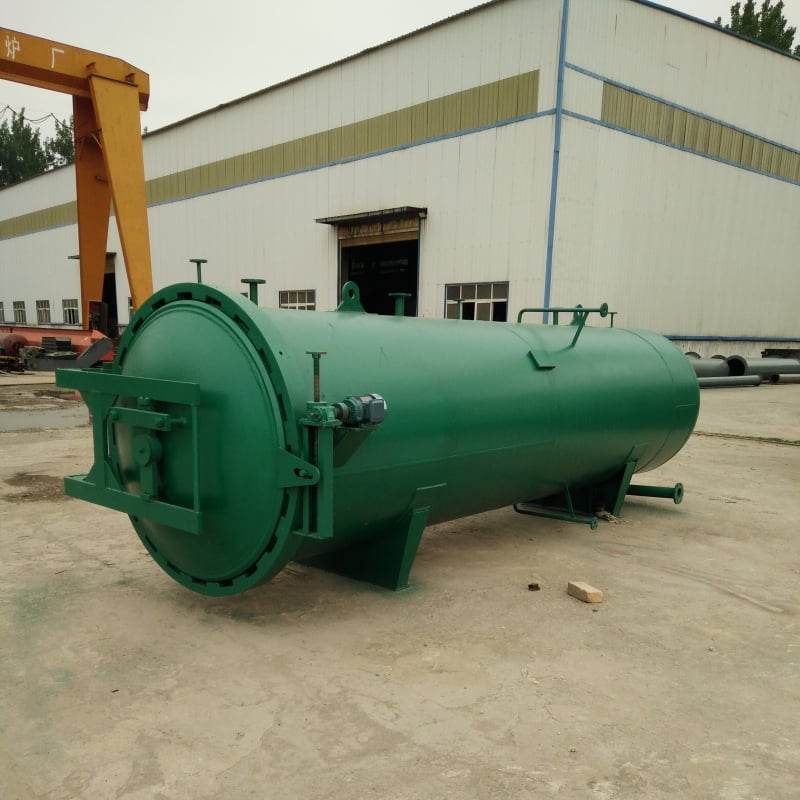
Case 2: AAC Block Production Plant, Middle East
A building materials company in the Middle East required four large autoclaves for a new autoclaved aerated concrete (AAC) block production line. This project demanded vessels sized for high throughput and engineered to withstand the corrosive high-alkalinity environment inside an AAC autoclave. Learn more about this application on our concrete autoclave for AAC block production page.
Quantity
4 units
Model
TG-2826 (Φ2.85×26 m)
Volume per Unit
136 m³
Design Pressure
1.6 MPa
Design Temperature
204 °C
Cycle Time
10 hours (including loading/unloading)
Annual Capacity
~320,000 m³ AAC blocks (4 units combined)
Certification
ASME U Stamp + SGS third-party inspection
Delivery
105 days (all 4 units)
Warranty
18-month parts and labor warranty

Case 3: Canned Food Processing Facility, East Africa
A food processing company in East Africa installed two Taiguo autoclaves for retort sterilization of canned fruit and vegetable products. We interviewed the Operations Manager about their experience.
Q: Why did you choose a Chinese autoclave manufacturer over European or North American suppliers?
“We evaluated suppliers from four countries. Taiguo offered the same ASME certification and 316L stainless steel construction as the Western suppliers, but at roughly 40% lower cost. The deciding factor was that they agreed to a supervised factory acceptance test — our QA engineer flew to China and witnessed hydrostatic testing, door-cycle testing, and instrument calibration before shipment。”
Q: How has the autoclave performed in daily production?
“We run 4 to 5 sterilization cycles per day, 6 days a week. After 14 months of operation, we have had zero unplanned downtime related to the autoclave itself. The steam distribution is very uniform — our F-value validation showed consistent lethality across all basket positions, which was our biggest concern with a new supplier.”
Q: What about after-sales support from a manufacturer based in China?
“This was our concern initially. In practice, Taiguo sent an engineer for 10 days during commissioning and trained our operators thoroughly. Since then, we have needed technical support twice — both times resolved within 24 hours via video call. They shipped a replacement gasket set that arrived in 8 days. Honestly, the after-sales has been better than what we experienced with our previous European supplier.”
“The autoclave has paid for itself in under two years through the increase in production capacity. We are now planning to order a third unit for our new poultry processing line.”

Autoclave Engineering Tools
Precision calculators designed for industrial autoclave sizing, cost optimization, and model selection. Click to launch the interactive tools.
SIZING
Tool Sizing Calculator
Get precise autoclave model recommendations based on your application area, required temperature, air volume, and fuel source.
Size My Autoclave →
COST ANALYSIS
Tool Cost Estimator
Compare annual and 5-year operational costs across steam, electric, and gas heating to find the most cost-effective solution.
Compare Costs →
COMPARISON
Tool Type Selector
Select up to 3 autoclave models side by side to compare heating output, internal volume, efficiency, and dimensions at a glance.
Compare Models →
Frequently Asked Questions
An industrial autoclave is a large pressure vessel designed to operate under controlled high-pressure and high-temperature circumstances processing materials that have to be handled in this way. As opposed to laboratory or medical autoclaves for sterilization, industrial autoclaves would be used to vulcanize rubber, cure composites for aerospace use, preserve timber, or produce AAC blocks. They are usually defined by operating pressures between 0.6 and 2.5 MPa at temperatures of up to 250 °C and chambers ranging in size from a few cubic meters to well in excess of 200 m³. Common construction materials include Q345R carbon steel for standard applications and 316L stainless steel where corrosion resistance is needed. Most industrial autoclaves are horizontal in orientation with rail-mounted trolley loading systems for efficient batch processing.
Industrial autoclaves can be described in three ways: by method of heating (steam-heated or electrically-heated), by orientation (horizontal or vertical) and by type of door (single-door, double door pass-through, side-swing, quick-opening). Large-scale industrial production is dominated by saturated steam-supplied steam-heated autoclaves as saturated steam is capable of achieving heat transfer in a far more efficient and uniform manner than dry air. Double door pass through models are often for use where the separation of clean and contaminated zones is necessary in food or medical sterilization.
Operating an industrial autoclave involves a regulated cycle of loading the products into the vessel and sealing the door, vacuum, pressurizing with steam or heated gas, holding at temperature and pressure for the duration of the cycle, depressurizing, and cooling down before finally removing the load. Controlled by a PLC control system for pressure, temperature, and timing, the vacuum cycle is engineered to expel excess air and remove all trapped air bubbles before reaching required process temperature - especially critical in the production of composites where entrapped air causes structural voids that lead to failure.
Every autoclave is a pressure vessel, but not every pressure vessel is an autoclave. A pressure vessel is the more general engineering term - any enclosed container designed to contain liquids or gases at pressures significantly different than the environment. An autoclave is a specific pressure vessel, one with a seal-able access door for loading and unloading materials and integrated heating, pressurization, and control systems. In everyday terms, a storage tank or a heat exchanger are pressure vessels; an autoclave is a pressure vessel + process.
Start with your largest product dimensions (length, width, height) and add clearance for steam circulation - we typically recommend 200-300mm beyond the load cross-section. Then consider throughput: how many units per day do you need to process, and how long is your cycle? From experience, it is almost always more cost-effective to invest in a slightly larger autoclave than to discover six months later that you need additional capacity. We offer free sizing consultations - provide your product dimensions and production targets and we will recommend the optimal chamber size.
Certainly. Most industrial autoclaves are custom built, with flexible dimensions, pressure ratings, materials, door types, control systems, and internal fittings. Taiguo Boiler manufactures custom autoclaves tailored to each client's specific process requirements. Requests often heard include 316L stainless steel for food-grade applications, multi-zone temperature control for composite curing, pass-through double-door configurations for contamination-controlled environments, and oversized chambers for large aerospace components.
A well manufactured and cared for industrial autoclave will have a life span of 15-25 years or more. Key contributors are material and weld quality, severity of operation (pressure cycles, temperature range, corrosive media), care and maintenance. It can be made to last for a long time through diligent inspection (wall-thickness, welds, replacements of gaskets & safety-valve recertification) and consequent preventive care. Some of our autoclaves made in the 1990s are still in active service today. We can report that it is possible, with conservative design margins, to extract long, trouble-free service life from an autoclave as well as to care for it properly over its lifetime.
The Team Behind Our Autoclave Engineering
Taiguo Boiler has designed and manufactured pressure vessels for over 50 years, accumulating deep expertise that no brochure can fully convey. Our autoclave engineering team includes pressure vessel designers licensed under Chinese Grade A regulations, welding engineers certified to ASME Section IX, and process specialists with hands-on commissioning experience across six continents. Every autoclave we build is hydro-tested in our in-house testing facility before shipment. This combination of design rigor, manufacturing discipline and real-world field experience is what separates a reliable autoclave from a merely adequate one.