Get in Touch with Taiguo

SZS Steam Hot Water Boiler
SZS Gas & Oil Fired Water Tube Steam Boiler
D type packaged water tube boiler delivering 2-50 t/h of steam at maximum 4.9 MPa. Constructed by Taiguo Boiler – An A-Class manufacturer since 1976. available for natural gas, diesel, LPG and dual-fuel operation.
2–80
Ton/h Capacity
98%
Max Efficiency
1-4.9
MPa Pressure
What Is an SZS Water Tube Boiler and How Does It Work?
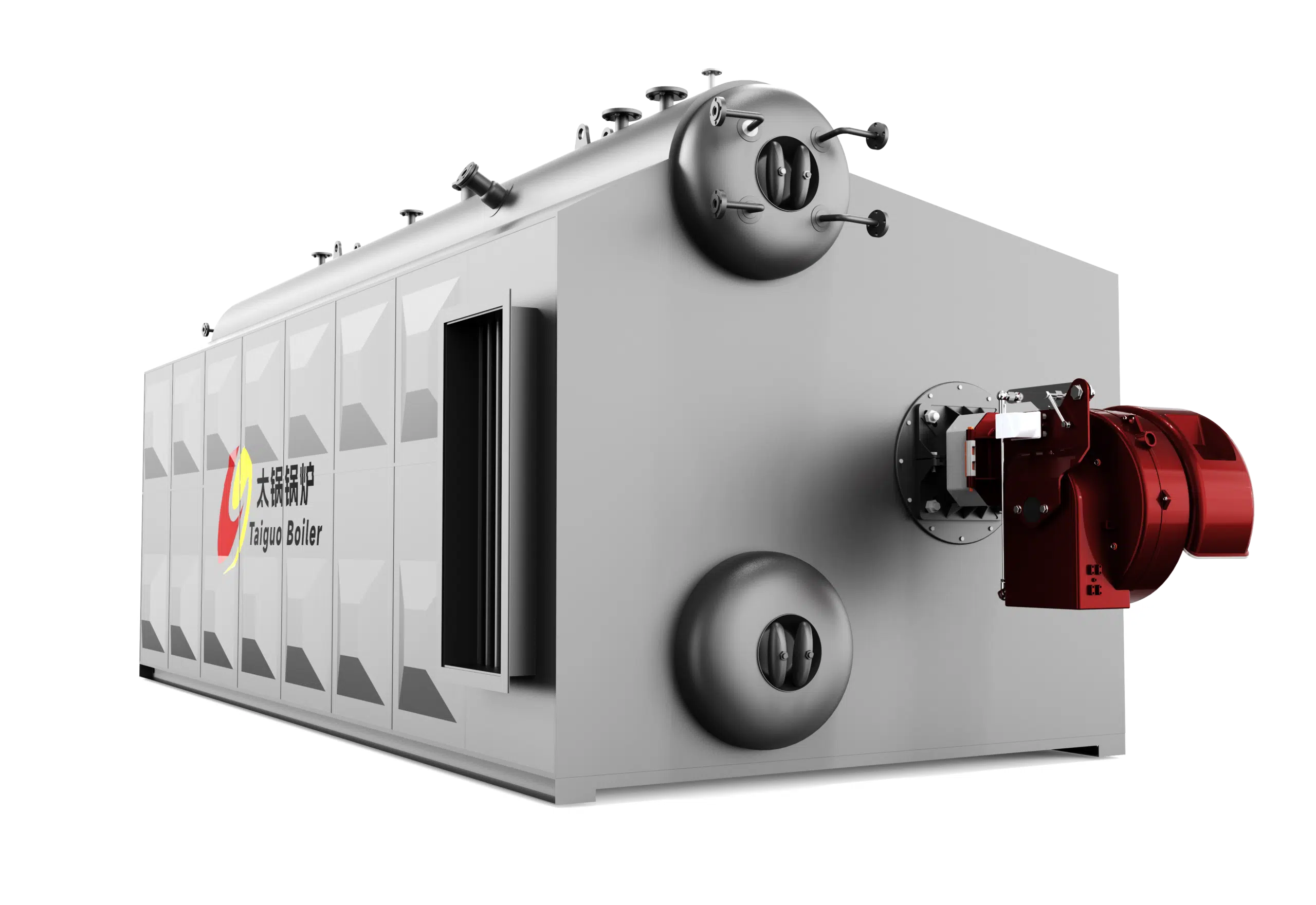
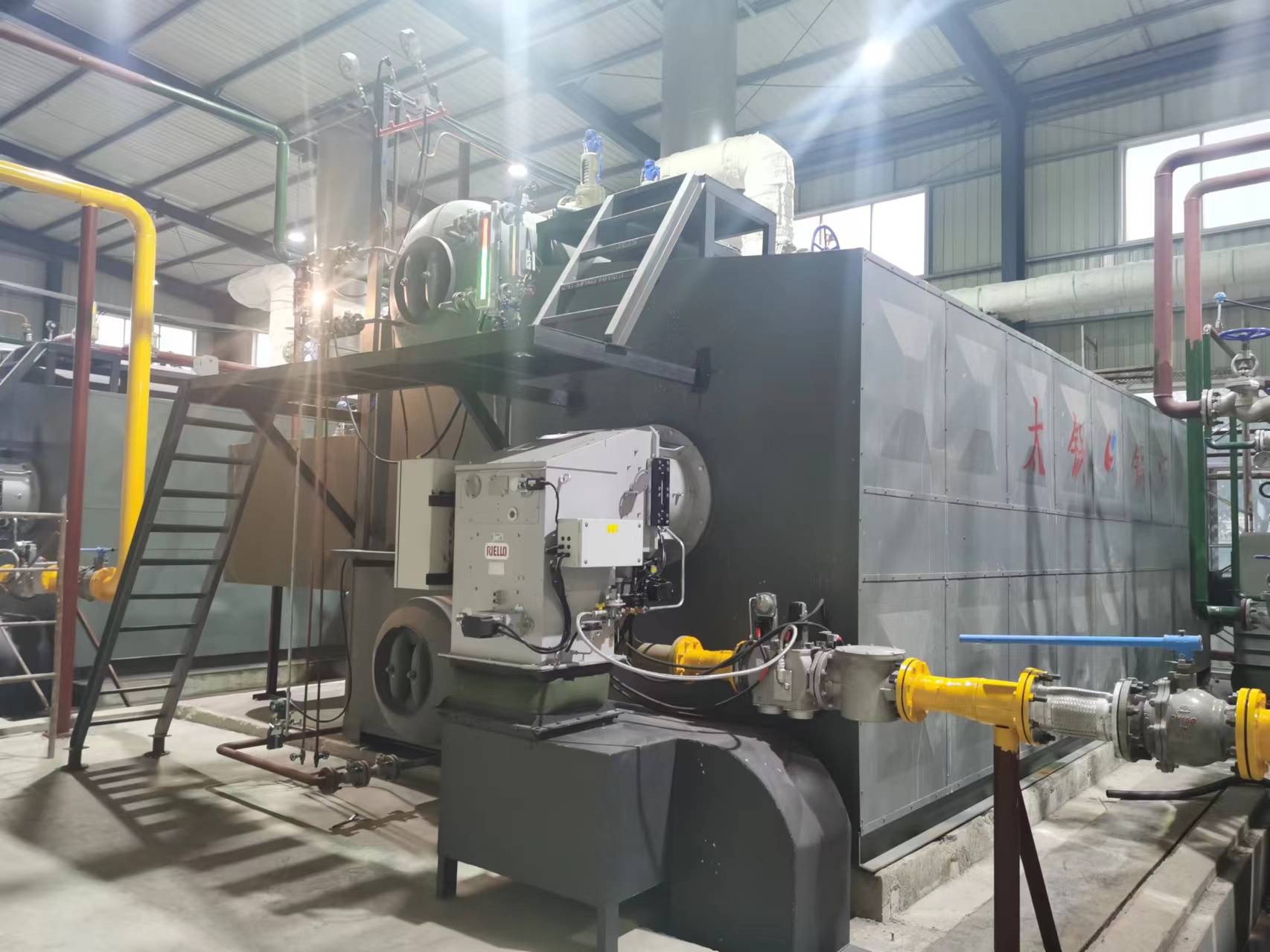
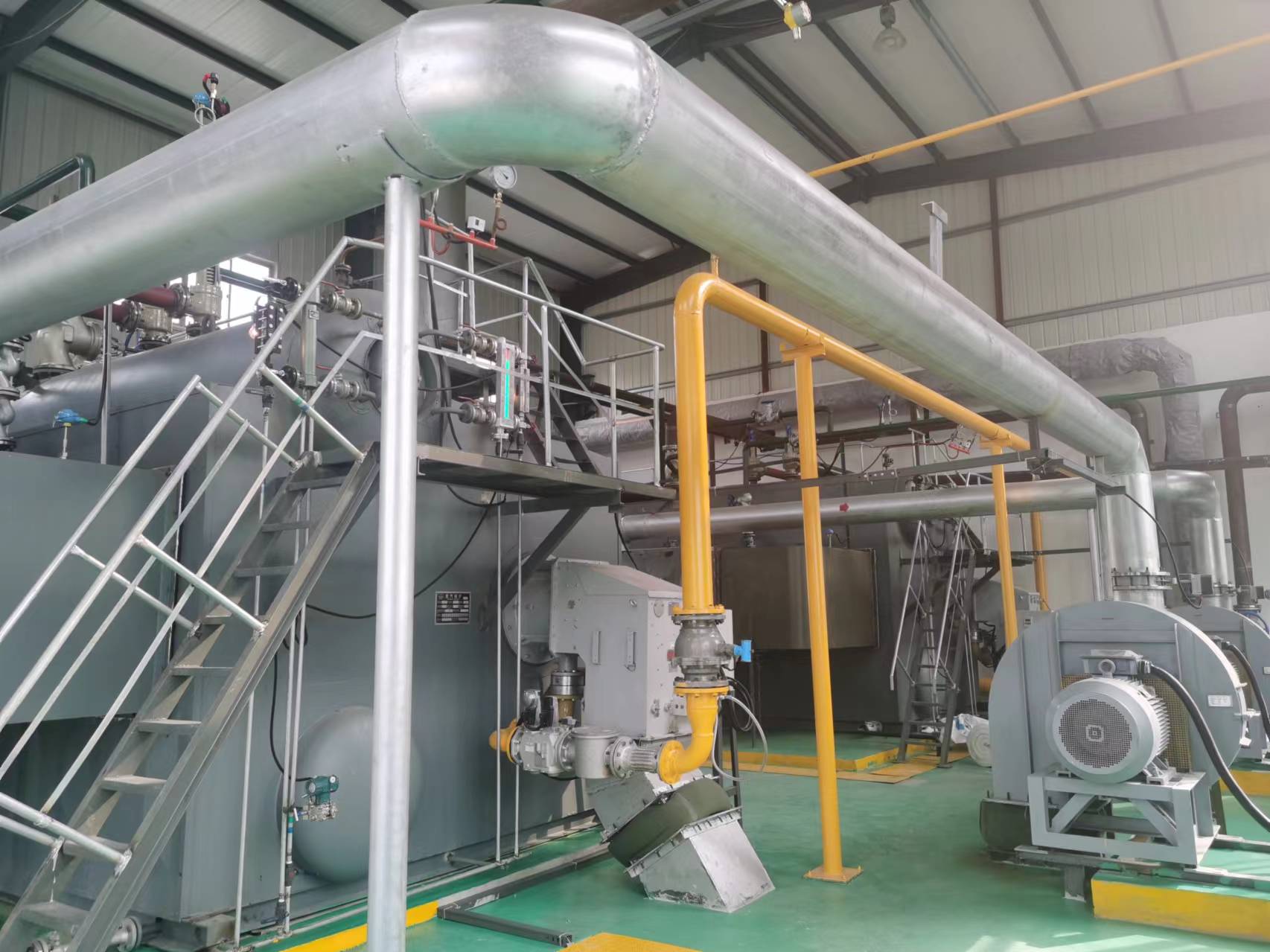
Our SZS is a D-type watertube boiler, in which water circulates in tubes heated by the combustion gases produced in an external burner. This design, also called water-tube boiler in engineering literature, sets the SZS apart from fire tube boilers, allowing higher steam pressures, faster load response, and improved safety margins in industrial-scale operations.
Inside the SZS, feedwater is admitted to the lower drum and rises through membrane water walls that constitute the furnace enclosure. Hot gases travel through the radiant part before passing through a convection tube bundle. Steam accumulates in the upper steam drum, where internal separators remove water droplets before the dry steam exits to your process header.
D-type layout – named for the cross-sectional shape of the tube arrangement – ensures the entire boiler remains compact enough for skid mounting. Based on our experience commissioning these units, the quick-assembly design reduces on-site installation time by approximately fifty percent compared to field-erected designs. A 20-ton unit arrives in two main sections and can be running within 5-7 days of delivery, provided foundation and utilities are in place.
This watertube boiler assembly supports working pressures between 1.0 and 4.9 MPa and steam temperatures far exceeding those attainable by fire tube boilers. For plants requiring superheated steam – where a superheater section elevates steam temperature beyond saturation point – the SZS configuration can be equipped with an integral or external superheater to produce dry, high-temperature steam for turbine drives or chemical process heating.
SZS Boiler Models: Specifications from 2 to 100 Tons per Hour
Seven standard models cater to medium and large industrial steam needs. Each model is available in steam and hot water setups with adjustable pressure ratings.
| Model | Rated Evaporation (t/h) | Working Pressure (MPa) | Light Oil (kg/h) | Natural Gas (Nm³/h) | Dimensions L×W×H (mm) | Transport Weight (t) |
|---|---|---|---|---|---|---|
| SZS10-1.25-Y(Q) | 10 | 1.25 | 646 | 806 | 7200×3400×3300 | 36.7 |
| SZS15-1.0-Y(Q) | 15 | 1.0 | 1043 | 1209 | 7100×3700×3500 | 38 |
| SZS20-1.25-Y(Q) | 20 | 1.25 | 1165 | 1403 | 10800×7000×4800 | 41 |
| SZS25-2.45-Y(Q) | 25 | 2.45 | 1458 | 1773 | 10800×7000×4800 | 60 |
| SZS30-1.25-Y(Q) | 30 | 1.25 | 1718 | 2092 | 12900×7000×4800 | 64 |
| SZS35-2.45-Y(Q) | 35 | 2.45 | 2048 | 2468 | 12900×7000×4800 | 68 |
| SZS50-2.45-Y(Q) | 50 | 2.45 | 3218 | 3878 | 13200×12000×4700 | — |
Models above 50 t/h (up to 100 t/h) and custom pressure ratings are available on request. Each Y(Q) designation reveals oil(Y) and gas(Q) dual-fuel capabilities. All fuel consumption figures are based on rated output with standard calorific values – natural gas at 35.6 MJ/Nm³, light diesel at 42.4 MJ/kg.
Gas Fired Steam Boiler Fuel Flexibility: Natural Gas, Diesel, LPG & Dual-Fuel Options
Our SZS series is compatible with multiple gas and oil fuels. A fully automatic burner controls combustion parameters according to fuel type, eliminating the need for manual adjustments when switching between natural gas and diesel.
Natural Gas
Most popular choice. Minimal emissions, highest efficiency with condensing economizer – up to 98%+ on LHV basis.
Diesel / Light Oil
Dependable backup fuel for regions lacking gas infrastructure. Consumption ranges from 646 to 3218 kg/h across the model spectrum.
LPG / LNG / CNG
Compressed and liquefied gas options for remote locations or regions phasing out coal and residual oil.
Biogas / Heavy Oil
Biogas from anaerobic digesters or heavy-duty fuel oil for budget-conscious installations. Burner adjusts automatically.
SZS vs Fire Tube Boilers: Why Water Tube Design Wins at Scale
Your first decision in boiler room design: tube choice, fire tube or water tube. Here is a side-by-side comparison of the two designs that matter for industrial applications.
| Feature | SZS Water Tube Boiler | Fire Tube Boiler |
|---|---|---|
| Maximum Pressure | Up to 4.9 MPa | Typically ≤ 2.5 MPa |
| Steam Output Range | 2–100 t/h | 0.5–20 t/h |
| Steam Quality (Dryness) | ≥ 99% with internal separators | 95–97% |
| Start-up Time | 15–25 minutes (less water volume) | 30–45 minutes |
| Response to Load Changes | 3–5 minutes | 8–15 minutes |
| Footprint per ton of steam | Smaller (D-type compact layout) | Larger at equal capacity |
| Explosion Risk | Lower water volume = less stored energy | Large water volume = higher risk |
| Upfront Cost (per t/h) | Higher | Lower for < 10 t/h |
| Maintenance Complexity | Moderate — tube inspection needed | Simpler access to tubes |
Oil Fired Steam Boiler Efficiency & Energy-Saving Technology: 92–98% Thermal Performance
Steam boiler efficiency affects your total fuel bill. Our SZS delivers 92-98% effective efficiency through three layers.
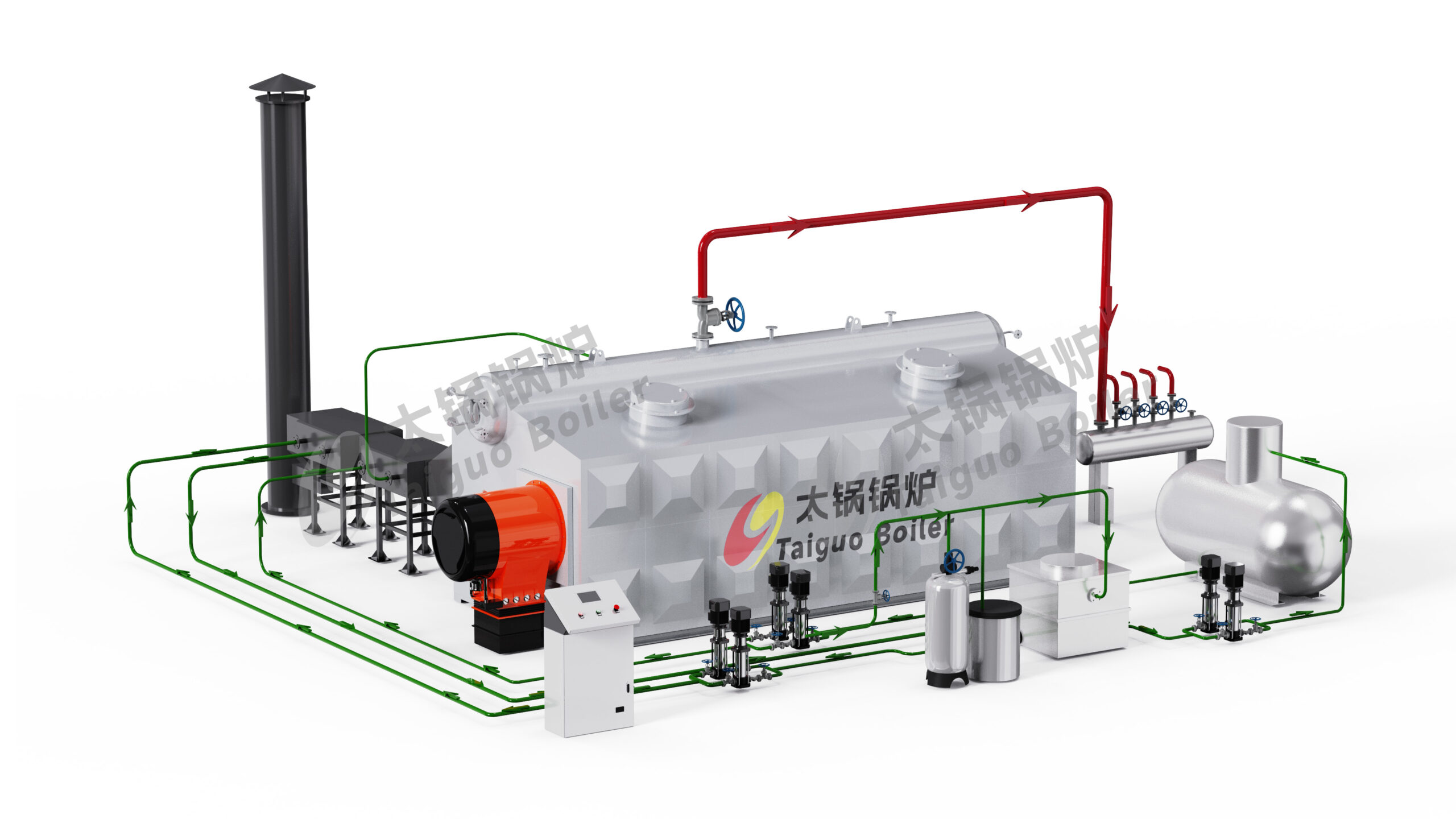
Complete Boiler Room Accessories & Support Equipment
A packaged steam boiler is far more than the boiler body. Taiguo supplies the complete boiler room as a matched package.
Automatic Burner
Control Cabinet
Economizer
Feed Water Pump
Safety Valve
Steam Header
Valves & Gauges
Water Softener
SZS Steam Boiler Pricing: Key Cost Factors for Industrial Buyers
Industrial steam boiler costs will vary depending on several parameters other than capacity. Here is a guide to understanding what influences costs in order to allow for fair comparisons when evaluating proposals from different suppliers.
Primary Cost Drivers
-
boiler capacity (t/h):
Greater capacity=higher cost. For example a 20 T/h unit costs a lot more than a 10 T/h unit however cost-per-ton of steam capacity is less.
-
Pressure rating (MPa):
Driven by design, higher pressure (MPa) requires thicker tube walls, drum plates etc—moving from 1.25 MPa to 2.45 MPa adds circa 8-12% to the cost of the boiler body.
-
Fuel and burner:
Dual-fuel (gas and oil) burners are more expensive than single-fuel burners. European-brand burners (Baltur, Riello, Weishaupt) cost more than domestics.
-
Auxiliaries:
Economizer, condenser, water treatment, Deaerator and control system will add 15-25% on top of base boiler price.
Cost Considerations Beyond Purchase
-
installation & commissioning:
Foundation, piping, electrical, chimney, gas connection etc.
-
Shipping & logistics.
Every SZS is a packaged boiler, however larger models (30+ T/h) will need oversized transport permits. Costings will depend heavily on destination.
-
Operational expense:
Fuel accounts for 85-90% of the lifetime price of the boiler. 1% efficiency improvement on a 20 T/h boiler running 6000 hours a year, is worth thousands of dollars of saved fuel every year
-
Certification requirements:
CE, ASME, IBR costs depend on the applied engineering work and third party inspections.
Frequently Asked Questions
The SZS operates on natural gas, diesel, LPG, LNG, CNG, biogas, and heavy oil. Dual-fuel configurations allow switching between gas and oil without shutting down. The fully automatic burner adjusts combustion parameters for each fuel type, maintaining efficiency above 92% across all options. For a gas fired hot water boiler configuration, the same fuel flexibility applies — the boiler simply routes heat output to a hot water circuit instead of a steam drum. Biogas from anaerobic digesters is gaining popularity in food processing plants where waste-to-energy programs offset fuel purchases by 15–30% annually.
Our SZS achieves 92–98% thermal efficiency depending on configuration. Its base unit reaches approximately 92% through its large radiant heating surface and membrane wall design. Adding a tail-end economizer raises efficiency to around 97% by recovering exhaust heat. With an optional flue gas condenser using natural gas, efficiency exceeds 98% on a lower heating value basis. Real-world efficiency depends heavily on feedwater temperature, combustion air temperature, and load profile — boilers running at 60–80% load continuously tend to achieve slightly higher average efficiency than those cycling between 30% and 100%.
Industrial steam boilers serve food processing (sterilization, cooking), chemical production (reaction heating, distillation), textile manufacturing (dyeing, finishing), pharmaceutical plants (sterilization, drying), district heating systems, hospitals, power generation, and paper mills. The SZS series covers 2–100 t/h, suitable for medium to large-scale facilities. A high pressure steam boiler configuration at 2.45–4.9 MPa serves power generation and chemical applications requiring superheated or high-pressure saturated steam. In district heating networks, municipal facilities pair two SZS units in lead-lag arrangement to balance seasonal demand swings while keeping at least one boiler at peak efficiency year-round.
Sizing depends on three factors: required steam output (tons per hour), operating pressure (MPa), and fuel availability. Calculate your peak steam demand from all connected equipment, add 10–15% safety margin, then match to the nearest SZS model. For example, a food processing plant needing 18 t/h of steam at 1.25 MPa would select the SZS20-1.25 model rated at 20 t/h. Be careful not to oversize — a boiler running constantly at 40% load wastes fuel on standby losses and suffers more thermal cycling stress than one sized correctly for your actual demand profile.
Industrial water tube steam boiler pricing depends on capacity, pressure rating, fuel type, and auxiliary equipment. Key cost components include the boiler body, burner system (European brands cost 30–50% more than domestic options), economizer, water treatment system, control cabinet, and shipping. Larger capacities and higher pressure ratings increase cost proportionally. Installation typically adds 10–20% of equipment cost. Contact our team for a detailed quotation based on your specific requirements — we provide itemized cost breakdowns within 2–3 business days.
Each SZS includes eight interlock protections: water shortage cutoff, overpressure relief, overtemperature alarm, gas leakage detection, flame-out protection, electrical leakage breaker, motor phase-loss/overload protection, and dual explosion doors on the furnace roof. The fully automatic burner includes a programmed ignition sequence with pre-purge and post-purge cycles per NFPA 85 combustion safety principles. The boiler shell also features manhole and inspection openings for internal access during mandatory annual pressure vessel inspections.
A well-maintained industrial water tube steam boiler typically operates for 15–20 years. The SZS membrane wall structure reduces refractory maintenance and extends service life compared to older brick-lined designs. The single most important factor in boiler longevity is water treatment — untreated or poorly treated feedwater causes tube scaling (which reduces heat transfer and creates hot spots) and oxygen pitting corrosion (which thins tube walls). Regular maintenance should include annual internal inspections, continuous water quality monitoring, quarterly burner tuning, and monthly safety valve testing. Plants using deaerated feedwater and maintaining dissolved oxygen below 7 ppb consistently report tube wall thickness remaining within specification even after 18 years of continuous service. Tube replacement is straightforward on the SZS because individual membrane wall panels unbolt without cutting, keeping unplanned downtime to 3–5 days rather than the 2–3 weeks common with older welded-in designs.