Get in Touch with Taiguo


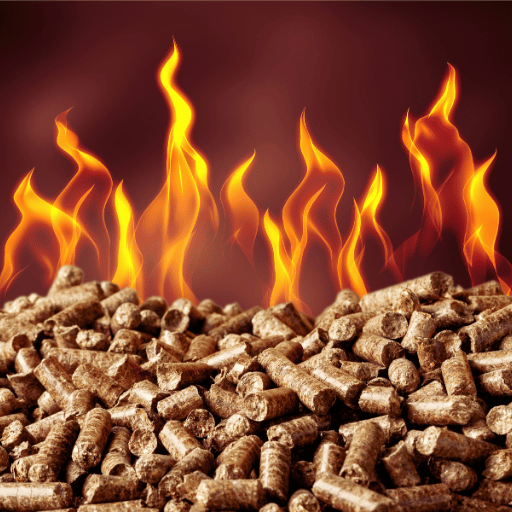
A biomass heating system is a combustion unit that creates thermal energy by burning biomass fuel – wood, biofuels or biomass – to produce heat for buildings, manufacturing processes or district network. For facilities managers considering alternatives to natural gas or oil, biomass presents a viable path which can reduce fuel bills by 30-50% in areas with abundant local wood supply, while complying with stricter emission rules.
But the devil is in the detail. Capital costs can vary from $50,000 to more than $2mn depending on size, fuel, level of automation. Fuel handling, ash removal, control system, footprint and emission permits all influence the overall cost of ownership. If any of these elements are missed, a biomass project falters – or worse, runs at a loss.
This guide explains the reality of how biomass combustion systems operate, contrasts fuels with pricing data, provides a contextually based decision framework, and describes the overall cost impact. Whether you are upgrading an old coal boiler or planning new capacity at a large food maker, the information provided reflects five decades of experience manufacturing and deploying biomass-fired equipment all around the world.
75–92%
Thermal Efficiency
3–8 Years
Typical Payback
30–50%
Fuel Cost Savings vs. Oil
~$245/ton
Wood Pellet Price (EIA, Oct 2025)
What Is a Biomass Heating System and How Does It Work?

A biomass heating system supplies thermal energy by burning organic material in a controlled combustion chamber to heat water, air or thermal oil. Its fuel, biomass fuel, might be wood, renewable biofuels or organic waste. Today, unlike fossil fuel boilers, biomass heating systems rely on inputs that are renewable. They are carbon-neutral when delivered along sustainable supply chains.
From feed to flame, the process is fast. biomass fuel is fed – accumulated manually, by auger or via conveyor or hydraulic ram – into the combustion chamber. biomass combusts at temperatures of 800°C to 1,000°C. In this range the volatile compounds are released, ignite and release a lot of energy. Resulting hot flue gases then move through a heat exchanger for the production of hot water or hot gas, or for the production of hot air in hot air furnaces.
A biomass heating system runs through three stages. First, moisture is evaporated from the biomass fuel – hence why moisture levels in the fuel matter. Second, volatile elements gasify and burn within the principal combustion zone. Third, the fixed carbon can burn at a lower and slower rate on the grate – modern systems often preheat and add secondary air to boost and complete combustion of the volatiles for maximized combustion and minimized emissions.
An efficient biomass heating system would include: the fuel storage and handling system (silo, walking floor, augers), the combustion chamber with grate and refractory lining, the heat exchanger, the flue gas treatment system (multicyclone, bag filter or electrostatic precipitator), the ash removal system, and the control panel to control fuel feed rate, air supply, and temperature. As described in the Whole Building Design Guide (WBDG), a federal facility resource from the National Institute of Building Sciences, the efficiencies of current biomass systems are in the range 75-92% depending on fuel quality.
Heat gained from biomass can be used for any one of several applications—including space heating, process heat in manufacturing, domestic hot water or to produce steam for turbines. Common in all industrial applications is a distribution system, which may be an insulated piping system that transports hot water or steam to various usage points within a facility.
💡 Pro Tip
Efficiency plummets above 35% fuel moisture. Burning wood chips (40-50%) that are still green may result in thermic efficiency in the range of 65-75%. Prior to combustion drying your fuel or choosing a boiler constructed to consume high-moisture fuels can be a cost-effective step toward optimizing fuel consumption.
Types of Biomass Heating Systems: Boilers, Furnaces, and CHP Units
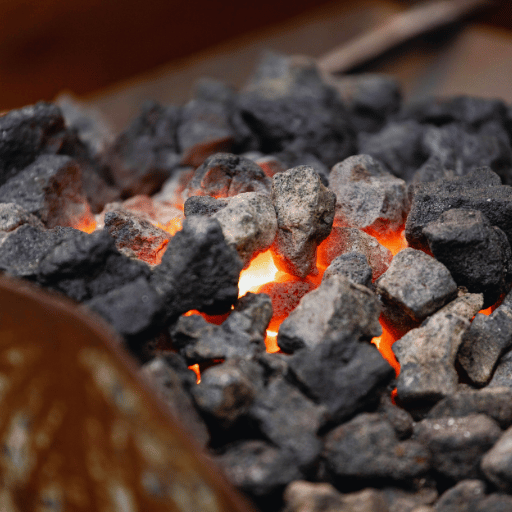
Each type of biomass heating system is not interchangeable with another and choosing the wrong type is one of the most common error made—and the one most costly!—in biomass project planning. There are four main categories of biomass heating systems, based on the medium of output, level of automation, degree of fuel flexibility and capital cost:
Understanding the performance of each system with respect to the important factors is summarized in the table below. Current market statistics and manufacturer specifications have been considered till 2025, based on the classifications detailed by Penn State Extension’s biomass heating guide.
| System Type | Output | Typical Capacity | Fuel Types | Automation | Best For |
|---|---|---|---|---|---|
| Biomass Boiler (Hot Water/Steam) | Hot water or steam | 0.5–40+ MW | Wood pellets, wood chips, shells, agricultural waste | Fully automated system with auger/conveyor feed | Factories, district heating, process steam |
| Pellet Boiler | Hot water | 15 kW–1 MW | Wood pellets (standardized) | Fully automated system; hopper-fed | Commercial buildings, smaller facilities |
| Biomass Hot Air Furnace | Hot air (direct or indirect) | 0.3–20 MW | Wood chips, sawdust, rice husk, biomass briquettes | Semi- to fully automated | Drying systems, grain drying, space heating in large buildings |
| Combined Heat and Power (CHP) | Electricity + heat | 1–50+ MW thermal | Wood chips, woody biomass, agricultural residues | Fully automated; complex controls | Facilities needing both power and heat; energy production plants |
Biomass boilers are the workhorses of industrial biomass heating. A biomass boiler burns the fuel on a grate (either moving-gate, step-gate, or vibrating-gate) and moves the heat from the fire through a line of fire-tubes or water tubes to make hot water or the steam. Most boilers can burn numerous fuels but will generally require a grate/air system modification when it is switched from pellets to high-moisture wood chips.
Industrial biomass boiler systems over 4 MW are all but required to use automated fuel handling with a walking-floor-trailer on one end loading into a silo with the silo discharging into a conveyor system that blows the fuel into the fires.
Pellet boilers – Pellet boilers are a special category of biomass boiler applications where a stable homogeneous fuel (hence the selection for pellet systems) provides a single consolidated manufacturing process sized for one form of wood (e.g. chip; pellet etc.). This is beneficial as a fuel that has a constant power density, energy, moisture, size etc. can be used in a stable environment and not at full capacity and can be substantially cleaner, cheaper and simpler to run than multi-fuel fired pellet systems. A pellet boiler normally extracts fuel via a auger from a hopper, silo etc.
These applications are more likely to be for offices, small system applications as the homogeneity of the fuel and low ongoing maintenance is often more attractive than raw capacity.
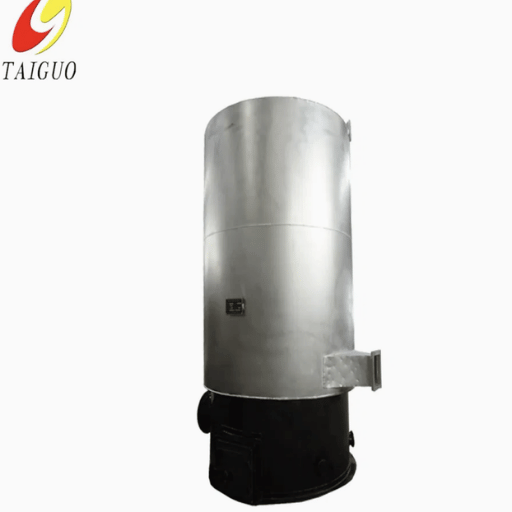
biomass hot air furnaces deliver heated air to the process directly; water is not circulated. Hot air furnaces are used primarily in drying applications (lumber, grain, foodstuffs) and for space heating in warehouses and farm buildings. Taiguo Boiler manufactures several industrial hot air furnace models which can fire from relatively clean wood chips to rice husk and sawdust. Hot air furnaces have a shorter startup time than boiler-based systems, due to absence of the trapped water mass that needs to be heated.
Combined heat and power (CHP; co-generation) systems simultaneously generate electricity and usable heat from biomass. A CHP system combusts biomass to generate high-pressure steam which then powers a turbine to provide electricity; the heat byproduct is then captured for space heating or process use. CHP economically makes sense on a site where process heat and power demand co-occur, and where the biomass fuel supply is relatively stable throughout the year. Capital investments are substantially higher than for heat-only systems, but the dual revenue stream (avoided purchased electricity plus heat) provides for near-term financial viability (5-8 years for well sited projects).
⚠️ Important
biomass fueled with boiler as rated for pellets should not be assumed to work well with wood chips or agricultural waste without alterations. combustion systems are designed around specific physical and chemical fuel parameters – particle size, moisture, ash content, and ash melting temperature. Running these systems with incompatible fuels leads to clinker formation, tube fouling, and unplanned outages.
Biomass Fuel Options: Pellets, Wood Chips, and Agricultural Residues
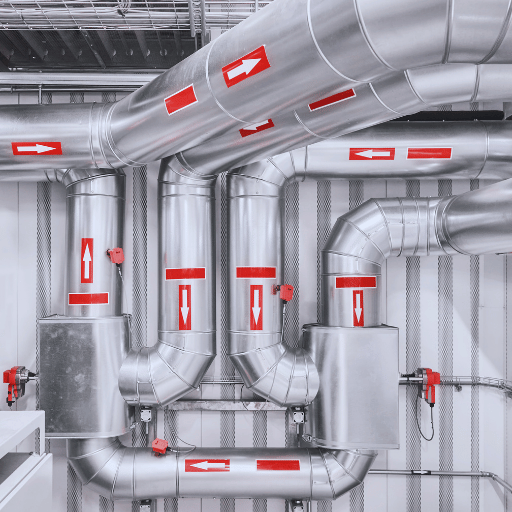
Biomass fuel selection has implications for nearly every other decision in a biomass heating project – choice of equipment, fuel handling and storage arrangement, ash handling and disposal, operating costs. Not all biomass fuel types are available equally across the world; wood pellets and wood chips are prevalent in the developed world, but rice husk pellets are common in SE Asia, yet virtually nonexistent in the UK.
The appropriateness of a particular biomass fuel format for a project depends on three factors: energy density (BTU per pound), moisture content, and ash content. Energy density determines how much fuel you need to meet targeted process heat. Moisture content determines how much of the energy is lost in evaporative losses. Ash content determines how often and how expensive the ash disposal process becomes. The table below compares the main fuel/feedstock types, using cost data from the U.S. Energy Information Administration (EIA) and fuel properties according to Penn State Extension.
| Fuel Type | Energy Content (BTU/lb) | Moisture Content | Ash Content | Approx. Price | Storage Needs |
|---|---|---|---|---|---|
| Wood Pellets | 8,000–8,500 | <10% | <1% | ~$245/ton (EIA, Oct 2025) | Enclosed silo; protected from moisture |
| Wood Chips (M25 grade) | 5,500–8,000 | 20–25% | 1–3% | $35–$65/ton (regional) | Covered storage; 3–5× volume vs. pellets |
| Wood Chips (M50 grade, green) | 3,500–5,500 | 40–50% | 1–5% | $20–$40/ton (regional) | Large covered area; risk of decomposition |
| Rice Husk | ~6,000 | 8–12% | 15–20% | $15–$30/ton (Asia) | Very high volume; low bulk density |
| Corn Stover | ~7,000 | 10–20% | 5–8% | $40–$60/ton | Baled; seasonal availability |
Wood pellets are the most energy-dense and reliable of all biomass fuels. pellets are created by compressing kiln-dried sawdust into mechanically uniform cylinders (6-8 mm in diameter), thereby imparting consistency of moisture content, density, and energy content throughout the pellet. This homogeneity supports automated systems. The downside: pellets are significantly more expensive on a per-ton basis than raw wood chips, due to processing requirements. At ~$245/ton (EIA, October 2025), pellets are a luxury fuel – though they demand minimal storage capacity and produce the lightest ash.
Wood chips-the all time most common wood fuel for the larger facilities-are available in pre-determined moisture grades. M25 chips (less than 25% moisture content) work well in most boiler designs. M50 (40-50%, sometimes called “green chips”) cost less-per unit-than M25, but demand a boiler designed specifically for high moisture woody biomass. The required fuel storage for wood chips is three to five times the size of the fuel storage for pellets; its chips have less bulk density. Cover your chip stockpile; if wet chips are left in uncovered piles, they will rot, drop their energy value and create mold.
Agricultural by-products-hard straw, shell residue, rice hull, bagasse, palm kernel shell, and corn stover-are very interesting in areas where they are a current waste product of food or fiber production. Consider rice hull-then cheaply available in huge quantities from Asian rice Mills and costing from as little as $15-30/Ton-when evaluating the TVA. Agricultural biomass fuels tend to be higher ash (15-20% in the case of rice hull) and may contain alkali metals; this results in the need for larger ash systems, more frequent cleanings and corrosion resistant combustion.
⚠️ Important
A common but dangerous error: choosing fuel primarily on the basis of bulk cost; pricing the result based on the heat content that fuel will deliver. The difference between a year supply of green wood chips@50% moisture and an equivalent supply of wood pellets@8% moisture is approximately 50% in releasable energy content. compare fuel costs on the basis of dollars per MMBtu; this simple comparison will save you from the most common budgeting mistake in biomass heating projects.
Biomass Heating vs. Fossil Fuel Systems: Emissions, Cost, and Sustainability
The bottom line for any owner contemplating a switch from a gas boiler or oil-fired system to biomass: do the numbers. Decouple noxious marketing messages concerning “carbon neutrality” from the amounts of emissions and dollars involved. Provide Facility managers with hard data on both.
In terms of greenhouse gases, the picture is clear. 52.91 kg of CO per MMBtu of heat is produced when one burns natural gas, using EPA’s Greenhouse Gas Equivalencies Calculator. Biomass energy has been established as carbon-neutral when produced sustainably: the CO liberated by biomass combustion exactly balances the CO sequestered in the biomass fed into it, enabling the draft of an closed loop carbon cycle. IPCC and most national governments have come to recognize this accounting practice; it depends on responsible forestry or other biomass management to be meaningful.
For particulate matter, biomass isn’t so lucky. The EPA’s NESHAP regulations for industrial boilers set PM emission limits at 0.07 lb/MMBtu for units under 30 MMBtu/hr of input, and 0.03 lb/MMBtu for units above 30 MMBtu/hr of input. Compliance depends on the design of the combustion controls, and for larger systems, at the installation of flue gas treatment such as multi-cyclones or baghouse filter systems. Do not purchase a biomass system–be diligent in your research.
| Factor | Biomass System | Natural Gas Boiler | Oil-Fired Boiler |
|---|---|---|---|
| CO₂ Emissions | Carbon-neutral (sustainably sourced) | 52.91 kg/MMBtu (EPA) | 74.14 kg/MMBtu (EPA) |
| PM Emissions | Higher; requires filtration | Very low | Moderate |
| Fuel Cost (per MMBtu) | $3.00–$6.50 (pellets/chips) | $8.00–$18.40 (regional) | $15.00–$25.00 |
| Equipment Cost | 2–5× higher capital | Baseline | Similar to gas |
| Fuel Price Stability | Local supply; less volatile | Subject to global markets | Highly volatile |
| Maintenance | Higher (ash, fuel handling) | Lower | Moderate |
| Renewable Energy Credit | ✔ Eligible in most jurisdictions | ✘ Not eligible | ✘ Not eligible |
In operating cost, biomass fuel runs 30-50% cheaper per MMBtu than heating oil in forested areas, and can compete with natural gas where gas tariffs are high or there is limited pipeline access. For big operators who consume a lot of thermal energy – process heat, for example, running 5,000+ hours/year – the saving in operating costs can pay back rapidly because the fuel costs grow in equal proportion against the upfront cost of the equipment fairly quickly.
A food processor in SE Asia that purchased a 10 tph biomass steam boiler burning rice husk replaced a diesel heat system and experienced annual savings of more than $180,000. This was recovered in less than four years. Economics depend heavily on local fuel costs and energy use dynamics, and whether you have access to a biomass resource within about 80 km to keep shipping and storage costs economical.
💡 Pro Tip
Once you know the fuel you will use, take your signed-up supply contracts, not just verbal quotes! Markets for biomass in biomass fuel are regional – if a large new buyer enters the market, it could affect prices. For the project to be viable, you will need to lock down prices and volume commitments for 3-5 years minimum, to counteract unpredictable fuels supply prices.
How to Select the Right Biomass Heating System for Your Facility
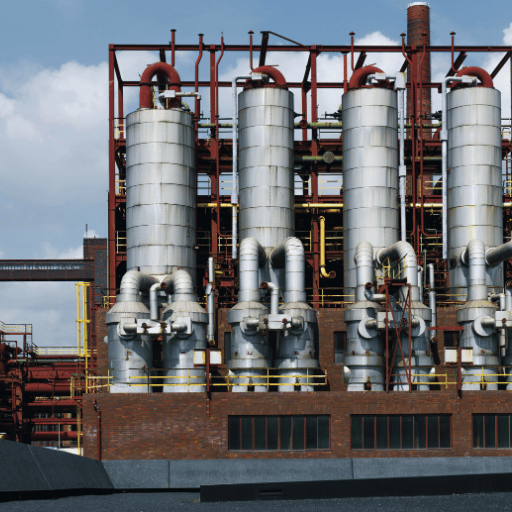
To purchase a biomass boiler is not like buying gas boiler. Here you need to decide capacity, efficiency, and connection to the fuel grid. With solid fuels, the mechanical infrastructure is much more significant – you need to consider the complexities of storage and handling, variable material and fire characteristics. A five-factor framework below provides a structured way to determine whether your biomass installation will be a success or not.
Factor 1: Heat Load and System Size
Establish your total heat requirement before choosing a system – a ballpark figure is not sufficient. Will need to determine your maximum thermal load (BTU/hr or MW) and how much energy you will require in an average year (in MMBtu or MWh). A rule of thumb: 1 MMBtu/hr of biomass boiler capacity will need approximately 120-150 lbs/hr of wood pellet feed, or 200-300 lbs/hr of wood chips, depending on the moisture content. Going much too large will be a waste of capital. Slightly too small means the set-up will have to run at its rated capacity for the duration, which can negatively impact its life cycle. Larger units (over 5 MW) can also benefit from multiple smaller sets as opposed to one large. This will allow some control over the system volume size, and one set can continue when maintaining the other. The IRENA technical brief on biomass for heat and power provides additional guidance on matching system size to thermal load profiles.
Factor 2: Fuel Availability and Consistency
Research your local fuel market before choosing a system. Can you find biomass types within 50-80 km? What is the landscape like? Does your site have the moisture content? Will supply be guaranteed year-round, or will there be seasonal fluctuations? If you want a system that relies on wood pellets, you will need a steady supply of pellets and covered storage capacity. If you are considering an agricultural system, you will need to look at harvest cycles – rice husk is available immediately after harvest, but not months later. It is practical to source from sawmills or timber sites for their sawdust or shavings. You must match your fuel type with your system.
Factor 3: Site Space and Layout
biomass heating systems, on the other hand, take much more space than in gas or oil-fired systems. The floor alone has the space for a fuel storage (silo or bunker), a fuel handling system (conveyors, augers, metering bins), the boiler, a dump for ash handling and flue gas treatment. Until the smaller system burning pellets took about 50- 100 M for all of this.
In a 10 MW, a wood chip system it is not difficult to take 500- 1000 M for receiving, storing and handling the fuel. Allow for truck entrance – most sites are supplied with the fuel from a tractor-trailer; the layout shall have a turnaround room, and the position of the unloading system should be well established before buying the equipment.
Factor 4: Emission Regulations and Permits
Check your local and national emission requirements before final equipment specifications. In the U.S., the EPA’s NESHAP rules for industrial boilers establish limitations on PM, CO, and HAPs (hazardous air pollutants). In the EU the Medium Combustion Plant Directive applies to units 1-50 MW, and larger systems in many places require a construction permit and continued emission monitoring.
The cost of flue gas treatment (multicyclone, baghouse filter, electrostatic precipitator) can be an extra 10-25% of the total project cost for systems that must achieve tight PM limits.
Factor 5: Automation and Labor
An entirely automated system—from the delivery of the fuel to its removal of the ash—costs a premium in capital costs initially, but the daily labor required drops to as low as 1–2 hours of operator time daily. A manual system is lower in cost, though firemen would require time to load fuel in bulk and remedy a lot of ash. For a facility that runs 24/7 and/or has a limited maintenance staff, automation is not a luxury, it is a necessity.
Look at what is being fed into and removed from the system (augers, hydraulic ram, pneumatic system), how the system is being handled (wet or dry), and the controlling system (PLC, remote control monitoring).Cost of capital for automated systems are generally recovered in the cost of labor savings in 2–4 years at most industrial sites.
💡 Pro Tip
Ask for a site visit from your boiler manufacturer. They will bring an experienced team of engineers to tour the site, evaluate the delivery access, confirm utility connections, and identify any layout conflicts that will never be apparent on a floor plan. It is well worth the investment to prevent costly rework during installation.
Biomass Heating Costs: Equipment, Fuel, and Long-Term ROI
The Capital cost is the initial figure that every purchaser inquires about–and the most deceptive when quoted as a single figure. boiler comprises only 30-60% of the complete installed cost of a biomass heating installation. Ancillary systems, including fuel feed handling and storing, ash removal, flue gas cleaning, civil and electrical works and process controls, are generally available at an overhead of 40-70% on the boiler figure.
Cost projections that omit these elements inevitably result in cost blow-out and dooms otherwise viable projects.
| Cost Component | Small System (0.5–2 MW) | Medium System (2–10 MW) | Large System (10+ MW) |
|---|---|---|---|
| Boiler Equipment | $50K–$200K | $200K–$500K | $500K–$2M+ |
| Fuel Handling & Storage | $30K–$100K | $100K–$400K | $300K–$1M+ |
| Flue Gas Treatment | $10K–$50K | $50K–$200K | $150K–$500K |
| Civil & Installation | $20K–$80K | $80K–$300K | $200K–$600K |
| Controls & Electrical | $15K–$40K | $40K–$120K | $100K–$300K |
| Total Installed | $125K–$470K | $470K–$1.5M | $1.25M–$4.4M+ |
Fuel cost is the only point where biomass competes with its larger capital costs. Wood pellets at about $245 per ton provide heat at approximately $3.00-$3.50 per MMBtu. Natural gas, at close to $1.84 per therm, costs about $18.40 per MMBtu in high-dollar markets or $8-$10/MMBtu in low-dollar locations.
Wood chips in some regions has the potential to go below $2.50/MMBtu. Savings from wood fuels is the most significant contributing factor in payback calculations, making fuel procurement strategy as important as equipment choices.
Payback generally appears in the 3-8 year range. Systems at high use intensive facilities (over 5,000 hours off-peak operating season, all season process heat) will pay for themselves in much less than five years on average. There are models with pellets / chips changeover features that provide fuel price hedge. The price advantage increases the farther the system is in the context of high fossil fuel values, local affordable biomass, and applicable carbon tax or renewable energy subsidy.
$0.50- $1.50 / MWh of heat output is typical. More expensive systems in the upper range are often purchased as OEM models with service contracts that bundle maintenance, remote sensing, and stand-by services at a fixed annual total. Total ownership costs are frequently lowered by buying a system with a long-term service agreement from the outset.
💡 Pro Tip
Note that when evaluating several quotes, compare using a “total installed system” figure as opposed to just the boiler. A 20% savings in the equipment purchase price that adds up to $150K in extra auxiliary equipment, civil works, and site prep does not really save anything. Solutions you are evaluating are usually listed as different scopes of supply for easier side-by-side comparisons.
Frequently Asked Questions About Biomass Heating Systems
Q: What is a biomass heating system?
View Answer
A biomass heating system creates thermal energy by combusting organic material (pellets, wood chips, or agricultural wastes) in a combustion chamber. Heat gain, delivered by water, air, or oil, is distributed through the facility for space heating, industrial process heat, or hot water production. As a renewable feedstock, biomass heating is intrinsically a renewable energy technology.
Q: How does a biomass boiler work?
View Answer
A biomass boiler supplies solid fuel (pellets, wood chips, or other biomass) to a combustion chamber using a conveyor, auger, hydraulic ram, or other feed device. Fuel burns on a grate at 800-1,000 C. Hot combustion gases move through a heat exchanger that transfers heat to the water for hot water or steam production. Temperature, fuel feeding, and air supply are regulated automatically to maintain target temperature and efficiencies. Ash is expelled manually or automatically. Exhaust is filtered prior to passing out of the stack.
Q: What are the disadvantages of biomass boilers?
View Answer
Disadvantages include higher initial installed costs (two to five times the cost of an equivalent gas boiler), larger equipment footprint, and more maintenance (ash removal and fuel system upkeep). Emission control equipment to manage PM emissions adds cost. Costly logistics of fuel handling are weighed against a simple gas connection. Payback ranges typically 3-8 years.
Q: Is biomass cheaper than gas?
View Answer
At fuel-cost-per-MMBtu basis, biomass is generally less expensive than natural gas—particularly in areas where wood is locally available. Compared to wood pellets that typically cost around $3.00-$3.50 per MMBtu, natural gas costs between $8-$18+ per MMBtu depending on the region. wood chips may fall below $2.50 per MMBtu. But biomass system costs are two to five times higher and maintenance costs are also higher. The overall cost comparison therefore depends on the fuel costs, number of operating hours and incentives. A significant economics case for biomass may exist if a facility runs over 5,000 hours a year and is in a high gas price region.
Q: What type of biomass fuel should I use?
View Answer
The best fuel depends on local availability, your boiler design, and your budget. Also high energy density (8,000-8,500 BTU/lb), very low moisture (<10%) and ease of handling are the advantages of Wood pellets, but they will cost you more per ton (around $245/ton). wood chips are less expensive ($35-$65/ton for M25 grade), can be more suitable for larger systems, but will require an appropriately designed boiler to support fluctuating fuel. Agri-residues (rice husk, corn stover) are the most inexpensive available but require more storage and handling capacity and specialized equipment will be needed. Always choose fuel type before choosing your equipment type and size as the order of components is important.
Q: How much space do I need for a biomass heating system?
View Answer
Space requirement varies widely for system sizes and fuel type. For example, a small pellet boiler system (less than 1 MW) would require a footprint of 50-100 m including fuel silo. A medium wood chip system (2-10 MW) would need 200-500 m for the boiler house, fuel storage bunker, and ash handling equipment. Large systems (over 10 MW) may need 500-1,000 m or more for fuel reception, storage, and processing. Truck access space for fuel delivery and ash container pickup should also be included in your plan. Storage capacity should be planned to provide 3-7 days of operation at full loads to ensure delivery reliability.
Need Help Selecting the Right Biomass Heating System?
Taiguo boiler designs and engineers turnkey delivery solutions for biomass heating systems. We have done system designs and installations for over 100 countries. Request a free consultation and site visit.
About This Guide
Taiguo Boiler has been designing and manufacturing industrial boilers since 1976 – including biomass firing systems, hot air burners, and thermal oil heating systems. Our engineering team has over four decades experience in biomass boiler design and has installed more than 100 plants in the chemical, food processing, textiles and energy industries around the world. We produced this reference from our own technical and field experience in biomass heating systems.
References & Sources
- Biomass for Heating — Whole Building Design Guide (WBDG), National Institute of Building Sciences
- An Introduction to Biomass Heating — Penn State Extension
- Characteristics of Biomass as a Heating Fuel — Penn State Extension
- Biomass & Biofuels Data — U.S. Energy Information Administration (EIA)
- Greenhouse Gas Equivalencies Calculator — Calculations and References — U.S. Environmental Protection Agency (EPA)
- NESHAP for Industrial, Commercial, and Institutional Boilers — U.S. Environmental Protection Agency (EPA)
- Biomass for Heat and Power — Technology Brief — International Renewable Energy Agency (IRENA)