Get in Touch with Taiguo



All food processing facilities require a cost-effective heat source—whether it’s used to dry rice, cure coffee beans or sterilize packaging materials. A hot air furnace provides a clean, controllable heat directly to the area where it’s needed without the complexities of handling steam. Still, many managers stick to tradition with steam boilers without evaluating the benefits of using a furnace instead.
This article explains how hot air furnaces function, discusses which types of units are available in the food and beverage industry, and offers practical advice on selecting the correct hot air furnace for your processing plant. Our information is based on the many years of experience from Taiguo Boiler—the world leader in industrial heating equipment manufacturing for the food industry, since 1976.
What Is a Hot Air Furnace and How Does It Work?
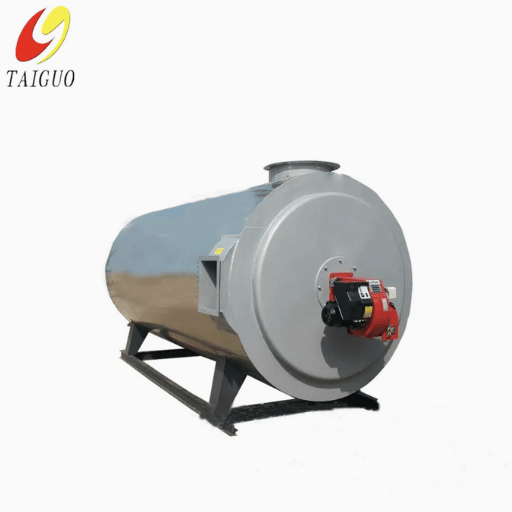
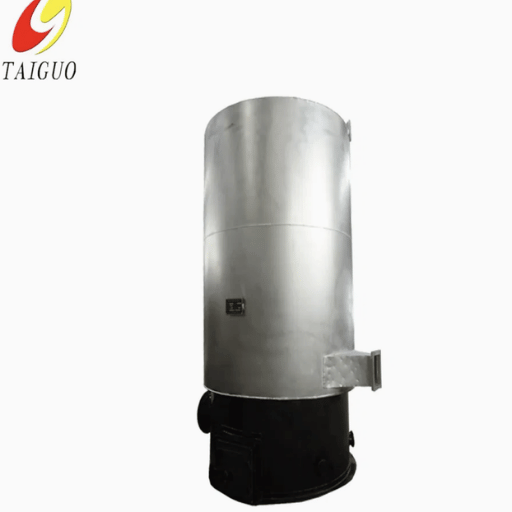
A hot air furnace is an industrial heat generator that creates thermal energy from combustion of a carbon-based fuel—such as natural gas or diesel—using a sealed combustion chamber, or through electric heating elements. This thermal energy is transferred to passively circulated air by a heat exchanger. The heated air—residue-free—travels where it is needed—through a duct system or directly—to perform the drying, roasting or heat treatment task at hand. In contrast, steam boilers require heated water as a medium.
Working Principle: Four-Stage Process
- Combustion—The stored chemical energy of a fuel is released through combustion within a sealed chamber. Electric models eliminate this stage, instead utilizing electrical resistance to generate thermal energy.
- Heat Transfer—Hot combustion exhaust gases flow through finned heat exchanger tubes, radiating the thermal energy through the tube walls to their external surface at 150C–600C.
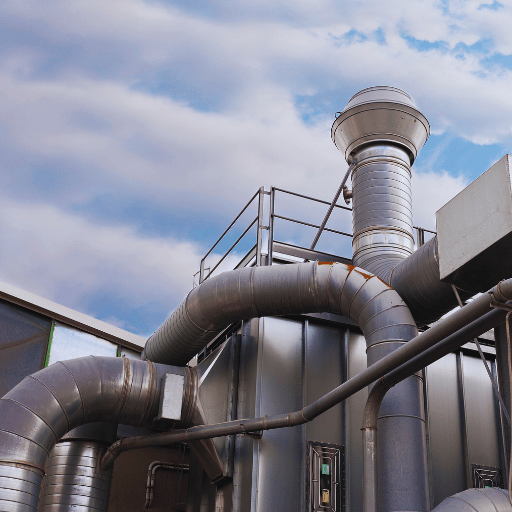
- Air Movement—Powered by a high-pressure centrifugal blower, any ambient air is pulled in and pushed through the heat exchangers, entering the output area—usually a drying chamber, sterilization tunnel or oven zone—as conditioned, high-temperature air.
- Dispersal—The output air enters the targeted area of the processing plant; this may be an oven or dehydration chamber, or a sterilization zone. The high temperature air contacts the product or merchandise to be processed.
85–92%
Thermal Efficiency (Modern Units)
50–800°C
Output Air Temperature Range
3–15 min
Startup to Operating Temperature
In a closed-flame hot air furnace design, combustion exhaust gases never mix with the heated process air, which is delivered through a sealed heat exchanger. This results in clean, non-contaminated air—critical for use with food.
💡 Pro Tip
A hot air furnace recirculates its exhaust air back into the intake in order to increase thermal efficiency by up to 15%. Most modern hot air furnaces include a recirculation feature.
Types of Hot Air Furnaces for the Food Processing Industry
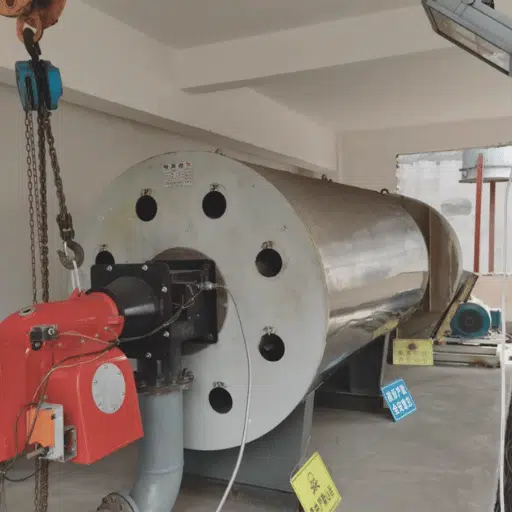
Not all hot air furnaces are configured equally. What fuel you intend to use, your desired output temperature and whether you wish to include a heat recirculation feature—these all influence which hot air furnace can fit your food processing operation.
| Furnace Type | Fuel / Energy | Temp Range | Efficiency | Best For |
|---|---|---|---|---|
| Direct-Fired | Natural gas, LPG, diesel | 100–600°C | 90–95% | Non-food-contact drying (packaging, raw materials) |
| Indirect-Fired | Natural gas, diesel, coal | 80–500°C | 85–90% | Food-contact drying, sterilization (clean air output) |
| Biomass-Fired | Wood chips, agri-waste, pellets | 80–350°C | 80–88% | Grain drying, tea processing (low fuel cost regions) |
| Electric Hot Air Oven | Electricity | 50–300°C | 95–99% | Pharmaceutical-grade sterilization, lab testing, small-batch food drying |
Direct-Fired vs. Indirect-Fired: The Key Distinction
A direct-fired heater exposes the combustion flame and exhaust gases directly to the process air stream. This produces higher thermal efficiency—up to 95%—but the output air contains combustion byproducts. Common fuel types include natural gas, LPG, and diesel.
An indirect-fired heater isolates combustion from process air through a sealed heat exchanger. This results in clean process air, which is why industry professionals recommend these units for food processing facilities, pharmaceutical production, and other chemically-sensitive environments.
Biomass Hot Air Furnaces
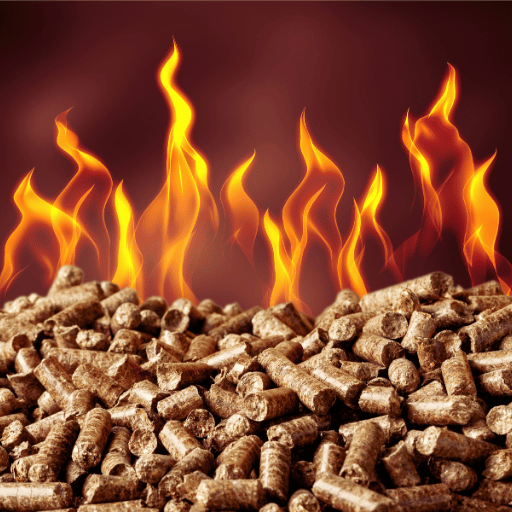
Biomass-fired machines operate off agricultural waste, wood chips, or square pellets. They’re the most prevalent in Southeast Asia, Africa, and South America, where biomass fuel is abundant and inexpensive. A 2024 experimental study published in Applied Thermal Engineering (ScienceDirect) revealed a novel hot air furnace equipped with a biomass briquette fuel system designed for industrial drying processes with an increased combustion exhaust temperature.
Electric Hot Air Ovens
Electric machines use resistance heating coils to produce heat, with no combustion necessary. Electric heating systems provide optimal temperature control (±0.2C) and supreme product temperature consistency, which is why they are the most common for pharmaceutical applications, experimental testing, and laboratory research. In food production contexts, electric ovens are perfect for small batch surface drying of powder ingredients, aromatics, and spices where eliminating electrical or fuel-flame-related contamination risks is advantageous.
💡 Pro Tip
Begin your consideration of the various furnaces types by focusing on how they transfer heat. For products in contact with hot air (grain, tea leaves, spices), avoid direct-fired furnaces in favor of electric or indirect-fired alternatives. Reverse that advice for processes in contact only with jar or packaging surfaces.
Key Applications of Hot Air Furnaces in Food Processing
Direct-fired hot air furnaces are simply optimized for many food-related industrial applications. No moisture, just heat, in specialized systems that rely on dry heat transfer. Common applications include the following.
1. Grain and Cereal Drying
Hot air used in preparation of grain for storage on farms utilizes temperatures of 50-80C with drying air flow rates of 30-70 m/s. Capacities vary from 10 to over 100 tonnes/hr depending on the requirements. Biomass-fired furnaces are integrated in agricultural regions to use low-cost locally sourced fuel and produce heat in comparison to the costs of electric and natural-gas heat sources.
2. Fruit and Vegetable Dehydration
Post-harvest fruits and vegetables are dried at 50-70C for extended periods (8 to 24 hours). Uniform consistency prevents case-hardening, which results in the outer layer drying while the interior remains unusable. Indirect-fired furnaces supply the necessary dry process air.
3. Spice, Herb, and Powder Processing
Gentle heating of ground spices and powder ingredients occurs at 40-60C and requires even heat distribution. Electric furnaces reach precise temperature throughout the drying envelope, while clean and sterile air prevents the formation of undesirable flavors.
4. Sterilization and Microorganism Elimination
Historical evidence suggests dry heat sterilization are effective at exterminating microorganisms through denaturation of proteins. Federal guidelines through the U.S. Centers for Disease Control and Prevention (CDC) stipulate 160C for 120 minutes or 170C for 60 minutes. Food production operations use these programs to sterilize glassware and water vessels, medical tools, and other items fragile to steam or pressure sterilization. In the pharmaceutical industry, hot air furnaces are used to sterilize tools and liquid handling equipment where the introduction of moisture is undesirable.
5. Tea and Coffee Roasting
Roasters require high temperature, 180C to 240C, with fast heat response. Hot air furnaces allow the operator to modulate burner output to control temperature in real time. Various tea production facilities in India and Sri Lanka have adopted biomass-fired hot air furnaces to roasters, lowering fuel consumption and stabilizing roast profile.
6. Packaging and Shrink-Wrapping
Hot air blower systems deliver a targeted burst of heat that collapses the shrink-wrap film around the designated food packages. New application technology limits the temperature range to 150 and 200 C, with airflow- directing ports that prevent “surge” temperature, depositing excessive heat on the product. This is a precisely-timed, inline process in a high-speed roastery, where every second and every degree counts.
“Based on experience using over a hundred hot air furnace systems installed in 100+ food production plants worldwide, the largest single category of use can be summarized as grain drying and dehydration. Roasting, sterilization, and packaging applications each comprise an equal share of the balance of demand.”
— Taiguo Boiler Engineering Team, based on project data since 1976
Hot Air Furnace vs. Steam Boiler: Which Is Right for Your Plant?

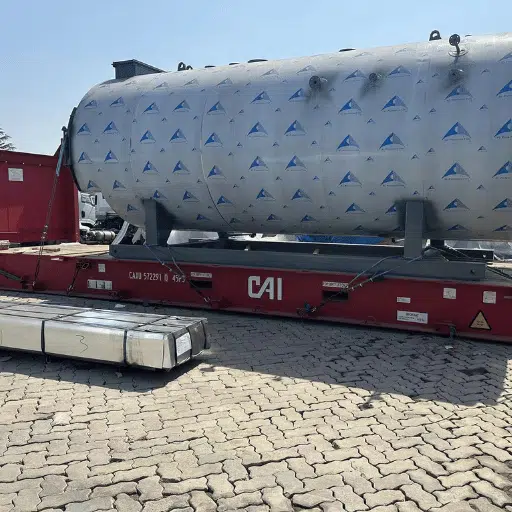
Many food processing plants already operate steam boilers, and in many applications they make operational sense. But in what cases makes it more appropriate -or cost-effective- to add a hot air furnace? The answer depends on the task at hand.
| Dimension | Hot Air Furnace | Steam Boiler |
|---|---|---|
| Heat Medium | Direct hot air | Steam or hot water |
| Primary Use | Drying, roasting, heat treatment, shrink-wrapping | Cooking, blanching, CIP cleaning, liquid heating |
| Startup Time | 3–15 minutes | 30–60 minutes (cold start) |
| Thermal Efficiency | 85–95% | 80–90% |
| Install Cost | Lower (no water treatment, no condensate return) | Higher (water treatment, piping, condensate system) |
| Maintenance | Simpler (no water chemistry, no scale buildup) | More involved (water treatment, blowdown, tube inspection) |
| Moisture Output | Dry heat — removes moisture from product | Wet heat — adds moisture (cooking, blanching) |
| Water Requirement | None | Continuous treated water supply |
⚠️ Common Mistake
If you are looking to dry, dehydrate, or cure, a direct-fired furnace is a waste of fuel. Direct-fired units create moisture as well as heat by combustion, with the eventual process result being ultimately wrong for the application. If the biggest reason for adding heat is to get rid of moisture in grain, fruit, or fabrics, an indirect-fired furnace will perform better and cost less to operate.
Many applications can be served effectively by running both systems. Steam is most suitable for cooking, pasteurizing, CIP cleaning, and other processing applications, while furnaces provide heated airflow for air flotation to produce flowable finished product. Two systems can run the operation most efficiently by heading separate processes in each with properly-sized equipment.
In summary: Want to dehydrate, roast, dry, cure or otherwise remove moisture? Then a hot air furnace is the right choice. To produce heat through a steam boiler -to cook, warm, or fluidize- then a boiler is correct. For live operations that require both, size equipment to application rather than heat source.
How to Select the Right Hot Air Furnace for Your Food Processing Plant
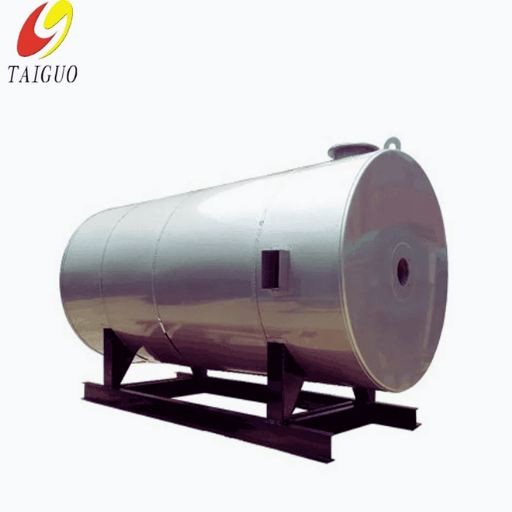
Selecting a furnace that is unnecessarily large costs more than the equipment itself- its fuel use is higher, the finished product suffers inconsistency, and the end result could be serious food safety violation. Here is a six-point selection framework based on what we see in 100’s of food factories worldwide.
- ✔
1. Heat Source and Fuel Availability — Check local fuel supply and pricing. Natural gas offers the lowest per-BTU cost in most regions. Where gas infrastructure is limited, biomass or diesel models provide heat at production scales from 50 kW to 2,000 kW. Electric heater units suit small-batch operations where fuel storage is impractical.
- ✔
2. Required Temperature Range and Uniformity — Match the furnace output to your process parameters. Grain drying needs 50–80°C; sterilization demands 160°C+. Consistent heat across the entire drying chamber prevents hot spots that damage product quality. Look for temperature uniformity specs of ±2–5°C.
- ✔
3. Production Capacity and Throughput — Size the furnace to your daily output. Undersizing forces the unit to run at maximum load continuously, reducing lifespan. Oversizing wastes fuel during partial loads. Request a thermal load calculation from the manufacturer based on your product volume, moisture content, and target drying time.
- ✔
4. Food Safety: Direct vs. Indirect Firing — If the heated air contacts food products directly, an indirect-fired or electric model is mandatory. Direct-fired furnaces introduce combustion gases into the airstream — acceptable for drying packaging or construction materials, but a contamination risk when used to heat food products directly.
- ✔
5. Energy Efficiency and Operating Cost — Compare the total cost of ownership across a 10-year lifespan, not just the purchase price. Heat recovery and recirculation features can reduce fuel consumption by 10–20%. Ask for efficiency ratings at both full and partial load, since most furnaces run at 60–80% capacity during normal production.
- ✔
6. Certifications and Process Control — Verify that the furnace manufacturer holds relevant quality certifications (ISO 9001, CE, ASME). For food applications, check whether the unit supports HACCP-compliant temperature monitoring and atmosphere control with data logging capabilities.
⚠️ Common Mistake
Installing a directly fired furnace for drying to save on initial equipment costs (This furnace works- the heat is there, but the combustion byproducts will impart too much flavor, and cause failures in compliance or inspection. The expenses of food recall or failed inspection greatly exceed equipment costs).
Safety Standards and Compliance for Food-Grade Hot Air Furnaces
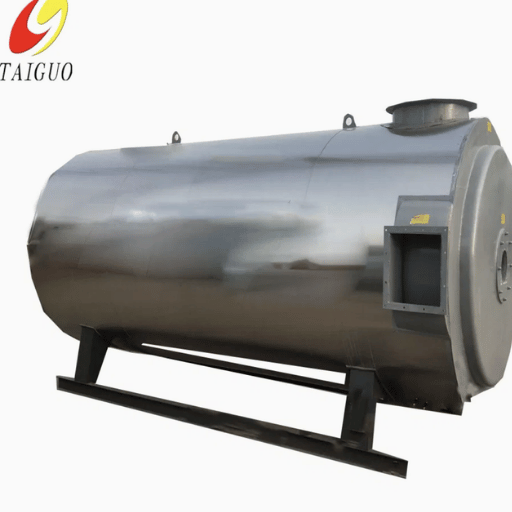
Meeting both process safety and food safety standards when installing a hot air furnace involves what designs and fabrication standards are relevant:
Equipment Quality and Safety
- ISO 9001 quality certification that the manufacturer adheres to detailed standards governing design, fabrication, and inspection. Taiguo Boiler features ISO 9001 certified design and manufacturing processes, supported by eight separate quality assurance systems covering the full business.
- CE marking is required for equipment sold within the EU and includes pressure equipment safety, electromagnetic compatibility and mechanical safety directives.
- ASME codes form the standards for pressure vessels and thermal equipment. ASME certification is needed for many North American installations.
- The US FDA’s HACCP framework is based on Hazard Analysis Critical Control Points — every step of the food manufacture process is analyzed to detect and control the hazards. Your hot air furnace becomes a “critical control point” once the food is heated by direct contact with the air. The process must have its temperature monitored, air filtration must be effective and all sensors calibrated.
Food Safety and Regulatory Compliance
- US FDA GMP’s requirements in relation to food processing equipment include the design of the factory, equipment sanitation and process control, the furnaces used in food production factories must be constructed so that they are cleanable, and constructed from food safe materials within the airflow path. They must not contaminate the food with rust or lubricant:
- ISO 22000 is a global standard for food safety management, which combines HACCP with ISO 9001 quality management protocols. Plants with this certification require documented conditions of heat equipment, such as hot air furnaces.
Emission standards must also be considered; emissions from natural gas and diesel fired furnaces must meet local standards for NOx, CO and particulate emissions, and biomass fired systems are subject to extra controls in areas with rigorous air quality regulations:
Frequently Asked Questions About Hot Air Furnaces in Food Processing
Q: What is a hot air oven in the food industry?
View Answer
A hot air oven is a confined chamber for circulating hot air to dry, sterilize, or heat treat foods and packaging materials. Air-based systems have the advantage of delivering dry heat, meaning their application is well suited to herbs, spices and other ingredients where excess moisture could be detrimental to the product. Typical operating temperatures are 50-300°C. Electric fired units or gas fired indirect burners form most food-grade applications: electric units are used more in pharmaceuticals because they produce no combustion byproducts, while the indirect gas fired systems are also used within larger high-volume food production lines where the cost of electricity makes resistive heating impractical:
Q: Which heating method is suitable for food processing?
View Answer
The appropriate method of heat transfer is determined by the application; wet heat applications such as cooking, pasteurization, blanching and cleaning-in-place are best carried out with steam boilers. Dehydration, sterilization or heat treatment applications to dry or roast foods are best achieved with hot air furnaces; small-batch precise heating applications are suitable for electric ovens: in most large-scale food manufacturing facilities, a mixture of steam and hot air systems is used to satisfy all requirements:
Q: How does a hot air furnace work?
View Answer
Combustion heats an enclosed chamber of pipes or tubes and ambient air is simultaneously pumped around the hot pipes, for strong heat transfer. Combustion exhaust is then vented and process air is blown into the hot process area.
Q: What is the difference between a hot air furnace and a hot air oven?
View Answer
A hot air furnace generates heated air and distributes it through a duct system to external process areas. A hot air oven heats the air within its insulated chamber and that hot air is circulated around the food and packaging within the oven itself. In oven-based systems, the product is placed directly inside to dry, with no oil or steam generated.
Q: Can a hot air furnace be used for food sterilization?
View Answer
Yes. Hot air furnaces and ovens are applicable for sterilizing packaging, glassware, and metal utensils in food processing facilities. Dry heat sterilization at 160C for 2 hours or 170C for 1 hour kills bacteria, spores, and other microorganism populations. The food product must be able to stand extreme dry heat. Liquid food items are normally sterilized with steam (autoclaving), not dry hot air.
Q: What fuel types are available for industrial hot air furnaces?
View Answer
Natural Gas, LPG, Diesel, Coal, Biomass (Wood Chips, Agricultural Waste, Pellets), Electricity. Gas has the least emission profile. Biomass is the least expensive option in agricultural areas. Electric avoids combustion entirely, therefore the cleanest air output for pharmaceutical and food-contact work. Many modern units ship with dual-fuel burners which operates with the push of a button as gas/diesel. This feature can be useful for plants in areas which experience seasonal changes to the available fuel source.
Need a Hot Air Furnace for Your Food Processing Line?
Taiguo Boiler produces direct- and indirect-fired and biomass hot air furnaces for food processing, chemical and textile industries, as well as for other industrial applications. ISO 9001 + ASME + CE tested. 100+ countries since 1976.
About This Analysis
This information has been compiled by the engineers at Taiguo Boiler, with assistance from our first-hand experience in manufacturing hot air furnaces and other industrial heating equipment since 1975. The application notes and temperature schedules mentioned in this document are based on our product series and installed units at food processing, chemical manufacturing, and agriculture drying facilities. This information is presented based on our manufacturing standpoint, and users are advised to cross-reference this article with their respective process specifications.
References & Sources
- HACCP Principles & Application Guidelines — U.S. Food and Drug Administration (FDA)
- Other Sterilization Methods — U.S. Centers for Disease Control and Prevention (CDC)
- Design and Application of Biomass Briquette Hot Air Furnace System (2024) — Applied Thermal Engineering, ScienceDirect
- Direct-Fired vs. Indirect-Fired Heat — Polygon Group
- A Guide to ISO Standards for Food Safety — SafetyChain