Get in Touch with Taiguo


Industrial heating represents approximately 2/3 of all industrial energy consumption in the world, notes the IEA Energy Efficiency 2025 report. For plants that use hot air generators for fuel drying, curing, or thermal processing, even a small improvement in thermal efficiency results in thousands of dollars in savings annually on fuel. However, many plant operators operate heating equipment well below design conditions – often unknowingly.
This guide examines the engineering considerations contributing to hot air generator efficiency, compares fuel choices and generator classifications side by side, and provides practical methods to improve your systems closer to label efficiency. Whether exploring a new hot air generator purchase or seeking to improve energy savings on existing equipment, the data and approach discussed herein is applicable to textile, food processing, chemical, and pharmaceutical sectors.
What Is a Hot Air Generator and How Does It Work?
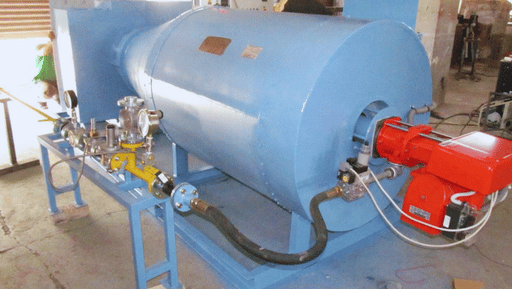
A hot air generator is a device that combusts fuel within a combustion chamber to transfer thermal energy into an airstream. This heated air is ultimately delivered through ductwork for industrial heating, thermal, or curing purposes. Unlike a boiler (steam generator) that heats water for steam formation, hot air generators use heat air directly. This design eliminates the heat transfer losses associated with phase-change.
The basic operating cycle follows four stages:
- Combustion – fuel (natural gas, diesel, LPG, coal, biomass) is burned in a refractory-lined, insulated combustion chamber.
- heat transfer – thermal energy passes from the combustion gases into the process air, either directly (mixed flow) or via a heat exchanger (separated flow).
- Air circulation – An ambient blower introduces air across the heating surface and pushes the heat air into ductwork.
- Exhaust – Acid flue gases exit into the atmosphere from the chimneys of indirect units. In direct-fired units, combustion products become entrained with the process air.
💡 Pro Tip
Typical temperature ranges for industrial hot air generators is 90C to 400C. precise temperature control is controlled using modulating burners and PID control. This modulation capability enables rapid heating, making them well-suited to processes for which oven batch heating would be too slow.
Direct-Fired vs. Indirect-Fired Hot Air Generators
Choosing between a direct-fired or indirect design is the most critical decision when selecting a direct-fired or indirect design. Both serve distinct applications, and the efficiency delta between them is notable.
In direct-fired hot air generators the combustion gases mix directly with the process air. There is no heat exchanger between the two streams. Since nearly all thermal energy produced by the combustion is captured, thermal efficiency ratings are around 92%, with loss of only 8% to water vapor formation in the fuel -burning process. Several manufacturers rate direct-fired units at nearly 100% combustion efficiency.
An indirect-fired generator routes combustion gases though a heat exchanger while keeping the airstream completely separate. The heated air entering the process is clean air, free from soot, moisture, and other combustion byproducts.
The trade-off is efficiency: indirect conventions often operate in the ball park of 80% thermal efficiency, as the heat exchanger creates a temperature profile and some heat is lost with the flue gases and out through the chamber walls.
| Feature | Direct-Fired | Indirect-Fired |
|---|---|---|
| Thermal Efficiency | 90–100% | 75–85% |
| Air Purity | Contains combustion gases | Clean, contaminant-free |
| Typical Applications | Mineral drying, asphalt plants, fertilizer | Food processing, pharmaceutical, textile dye finishing |
| Fuel Consumption | Lower (higher efficiency) | Higher (heat exchanger losses) |
| Emission Control | Products enter air stream | Flue gases exhausted separately |
| Equipment Cost | Lower initial cost | Higher (heat exchanger adds cost) |
In commercial operation, the choice depends on what the heated air contacts. If the air contacts food, pharmaceutical ingredients or finished textile fabric, an indirect is the safe choice even if its energy efficiency is lower. If the air contacts raw minerals or bulk construction materials, a direct-fired has a lower fuel per Unit.
Key Factors That Drive Hot Air Generator Efficiency
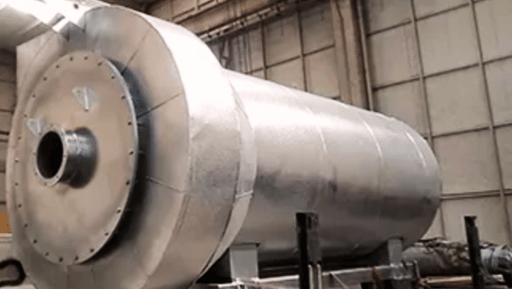
hot air generator efficiency is not an absolute number marked on the nameplate. It varies with operating conditions, accumulated wear, and system design. The U.S. Department of Energy’s Process Heating Systems program has identified several variables that significantly influence the amount of useful heat obtained per fuel.
Primary Efficiency Drivers
- Combustion efficiency – Any unburned combustion wastes fuel and leads to creation of excess carbon monoxide. The high impact / easy adjustment of optimizing air-to-fuel ratio truly cannot be overstated.
- heat exchanger surface condition – deposits of ash, soot or scale on the heat transfer surface create an effective blanket that prevents heat transfer. Routine cleanings can recover measurable thermal operation.
- Flue gas temperature – the higher the stack temperature, the greater the fuel carrying off through the flue gases. An efficient generator maintains an exit exhaust below 200 C.
- Insulation condition – damaged Refractory brick or worn insulation material in ductwork allows considerable radiant and convective heat transfer from the combustion chamber walls.
- Excess air ratio – Optimizing back-end air adjustment balances the excess air mixture passed through the system. Too much excess air sweeps the furnace clean of soot and moisture and blows heat out the stack. Too little results in incomplete combustion. The target varies by fuel type.
- Ambient air temperature – Preheating inlet air can incorporate waste heat recovery from the exhaust stream, increasing overall efficiency levels by 5 to 15%.
DOE studies have indicated achievable energy efficiency improvements of 15 to 30 percent across industrial process heating systems when advanced controls and techniques are applied. With a $200,000 annual gas bill, this provides $30,000-$60,000 in potential fuel savings without major capital investment — a direct boost to plant productivity.
15–30%
Achievable Energy Savings (DOE)
85–95%
Modern Generator Thermal Efficiency
65–75%
Older System Efficiency Range
Our engineering department frequently sees plants operating generators at or below 70% efficiency because of postponed burner tuning or fouled heat transfer. A modern high performance generator with a multi-pass heat exchange system can reduce fuel by 20-25% in turn providing equivalent thermal at lower operating cost.
Fuel Selection and Its Impact on Efficiency
Fuel choice plays a major role in understanding both the potential maximum efficiency and your hot air generator operating cost. Different fuel types provide different amounts of calorific value, impact the combustion and emission you gain, and provide varying levels of ash.
| Fuel Type | Thermal Efficiency | Ash Content | Emission Level | Best For |
|---|---|---|---|---|
| Natural Gas / LPG | 88–95% | None | Low (cleanest) | Food, pharma, clean processes |
| Diesel / Light Fuel Oil | 85–92% | Minimal | Moderate | Remote sites, backup fuel |
| Biomass (pellets, briquettes) | 78–88% | Low–Moderate | Low CO₂ (carbon-neutral) | Agriculture, wood industries |
| Coal | 75–85% | High | High (SOx, particulates) | Heavy industry, cement, minerals |
Gas fired systems (Natural Gas and LPG) provide the highest thermal efficiency as the fuel burns with zero ash. There is no fouling occurs on the surfaces of heat transfer, ensuring the generator retains its rated efficiency much longer between maintenance cycles. On the cost side, natural gas is priced differently from area to area and LPG can become costly in locations that are remote from piped infrastructure.
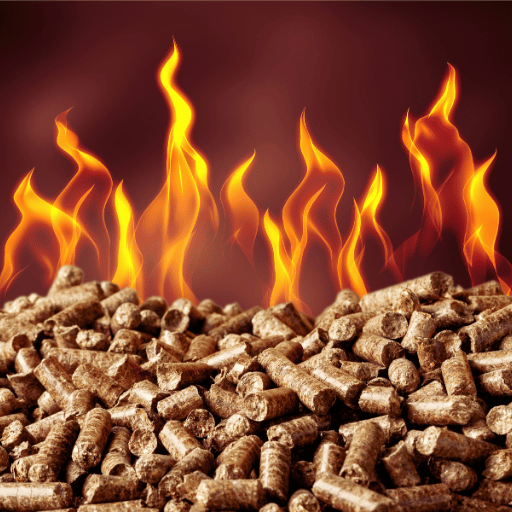
A biomass hot air generator uses a solid fuel such as wood pellets, rice husk, bagasse, or agricultural waste. When biomass is used as the fuel, there is greater ash generated which requires more frequent cleaning. However, this is the environmentally eco-friendly path to sustainable heating in areas rich in biomass feedstocks where fuel costs are key to profitability. As reported in the IEA Renewables 2025 report, biomass remains the top choice of renewable heat and overshadows other solutions for industrial drying processes.
⚠️ Common Mistake
A solid fuel is also the basis for a hot air generator used to generate steam from biomasses. This unit can use rice husk, bagasse, agricultural waste, or other inerts as the fuel. Ash generation and scrubbing is higher but the pathway to lower fuel costs in biomass abundant regions can make these solutions attractive. As reported in the IEA Renewables 2025, biomass remains the dominant form of renewable heat generation globally with industrial drying being a key application.
Industry Applications — From Textile Drying to Food Processing
Sample from life-cycle cost analysis for selecting fuel. Avoid the mistake of only evaluating fuel prices per kg or MMBtus; you should factor in ash handling, cleaning frequency, and emission compliance effort in assessing lifecycle expense. Selecting a fuel that saved you 30% per KG or MMBtus but doubles the number of maintenance visits and cubic meters of emission you must scrub can push up total bills.
Textile Industry
hot air generators are applied in nearly every product-control sector that involves controlled thermal production. The most prevalent is in the application of settling and drying out dyes in the textile industry. This process ensures chemicals are fixated onto the fiber at the appropriate temperature, humidity, and contact time. Proper application avoids uneven colors, shrinks or weakened finishes. The generator is fed heated air directly into the drying chamber in high throughput output across a broad temperature range – from 120C to 180C.
Food Processing
In the food industry, hot air generators are employed for drying, baking, and coating processes. The generator feeds heated air directly in to the drying zones to provide a high flux, high repeatability thermal source.
Chemical and Pharmaceutical
In a number of food processing applications, the milk powders, teas, coffees, and spices can be evenly dried in these hot air generators. Tray dried fruits and vegetables or elevated temps of the roasting process, these hot air generators can be employed. High standards of registration mean that indirect-fired generators are the standard here this is why the flavor release matrix and quality of the final product is of high quality. When the foods must track high throughputs, the generator are employed, and the air is fed directly into the dryers.
Rubber, Asphalt, and Building Materials
In these on-going, heavy-duty uses in the industry, the hot air generators are used to support sanddrying, aggregate heating reactor for asphalt feed preparation and the vulcanization of rubbers. Temperatures can be in excess of 300C and the direct fired dust prone nature of the environments requires rugged construction – this is why coal and biomass fired generator are employed.
The work of the IEA’s Energy Efficiency 2025 report shows that industry is responsible for almost 40% of the entire world final energy consumption—more than 450 EJ in 2024. Of these, nearly one fifth is used for producing Industrial heat. Even tiny efficiency gains at scale translate to massive energy savings and emission reductions across heating equipment.
How to Choose the Right Industrial Hot Air Generator for Your Facility
Selecting a hot air generator means choosing equipment size that matches process needs. An oversized one produces massive fuel waste at partial loads; an undersized model won’t handle the throughput. Here is a simple decision flow that our engineering systems experts use when they specify heating solutions for different industrial needs.
- ✔
Required air temperature range — Determine your process setpoint (e.g., 150°C for textile drying, 300°C for mineral processing). This dictates the generator’s thermal rating and combustion chamber design. - ✔
Air purity needs — If the heated air contacts food, pharmaceuticals, or sensitive materials, you need an indirect-fired unit with a heat exchanger. For non-contact applications (mineral drying, asphalt), direct-fired is more efficient. - ✔
Available fuel supply — Check local gas pipeline access, diesel delivery logistics, or biomass feedstock availability. Fuel availability often determines operating cost more than equipment efficiency ratings. - ✔
Capacity calculation (kcal/hr) — Size the generator based on airflow volume, required temperature rise, and process heat load. Include a 10–15% safety margin for ambient temperature variations. - ✔
Space and installation constraints — Measure available floor space, ceiling height, and duct routing. Multi-pass designs offer high performance in a compact footprint. - ✔
Emission regulations — Verify local emission standards for NOx, SOx, and particulate matter. Gas-fired systems typically meet the strictest requirements without add-on scrubbers.
“The most common mistake we see in generator choice is compromising purchase price at the expense of the fuel-to-heat ratio. A unit with 90% thermal efficiency that costs 15% more initially will amortize during a 15-year service period far better than a 75% model selling at a lower price.”
— Taiguo Boiler Engineering Team
Maintenance Practices to Sustain Peak Efficiency
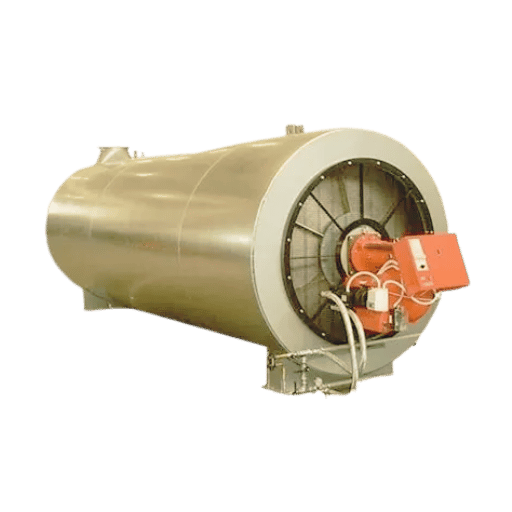
Even a great generator that is designed properly for the project requires periodic maintenance to keep it performing to spec. The U.S. DOE Better Buildings Process Heating initiative shows regular maintenance is the fastest way to improve generator performance and reduce energy costs.
Scheduled Maintenance Checklist
- ✔
Weekly: Inspect burner flame pattern, check for unusual combustion noise, verify temperature readings against setpoints. - ✔
Monthly: Clean heat exchanger tubes and surfaces to remove ash, soot, and scale deposits. Check air filter condition. Inspect insulation and refractory lining for cracks. - ✔
Quarterly: Tune the burner’s air-to-fuel ratio using flue gas analysis. Calibrate temperature sensors and safety controls. - ✔
Annually: Full refractory inspection and repair. Pressure test all joints and seals. Evaluate overall system efficiency against baseline.
⚠️ Common Efficiency Killer
Neglecting heat exchanger cleaning is the most common reason for annual fuel cost rise. Without annual cleaning, the build-up of 1mm of deposits on heat transfer surfaces can cause a big drop in thermal conductivity and high fuel usage. Facilities that clean quarterly instead of annually maintain 5-8% higher operating efficiency year-round. Start by keeping heat transfer surfaces free of buildup.
For generators that use solid fuels such as coal or biomass, regularly removing ashes from the combustion chamber and the grate area is critical. Ash buildup restricts airflow entering the fuel bed, leading to incomplete combustion and emission increases. Moreover, proper ash removal extends the durability of the refractory and grate.
Recovering waste heat is another viable efficiency improvement. By using a heat exchanger to extract exhaust energy and preheat incoming combustion air—placing it on the flue stack—the overall gain in generator efficiency can be between 5-10% with a payback period of less than two years in most situations. This practice supports long-term sustainability through fuel economy and improved heating performance without requiring any major modifications.
Frequently Asked Questions
Q: What are the different types of hot air generators?
View Answer
Direct-fired and indirect-fired. Direct-fired units blow combustion gases into the process air for 90-100% efficiency. Indirect-fired models separate combustion from air via a heat exchanger, producing clean heated air at 75-85% efficiency. Generators are also classified by fuel — gas, oil, solid fuel, or biomass.
Q: What are the main benefits of using a hot air generator over steam heating?
View Answer
Hot air generators offer several advantages over steam-based heating systems, including: lower startup time (generally minutes vs. hours for boiler pressurization), no need for water treatment or condensate return equipment, lower capital and installation costs, easier operation requiring less maintenance, and delivery of heated air directly into the process instead of presence of intermediate heat transfer media. Hot air generators are also ideal for drying applications where contact of the heated air with the product is necessary.
Q: What thermal efficiency should I expect from a well-maintained hot air generator?
View Answer
A modern hot air generator that is well-maintained should reach an 85-95% thermal efficiency on an NCV basis. Gas fired direct-fired units typically achieve this high end of the spectrum (92-95%), while indirect-fired solid fuel-fired units tend toward the lower end (78-85%). Older generators tend to achieve only 65-75%, owing to aged burning elements, dirty heat exchangers, and degrading insulation. Properly tuning burners, cleaning heat exchangers, and inspecting insulation regularly will preserve rated efficiency over the life of the equipment.
Q: What safety precautions are needed when operating a hot air generator?
View Answer
Flame detection with automatic fuel shutoff, ventilation to prevent combustion gas buildup, high-temperature limit switches, and pressure relief devices. Fuel lines and gas connections need routine inspection. Operators should be trained on startup/shutdown procedures. Direct-fired units in enclosed spaces require oxygen monitoring.
Q: How long does an industrial hot air generator typically last?
View Answer
With proper maintenance, 15-25 years is the expected service life. Combustion chamber refractory may need repair every 5-8 years. Heat exchanger tubes in indirect-fired units last 10-15 years. Gas-fired generators tend toward the upper end of that range since they produce no abrasive ash; coal and biomass units wear faster due to ash contact with internal surfaces, and solid fuel grate components may need periodic replacement as well. Annual inspection records help predict when major overhauls become necessary, so tracking performance data from each maintenance cycle is worth the effort.
Q: Can hot air generators use renewable energy sources like biomass?
View Answer
Yes. fuel sources for hot air generators include various forms of biomass, such as wood pellets, rice husk, bagasse, and coconut shells, which are all renewable resources. Using these is considered carbon-neutral as the CO2 emitted was captured by the growing biomass. Modern biomass-fired generators achieve 78-88% thermal efficiency and are common in many industries with ready access to biomass feed. Some dual-fuel models offer switching between biomass and gas depending on cost and fuel shortfall.
Need a Custom Hot Air Generator Solution?
Taiguo Boiler produces industrial hot air generators, thermal oil heaters, and steam boilers, with certification from ISO 9001, ASME, and CE. Our engineers can advise on projects, design solutions, customize manufacturing, and provide aftercare for sites located over 100 countries.
About This Analysis
This summary incorporates the Taiguo Boiler engineering experience gained in the manufacturing of industrial heating including hot air ovens, boilers, and thermal oil systems for 49 years. The statistics and recommendations for maintenance of hot air generators is based on our experience in the field operating, visiting, repairing installations in over 100 countries across the world for groups involved in food processing, textile, chemicals, building materials. Where we reference any outside statistics, they are hyperlinked for quick access.
References & Sources
- Energy Efficiency 2025 — Industry — International Energy Agency (IEA)
- Process Heating Systems — U.S. Department of Energy
- Improving Process Heating System Performance: A Sourcebook for Industry (3rd Edition) — U.S. DOE Advanced Manufacturing Office
- Better Buildings — Process Heating — U.S. Department of Energy
- Renewables 2025 — Renewable Heat — International Energy Agency (IEA)