Get in Touch with Taiguo

Taiguo Boiler
Hot Air Furnace
Industrial Biomass & Gas Hot Air Generator | Taiguo Boiler
From grain drying lines to textile heat-setting tunnels, the industrial hot air furnaces from Taiguo provide clean, temperature regulated heated air in the toughest process environments. Two families of products—biomass fired LRF and gas/oil-fired WRF—provide capacities from 0.12 MW to 1.4 MW in industries worldwide.
Since 1976
50 Years of Industrial Heating Excellence
100+
Countries Served
0.12–1.4 MW
Capacity Range
ISO / ASME / CE
Triple-Certified Manufacturer
Industrial Knowledge
What Is a Hot Air Furnace?
A hot air furnace is an industrial heat generation system that burns a fuel—biomass, coal, natural gas or diesel—to produce a controlled stream of heated air for use in industrial processes. Unlike a steam boiler, which employs water as the heat transfer medium, hot air furnaces employ air itself and are thus more suitable for various drying, curing and direct thermal processing purposes. Industrial hot air generators operate at outlet temperatures of roughly 120°C to 300°C and at capacities from 0.12 MW up to 1.4 MW.
A key advantage of a hot air furnace over a steam-based heat system resides in its relative simplicity. Hot air furnaces do not require boiler water treatment program regimes, condensate return piping layouts, steam traps to handle or water hammer issues to address. For processes requiring dry rather than latent heat, hot air generators are a more direct and affordable approach.
It is precisely these industrial process advantages that have seen hot air delivery systems such as the grain dryer operators, textile manufacturers, building goods producers choose forced air heating systems over the past twenty years.
Hot Air Furnace vs. Steam Boiler: Key Differences
When your process requires outlet temperatures of 200°C to 300°C and airflow volumes of thousands of m³/hr, only a thermal power source such as a hot air furnace will do.
Hot Air Furnace
The comparison is when you want the combined effects of combustion and high volume of airflow: The hot air furnace has the thermal power source with a high-capacity blower to funnel the heated air precisely where your process applies it. When your process requires outlet temperatures of 200°C to 300°C and airflow volumes of thousands of m³/hr, only a thermal power source such as a hot air furnace will do.
VS
Heat Pumps & Air Heaters
Heat pumps, fresh air recirculation systems and air heaters when used as low-temperature, off-cycle heating sources do an excellent job of taking existing thermal energy and transferring it to a new work environment. While an air conditioner or a heat pump can recirculate room air at intermediate temperatures, their volume and heat delivery capabilities do not match what industrial drying lines require. For these tasks the hot air furnace takes over—combining a high-energy power source with a large blower to direct huge quantities of heated air precisely where it must go.
Direct Fired vs. Indirect Fired Hot Air Generators
The choice between direct and indirect firing depends on your product’s contamination sensitivity, target efficiency, and applicable regulatory framework.
Direct Fired
Direct Fired Hot Air Generators
Direct fired hot air generators combine combustion products with process air. This approach gives the greatest thermal efficiency because no barrier exists to separate the two, but it can also put combustion pollutants such as small particulates, CO₂ and trace NOx into the atmosphere.
For certain materials processing tasks—such as asphalt aggregate tumbling or other minerals treatment—the direct fired designs are simply the best fit.
Indirect Fired
Indirect Fired Hot Air Generators
Indirect fired hot air generators plug the combustion train into a heat exchanger that is isolated from the clean air side. Both the Taiguo LRF and WRF series use a form of indirect firing employing an inner tank that isolates heated air from the flue gases.
Such equipment is essential in the food processing, pharmaceutical and textile industry sectors where products must remain free from contamination. The penalty for this configuration is a modest drop in efficiency – perhaps 3–5 points – resulting from the temperature differential which is required for a transfer of heat across the walls of the exchanger.
Based on our own experience, that minor inefficiency advantage makes its way into significantly lower reject levels and a less cumbersome regulatory process.
The Taiguo LRF and WRF series indirect fired hot air generators employ an inner-tank isolation design to fully separate heated process air from flue gases — delivering clean, contamination-free air to your production line while maintaining thermal efficiency within 3–5 points of direct fired systems.
Working Principle
How Does a Hot Air Furnace Work?
1Combustion & Heat Exchange Process
All hot air furnaces operate the same basic cycle: burn the fuel, absorb the heat, transfer the heat to the clean air. In the Taiguo LRF biomass furnace, the solid fuel—wood chips, pellets, rice husks, etc. or coal—is introduced into the combustion chamber where it is burned on a fixed grate. Hot flue gases produced from the combustion then ascend through a two-pass heat exchanger. Within the heat exchanger tubes the multi-head spiral groove and turbulence promote the turbulent, swirling flow of the flue gases, and the contact time with the heat transfer surfaces is maximized.
It is this turbulence as the key engineering detail that propels the thermal efficiency of this furnace from only 70% on the smaller LRF-10 through on the LRF-40, up to 75% on the LRF-60 and larger models. This thermal efficiency increase is simply due to the larger surface areas more room for energy transfer—these larger modules sacrifice a second pass in the flue gas flow route to have a larger heat exchange surface.
Clean Air Side — Indirect Heat Transfer
On the clean air side the blower impels clean ambient air over the exterior of the heat exchanger surfaces. This ambient heat is transferred to the air via conduction and convection until it reaches its desired outlet temperature of between 200–300°C. Since the air and flue circuits are separated by the inner tank wall, the heated air is discharged as clean, uncontaminated air. This enables high temperature air to be blown directly onto meats, pharmaceutical powders or textile fabrics without any form of filtration.
LRF Series — Biomass
Solid Fuel Combustion
The LRF burns solid fuel on a fixed grate. Hot flue gases pass through a two-pass heat exchanger with multi-head spiral groove tubes maximizing contact time and heat transfer.
Startup: 30–45 min
WRF Series — Gas / Oil
Spray Atomizing Burner
The WRF series is the same indirect heat exchange principle but substitutes a burner to spray atomizing diesel or natural gas to burn. Its burner can realize complete combustion with low NOx, and the multi-layer spiral groove heat exchanger conveys the thermal energy much the same way as LRF to the clean process air.
Since the gas and oil burner can ignite in seconds, the WRF can come to work 15–30 minutes faster — usually in 10–15 min, whereas a typical biomass furnace takes 30–45 min to warm up.
Startup: 10–15 min
2Temperature Control & Safety Systems
Temperature regulation is the point in which the contemporary hot air gasifiers differ from past models. The WRF range of units incorporate a sophisticated controller with LCD indicating screen that allows the operator to set a constant outlet temperature range from 120°C to 300°C. This is controlled by a blower controller using a variable speed to moderate the quantity of air delivered to retain a steady temperature independent of heat load fluctuations or ambient variations.
Its controller also manages the two stage mode of operation for the burner firing sequence — low fire for beginning and light loads, high fire at maximum which minimizes the gas consumption against partial loads.
LCD Controller
Set point 120–300°C with real-time display
Variable Speed Blower
Auto airflow modulation for stable output
Two-Stage Firing
Low fire / high fire for fuel economy
Over-Temperature Protection
Over-temperature protection is common and standard with both the LRF and WRF series; if the outlet temperature surpasses the set point by a specific amount, then the control will decrease the amount of fuel going into the furnace (or turn off the burner entirely on a gas or oil fired model) and increase the speed of the blower so that excess heat is blown out the exhaust vent.
User-definable fault alarms notify the user of a fault condition such as a flame-out, blower motor overload or high stack temperature.
These over-temperature protection systems are not merely optional features—they are built in to every furnace because a thermal runaway in an industrial dryer can crush the product, destroy the furnace and damage the house.
Engineer’s Note
We see a lot of plants running their hot air furnace at full temperature when their process only needs 80% of rated output. Running at partial load with a properly tuned controller saves 10–12% on fuel compared to cycling the furnace on and off at full fire. If your WRF controller supports modulating burner output, use it — the fuel savings compound over a full production year.
Product Series
Types of Industrial Hot Air Furnaces
Taiguo has developed two series of industrial hot air generators built to optimally operate on alternative fuels and different startup requirements and applications. Both series of hot air generators provide clean heated air by indirect firing and the heat exchange section in both series is of similar multi-pass construction.
LRF Series
Biomass / Coal
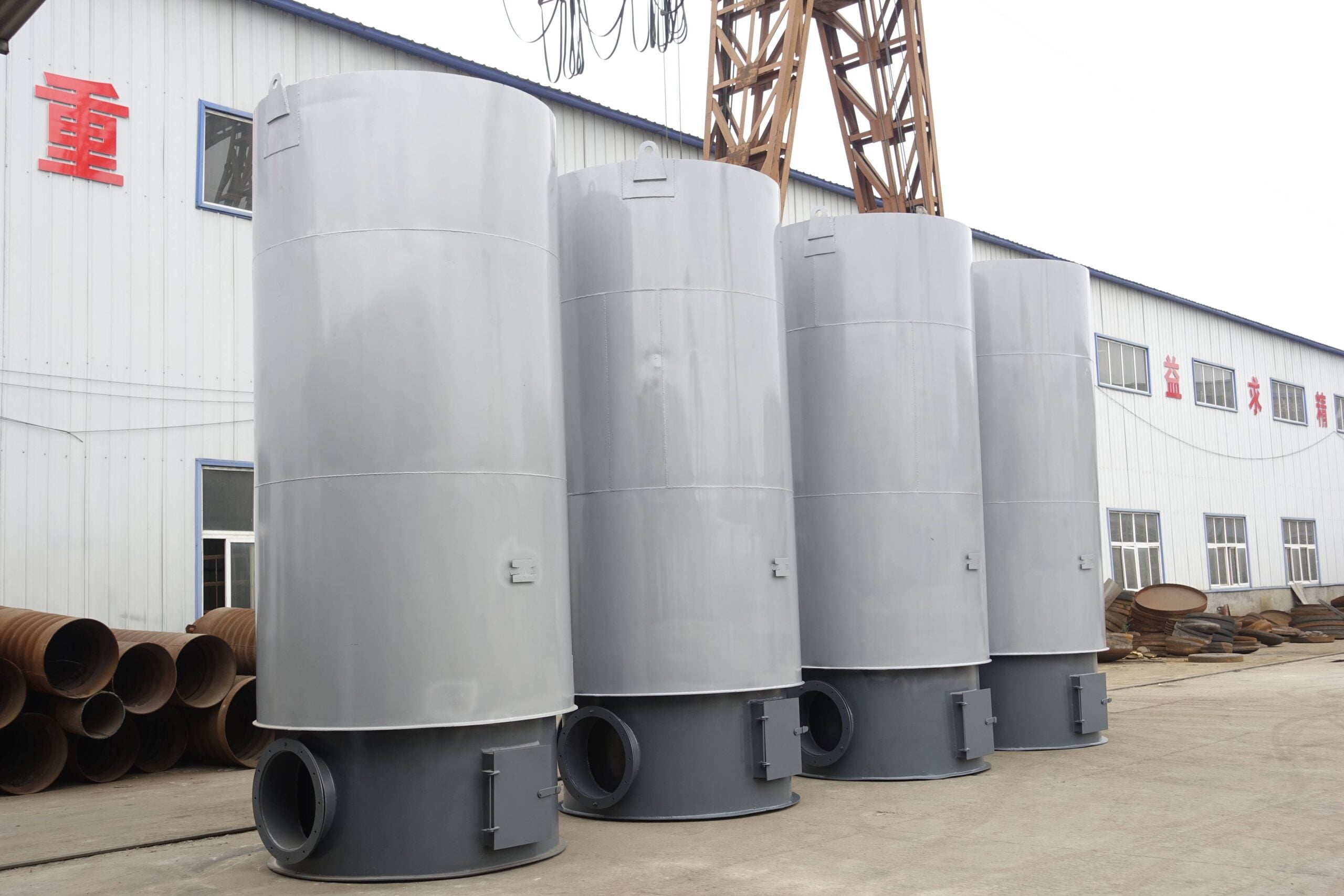
LRF Series — Biomass Hot Air Furnace
200–300°COutlet Temp
0.12–1.4 MWCapacity
70–75%Efficiency
Up to 12,370 Nm³/hAir Volume
Two-pass heat exchange, multi head spiral groove turbulence structure. High-efficiency insulation, small installation space, unchanged working life. Completely separating of the flue gases and combustion air.
WRF Series
Natural Gas / Diesel
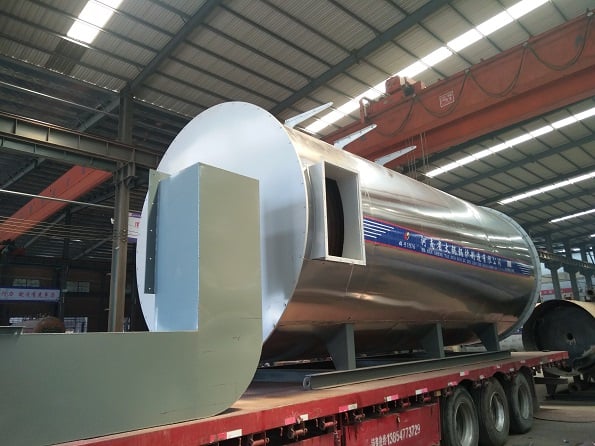
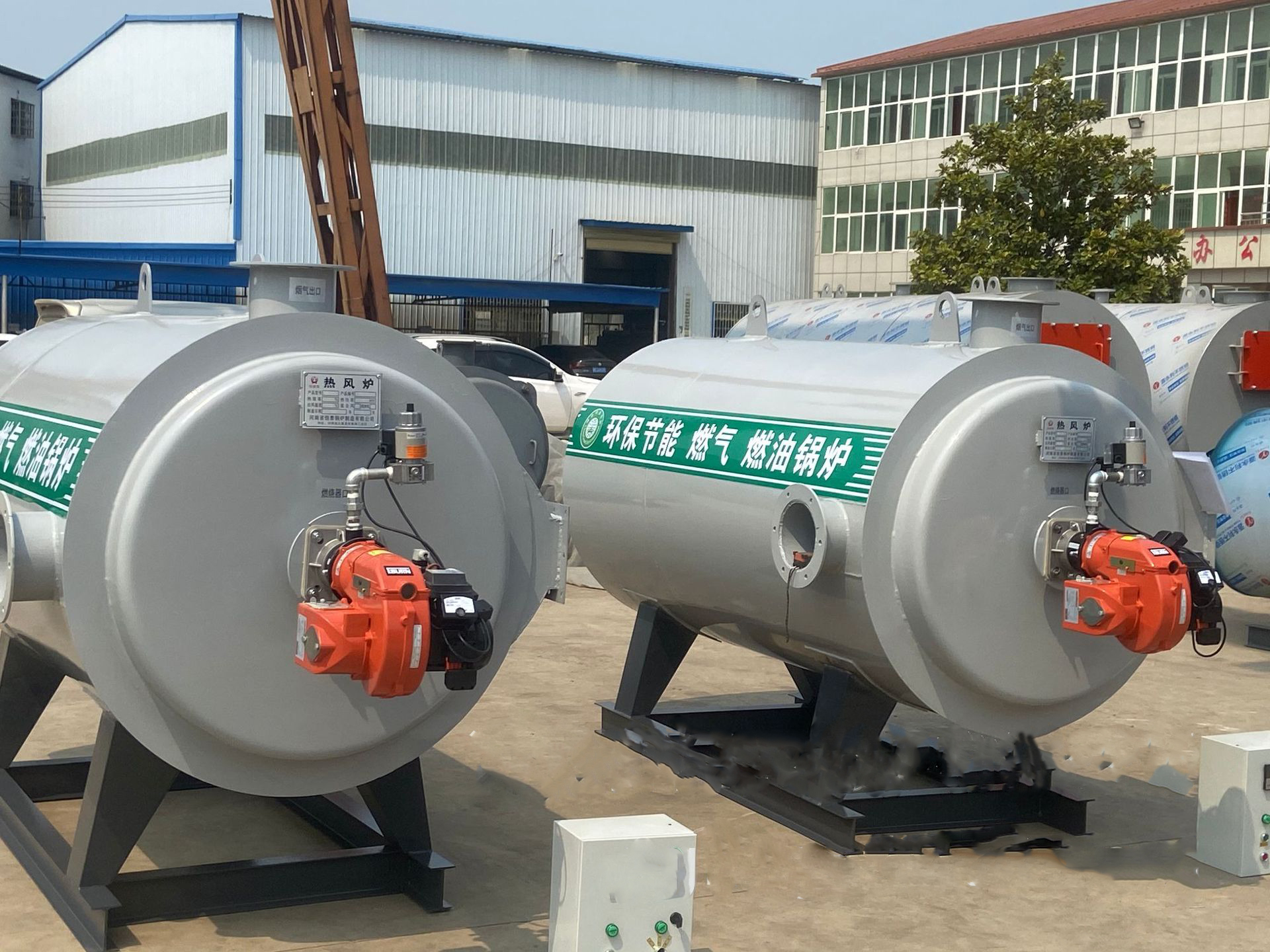
WRF Series — Oil & Gas Fired Hot Air Furnace
120–300°COutlet Temp
Gas / DieselFuel Types
10–15 minStartup
Low NOxEmissions
Uses air as heat carrier in presence of forced circulation. Multi-layered spiral groove heat exchange and turbulence technology. Integrated tank structure for clean heated air output. Intelligent controller with LCD display of temperature, Stepless Speed blower, over-temperature protection, fault alarms. Heat resistant High-Tech steel.
LRF Series — Biomass Hot Air Furnace
The LRF series is designed for plants that have available local biomass feedstock—anywhere from sawdust, rice husks, wood chips, straw pellets, to coal. Its two-pass heat exchange system with spiral groove turbulence design captures the maximum amount of thermal energy possible from the flue gas before it exits the stack. This provides 70% thermal efficiency on the smaller models (LRF-10 through LRF-40) and 75% on the LRF-60 and above, due to the larger volume of the combustion chamber which extends the flue gas path.
Another strong point of the LRF is the mechanical simplicity. It has no sophisticated burner management system, no gas train containing safety shutoff valves and no atomizing nozzles to take care of. Its only moveable part on the air side is the blower motor. This results in a very low operation and maintenance cost high uptime, which is important when you operate on the LRF over 6,000 hours per year.
Practical Insight
Biomass furnaces need a reliable fuel supply chain. If your local biomass feedstock is inconsistent in moisture content, you may see a 5–8% swing in thermal efficiency. We recommend testing your fuel source at 3–4 different moisture levels during commissioning so the operators know what to expect across seasons.
WRF Series — Oil & Gas Fired Hot Air Furnace
The WRF series employs natural gas, or if available, remote bio-gas, as fuel, producing clean hot air through forced draft. Its two stages of firing—low fire for starting-up and feather load, high fire for 100% load—allow for more efficient fuel consumption during partial load operation. Its control system, equipped with LCD display, provides operators with instant data of outlet temperature, flue gas temperature, burner status, and fault information. An intelligent controller automatically adjusts the variable-speed blower to ensure process air stays at a consistent temperature regardless of upstream condition variations.
If the plant has a requirement for rapid start-up, or will operate batch run, with periodical on/off cycling, the WRF is more appropriate. While a gas furnace can reach operating temperature within 10–15 minutes, a biomass furnace takes 30–45 minutes to build a fuel bed and warming up the combustion process. The WRF features a smaller form factor without any fuel storage bin or mechanical feed system. Incorporating a natural gas line connection simplifies the machine installation.
Best For
Batch processes with periodic on/off cycling, plants requiring rapid startup (10–15 min), facilities without biomass storage infrastructure, and applications where compact footprint and low emissions are priorities.
LRF vs. WRF Comparison Table
| Parameter | LRF (Biomass) | WRF (Gas / Oil) |
|---|---|---|
| Fuel | Biomass, coal | Natural gas, diesel |
| Outlet Temperature | 200–300°C | 120–300°C |
| Startup Time | 30–45 minutes | 10–15 minutes |
| Thermal Efficiency | 70–75% | High (gas combustion) |
| Emissions | Particulate + CO₂ | Low NOx, minimal particulate |
| Fuel Cost | Lower (biomass) | Higher (gas/diesel) |
| Maintenance | Ash removal, grate inspection | Burner nozzle, gas train |
| Best For | Continuous 24/7 operations | Batch processes, fast cycling |
| Footprint | Larger (fuel storage needed) | Compact |
| Air Cleanliness | Clean (indirect fired) | Clean (indirect fired) |
Industries & Applications
Industries & Applications

Food Processing & Agricultural Drying
Agricultural drying is the largest application sector for hot air generators worldwide. Grain processing plants use hot air furnaces to dehydrate rice, wheat, corn, and soybeans from yield high moisture levels (18–25%) down to merchandize safe moisture level (12–14%). Tea leaf processing requires exact drying regimen to achieve evenly complete oxidation and dehydration progression. Fruit and vegetable dehydration units use hot air for producing dried mango, apple chip, and tomato granules.
Because of the indirect firing design, the heated air is combustion byproducts free and suitable for consumable product manufacturing. Insulation and combustion chamber separation makes indirect fired hot air generator a leading edge equipment for the food manufacturing process.
18–25% → 12–14%
Tea oxidation
Fruit dehydration
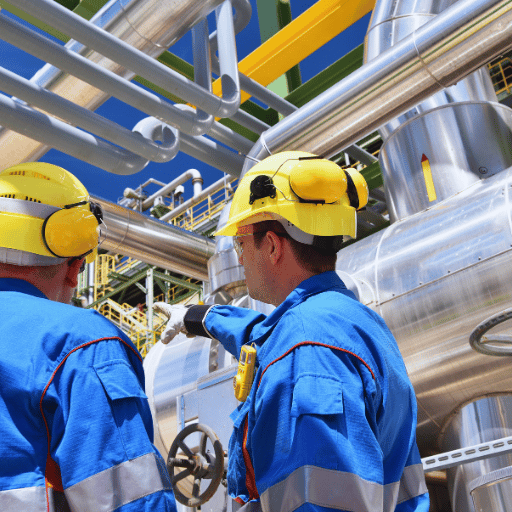
Textile & Chemical Manufacturing
Hot air furnaces are necessary for the fabric drying and heat-setting within textile manufacturing facilities. Setting synthetic fabric fibers at 180–220°C prevents subsequent shrinkage and deformation after final washing. Hot air is also used in chemical manufacturing plants for dried chemicals, coating trays, feed activator, and solvent vapor removal.
In chemical industries, the WRF gas furnace is favored because it has a flexible temperature range (120–300°C) and an instantaneous response, which suits batch chemistry process. Rubber products vulcanization and cross-linking is also reliant on the consistent flow of hot air at specific temperatures.
180–220°C setting
Vulcanization
WRF Series recommended
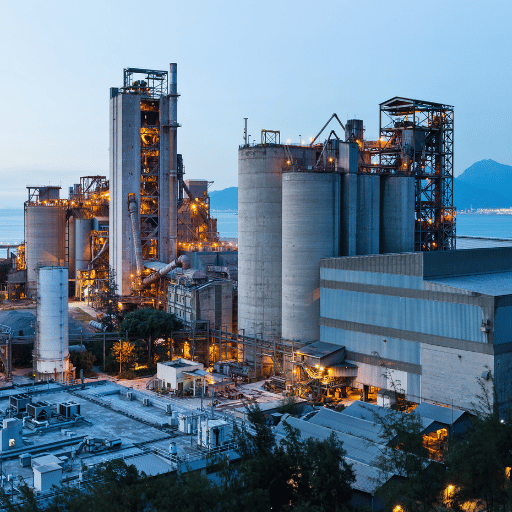
Building Materials & Construction
Via hot air furnaces, the manufacture of building materials benefits from accelerated cure times. Brick and tile manufacturers use tunnel driers fed with hot air. Aggregate in asphalt paving plants is heated and dried before mixing with hot bitumen. Gypsum board manufacturing process uses the large volume hot air for the entire board drying stage.
In the building material industry, the abundant supply of wood waste and by-products often directs the choice to the LRF biomass furnace.
Brick & tile drying
Asphalt aggregate
Gypsum board
LRF Series recommended

Pharmaceutical & Packaging
Pharmaceutical producers use a hot air furnace for fluid bed drying of granulated drugs, tablet coating on perforated pans and sterilization tunnels of glass ampoules and vials. Industry packaging operations use hot air for shrink-wrapping, labels and adhesives for packaging boxes.
These processes require the cleanest maximum output and best tight temperature control. The WRF hot air furnace with its advanced control and variable-blower drives meet the pharmaceutical plant’s need for maximum procedure repetition with maximum manufacturing integrity. In a pharmaceutical setting 2–3°C of air temperature deviation makes all the difference.
±2–3°C precision
Fluid bed drying
Shrink-wrap
WRF Series recommended
Don’t know what hot air oven your industry needs?
Talk to our engineers and we will recommend the correct sized process unit based on required process temperature, airflow, available fuel.
Specifications
Technical Specifications
LRF Biomass Hot Air Furnace Specifications
| Model | Outlet Temp (°C) | Heating (MW) | Air Volume (Nm³/h) | Efficiency (%) | Diameter (mm) | Height (mm) |
|---|---|---|---|---|---|---|
| LRF-10 | 200–300 | 0.12 | 2,198–3,297 | 70 | 1,220 | 2,450 |
| LRF-20 | 200–300 | 0.24 | 3,572–3,847 | 70 | 1,500 | 2,740 |
| LRF-30 | 200–300 | 0.35 | 3,912–5,447 | 70 | 1,750 | 3,500 |
| LRF-40 | 200–300 | 0.47 | 6,445–7,513 | 70 | 1,840 | 3,790 |
| LRF-60 | 200–300 | 0.70 | 6,786–7,532 | 75 | 1,850 | 4,350 |
| LRF-80 | 200–300 | 0.93 | 7,813–8,685 | 75 | 2,100 | 6,395 |
| LRF-100 | 200–300 | 1.17 | 8,867–9,984 | 75 | 2,340 | 6,400 |
| LRF-120 | 200–300 | 1.40 | 10,556–12,370 | 75 | 2,500 | 6,800 |
Selection Tip
In practice, you’ll find that an LRF-60 handles most mid-scale grain drying operations. The jump to LRF-80 only makes sense when your throughput exceeds 15 tons per hour. Oversizing the furnace means you run at partial load, which wastes fuel and accelerates soot buildup on the heat exchanger surfaces.
WRF Oil/Gas Hot Air Furnace Key Parameters
Fuel Types
Natural Gas / Diesel
Outlet Temperature Range
120–300°C
Temperature Adjustment
Continuously Adjustable
Heat Exchange
Multi-Layer Spiral Groove
Burner Type
Two-Stage (Low/High Fire)
Emissions
Low NOx
Controller
Intelligent LCD + Alarms
Safety
Over-Temp Protection + Fault Alarms
Fuel flexibility is also achieved in the WRF heat exchanger, since the single burner assembly can be fitted with either the natural gas or the diesel nozzle. Conversion takes 15 minutes in the field. For a site where the natural gas and diesel supply network are both available; having the dual-fuel option inline ensures uninterrupted operation regardless of the condition of the “other” fuel source.
Construction with advanced heat resistant steels in the combustion chamber and the heat exchanger’s inner wall will prolong life through even the highest heat application.
Case Studies
Case Studies
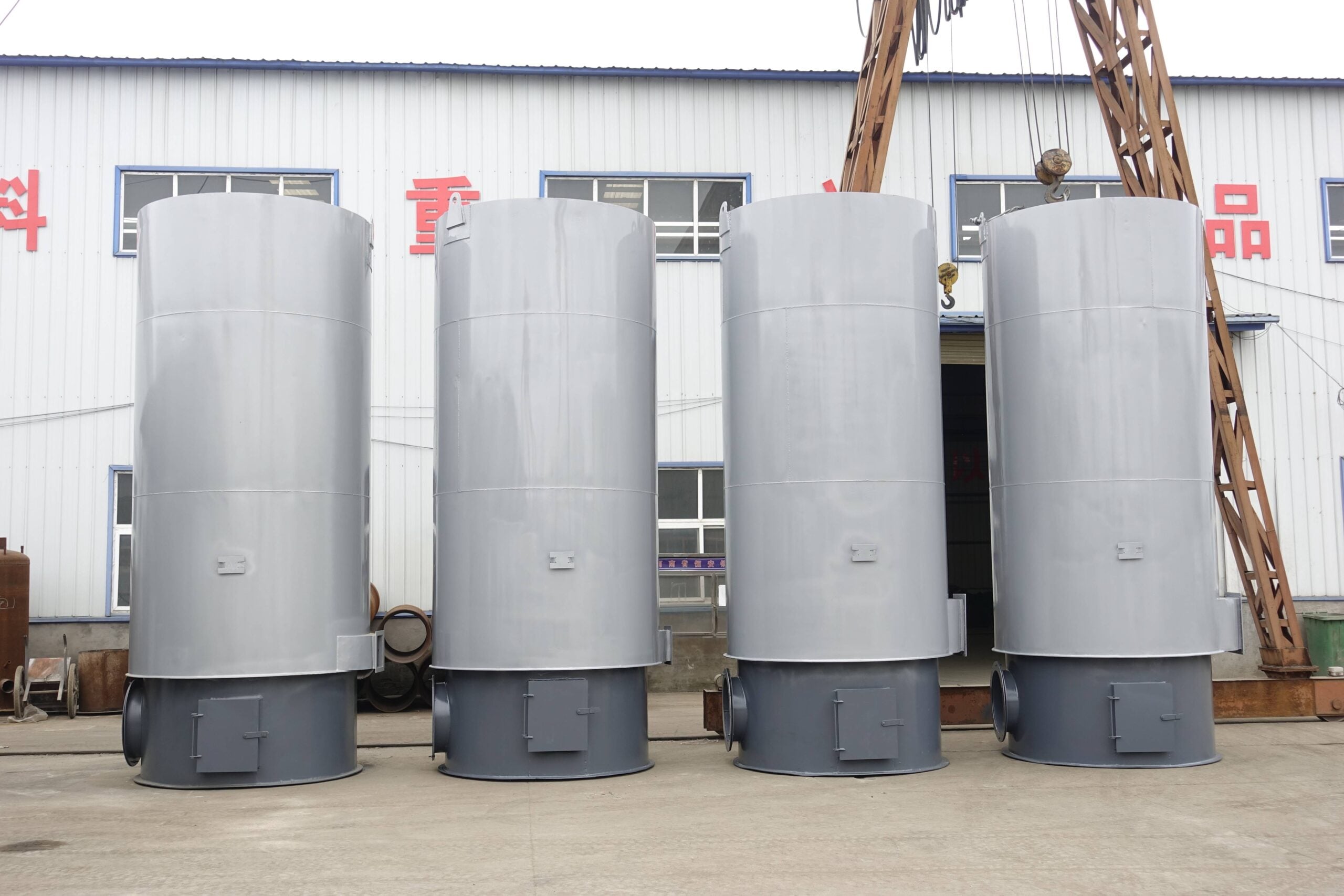
Biomass Drying System for a Grain Processing Plant — 35% Energy Savings
Location: Central Thailand | Product: Rice paddy drying, 12 tons/hour capacity
35%
Energy Savings
$85K → $12K
Annual Fuel Cost
5,800 hrs
Year 1 Operation
12 t/h
Steady Throughput
The Challenge
This rice process plant was using a diesel fired heater – operating at approximately 280°C on the blower output. Annual diesel expenditure exceeded $85,000 and the machine was putting a strain on the company’s balance sheet. The plant was surrounded by rice mills which had no technology outlet for their excess rice husks.
Our Solution — Installed
A Taiguo LRF-60 rated at 0.70 MW, and fired with rice husks from a proximate mill at no charge to the factory. Our biomass unit feeds a flow continuous column dryer through an insulation-lined duct run of 14m length. Airflow calculations indicated that the unit would need to use 7,200 Nm³/h at 240°C, well within the LRF-60 rated range of 6,786–7,532 Nm³/h.
Measured Results
Within a year we were back to report the following figures. Fuel costs reduced from $85,000/year (diesel) to under $12,000/year (rice husk handling and labor), which was a 35% reduction in overall drying process energy costs once the simple increased labor costs are folded into the calculation. Moisture content reduction from 24% to 14% held steady at 12 tons/hour. Operating time accumulated to 5,800 hrs (1st year) with one planned heat exchanger cleanout/ash grate inspection.
Operational Note
Rice husk moisture content varied from 8% in the dry season to 14% in the rainy months. We observed that the thermal efficiency decreased from 75% to about 71% during the wet season. Operators learned to mix stored husks with fresh feedstock to achieve steadier burning—a mass-batching practice that kept the temperature close to the target setpoint (+/- 5°C).
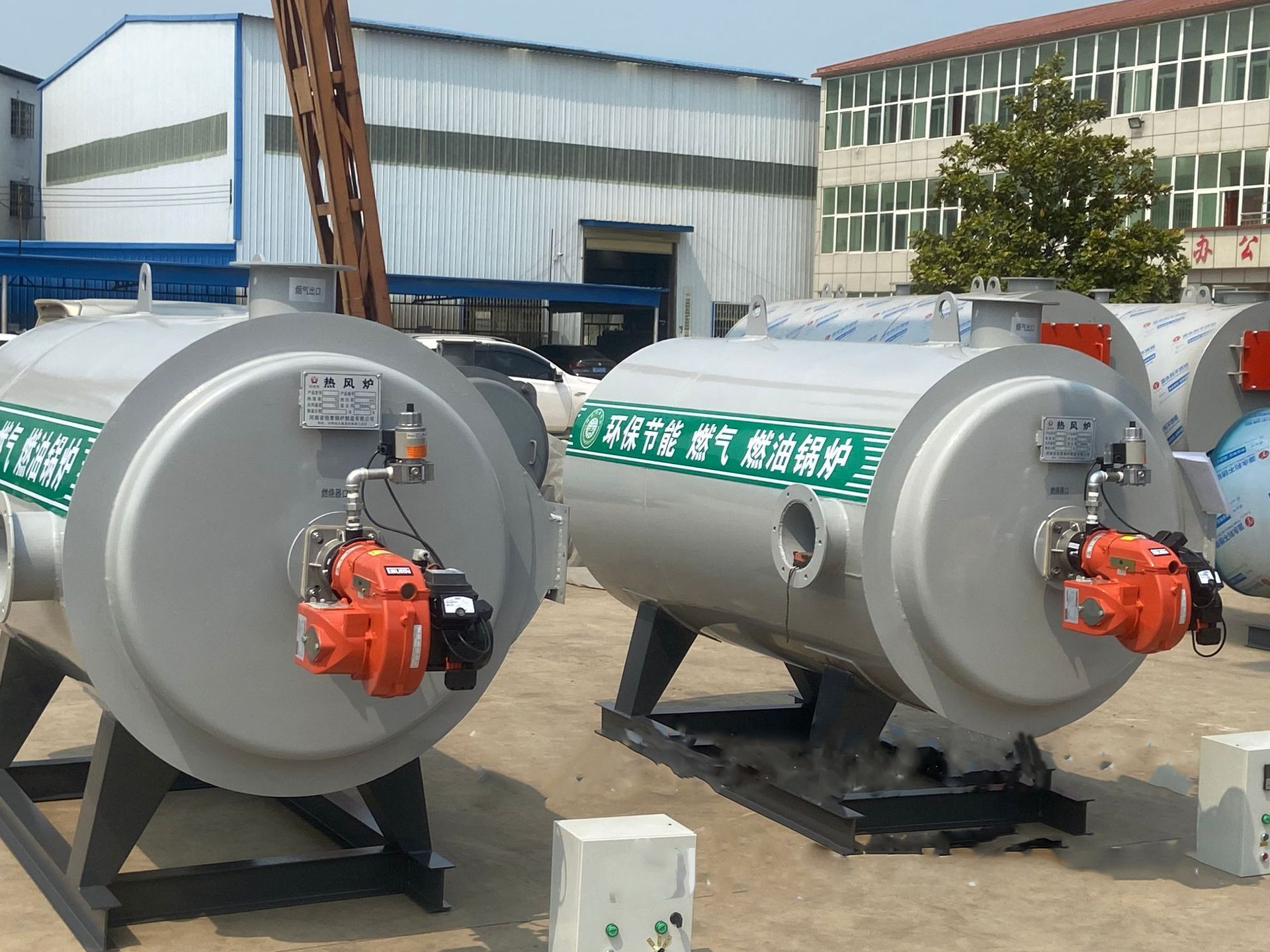
Gas-Fired Hot Air Solution for Textile Manufacturing — 8-Month ROI
Location: Faisalabad, Pakistan | Product: Polyester fabric heat setting on stenter frames
4% → 0.8%
Fabric Rejection
18%
Lower Fuel Cost
12 min
Startup Time
8 mo
ROI Payback
The Challenge
This textile producer has operated aging coal-fired air heaters since early 2000s. Inefficient burners produced smoke and needed continuous adjustments. Temperature fluctuations of 15–20°C resulted in uneven heat setting and a fabric rejection of about 4%.
Our Solution — Installed
Installed here was a WRF series gas furnace running on pipeline natural gas. Its intelligent controller keeps stenter inlet temperature at 195°C with less than 2°C fluctuations. Load changes are managed without overshooting using the two-stage burner. The mill recirculates the furnace’s exhaust to preheat the incoming air, saving on the temperature rise needed from the furnace.
Measured Results
- Fabric rejection rate: 4.0% → 0.8% (fluidized bed heat setting)
- Cost of natural gas per meter of fabric: 18% less expensive than coal
- Time to reach operating temperature: 50 minutes (coal) → 12 minutes (gas)
- Two operators removed from the heat section (no hands-on coal feeding)
- Total ROI payback period: 8 months from commissioning date
Key Lesson
The most important lesson from this project is the value of consistent temperature for heat-sensitive applications. While the coal furnaces may have had comparable efficiencies according to operating data, the uneven temperature delivery was making the mill pay dearly in rejected fabric.
Selection Guide
Choosing the Right Hot Air Generator
| Application | Recommended Series | Temp Range | Capacity Guide | Key Consideration |
|---|---|---|---|---|
| Grain drying (rice, wheat, corn) | LRF (biomass) | 200–260°C | 0.35–1.4 MW | Continuous operation; use local crop waste as fuel |
| Textile heat-setting | WRF (gas) | 180–220°C | 0.3–0.7 MW | Temperature stability within 2°C |
| Chemical powder drying | WRF (gas/diesel) | 120–180°C | 0.2–0.5 MW | Low-temp adjustable; clean air mandatory |
| Concrete curing | LRF (biomass/coal) | 200–280°C | 0.47–1.4 MW | High volume, cost-sensitive; biomass fuel preferred |
| Pharmaceutical tablet coating | WRF (gas) | 120–160°C | 0.12–0.35 MW | Precision control; GMP documentation needed |
| Asphalt aggregate heating | LRF (coal) | 250–300°C | 0.7–1.4 MW | High temp, high volume; fuel cost is primary concern |
| Food dehydration | LRF or WRF | 150–220°C | 0.24–0.93 MW | Indirect fired required; food-safe air output |
If your process (products and heat levels) do not match any of the applications listed, please contact us.
Contact UsQuality Assurance
8-Step Quality Control System
Every Taiguo hot air furnace is subjected to eight formal quality control procedures prior to leaving the factory.
Raw Materials Inspection
Incoming carbon steel plate, corrosion resistant alloy, insulation, and welding rods tested and cut to sample test pieces
CNC Forming & Calibrating
Parts traced, scaled, and machined to CAD drawing specifications
Welding Quality Assurance
All welding performed by qualified welders and checked via x-ray and ultrasonic inspection using qualified procedures and joints
Assembled Body Dimensional Inspection
Checked for fitup and passage of gases before insulation milling
Hydrostatic / Pneumatic Pressure Test
Pressurized to 1.5× design pressure according to application code (ASME / GB) and maintained for the specified period with leakage at zero
Functional & Safety System Test
Control system, blower, burner (WRF), over-temperature safety device, alarms in simulated load test
Surface Finish & Insulation
Outer surfaces coated with corrosion resistant coating; insulation thickness and thermal insulation tested
Final Inspection & Records
Test reports, material reports, operating manual, certificates supplied with the equipment
Hot Air Furnace Engineering Tools
Precision calculators designed for industrial hot air furnace sizing, fuel cost optimization, and model selection.
Sizing
Hot Air Furnace Sizing Calculator
Get precise LRF/WRF model recommendations based on your application area, required temperature, air volume, and fuel source.
Size My FurnaceCost Analysis
Fuel Cost Comparison Calculator
Compare annual and 5-year heating costs across biomass, natural gas, and diesel to find the most cost-effective fuel for your facility.
Compare CostsComparison
LRF Model Comparison Tool
Select up to 3 LRF models side by side to compare heating output, air volume, efficiency, and dimensions at a glance.
Compare ModelsFAQ
Frequently Asked Questions
Yes – modern hot air furnaces are among the most widely used industrial equipment applications. Hot air generators are used to provide a consistent temperature and air flow to drive moisture removal from many products such as grains, timber, textiles, chemicals and building materials. For the high moisture removal demands of large-scale drying applications the LRF series biomass furnace can generate 200-300°C outlet temperatures up to air flows of 12,370 Nm³/h. For handling more sensitive products, the WRF series allows adjustable temperatures down to 120°C. Other application parameters – for example the initial moisture content of your material, the final product moisture content and the desired throughput rate – will influence the size and design of the most suitable dryer.
The service life for a properly maintained industrial hot air furnace is typically 15 – 20 years. Primary factors influencing service life include the quality and condition of the fuel feedstock, operating temperature range, maintenance schedule and material construction (particularly in high wear areas). Taiguo boilers use state-of-the-art heat resistant steel alloys for the hot-air transfer elements, such as the heat chambers and heat exchanger heat exchange tubes. Routine maintenance practices, such as inspection of the refractory liner after approximately 8,000 operating hours, burner calibration, heat exchanger flushing and refractory modifications will ensure a longest possible furnace service life. There are also a range of more detailed issues such as environmental conditions (dust loading, corrosive ambient factors etc.) which will influence the longevity of your specific installation.
AFUE = Annual Fuel Utilization Efficiency. AFUE is a standard North American rating system used only on residential gas furnace and heating system equipment. An oil or gas high efficiency furnace with a 96% AFUE consumes 96 cents of every fuel dollar in to usable heat. However, AFUE is not a rating system for industrial hot air furnace equipment. An industrial furnace operating at its optimum specific throughput rates produces a thermal efficiency measure based on the percentage ratio of heat input over heat out, commonly expressed as a percentage measure. For example, the Taiguo LRF series biomass furnace obtains 70% – 75% thermal efficiency. Customers need to be aware when comparing high efficiency residential fuel-burning equipment, which is rated by AFUE that incorporates seasonal cycling losses, and a continuous running industrial product when comparing an industrial hot air furnace that rate by thermal efficiency. AFUE measures fundamental differences in how equipment operates during its running cycle.
The price of an industrial hot air furnace is determined by the capacity (power rating), fuel type (biomass and gas model variations), materials standards, control system complexity and the installation specifics. Biomass models tend to have a lower proportional fuel cost in comparison to MW power output, but may require further advanced fuel handling system infrastructure that may then be more than offset by the added process cost benefit. Gas-fired unit costs are usually higher for the burner and associated controls, but installation costs are generally less complicated. Other cost factors include freight (due to export manufacturing), chimney and flue-gas treatment processes, fuel storage and feeding systems, and on-site commissioning and start-up. Please consult directly with Taiguo Boiler for a quote specific to your process.
Biomass hot air furnaces have other advantages as well. Fuel cost saving can be significant – biomass feedstock like wood chips, sawdust, rice husks, and other agricultural by-products are 40-60% cheaper per MWh than natural gas or diesel for the same heating value. Your facility will have a lower carbon footprint using bio-fuel as biogenic carbon is not contributing to the overall accumulation of greenhouse gases. Energy saving features in the Taiguo LRF series include high efficiency insulation and small overall size factor, design features compared to gas fired systems include a mechanically simple low power combustion system with fewer moving parts. The main compromise relates to fuel handling – you need the appropriate supply chain and the space for on-site storage that we don’t need with a gas fired system, and farm-yard spare room for periodic ash removal.
The choice of hot air generator depends on five parameters. (1) Required outlet temperature – if below 200°C then WRF low range is more efficient, if 200-300°C then choose a LRF or WRF full range model. (2) Required air flowrate in Nm³/h – this is calculated based on your throughput and your product’s thermophysical properties. (3) Fuel accessibility – check local biomass supply chains against your natural gas pipeline routes, versus your farm property for a diesel tanker drop off. (4) Can you afford to have your air heated indirectly by warm flue gases or do you need direct firing? (5) How long are your process runs – we know that the simple-mechanical biomass design lends itself to long, continual operation, while faster start-up is attractive with gas-fired equipment.
Hot air furnace maintenance schedule is as follows: Daily combustion checks, flue gas temperature calibration, fuel feed calibration (biomass furnaces); Weekly vent blower belt checks, air filter cleaning, burner nozzle checks (gas/oil furnaces); Monthly soot removal from heat exchanger surface, safety interlock testing, temperature sensor calibration; Annually full inspection and cleaning of refractory lining, safety device testing, control calibrations. Industry engineers will tell you that the 8,000 hour service interval is desirable to keep most furnaces operating cost effectively, which can be planned to coincide with the annual plant shutdown.