Get in Touch with Taiguo


![What Is Biomass Energy An Operator's Guide [2026]](https://taiguo-steamboiler.com/wp-content/uploads/2026/05/What-Is-Biomass-Energy-An-Operators-Guide-2026.png)
What Is Biomass Energy? An Industrial Boiler Operator’s Guide
Biomass energy refers to the heat, steam, electricity or liquid fuel created from combustion, gasification, or biological digestion of plant matter, wood waste, crop residues, or animal manure. For the industrial boiler operator, the working definition narrows to how the specification becomes more directed – biomass energy means fuels that can be fired in a stoker, fluidized-bed, or suspension boiler to produce process heat or steam. This guide addresses the types of fuel you will see delivered at your dock, the four conversion pathways your plant may employ, the cost profile in relation to natural gas and oil, the “carbon-neutral” issue regulators repeatedly raise, and the 2025-26 emission regulations that will determine whether your facility passes muster.
Quick Specs — Biomass Energy at a Glance
| Wood pellet HHV (dry) | 18-19 MJ/kg (≈16-20 MMBtu/ton) |
| Pellet moisture (EN PLUS A1) | ≤10% |
| Ash content range | 0.5-3% (woody → agricultural residue) |
| Stoker / FB boiler efficiency | 65-85% (EPA CHP Catalog, CIBO data) |
| US biomass densified fuel price | $239.25/ton (EIA, Dec 2025 domestic average) |
| US biomass share of total energy | ~5% (EIA, 2023; 4,978 TBtu) |
| Industrial sector share of US biomass | 45% (2,225 TBtu — largest sector) |
What Is Biomass Energy?

Biomass energy is renewable energy produced from organic material — also called organic matter — that comes from plants and animals. As an energy source, biomass is older than coal: humans have burned wood for heat for at least 450,000 years. According to the U.S. Energy Information Administration, biomass contributed approximately 5% of total primary energy consumption in the United States in 2023, amounting to 4,978 trillion British thermal units (TBtu).
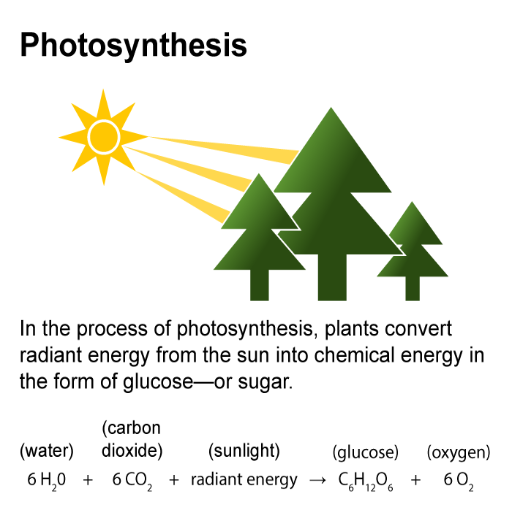
What distinguishes biomass from fossil fuels is the carbon cycle. Fossil fuels like coal, oil, and natural gas contain carbon that was sequestered from the atmosphere millions of years ago. In contrast, biomass holds carbon that was removed from the atmosphere in the recent past – from several years (such as corn or switchgrass) to a few decades (for managed forest pulpwood). When biomass is combusted, the released carbon re-enters the atmosphere, but if the cycle is replenished by planting the same crop, the balance is achieved within an acceptable time frame. In principle, the amount of carbon released by combustion equals the amount absorbed during the plant’s growing phase — which is why biomass is used and accounted on the renewable side of the energy ledger.
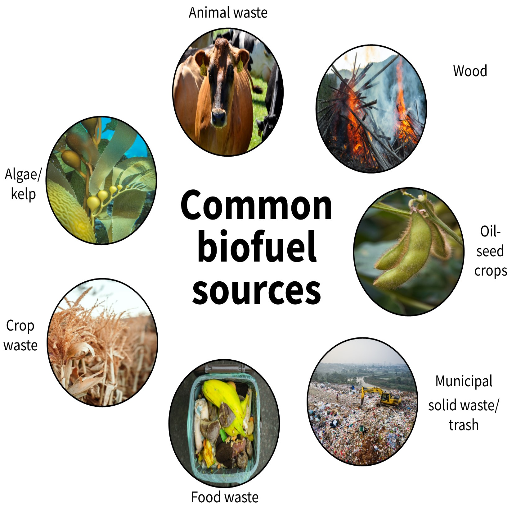
The practical concern for boiler operators is identifying which materials can be used as biomass fuel. The Energy Information Administration classifies sources of biomass into four main categories: (a) wood and wood waste; (b) agricultural crops and residues; (c) the biogenic component of municipal solid waste; and (d) manure or sewage. Since the 1990s, the availability of densification technologies (pelleting, briquetting) has widened the range of biomass fuel types that are economically viable in industrial markets. Where a project includes making its own densified fuel, biomass pellet production equipment from TCPEL belongs to the upstream fuel-preparation scope; the finished pellet specification still needs approval for the boiler's feed and combustion system.
Two facts surprise most newcomers. First, biofuels — liquid ethanol and biodiesel — account for 53% of U.S. biomass energy use, more than wood (39%). Second, the industrial sector consumes 45% of all U.S. biomass, mostly through wood and paper-industry combined heat and power plants that burn process residues on site. Biomass is used across nearly every sector that consumes fossil fuel today, competing on cost, supply locality, and emission profile rather than thermodynamic efficiency.
Is Biomass Energy Renewable? The Carbon-Cycle Reality
Biomass is renewable in time, not instant — and that distinction matters more than the marketing language suggests. Carbon released when you burn a wood pellet today only “neutralizes” once an equivalent volume of biomass regrows. For switchgrass, that takes one growing season. For old-growth forest wood, the IPCC reports recovery can take more than 200 years.
Bioenergy carbon neutrality is questionable and varies according to producer and conversion pathway used and the energy consumed in the process.
This is not necessarily a fringe critique. For each side of the argument there is a healthy collection of peer-reviewed articles. As eco-business.com revealed “many conflict studies map the controversy surrounding forest biomass”, citing dozens of studies for each side of the argument.
The NRDC says the real debate is a question of accounting fraud—if you burn pellets derived from a forest, it takes decades to regrow; but you’re putting out a ton of emissions right now. And Ohio State University researchers have argued that as an entire managed forest system, biomass cycling closes the loop within a working century.
Is Biomass Energy Carbon Neutral?
Carbon neutrality of biofuel remains a “conditional” or “relative” term. It depends on three variables?source of the biomass (waste residue or dedicated forest harvest), path of conversion to liquid ( direct combustion or fermentation to ethanol) and contributor utilization of fossil energy for harvesting/drying/ pelleting and transportation. Short rotation energy crops grown for direct utilization on marginal land as native species tend to be near neutral over a typical one growing cycle.
Transportation of wood pellet fuel from North American forest to European power station however introduces some transportation emissions as well a decades long lag time for regrowth?that is what scientific critics object to. As a power plant operator, the most straight forward way to describe this with regulators would be as “renewable when sustainably sourced” not “carbon neutral”.
📐 Engineering Note — The 50-Year Loophole
If your procurement contract is for pellets coming from a forest of 40 year rotation, your “renewable” carbon math hinges on regrowth completing. Procurement teams are now requiring suppliers to forward chain-of-custody proofs (FSC, SFI, PEFC) of origin and an affidavit of stand age – not because the regulators demand it presently, but because the EU IED 2026 is contemplating doing so.
Where Does Biomass Energy Come From? 5 Feedstock Categories
These five working categories of biomass feedstocks are recognized.It’s important to understand the grouping since the moisture content, ash content, and bulk density are key attributes that cause different industrial firing processes to be selected for this type of fuel without any modifications:
| Category | Examples | Typical Moisture | Industrial Use |
|---|---|---|---|
| Woody biomass | Wood chips, pellets, sawdust, bark, black liquor | 8-50% (pellets <10%) | Direct combustion, CHP |
| Agricultural residue | Bagasse, rice husk, palm kernel shell, corn stover, straw | 10-50% | Onsite combustion (sugar, palm oil mills) |
| Energy crops | Switchgrass, miscanthus, short-rotation willow | 15-50% | Pelleting, gasification |
| Wet biomass | Manure, food waste, sewage sludge | 75-95% | Anaerobic digestion → biogas |
| Municipal solid waste | Biogenic fraction of MSW, landfill gas | varies | Waste-to-energy plants, landfill gas capture |
Operators neighboring food-processing plants, sawmills, sugar refineries, or palm oil estates will typically have the best biomass economics due to the fact a biomass heating system located close to the feedstock production can eliminate the largest component in biomass TCO-transport cost.
What Are 5 Examples of Biomass?
Five examples in the aforementioned groups: (1) wood pellets pressed from sawmill leftovers for use in industrial boilers and residential pellet stoves (2) sugarcane bagasse, a fibrous residual material after juice is pressed out, burned on the spot in sugar factories for process steam and power (3) corn-based ethanol, fermented from starch and blended into vehicle fuel (4) landfill gas, a methane from burning municipal waste, used for power or injected into gas pipes; (5) animal manure in anaerobic digesters at dairy farms for biogas. The first three are distinct types of direct biomass-energy fuels, while the last two are biological conversions to gaseous fuels.
Industrial Biomass Fuels: Pellets, Chips, Briquettes — Operator Specs
Fuel form decides the boiler. Operators balance energy density, fuel-handling complexity, ash logistics, and delivered $/MMBtu cost. Four densified or processed forms typically appear in an industrial buyer’s evaluation: wood pellets, wood chips, briquettes, and agricultural-residue compacts.
| Fuel Form | HHV (MJ/kg, dry) | Moisture | Ash | Bulk Density |
|---|---|---|---|---|
| Wood pellets (EN PLUS A1) | 18-19 | ≤10% | ≤0.7% | 650-700 kg/m³ |
| Wood chips (G30-G50) | 17-18 | 20-50% | 1-3% | 200-350 kg/m³ |
| Wood briquettes | 17-19 | ≤12% | 0.5-1.5% | ~1,000 kg/m³ |
| Bagasse (compressed) | 17-18 | 45-55% | 2-5% | 120-180 kg/m³ |
| Palm kernel shell | 18-21 | 10-15% | 2-4% | 600-700 kg/m³ |
📐 Engineering Note — Pellet Grade Thresholds (ISO 17225-2:2021)
International standards break graded wood pellets into A1 (premium industrial+non industrial), A2 (slightly higher ash and nitrogen), and B (industrial). Ash thresholds are A1 ≤ 0.7%, A2 ≤ 1.2%, B ≤ 2.0% (dry basis). For comparison, the U.S. Pellet Fuels Institute (PFI) sets a single 1.0% ash limit. Above 700°C, high-alkali components in the ash begin to sinter – an established problem operating in extreme case of clinker buildup on grate and superheater fouling. Specifying A1 pellets is the best-known means to keep ash chemistry within operational limits.
Field observation across thousands of biomass installations — including the rice husk, bagasse, wood chip, and palm kernel shell fleets we have shipped — points to ash variability rather than declared moisture as the leading cause of unscheduled outages. Wood chip industrial fuel handling systems tolerate wider density variation than pellet systems but require larger storage volume per MMBtu. Operators evaluating palm kernel shell as biomass fuel should request supplier ash and chlorine certificates batch-by-batch — chloride content above 0.1% accelerates superheater corrosion.
How Biomass Becomes Energy: 4 Conversion Pathways
There are four families of biomass conversion process technology, each aligned to a different feedstock set and product demand specification. Picking the wrong pathway for the given feedstock is the most common technical error in early-scale biomass project definition.
| Pathway | Process Conditions | Best Feedstock | Output |
|---|---|---|---|
| Direct combustion | Open-air, excess oxygen, >800°C | Dry woody / agricultural residue | Heat, steam, electricity (turbine) |
| Gasification | 800-900°C, controlled oxygen/steam | Dry biomass, >20 MW scale | Syngas → electricity, synthetic fuels |
| Pyrolysis | 400-500°C, near-zero oxygen | Dry biomass (R&D / commercial bio-oil) | Bio-oil, biochar, methane |
| Anaerobic digestion | Mesophilic (35°C) or thermophilic (55°C) | Wet feedstocks (manure, food, sewage) | Biogas (renewable natural gas) |
Direct combustion is the workhorse for industrial heat and steam — over 90% of biomass energy flowing through industrial boilers takes this pathway, per EIA sectoral data. Gasification matters at utility scale and for advanced biofuels via Fischer-Tropsch synthesis, but it adds capital cost and operating complexity that rarely pay back below 20 MW. Converting diesel boilers to biomass typically means installing a stoker or fluidized-bed firing system upstream of an existing steam circuit — gasification is rarely the right answer for retrofits.
The 4-Pathway Conversion Matrix — Decision Framework
- IF feedstock is dry woody/agricultural AND scale ≥ 1 t/h → Direct combustion (industrial boiler)
- IF scale > 20 MW AND output is electricity or synthetic fuel → Gasification (syngas turbine or FT plant)
- IF feedstock is wet (manure, food waste, sewage, >75% moisture) → Anaerobic digestion (biogas)
- IF goal is liquid biofuel from solid biomass at R&D or commercial-pilot scale → Pyrolysis (bio-oil + biochar)
Biomass in Industrial Boilers — Where Theory Meets Operations

In practice, “biomass energy” generally refers to direct combustion using an industrial boiler. Three technologies preponderate: grate-stoker, fluidized-bed, suspension or pulverized firing. Each technology’s technical profile and commercially viable capacity range has key distinctions.
| Firing Method | Capacity Range | Fuel Flexibility | Notes |
|---|---|---|---|
| Grate-stoker (water-cooled, vibrating, traveling) | 1-30 t/h steam | Wide — wood chip, hog fuel, agricultural residue | Mechanically simpler; grate heat release ~1.0-1.2 MMBtu/hr-ft² |
| Fluidized-bed (BFB / CFB) | 5-300 t/h steam | Highest — low-grade fuels, mixed feedstocks | Better emission control; lower NOx; bed material costs |
| Suspension (pulverized) | >25 t/h steam | Narrow — finely ground pellet/sawdust only | Used in coal-to-biomass conversions of utility boilers |
Based on EPA Biomass CHP Catalog citing Council of Industrial Boiler Owners data – “the general efficiency range of stoker and fluidized bed boilers is between 65 and 85 percent” – a broader band than gas-fired equivalents because biomass moisture, ash, and fuel variability all drag efficiency down.
Working industrial biomass-fired boiler selection comes down to three matches: feedstock-to-firing-method, capacity-to-process-demand, and emission-control-to-regulation. The key components of a biomass boiler — fuel preparation, combustion zone, ash handling, flue gas treatment — change shape based on which firing method you select. Operators preparing to evaluate options will benefit from understanding how a biomass-fired boiler works from feedstock-receiving to stack outlet before sizing the equipment.
From thousands of biomass projects serving 100+ countries, hundreds of each using DZH (0.5-8 t/h) and DZL (1-30 t/h) grate-fired boilers while serving food processing, textile, CHP applications and even dozens of each SZL (2-45 t/h) double-drum water-tube units used in much heavier industrial duty- the regularity trend emerges: 65-75% of new biomass boiler orders below 30t/h are grate-stoker; fluidized-bed dominates above 50t/h; suspension is just about solely coal-to-biomass utility retrofits.
Advantages vs. Limitations — An Operator’s Honest Assessment

✔ Advantages
- Renewable when harvested responsibly – short-rotation feedstocks recover within one growing cycle
- Storable – unlike wind or solar, biomass can be dispatched on demand
- Drop-in replacement for coal in many existing boilers (with stoker or FB conversion)
- Reduces fossil greenhouse gas emissions versus coal or oil at most accounting horizons
- Local supply chain reduces import dependence in agricultural regions
⚠ Limitations
- Lower energy density than fossil fuels (50% of woody biomass mass is water- NatGeo)
- Higher fuel handling and storage expense – silos, augers, ash conveyors
- Particulates and other pollutant emissions higher than natural gas- requires baghouse or ESP
- Capex premium per MW versus gas- typically 20-40% higher installed cost
- Supply-chain risk- feedstock price mirrors regional crop yields and pellet export demand
What Are 4 Disadvantages of Biomass?
Four negatives an operator must consider: (1) Fuel handling expense- pellet silos, ash augers, and dust suppression increase supply equipment investment 15-25% versus natural gas; (2) Supply-chain dependence- regional feedstock availability dictates fuel cost variation, and US net pellet export status pulls domestic prices upward when European demand spikes; (3) Particulates and NOx emissions- even current biomass boilers emit more PM and NOx than natural gas units, requiring baghouse, ESP, or SCR investment; (4) Higher up-front capex per MW- 20-40% premium versus gas for the equivalent steam capacity.
Cost Reality — Biomass vs. Fossil Fuels per MMBtu
Fuel cost is where biomass economics either work or fail. The U.S. Energy Information Administration Monthly Densified Biomass Fuel Report recorded December 2025 domestic densified biomass sales at $239.25/ton, equivalent to roughly $13-14/MMBtu before delivery. Wood chip costs are typically 40-60% lower than pellets per MMBtu but require larger storage volume and higher moisture handling.
| Fuel | $/MMBtu (US, late 2025-early 2026) | Source |
|---|---|---|
| Wood pellets (densified biomass, domestic) | ~$13-14 | EIA Monthly Densified Biomass Fuel Report, Dec 2025 |
| Wood chips (industrial) | ~$5-8 | Regional industrial supply contracts, 2025 |
| Natural gas (Henry Hub spot) | $2.65-9.86 (2025 daily range) | EIA, “In 2025, U.S. natural gas spot prices…” |
| Central Appalachian coal | ~$3.32 (Feb 2026) | EIA Electricity Monthly Update |
| No. 2 fuel oil (industrial) | ~$15-22 | EIA Heating Oil weekly averages |
Fuel-cost comparison alone misleads. Total cost of operation includes fuel handling labor, ash disposal, emission-control consumables (sorbents, baghouse bags, urea for SCR), and capex amortization premium. Operators evaluating fuel switching should consult our biomass boiler cost guide for total installed cost benchmarks.
Prices used in this section are date-stamped Q4 2025/ Q1 2026 – anyone referencing these figure more than six months post-publication should revise by repulling EIA monthly data.
What’s Changing — 2025-2026 Industry Outlook
Three forces can be expected to reshape the biomass boiler marketplace until 2026 and during the 2030 planning horizon. Operators planning capital projects for this timeframe should follow all three.
Market growth. Biomass boiler system market reached USD 6.0 billion in 2025 and is projected at USD 6.4 billion in 2026, with continuing growth through 2034. Industrial boilers market overall is forecast at USD 24.09 billion by 2034, growing at a 3.66% compound annual rate from 2026. Growth driver: renewable heat policy in Europe and Asia, plus pulp-and-paper sector retrofit cycles in North America.
The primary growth driver is renewal heat policy in Europe and Asia, complemented by North American pulp-and-paper sector retrofit cycles.
Technology — automation. A 2024 IEA Bioenergy Task 32 report on automated biomass boilers documents the shift toward load-following combustion controls, online ash management, and remote monitoring as standard expectations in EU and North American tenders. New industrial biomass installations after 2025 increasingly include feed-rate trim by O₂ feedback, automatic boiler-tube sootblower scheduling, and predictive ash discharge — all serving electricity generation and combined heat and power systems with tighter availability targets.
Regulation – emission tightening. EU IED 2026 review is forecast to push down NOx and PM limits for medium combustion installations. In the US, EPA Boiler MACT continues to apply different existing-vs new unit limits. Operators retrofitting biomass boilers in 2025-2026 generally face the more stringent newunit limits for HCl, PM, mercury and CO.
Long-term pellet offtake contracts (3- 5 year horizon) are also gaining in popularity as wood pellet supply solidifies and US net-export position (8.6mt in 2023, EIA) drives local prices up amid European demand.
What operator needs to put into action: (1) Audit existing emission permit in consideration of new-unit Boiler MACT or IED 2026 draft thresholds prior to any retrofit scoping, (2) Lock multi-year pellet price if fuel portfolio is now depending heavily upon densified imports, (3) Require automated combustion controls as baseline for all newbuild boiler purchase, retrofit is 2–3 times the cost.
Frequently Asked Questions

Q: What is meant by biomass energy?
View Answer
Biomass energy is heat, steam, electricity, or liquid fuel produced from organic material — plants, wood waste, agricultural residues, animal manure, or the biogenic fraction of municipal solid waste. Energy is released by direct combustion, gasification, pyrolysis, anaerobic digestion, or fermentation to biofuel. Per the EIA, biomass supplied roughly 5% of U.S. total primary energy in 2023.
Q: How is biomass energy used to generate electricity?
View Answer
Solid biomass is burned in industrial boilers (grate-stoker, fluidized-bed, or suspension firing) to produce high-pressure steam, which drives a turbine and generator — same Rankine cycle used by coal plants. Wet biomass goes through anaerobic digestion to produce biogas, which is then burned in a reciprocating engine or turbine for electricity generation. Gasification feeds synthesis gas to gas turbines or fuel cells. Stoker and fluidized-bed biomass boiler thermal-electric efficiency is 65-85% (EPA CHP Catalog) — the same band that applies to combined heat and power configurations in pulp and paper mills.
Q: Is biomass energy efficient compared to fossil fuels?
View Answer
By unit-mass, no – biomass has 30-50% less energy content than coal and more than 50-70% less than oil or gas. Boiler thermal efficiencies are correspondingly lower (65-85% range vs. 80-95% for natural gas). Biomass wins on lifecycle carbon and on local-supply economics, not thermodynamic efficiency.
Q: Is biomass energy expensive?
View Answer
In December 2025, domestic wood pellets averaged about $239.25/ton (EIA), or roughly $13-14/MMBtu — more expensive than natural gas at typical Henry Hub prices but competitive with No. 2 fuel oil. Wood chips and on-site agricultural residues (bagasse, rice husk) can be significantly cheaper, at times under $5/MMBtu, depending on transport distance.
Q: Is biomass energy reliable for industrial boilers?
View Answer
Yes — when fuel quality is specified and procurement is disciplined. Field experience points to fuel ash variability rather than declared moisture as the dominant cause of unscheduled outages in stoker-fired biomass boilers. Specifying ISO 17225-2 A1 pellets, requiring batch-by-batch ash and chloride certificates, and sizing storage for 7-14 days operation cover most reliability risks.
Q: Which countries use biomass energy the most?
View Answer
On a global basis, biomass is predominantly consumed in low- and middle-income countries for residential cooking and heating — over 2 billion people use biomass daily, per National Geographic. At industrial scale, the EU (Sweden, Finland, Denmark, Germany, UK), the US (wood/paper sector CHP), Brazil (sugarcane bagasse), and India and Southeast Asia (rice husk, palm kernel shell) are the prominent markets. Sweden derives more than 30% of total energy from biomass.
Q: Does biomass energy emit carbon dioxide?
View Answer
Yes — burning biomass emits CO₂ at the stack. Whether that CO₂ counts as “net new” depends on whether equivalent biomass regrows on the timeline of the accounting framework. Per IPCC AR6 WG3 Chapter 6, biomass carbon neutrality is debated and conditional on the source, conversion pathway, and energy used in production.
About This Analysis
This biomass energy primer reflects what we have observed across 5,000+ biomass-boiler deployments in 100+ countries since 1976 — fuel-mix patterns from rice husk in Southeast Asia, bagasse in Latin America, wood chip in North America, and palm kernel shell in West Africa. Fuel specifications, ash thresholds, and capacity-tier guidance in this guide come from our DZH, DZL, LHG, and SZL boiler fleet operating data combined with ISO, EPA, and EIA published references. We are an ASME S+U Stamped manufacturer; we are not a research institution.
References & Sources
- Biomass Explained – U.S. Energy Information Administration (last updated July 30, 2024)
- Monthly Densified Biomass Fuel Report – U.S. Energy Information Administration
- Biomass Energy – National Geographic Education
- IPCC AR6 Working Group III, Chapter 6: Energy Systems – Intergovernmental Panel on Climate Change
- ISO 17225-2:2021 Solid Biofuels – Fuel Specifications and Classes (Graded Wood Pellets) – International Organization for Standardization
- Biomass Combined Heat and Power Catalog of Technologies – U.S. Environmental Protection Agency
- Low Emission Biomass Combustion in Automated Boilers (Task 32, 2024) – IEA Bioenergy
Related Articles
Planning a biomass boiler project? Get factory-direct sizing and fuel-compatibility analysis from a 50-year ASME S+U Stamped manufacturer.