Get in Touch with Taiguo



When plant engineers assess electric steam generation, the first path of the decision tree always branches to electrode boilers and resistance boilers. Both types of boilers convert electricity into heat, but they do so by fundamentally different means—and that difference informs which best suits your plant’s load profile, its electrical capacity, and its water quality characteristics.
This paper discusses working principles, capacity ranges, efficiencies, water quality specifications, and a practical decision framework. When you reach the end, you’ll know which of the two varieties deserves a place in your boiler room.
Electrode Boiler vs Resistance Boiler: At a Glance

The key difference is how the equipment converts electricity to heat. An electrode boiler creates heat by passing electrical current directly through water. A resistance boiler creates heat by passing electrical current through a resistant conductor first, then transferring that heat to the water. It seems like a subtle distinction, but this one difference cascades through capacity, water quality, and maintenance requirements.
| Criterion | Electrode Boiler | Resistance Boiler |
|---|---|---|
| Working Principle | Current flows through water — water acts as the resistance medium | Current flows through metal heating elements; elements heat water |
| Operating Voltage | 4,160 V – 13,200 V (high voltage, direct grid connection) | 208 V – 600 V (standard electrical supply) |
| Capacity Range | 800 kW – 50,000+ kW | 10 kW – 5,000 kW |
| Load Control | Near-instant 0–100% via VFD / water level adjustment | Step control — element banks switched sequentially |
| Water Quality | Strict — conductivity must stay within a controlled range | Standard boiler feed water (softened water acceptable) |
| Best Application | > 4 MW industrial; grid demand-response; large-scale steam | < 5 MW commercial or industrial; simpler infrastructure |
How an Electrode Boiler Works

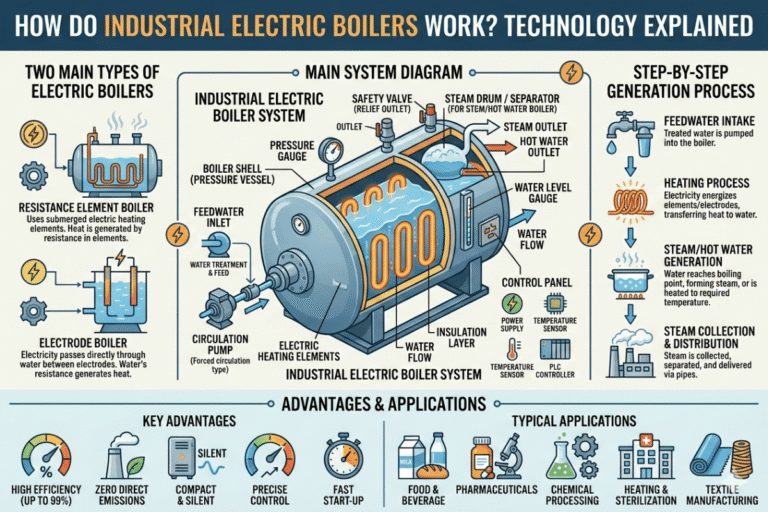
An electrode boiler creates steam by passing high-voltage electrical current directly through water. Water acts as the resistive load—dissolved ions conduct the current from electrode to electrode through the water body, converting electrical energy to heat in extremely efficient IR (Joule) form, creating an entire body of superheated water directly between the electricity and the steam. Direct heating like this renders electrode boilers some of the most efficient steam generators on earth: with thermal efficiencies approaching 99.9%.
Here is the sequence inside an electrode steam boiler:
- High-voltage input lines (4,160 V to 13,200 V) are brought directly into an electrode boiler; the lines connect to an array of electrodes situated inside a sealed pressure vessel.
- Water streams from the inlet onto active electrodes—the DC current energizes the electrodes, which transfer the current through the water to complete the circuit.
- Water conducts the current by way of dissolved ions, creating path for the electrical current via the water itself.
- Direct IR (Joule) heating of the water itself creates steam directly and rapidly without intermediary surfaces—rise in water temperature is rapid because no additional surfaces need to be heated.
- Water level height, or the amount of water contacting the electrodes, determines output. Greater water contact means greater current flow, more heat, and greater output.
~99.9%
Thermal Efficiency
50 MW+
Maximum Capacity
100%
Continuous Turndown (VFD)
Instead of subjects themselves to an ON- or OFF- duty cycle, control of feedwater flow and geometry is achieved by a VFD operated pump or a mechanically adjustable regulation screen to give 100% turndown ratio down to virtually no load.
Speed and precision from this direct heating method are an advantage: the electrode boiler adjusts the heat it delivers by changing water flow geometry, rather than by turning physical elements on or off. This enables quick response to load changers, make rapid adjustments, and regulates output precisely—desirable traits in grid demand response applications, where power plants are asked to shave or add megawatts within seconds.
💡 Pro Tip
However, one caveat: the water must maintain a precisely controlled range of conductivity; if conductivity is too low (water so pure that current fails to take) the electrical load remains too high due to high resistance. If too high, the current is uncontrolled, and the electrodes damage themselves in the process of trying to keep up with demand. Because of this and the additional complexity involved in electrodes, every electrode boiler plant installation requires a water-management system integral to the boiler water circuit, which resistance boilers do not.
Zegbrk_0011.
Electrode boilers connect directly to the high-voltage grid; 4.16 kV, 6.9 kV or 13.2 kV voltages are standard. At large capacities, electrode steam generators bypass the need to install separate step-down transformers, or to have distribution busbars installed as well—a saving in total plant cost and space.
How a Resistance Boiler Works

Resistance boiler – a resistance boiler heats water electrically via the use of metal alloy ‘resistance’ elements – usually nickel-chromium alloy – submerged as immersion elements inside the boiler vessel. When the element draws electrical current through it, the electrical resistance of the alloy material heats the element, then transfers that heat from the element surface to heat the water and produce steam or hot water.
The operating sequence:
- Standardvoltage electrical supply (208 V to 600 V) runs to element banks inside an ASME-rated pressure vessel.
- Electrical current is drawn through the resistance elements. Each element heats through thermal conduction at its surface – water is heated via the element surface; electricity and water are not directly joined in the same circuit path.
- Output is generally controlled by switching the resistance element banks on or off in a repeating pattern designed to spread use evenly across the elements (“first on/first off” method).
⚠️ Common Misconception
Resistance boilers are often referred to as large kettles – which frankly does a disservice to their engineering and design. These are heavy-duty, industrial, pressure vessels that contain a bank bundle-style elements capable of running at pressures of 1,750 PSI. These use a very straightforward development of off-the-shelf technologies.
Resistance boilers’ biggest draw is the sheer simplicity of the infrastructure necessary to install and operate. It runs on a standard electrical connection without the need for high-voltage switchgear, dedicated substations, or water conductivity management systems. For plants with existing 480 V or 600 V distribution, a resistance boiler is a very simple electrical project. It also supports more easily attainable maintenance; elements are readily removed and replaced under normal industrial lockout precautions, even without the high-voltage clearance props.
Capacity is the primary limiting factor for resistance boilers. They may be operated at capacities ranging up to about 4 MW efficiently. Beyond that, the number of elements, contactors, fuses, and distribution busbars on the electrical system becomes very difficult to practically produce. Large amounts of amperage also make developing the necessary transformers and switchgear prohibitive in cash cost. It is for that principal reason that technology such as the electrode boiler was created to produce steam at that capacity.
Capacity, Output & Scalability Compared
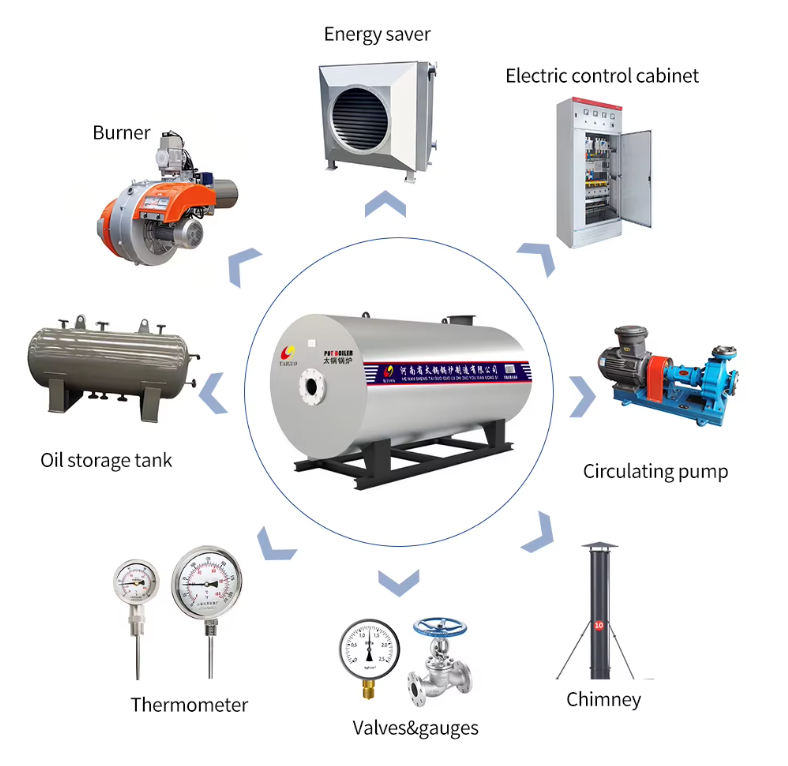
The capacity ranges for resistance and electrode type boilers don’t have much practical overlap – They serve different parts of the overall industrial and commercial heating markets. Steam flow rate, ramp-up speed to full capacity, and the ability to scale beyond 4 MW are where their practical differences are pronounced.
| Feature | Electrode Boiler | Resistance Boiler |
|---|---|---|
| Capacity Range | 800 kW – 50,000+ kW | 10 kW – 5,000 kW |
| Steam Output | 2,700 – 167,000+ PPH | Up to approx. 22,000 PPH |
| Load Modulation | Continuous 0–100% (VFD-driven) | Stepped (sequential element switching) |
| Ramp to Full Load | Near-instantaneous | Several minutes (thermal mass of elements) |
| Scalability Beyond 4 MW | Standard — direct high-voltage grid connection | Complex and costly — multiple transformers, busbars required |
| Hot Water / Hydronic Output | Some configurations; primarily steam | Both steam and hot water across full range |
In many manufacturing plants and more advanced industrial operations, where the desire to produce a large volume of hot water on an around-the-clock basis, an electrode boiler actually delivers a practical advantage for the plant; it has the ability to generate this capacity and rate of output in a much smaller footprint than a traditional fueled boiler would require. Conversely, in any commercial building, a small food-processing operation, or a growing production business, a resistance boiler provides high-volume steam without the substantial high-voltage electrical infrastructure investment or rigid water quality management requirements that come from such large-scale equipment.
Compare specific capacity configurations for your manufacturing application and facility by utilizing our full selection of industrial electric boilers – based upon both electrode and resistance types within all industrial and commercial output ranges.
Efficiency, Operating Cost & Emissions
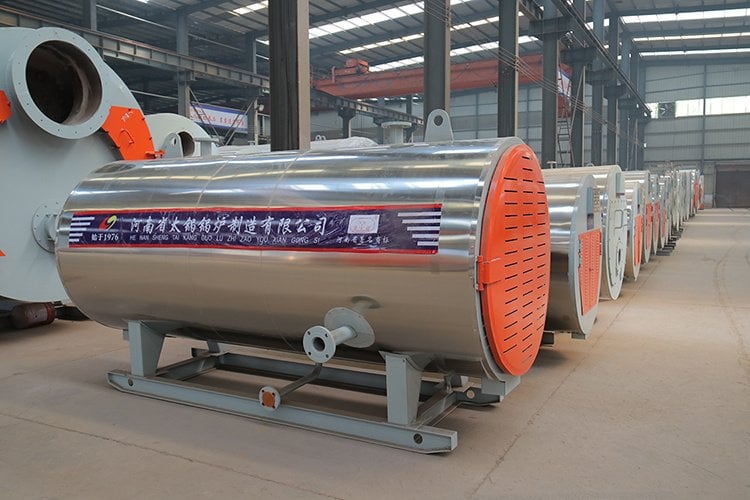
On paper, both electric heating technologies look nearly identical in thermal efficiency. In practice, total operating cost depends on factors beyond the efficiency rating — particularly what water treatment, electrical infrastructure, and maintenance the surrounding system requires.
95–100%
Electric Boiler AFUE (U.S. DOE)
70–85%
Typical Gas Boiler Efficiency
Zero
Direct On-Site Emissions
According to the U.S. Department of Energy, electric boilers carry an Annual Fuel Utilization Efficiency (AFUE) of 95% to 100% — significantly above the 70–85% typical for well-maintained gas boilers. Unlike gas boilers, electric steam boilers produce no exhaust, no flue gases, and no direct combustion emissions on-site, which aligns with most facility decarbonization programs. Where fuel-fired systems lose heat up the stack, electric boilers lose energy only through minor radiant heat from the vessel surface — a negligible fraction.
Where electrode and resistance boilers diverge on operating cost is in the systems surrounding them:
- ✔
Water treatment (electrode): Ongoing cost for conductivity monitoring, chemical dosing, and blowdown control. This is a recurring operating cost that resistance boilers generally avoid. - ✔
Element replacement (resistance): Nickel-chromium heating elements degrade over time, particularly in hard-water conditions. Replacement cycles of 2–5 years are typical, depending on water hardness and how aggressively the boiler cycles. - ✔
Infrastructure cost (electrode): High-voltage switchgear adds capital cost at installation. At large scales, this is offset by not needing the step-down transformers and heavy bus-distribution gear that resistance designs at equivalent capacity require. - ✔
Demand-response revenue (electrode): Because electrode boilers can reduce or shed electricity consumption within seconds, they can participate in grid demand-response programs. This revenue stream can partly offset electricity cost — a benefit resistance boilers rarely qualify for due to their stepped control response.
One grid-level point to factor in: the electricity your boiler consumes determines your net emission footprint. Where your grid draws substantially from renewable or nuclear generation, an electric steam boiler can drive meaningful fuel and emission reduction. In regions with a high proportion of natural gas or coal-fired power, the net reduction is smaller — though most industrial operators expect grid carbon intensity to decrease over time as renewable capacity grows.
Installation, Maintenance & Water Quality Requirements
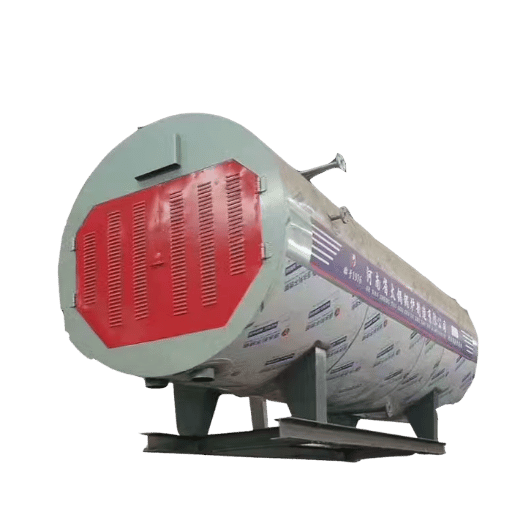
For most plant engineers, the installation and long-term maintenance requirements are where electrode and resistance boilers diverge most sharply in practice. For most engineers, the table below covers the key factors side by side.
| Factor | Electrode Boiler | Resistance Boiler |
|---|---|---|
| Electrical Supply | High voltage (4.16–13.2 kV); may require dedicated substation | Standard (208–600 V); connects to existing plant distribution |
| Feed Water Quality | Strict — electrical conductivity must stay in a controlled band; demineralization often required | Standard boiler feed water — softened water is acceptable |
| Water Treatment System | Conductivity monitor + chemical dosing + blowdown control system | Water softener usually sufficient; simpler overall |
| Primary Maintenance | Electrode inspection; boiler water blowdown; conductivity system upkeep | Heating element replacement; limescale removal from element surfaces |
| Footprint per kW | Smaller — high-voltage design is more compact per unit of output | Larger at equivalent high capacity; more components required |
| Maintenance Safety | High-voltage lockout procedures required — more specialist access | Safer for plant staff — standard industrial electrical lockout applies |
⚠️ Field Mistake: Wrong Water for Electrode Boilers
The most common installation error with electrode boilers is running them on untreated or lightly softened municipal water. Municipal water conductivity is both too variable and, in most locations, too high for electrode boiler operation — leading to uncontrolled current draw, accelerated electrode corrosion, and unpredictable shutdowns. Electrode boilers need a dedicated water treatment circuit that maintains conductivity within a precise operating band. According to Yokogawa’s boiler conductivity guidance, blowdown control and conductivity monitoring are non-negotiable — the level of control required for reliable electrode boiler operation.
Feed water management also shapes long-run costs. Electrode boilers need regular blowdown to reduce dissolved solid concentration as evaporation occurs and minerals accumulate — this controls conductivity and protects electrode surfaces. Resistance boilers need less aggressive blowdown management, but pay a different maintenance cost: element surfaces in hard-water areas collect calcium and magnesium deposits over time, which decrease thermal efficiency and eventually require element replacement.
Which Is Right for Your Plant? A Decision Framework
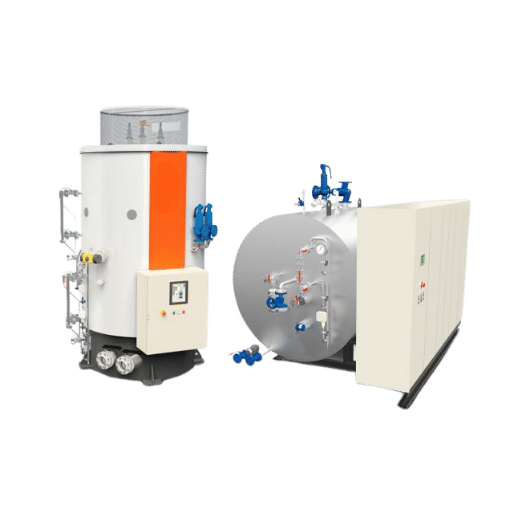
Neither boiler type wins categorically. The right solution depends on your plant’s specific operating conditions, existing electrical infrastructure, and steam demand profile. Here’s a practical framework to select between them:
| Plant Scenario | Choose | Primary Reason |
|---|---|---|
| Steam demand > 4 MW; large industrial or utility site | Electrode | Resistance becomes impractical at this scale; electrode direct grid connection is more compact and controllable |
| Small-to-medium facility (< 2 MW); standard electrical supply already in place | Resistance | Lower capital cost, simpler installation, no high-voltage infrastructure or strict water treatment required |
| Pharmaceutical, food processing, or lab — sensitive or regulated application | Resistance | Simpler water quality management; no conductivity band control adds complexity to regulated process environments |
| Grid demand-response participation; need rapid megawatt-scale load shedding | Electrode | Near-instantaneous 100% turndown makes electrode boilers suitable for frequency response and demand-response programs |
| Commercial HVAC or district heating (< 4 MW hydronic loop) | Resistance | Resistance handles hot water and steam and hot water loops without the high-voltage infrastructure overhead |
Five Questions to Answer Before You Select
- What is your peak and average steam demand in kW or MW?
- What voltage supply is currently available at your site (or what can your utility provide)?
- What are your water quality conditions — hardness, baseline conductivity?
- Do you need continuous load modulation, or is stepped control acceptable for your process?
- Is grid demand-response or flexible electricity purchasing part of your energy strategy?
Our engineering team at Taiguo works through these variables regularly across industrial and commercial boiler applications. If your load profile or site conditions aren’t clear-cut, a specification review before procurement saves significant cost down the line.
Frequently Asked Questions
Q: What is the difference between an electric boiler and an electrode boiler?
View Answer
“Electric boiler” is a broad category that covers any boiler using electricity as its heat source. An electrode boiler is a specific type of electric boiler that passes high-voltage current directly through water — using the water itself as the resistive medium. Resistance boilers are another type of electric boiler that use submerged metal heating elements instead. The two types of electric boilers differ in voltage requirements, capacity ranges, load control method, and water quality demands.
Q: How does an electrode boiler work?
View Answer
An electrode boiler generates steam by conducting high-voltage electrical current (typically 4,160 V to 13,200 V) directly through water. Dissolved ions in the water carry the current from electrode to electrode through the water body. The Joule heating produced (I²R) raises water temperature rapidly and generates steam. Output is controlled by adjusting how much water surface contacts the energized electrodes — via water level management or a VFD-driven pump — allowing near-instantaneous modulation from 0% to full load.
Q: Which type of electric boiler has lower maintenance costs?
View Answer
It depends on scale and water conditions. Resistance boilers have lower installation complexity — the main recurring cost is heating element replacement, often every 2–5 years depending on water hardness and load cycles. Electrode boilers have no elements to replace, but require ongoing water quality management: conductivity monitoring, chemical dosing, and blowdown control add to operating costs. At large capacities (above 4 MW), electrode systems often carry lower total maintenance costs per unit of output, because the element replacement problem doesn’t exist and the boiler design is simpler per megawatt.
Q: How do rising electricity prices affect the choice between electrode and resistance boilers?
View Answer
Higher electricity prices affect both types equally in terms of energy input cost — both convert electricity to heat at near-identical thermal efficiency. The key differentiator is that electrode boilers can participate in grid demand-response programs, where operators are compensated for shedding load during peak grid demand. This revenue stream can meaningfully offset electricity costs. According to Sympower’s analysis of e-boiler demand response, the ability to rapidly modulate output is what makes electrode boilers attractive for grid flexibility programs. Resistance boilers, with their stepped control, rarely qualify for this type of arrangement.
Q: What water quality is required for electrode boilers to operate efficiently?
View Answer
Electrode boilers require water with controlled electrical conductivity. The conductivity must stay within a specific operating range: too low (highly demineralized or purified water) and insufficient current flows to generate the target heat output; too high and excess current creates heat buildup, electrode damage, and erratic steam generation. Industrial electrode boiler installations require a dedicated water treatment system — typically including partial demineralization or softening, chemical dosing, and controlled blowdown — to keep boiler water conductivity in the correct band. Resistance boilers have no equivalent requirement; they operate reliably on standard softened boiler feed water.
About This Comparison
This is a product information pack showing the kinds of technical assessments the Taiguo engineering team make when defining industrial electric steam boiler specifications for industrial clients in production processes, chemical industries and district heating schemes. Electrical capacity tables and voltage specifications are from published equipment literature and checked against the U.S. DOE, Lawrence Berkeley National Laboratory and other industry literature. We certainly don’t prescribe one technology or use – the correct boiler depends on the site conditions, and we go through your proposed load profile before you commit to a specification.
References & Sources
- Furnaces and Boilers – Energy Efficiency Information – U.S. Department of Energy
- Replace Conventional Boiler with Electric Boiler – IAC Decarb Tipsheet 3 – Lawrence Berkeley National Laboratory (U.S. DOE)
- E-Boilers and Demand Response: How It Works – Sympower
- Conductivity Measurements for Boiler Blowdown – Yokogawa Electric Corporation
![The Complete Guide to Industrial Electric Boilers [2026]](https://taiguo-steamboiler.com/wp-content/uploads/2026/03/The-Complete-Guide-to-Industrial-Electric-Boilers-2026-768x512.png)