Get in Touch with Taiguo


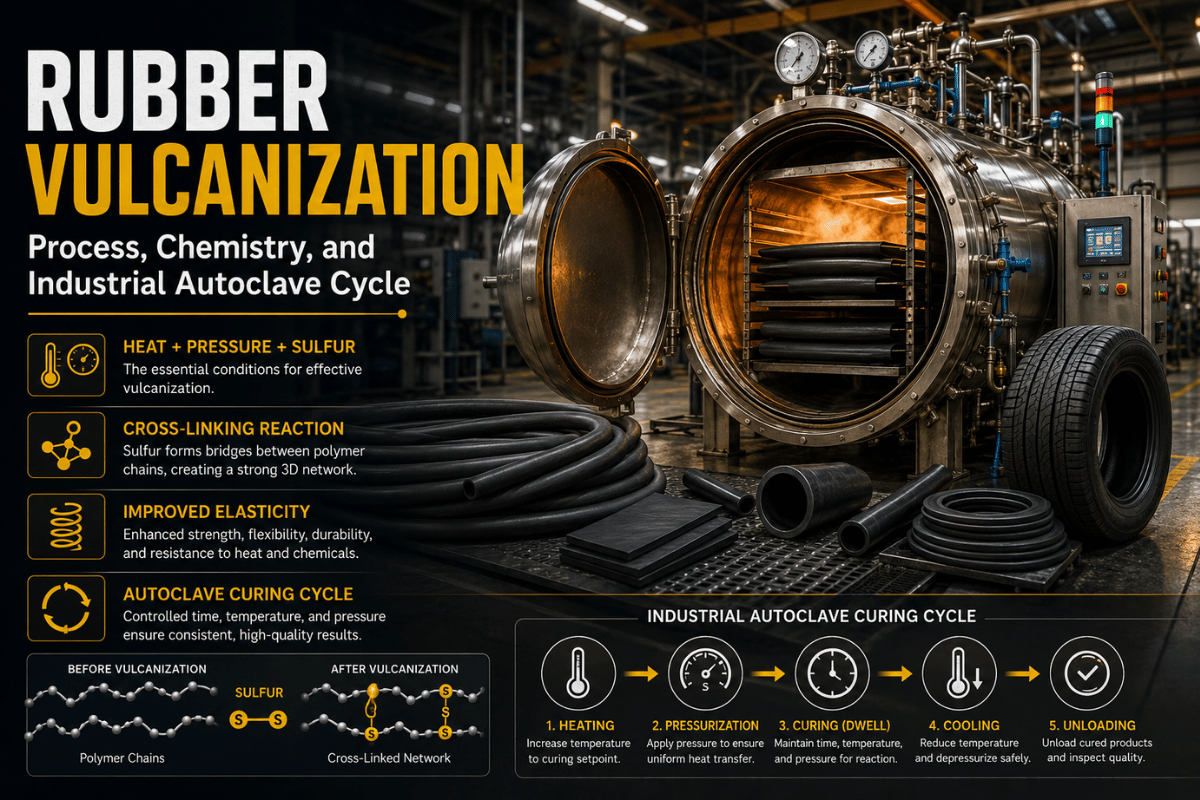
Rubber vulcanization is the chemical process that makes the rubber strong, elastic, and heat-resistant — turning soft, sticky natural or synthetic rubber (latex) into the finished product that goes into nearly every tire, conveyor belt, hose, and seal in modern industry. The vulcanization of rubber traces back to Charles Goodyear in 1839, but the engineering control behind a modern industrial cure cycle — temperature, pressure, sulfur dose, accelerator chemistry, and cycle time — is what determines whether a finished part lasts five years or fifty.
Quick Specs: Rubber Vulcanization at a Glance
| Typical cure temperature (HTV) | 140–180 °C (284–356 °F) |
| Autoclave pressure range | 2–10 bar steam (extreme: up to 20 bar) |
| Cycle time (industrial) | 10 min (thin sheet) – 180 min+ (thick belt) |
| Primary curing agent | Sulfur (77.3% market share, 2024) |
| Sulfur dose (Conventional) | 2.0–3.5 phr (parts per hundred rubber) |
| Hardness range | Shore A 30–90 (typical vulcanized parts) |
| Global market (2026) | USD 4.11 billion, CAGR 4.22% to 2031 |
What Is Rubber Vulcanization?
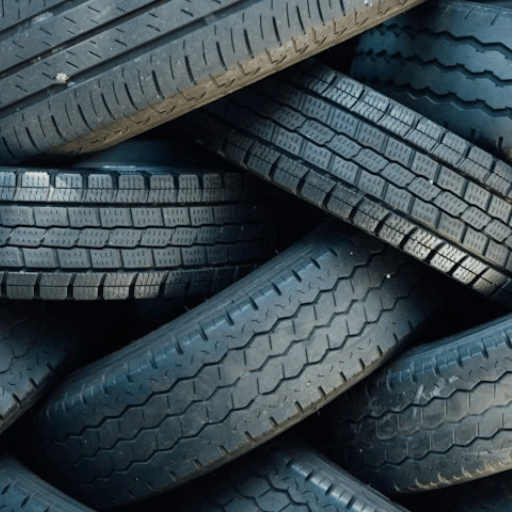
The vulcanization of rubber is the formation of covalent sulfur cross-links between the long polymer chains of natural or synthetic rubber. Raw rubber is sticky and thermoplastic; heating rubber with sulfur and an accelerator package cross-links hundreds or thousands of polyisoprene chains into an elastomer, converting the thermoplastic into a thermoset with stable dimensions and stable elastic properties, low tack, high tensile strength, good chemical resistance, and low water absorption. This is the chemistry that makes the rubber strong, durable, and dimensionally stable enough for industrial service.
Goodyear first published the chemistry of vulcanization in 1839, showing that heating natural rubber with sulfur dramatically changes its physical state. The same chemistry transforms tacky unmodified rubber into a dimensionally stable elastic with a much broader operating window, greater environmental and chemical stability, and lower water absorption. Wikipedia’s overview of vulcanization traces the chemistry from Goodyear and Hancock through modern accelerator systems.
The physical properties most commonly specified for vulcanized rubber — hardness (Shore A 30–90 depending on cross-link density), tensile strength, and elastic recovery — jump after vulcanization. Compared to untreated rubber, the vulcanized product shows many times higher elastic and tensile strength, while raw rubber takes a permanent set and remains deformed after each tensile cycle. This step is what revolutionized the rubber industry and continues to define every benefit of vulcanized rubber in modern manufacturing.
A Brief History: Charles Goodyear, 1839, and the Birth of Modern Rubber
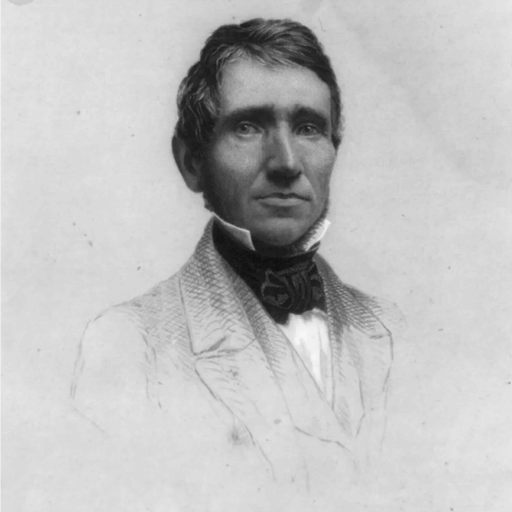
Before 1839 natural rubber was a toy material with limited industrial utility. Within budget constraints Charles Macintosh and Thomas Hancock (rubber chemist) had already developed a process for imparting waterproof and sunproof qualities to baked fabrics in the past decade, but the finished material was gooey in the summer and brittle in the winter. The breakthrough that turned rubber from a curiosity into an industrial resource was an accident in a hardware store.
“The article had charred itself to a leathery and elastic substance. I was astonished and excited at the result, for the elasticity remained, but the gum-elastic was no longer thermoplastic.”
Goodyear had spilt a portion of a mixture of sulfur and rubber onto a hot block of iron. He discovered he could repeat the cure at will. He dedicated the next five years of research to perfecting the process. The US Patent Office granted patent number 3,633 to Goodyear on June 15, 1844; Hancock had had a patent application granted in England about eight weeks earlier. The label was coined by a friend of Hancock’s, named after Vulcan, the Roman god of fire; see the full story at Britannica’s entry on vulcanization.
In 1912, American chemist George Oenslager came up with an elegant solution: add organic accelerators to the sulfur cure, and both required time and temperature drop. That single change made commercial-scale tire manufacturing economical, and the accelerator/sulfur chemistry framework Oenslager established remains the dominant cure system in 2026 — more than a century later.
The Chemistry of Sulfur Crosslinking
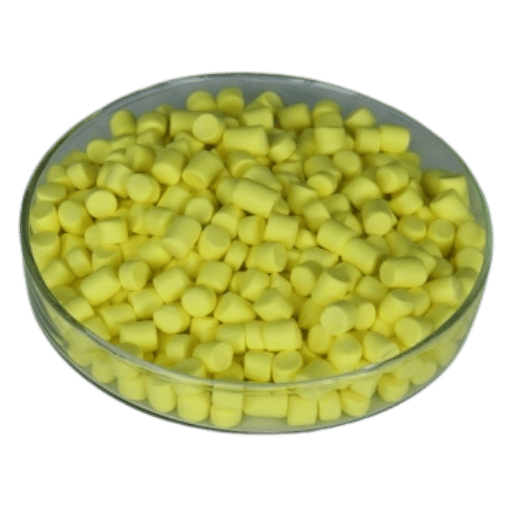
Natural rubber is long chains of cis-1,4-polyisoprene. Being long chains, unvulcanized natural rubber flows under pressure and will come to elastic equilibrium (“set”) when stretched. Vulcanization bonds those chains together at the double bonds.
The curing process begins when sulfur is heated with rubber in the presence of an activator (most often zinc oxide and stearic acid) and an accelerator (such as a thiazole, sulfenamide, or thiuram). Sulfur radicals attack the allylic carbon adjacent to the former double bonds in the rubber molecules. The resulting sulfur bridges — monosulfidic (single S atom), disulfidic (two S atoms), or polysulfidic (three or more S atoms) — create cross-links in the rubber that lock neighboring chains together. Crosslink density and the proportion of mono- versus polysulfidic crosslinks control nearly every mechanical property of the finished part. Incomplete vulcanization — where not all reactive sites form cross-links — produces under-cured rubber that fails early in service.
Cure systems are classified by the ratio of accelerator to sulfur (A/S). According to the ScienceDirect overview of sulfur vulcanization, industrial practice uses an A/S between 0.1 and 12, across three groups:
| Cure System | Sulfur (phr) | A/S Ratio | Crosslink Type | Strengths |
|---|---|---|---|---|
| Conventional (CV) | 2.0–3.5 | 0.1–0.6 | Mostly polysulfidic | Best dynamic fatigue, tear resistance |
| Semi-Efficient (Semi-EV) | 1.0–1.7 | 0.7–2.5 | Mixed | Balanced fatigue + heat aging |
| Efficient (EV) | 0.4–0.8 | 2.5–12 | Mostly monosulfidic | Best heat aging, lowest reversion |
📐 Engineering NotePolysulfidic links are stronger but break and re-form under heat (reversion); monosulfidic links are thermally stable but cannot re-form. A tire sidewall, which experiences constant flex, lasts longer with a CV system; a rubber engine mount that sits at 120 °C for 100,000 hours lasts longer with an EV system. The correct cure system follows the loading profile, not the polymer alone.
The Vulcanization Process Step-by-Step (Mixing → Shaping → Curing)
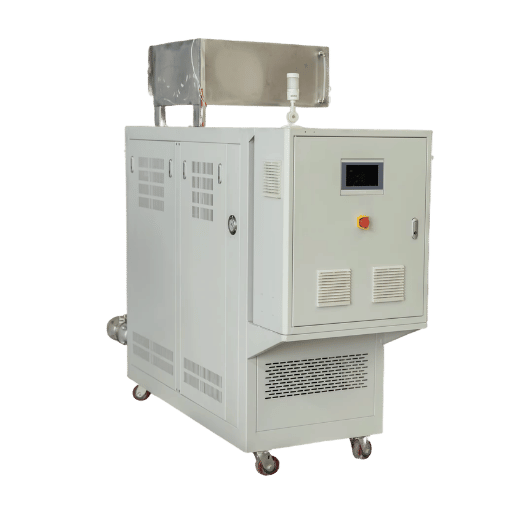
How do I vulcanize rubber, in five practical stages?
From raw bale to finished part, industrial rubber vulcanization follows the same five basic steps regardless of the end product:
- Mastication – The raw rubber bale is broken down on a two-roll mill or in a Banbury internal mixer to reduce molecular weight and make the polymer compatible with additives. Typical time: 5-10 min.
- Compounding (mixing) – Sulfur, accelerators (e.g., MBT, CBS, TMTD), activators (zinc oxide + stearic acid), reinforcing agents (carbon black, silica), processing oils, and antioxidants are blended into the masticated rubber. Mix temperature is held below 100 °C to avoid premature cross-linking. Typical time: 8-15 min.
- Shaping – The compounded rubber is calendered into sheets, extruded into profiles, or loaded into molds. The material is still “green” – soft and uncured.
- Curing (vulcanization) – Heat and pressure are applied. This is the chemical conversion step, operated in molds (compression / transfer / injection presses) or in autoclaves for non-molded parts. Cycle time ranges from 10 min (thin extrusions) to 180+ min (thick belts and rubber-lined tanks).
- Finishing & QC – Parts are trimmed, inspected for surface flaws, and tested (Shore hardness, tensile, MDR rheometer cure curve). Parts that do not meet specification are discarded.
💡 Pro Tip
Mixing temperature creep is the most common reason for compounding scrap. If the Banbury rotor speed pushes the batch above 110 °C, the cure has already begun before the rubber leaves the mixer and any subsequent cure cycle will overshoot. Monitor the batch thermocouple, not the clock.
5 Vulcanization Methods Compared: Why Sulfur Still Wins 77% of the Industry in 2026
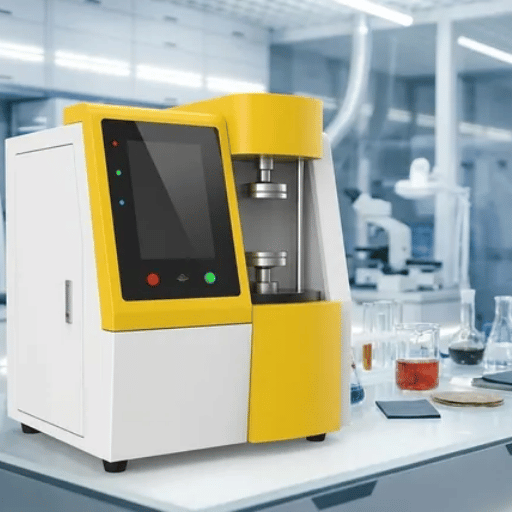
Sulfur cure has been the dominant chemistry for nearly two centuries, and the process of vulcanization with sulfur and accelerators remains the default route for high-performance rubber compounds. According to a 2024 Market.us report, sulfur still takes 77.3% of the world’s rubber vulcanization market by value. But four other types of vulcanization have secured durable niches where sulfur cannot go — usually because the polymer has no C=C double bonds, the running temperature is too high, or the item needs to cure at room temperature.
| Method | Best Polymers | Cure Temp | Typical Application | Cost vs Sulfur |
|---|---|---|---|---|
| Sulfur | NR, SBR, BR, NBR, IIR | 140–180 °C | Tires, conveyor belts, hoses | Baseline |
| Peroxide | EPDM, EPM, silicone, HNBR | 160–200 °C | Engine seals, high-temp gaskets | +30–60% |
| RTV (room-temperature vulcanizing) | Silicone (one- or two-part) | 15–35 °C ambient | Sealants, adhesives, mold-making | +50–150% |
| Urethane crosslinker | Specialty diene rubbers | 150–170 °C | Reversion-resistant tire compounds | +40–80% |
| Inverse vulcanization | Sulfur-rich copolymers | 130–185 °C | Research / sustainable materials | Pre-commercial |
Decision Matrix: Which Cure Method Should You Use?
- If your polymer is NR, SBR, BR, NBR, or IIR (any rubber with C=C double bonds), set sulfur cure as the default. Use CV for fatigue, EV for heat aging.
- If your polymer is EPDM, EPM, silicone, or HNBR (saturated or nearly saturated), choose peroxide. Without enough C=C bonds, sulfur cannot crosslink.
- If you need to set in place at room temperature (sealing, casting, repairs), use RTV silicone (moisture or platinum addition cure).
- If you need reversion resistance in a high-strain tire compound, consider a urethane crosslinker as a sulfur replacement or blend partner.
- If you’re going green by trying new sustainable formulations or rejuvenating sulfur waste through process infusion, watch the inverse vulcanization literature (RSC Polymer Chemistry, ACS Applied Polymer Materials, 2024-2026) but expect commercialization no sooner than 2027 to 2030.
Industrial Autoclave Vulcanization: Cycle, Parameters & Equipment
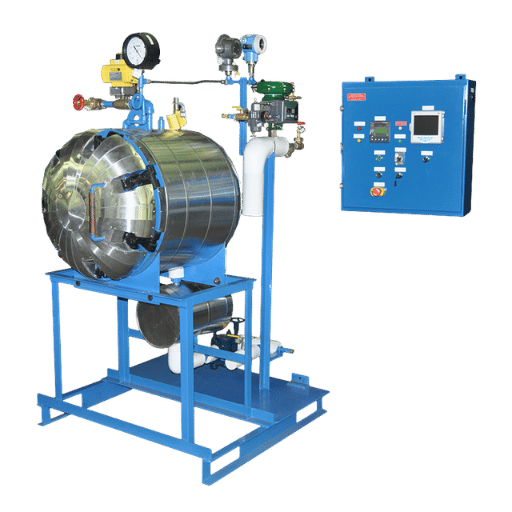
For molded rubber parts, the press itself supplies pressure and heat. For everything else — conveyor belts, rubber-lined steel tanks, hoses too long for a press, large profile extrusions, fabric-reinforced sheet goods — the cure happens in an industrial autoclave system. The autoclave is a large, horizontal, typically steam-jacketed pressure vessel. Once closed, it holds the green rubber at controlled temperature and pressure for the duration of the cure cycle.
The 3-Stage Autoclave Cure Cycle
All industrial autoclave cure cycles, irrespective of the product or its polymer, proceed through three stages. Each stage has its own control variables:
| Stage | Goal | Typical Duration | Watch For |
|---|---|---|---|
| 1. Heat-up | Bring vessel to soak temperature (typ. 140–180 °C) | 15–45 min | Scorch (premature cure) if ramp is too slow |
| 2. Soak (cure) | Hold at temperature/pressure to reach T90 cure | 10–180+ min (thickness-dependent) | Reversion if held past optimum |
| 3. Cool-down | Drop pressure and temperature in controlled ramp | 20–60 min | Blistering if pressure drops too fast on thick parts |
Dwell time at soak is determined by the cure characteristic of the compound, not the customer’s preference. In the industry standard, calculation lies on T90 – the time needed to reach 90% of the maximum torque on a moving-die rheometer (MDR) test following ISO 6502 / ASTM D5289. Customer shop practice applies the autoclave for T90 plus additional shifting for the part thickness of approximately 1 minute for each millimeter to offset the delay for heat to get into the rubber.
A good rule of thumb when scaling cycles between similar compounds: the vulcanization reaction rate roughly doubles for every 8–10 °C increase in temperature. A 10-minute cure at 160 °C becomes a 5-minute cure at 170 °C — but only if the part is thin enough for the heat to reach the centerline at the new ramp.
📐 Engineering Note: Autoclave Sizing for Rubber CureFor rubber cure work, the autoclave shell generally sits at 140–180 °C and 2–10 bar working steam pressure. Specialty units (composite curing, prepreg lay-ups) can reach 400 °C and 20 bar, but those parameters are rarely needed for elastomer cure. When sizing a vessel, the controlling dimension is the longest part you intend to cure — vessel diameter must clear the part diameter plus a 100–150 mm air-gap for steam circulation. A practical first pass: use an autoclave sizing calculator to match working volume and ramp rate to your throughput target before requesting quotes.
Heat delivery into the vessel matters as much as the steam-pressure rating. Direct steam injection is fastest but introduces moisture; indirect heating through a thermal-jacket system (such as a thermal oil heater with circulating fluid) gives drier, more uniform temperature control at higher upper-temperature limits. Choice between the two depends on whether condensation on the green rubber is acceptable for the finished part.
Vulcanization in Action: Tires, Conveyor Belts, O-Rings, and Rubber-to-Metal Parts
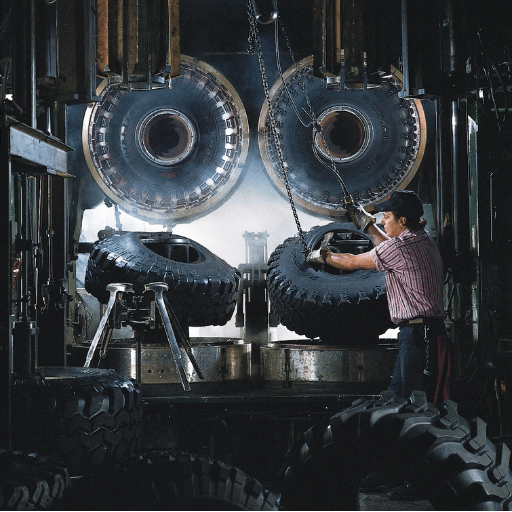
Tires dominate the economics of rubber vulcanization. Each type of rubber product — passenger rubber tires, conveyor belts, hydraulic seals, rubber hoses, silicone rubber tubing — has its own preferred polymer family, cure system, and rubber processing route. The world produces over a billion tires a year, each a multi-ply composite of separately compounded vulcanized rubbers — a hard tread compound bonded to a flexible sidewall compound bonded to a fabric-or-steel reinforced carcass. The same underlying chemistry enables hundreds of other industrial applications:
| Product | Typical Polymer | Cure Method | Hardness Target |
|---|---|---|---|
| Passenger tire tread | SBR + BR blend | Sulfur (CV) | Shore A 60–70 |
| Conveyor belt cover | SBR or NR | Sulfur, autoclave cure | Shore A 55–75 |
| Hydraulic O-ring | NBR (Buna-N) | Sulfur, compression mold | Shore A 70–90 |
| Engine mount (rubber-to-metal) | NR or NR/BR | Sulfur, transfer mold + bonding agent | Shore A 45–65 |
| Engine-bay seal | EPDM | Peroxide | Shore A 60–80 |
| Medical tubing | Silicone | Peroxide or platinum addition | Shore A 30–80 |
Special mention goes to vulcanized rubber-to-metal bonded parts. The part is designed with the metal insert already in the mold; a chemical bonding primer (usually some form of a Chemlok-type primer-surface coating) resides between the green rubber and the metal interface. During cure, the rubber cross-links, adheres, and bonds to the metal joint, creating a single load-bearing unit. Engine mounts, vibration isolation devices, bushings, rubber hoses with reinforcing cores, and many other rubber materials and rubber parts rely on this technique. The applications of vulcanized rubber across these markets continue to expand because rubber technology delivers a service envelope that no thermoplastic can match.
Common Defects and Quality Control: Scorch, Under-Cure, Over-Cure, and Splice Failure
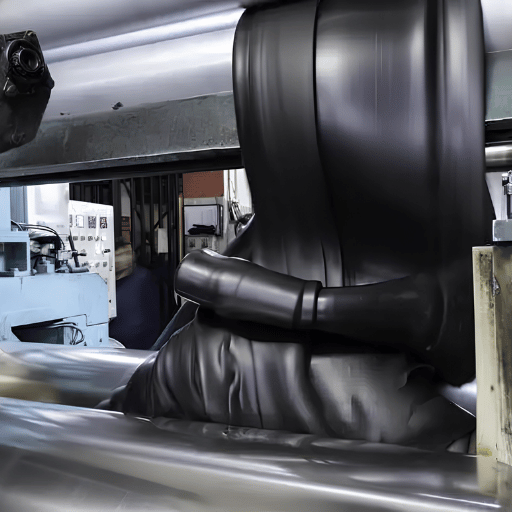
Splice failure along vulcanized seams is the most common production complaint reported by rubber assembly shops on industry forums — the joint where two strips of green rubber are spliced and cured cracks under load. Four quality issues drive most rejected lots, and all of them trace back to time-temperature-chemistry imbalance:
| Defect | Cause | QC Test | Corrective Action |
|---|---|---|---|
| Scorch | Cure started in mixer or during heat-up | MDR rheometer ts2 reading too short | Lower mixer temp; switch to delayed-action accelerator (sulfenamide) |
| Under-cure | Insufficient time or temperature | Shore hardness below spec; tacky surface | Extend dwell to T90 + thickness allowance |
| Over-cure (reversion) | Held too long at peak temperature | MDR torque drop after maximum; brittle handfeel | Shorten dwell; switch to EV or semi-EV system |
| Blooming | Excess sulfur or zinc oxide migrates to surface | Visual inspection; surface wipe test | Reduce cure-system dosage; check zinc oxide level |
| Splice failure | Surface contamination or stale tackified strip | Peel test on representative joints | Refresh splice surfaces; reduce strip storage time |
⚠️ Important
Heat-aged properties degradation is the long-tail burden of an over-cured component. An elastomer property test specimen that hits all initial Shore and tensile requirements may still fail chemistrywise after 3 years because too much crosslinking density reverted during service heat activation. ASTM D572 provides accelerated elevated-temperature aging analysis in a mixed gas oxygen pressure vessel–a 70 hour test that approximates 5-10 years of average service.
Industry Outlook 2026: Sulfur Still Wins, but Sustainable Routes Are Rising

The global rubber vulcanization market is sized at USD 4.11 billion in 2026, growing at 4.22% CAGR to USD 5.05 billion by 2031. Three quiet shifts inside that headline number deserve attention from anyone planning capital equipment or supply contracts in the next five years:
Sulfur isn’t going away – but accelerator chemistry is evolving. More than three quarters of the sulfur remaining demand share is locked up in the installed base of tire and belt production lines. The change within that share is now the selection of accelerators: European REACH hazards classification reviews of thiazole-series accelerators (MBT, MBTS) first prompted formulation shifts towards sulfenamide-series (CBS, TBBS) and in some cases thiuram-series (TMTD—currently under review) accelerator blends when exporting to other regions.
Reduced-zinc curing recipes are advancing from research to pilot. Conventional cure systems use 3–5 phr of zinc oxide as activator, and tire-end-of-life zinc leaching has become an environmental flag. Recent academic work (ChemRxiv preprint, 2024) on synergistic MgO–CaO activation aims to cut zinc loading by 40–60% without sacrificing cure rate. Buyers planning new compound formulations through 2027 should ask their material suppliers about reduced-zinc roadmaps.
Inverse vulcanization is the long-shot research frontier. Two 2024 papers in Polymer Chemistry (Royal Society of Chemistry) and ACS Applied Polymer Materials describe sulfur-rich copolymers that use elemental sulfur as a primary monomer rather than as a crosslinker. Commercial deployment is still years away, but the chemistry consumes industrial sulfur waste from oil refining — a credible sustainability story when it scales.
For buyers planning 2026 capital projects, the practical action is straightforward: lock in autoclave-class capacity now while supply lead times remain favorable, but build cure-recipe flexibility into the order so you can switch accelerator and zinc systems without revisiting the hardware in two years. Process known as vulcanization will keep the rubber industry running for decades, even as the chemistry inside the autoclave keeps evolving.
Frequently Asked Questions
Q: Is vulcanized rubber still used today?
View Answer
Indeed—the global vulcanization segment reached USD 4.11 billion in 2026 and is forecast to exhibit 4.22% CAGR (compound annual growth rate) through to 2031. vulcanized rubber is used for the construction of tandem bicycle tires, conveyor belts, truck inflatables, hoses, gaskets, seals, oil and steam pipelines etc.
Q: Can vulcanized rubber be recycled?
View Answer
Mechanical recycling—the grinding of vulcanized rubber into crumb for asphalt, tiles, turf infill etc. is common place and cost effective. Pyrolysis occurs in the presence of catalysts, and breaks the vulcanized product into oil, gas, and a carbon char. However, devulcanization (the undoing of crosslinking so the material can be used to produce new vulcanized parts) is still an active research field, but the commercial scale is not yet established. Within the end-of-life market place, large volumes of recycled vulcanized rubber are used in asphalt roads.
Q: Is vulcanized rubber waterproof?
View Answer
Yes—vulcanized rubber absorbs water at a maximum saturation level typically less than 1% weight in water, which makes it the product of choice for boat fittings, waders and gaskets.
Q: What temperature is needed for vulcanization?
View Answer
High-temperature vulcanization (HTV) of conventional rubber compounds runs at 140–180 °C in autoclaves or molded presses. Room-temperature vulcanizing (RTV) silicone systems cure at 15–35 °C ambient using moisture or platinum-addition chemistry. Peroxide cure of EPDM and silicone elastomers typically runs hotter, 160–200 °C.
Q: How long does vulcanized rubber last?
View Answer
An accurate general answer on the service life of vulcanized rubber “depends on the compound and the environment”. For example, a high-quality EPDM weather strip will typically enjoy over 20 years of outdoor service. Environmental factors including high temperatures, exposure to ozone, UV or other radiation will influence design life, and should be included in the customer specifications. the use of ASTM D572 heat aging tests allow for accelerated predictions of long-term performance.
About This Analysis
This information is a collection of from credible sources the Royal Society of Chemistry, ScienceDirect Topics, AIP Publishing, and current market reports from Mordor Intelligence, Market.us. Cure-system data and autoclave operating data gathered from the same sources. Operating data is provided as a generalized engineering range.
The proper cure recipe and cycle for a given compound can only be determined from the polymer batch details, filler system, part geometry, and required service environment.
References & Sources
- Vulcanization — Wikipedia
- Vulcanization — Definition, Inventor, History, Process & Facts — Encyclopaedia Britannica
- Sulfur Vulcanization — an Overview — ScienceDirect Topics, Elsevier
- A sulfur copolymer with a pyrrole compound for the crosslinking of rubber — Polymer Chemistry, Royal Society of Chemistry, 2024
- Combined Sulfur and Peroxide Vulcanization of Filled and Unfilled Natural Rubber — PMC / NCBI, 2023
- Rubber Vulcanization Market Size, Share, 2025–2031 Outlook — Mordor Intelligence
- Rubber Vulcanization Market Size, Share | CAGR Analysis — Market.us, 2024
Related Articles
- Industrial Autoclave Systems — product overview
- Autoclave for AAC Blocks — another high-pressure cure application
- Autoclave for Wood Preservation — pressure-vessel impregnation
- How a Thermal Oil Heater Works — indirect heating for process equipment
- Autoclave Sizing Calculator — size your vessel by working volume