Get in Touch with Taiguo


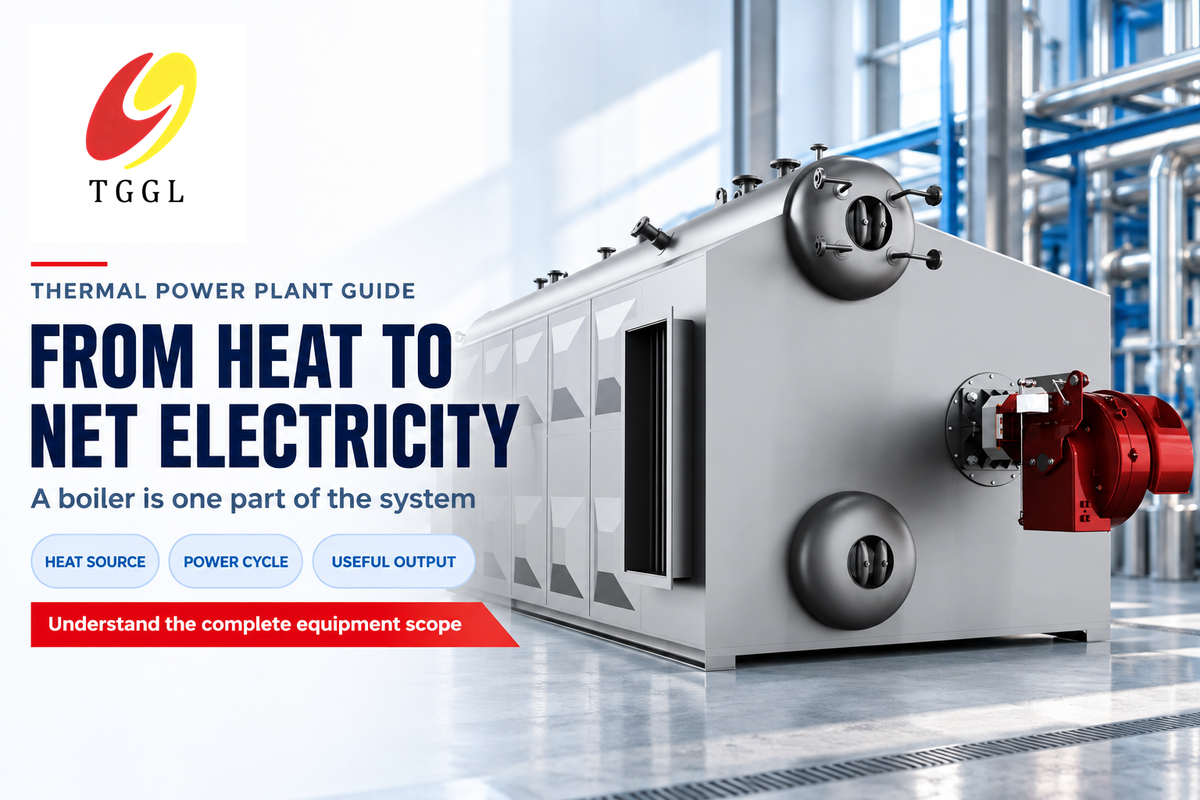
A thermal power plant transforms thermal energy into electricity. Heat drives an engine or turbine, and a rotating shaft drives a generator, with part of the electricity running the plant itself. Therefore, the useful comparison is the power delivered after internal plant loads, together with any heat an industrial site can actually use.
A steam boiler supplies one part of that process. An industrial buyer also has to interconnect steam conditions, turbine performance, cooling and electrical equipment into a functional system. This guide follows that route and demonstrates how to make equivalent comparisons while assessing offers and equipment in the marketplace.
Updated November 2026
A thermal power plant uses heat to produce mechanical work and electrical energy. Steam plants, gas turbines and combined cycles take different routes. Net electrical output, useful heat demand and the full equipment scope determine what a project delivers.
Quick comparison points
- Boiler efficiency measures useful heat transfer; electrical efficiency measures electricity produced.
- Net generation subtracts the electricity used by pumps, fans and other plant equipment.
- Combined heat and power counts heat only when it has a useful destination.
- A boiler quotation and a complete generating-plant quotation cover different equipment.
What Is a Thermal Power Plant?
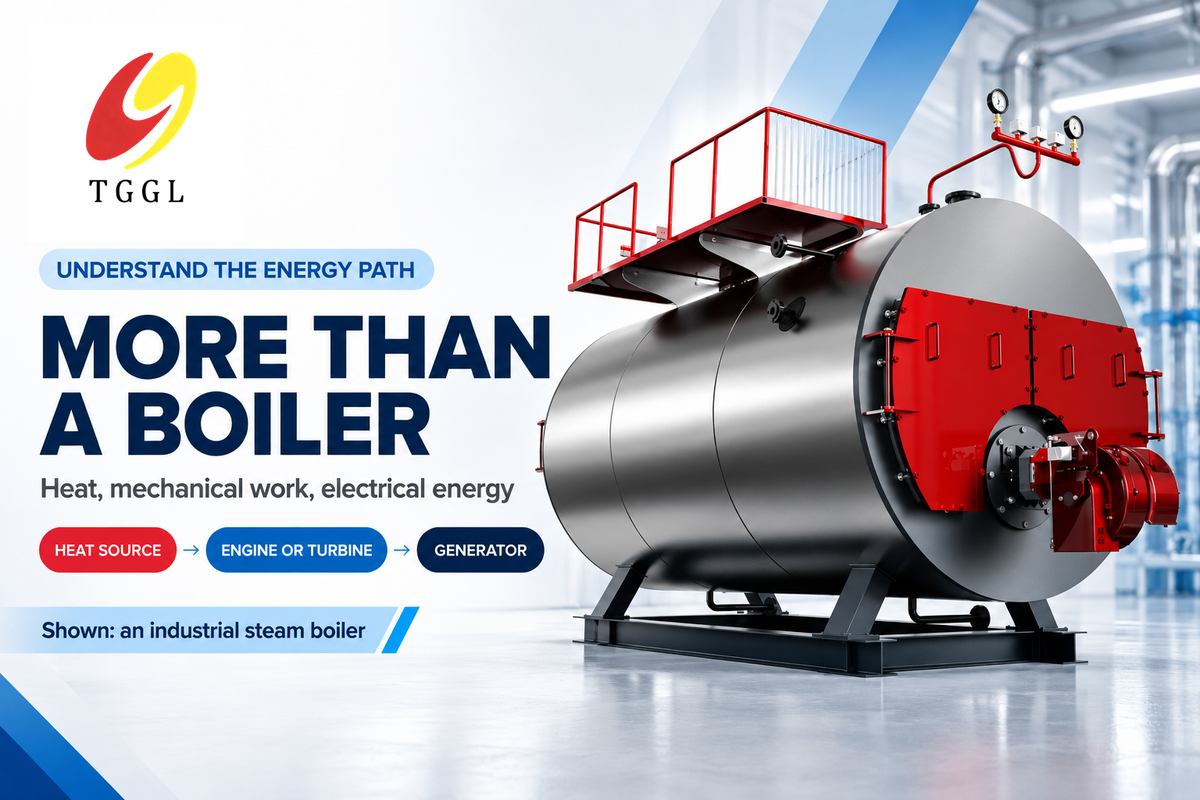
A thermal power station converts heat into electric power through a heat engine. The energy source may be burning fuel, nuclear reactions, geothermal heat, or concentrated sunlight. Heat transfers energy to a working fluid that drives an engine or turbine, which provides mechanical energy to drive a generator that converts this energy into electrical energy.
The word plant denotes an industrial facility: a power plant is a collection of equipment that generates electricity rather than one boiler or generator.
In a conventional thermal power plant, combustion supplies the heat. Coal, natural gas, oil and appropriate biomass are possible fuels, but require different handling and combustion equipment. Nuclear power plants obtain heat from nuclear fuel rather than a furnace as explained in the U.S. Energy Information Administration’s generation overview.
Steam supply is a different purchasing task.
A factory that buys large industrial electric steam boilers uses electricity to make steam. A generating plant uses a heat-conversion process to supply electricity. The direction of energy flow changes the equipment package and the bill.
How Does a Boiler Power Plant Work?
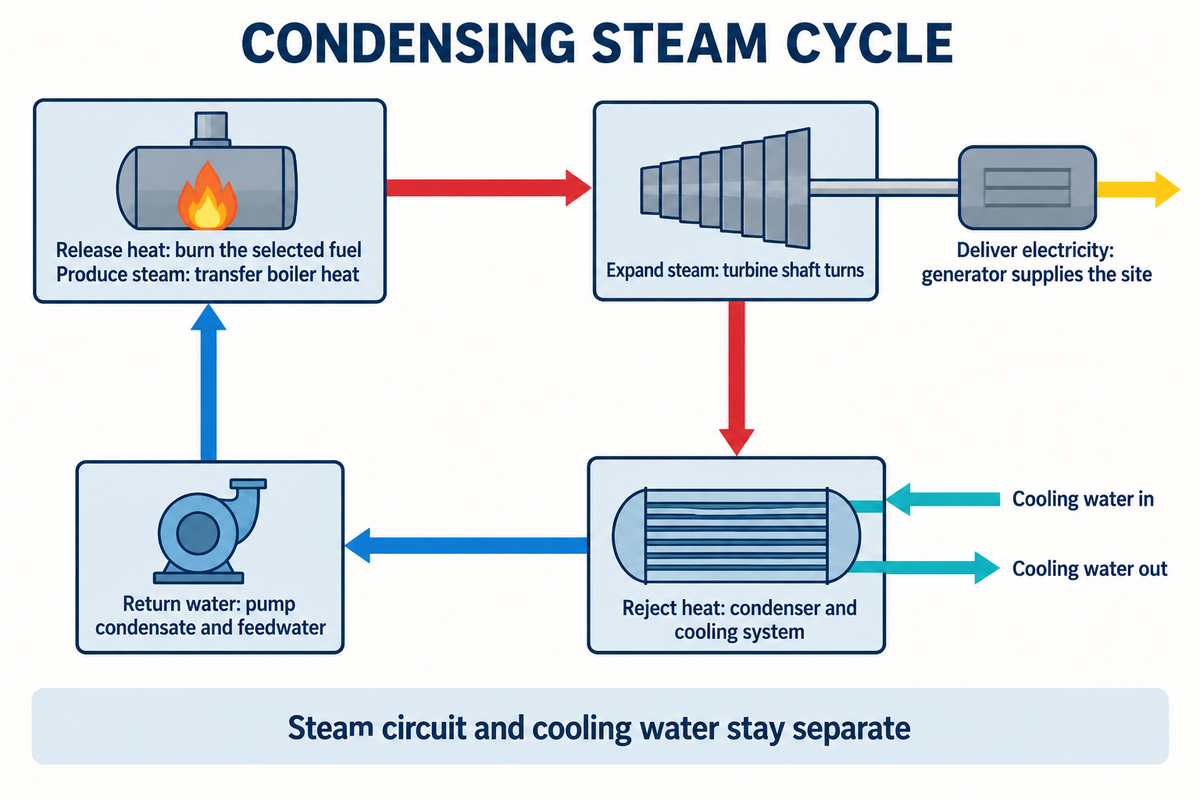
Water is circulated through a steam-producing system by a boiler power plant. That steam expands through a turbine that turns a generator. In a condensing arrangement, the turbine exhaust steam gives up heat in a condenser, returns to liquid water, and is pumped back toward the boiler.
How is heat converted to electricity?
Expanding steam drives a turbine whose shaft turns a generator to produce electricity. The cycle receives heat at high temperature and then rejects the remainder or supplies it to a useful process. The generator converts motion into electrical energy, while the steam cycle determines how much of the supplied heat does shaft work.
- Release heat. Burn the selected fuel in the furnace.
- Produce steam. Transfer heat through boiler surfaces; a superheater, where fitted, raises steam temperature.
- Expand steam. Direct the flow through a steam-driven turbine coupled to the generator.
- Deliver electricity. Supply internal equipment and send the remaining output toward the site or power grid.
- Reject heat. Condense exhaust steam by transferring heat to the cooling system.
- Return water. Pump condensate and feedwater back through the steam circuit.
Keeping those jobs separate helps when reading a steam enthalpy and entropy chart: the feedwater pump raises liquid pressure, and heating and superheating add energy. That chart explains the states of steam and the equipment drawing shows the locations of the changes. The drawing uses various symbols to represent machinery, heat exchangers, pumps and piping.
The cooling water circuit is separate and takes a different path through a surface condenser. According to USGS’s explanation of thermoelectric water use, once-through systems return warmed water to the source, while recirculating systems cool and reuse the water using a pond or tower. A cooling tower is seen in some plant layouts; the cooling and heat-source equipment vary between station types.
Types of Thermal Power Plants: Steam, Gas and Combined Cycle
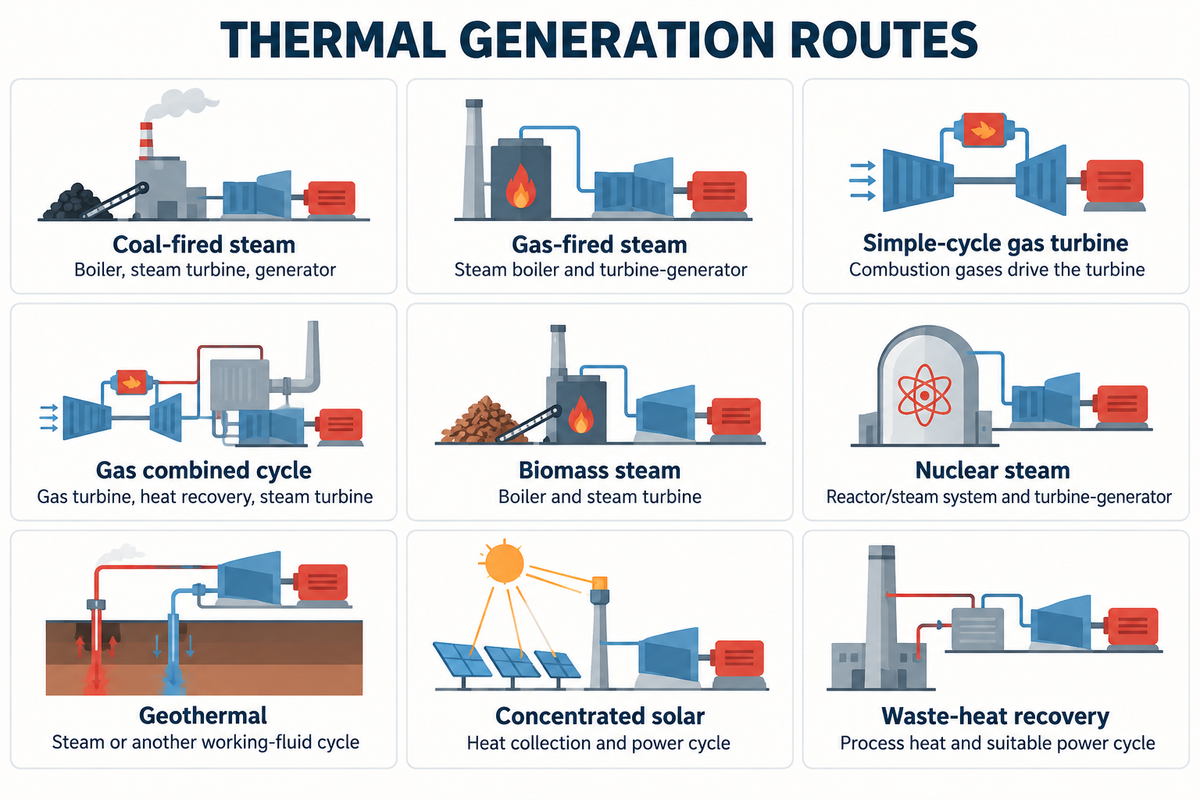
The main types of thermal power plants differ in their heat source and conversion cycle. Steam plants use a boiler or another heat source to drive a steam turbine. Gas turbines expand combustion gases directly. EIA reports that, in its 2022 U.S. utility-scale data, natural gas accounted for 99% of energy sources in combined-cycle plants and 95% in single-cycle combustion gas turbines. Combined cycle plants recover exhaust heat from the gas turbine to run a steam cycle.
A gas turbine, a gas-fired steam boiler or combined cycle power equipment may be used in natural gas power stations. The following classification uses the EIA technology descriptions to split the routes.
| Plant route | Heat source | Conversion path | Project distinction |
|---|---|---|---|
| Coal-fired steam plant | Coal combustion | Boiler, steam turbine, generator | Fuel preparation, ash and emissions systems |
| Gas-fired steam plant | Natural gas combustion | Steam boiler and turbine-generator | Steam-system requirements remain central |
| Simple-cycle gas turbine | Fuel burned in a gas turbine | Combustion gases drive the turbine | No steam bottoming cycle in this configuration |
| Gas combined-cycle plant | Gas combustion plus recovered exhaust heat | Gas turbine, heat recovery steam generator, steam turbine | Two linked thermodynamic cycles |
| Biomass steam plant | Suitable biomass fuel | Boiler and steam turbine | Feedstock moisture, storage and fuel preparation |
| Nuclear steam plant | Heat from nuclear reactions | Reactor/steam system and turbine-generator | Nuclear systems and their own regulatory regime |
| Geothermal plant | Heat from the earth | Steam or another working-fluid cycle | Available resource conditions |
| Concentrated solar power | Concentrated sunlight | Heat collection and a power cycle | Solar resource and possible thermal storage |
| Waste-heat power recovery | Heat from an existing process | Recovery equipment and a suitable power cycle | Recoverable temperature and heat flow |
Can thermal power plants work with renewable energy?
Yes. Geothermal power, solar thermal power and suitable biomass systems can generate electricity from renewable heat sources. Solar thermal electric systems concentrate the sun’s rays to produce heat, while photovoltaic solar power and wind power produce electricity without a thermal cycle.
The U.S. Department of Energy describes thermal storage for concentrating solar plants.
Biomass raises different fuel-handling issues, and these are addressed in a separate biomass power plant process guide.
Thermal Power Plant Efficiency, Heat Rate and Net Output
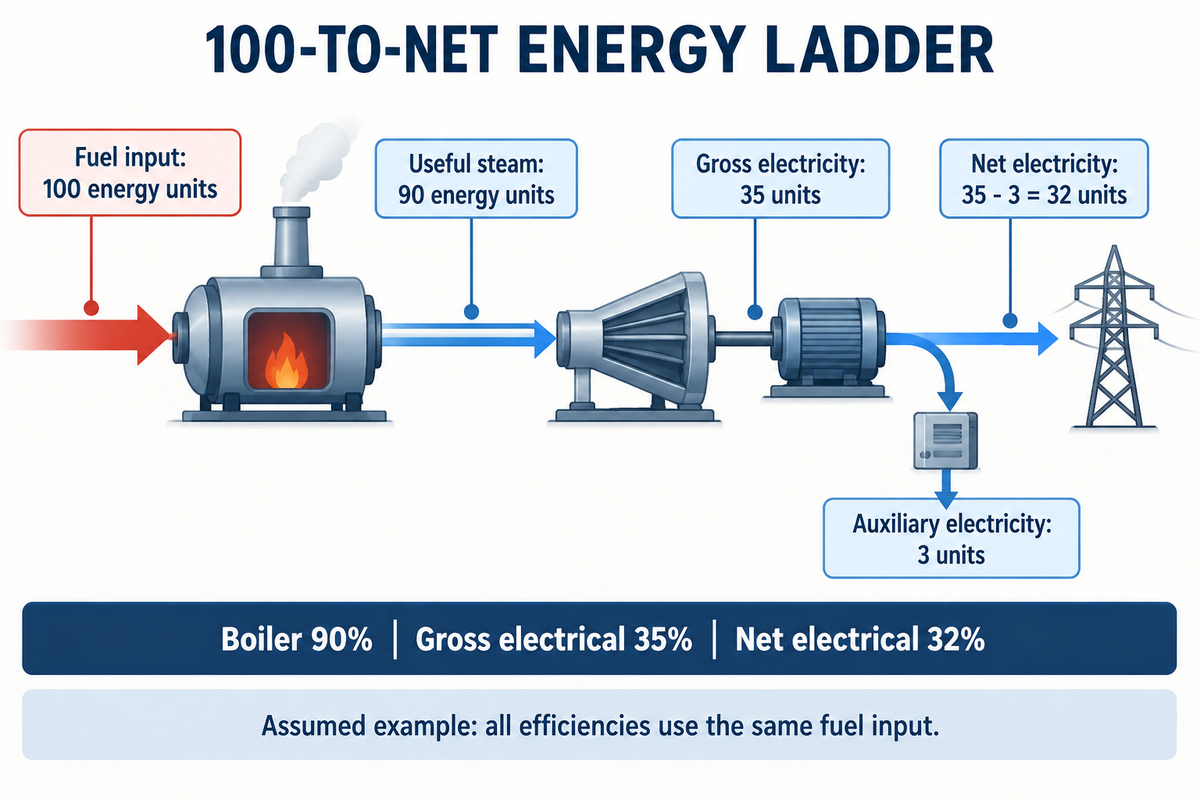
Thermal power plant efficiency compares the electrical output with the energy supplied to produce it. In a boiler, the numerator of thermal efficiency is useful heat delivered to the steam. Net electrical efficiency accounts for electricity consumed by the plant by deducting it from gross generation, so high boiler thermal efficiency does not directly indicate high net electrical efficiency.
100-to-Net Energy Ladder
The 100-to-Net Energy Ladder shows how one fuel-energy input is converted to useful steam and gross electricity, with net electricity calculated by subtracting plant consumption from gross electricity.
Example: assume 100 energy units enter as fuel, 90 reach steam, the turbine-generator delivers 35 units of gross electricity, and auxiliaries consume 3 electrical units. Net output is 35-3=32 units. Boiler efficiency is 90/100 = 90%; gross electrical efficiency is 35/100 = 35%; net electrical efficiency is 32/100 = 32%. Every percentage uses the same original fuel input as its denominator. Dividing 35 by 90 describes a different boundary, between steam energy and gross electricity. For the plant manager evaluating offers, the pertinent output is the one available following the specified internal loads.
EIA defines heat rate in Btu per net kWh. Its conversion is: electrical efficiency (%) = 3,412 ÷ heat rate × 100. An assumed heat rate of 10,000 Btu/kWh therefore gives 34.12% net electrical efficiency.
The fuel heating-value basis matters too. Higher Heating Value (HHV) includes the heat released as combustion water vapor condenses (see EPA’s CHP efficiency appendix, footnote 116). Match HHV or LHV across offers and compare energy efficiency of thermal power generation.
For boiler-only testing, use the separate boiler heat-transfer testing guide for direct and indirect methods. They address the efficiency with which the boiler transfers heat, not the electricity generation efficiency of the plant.
When Does Cogeneration Make Sense for an Industrial Site?
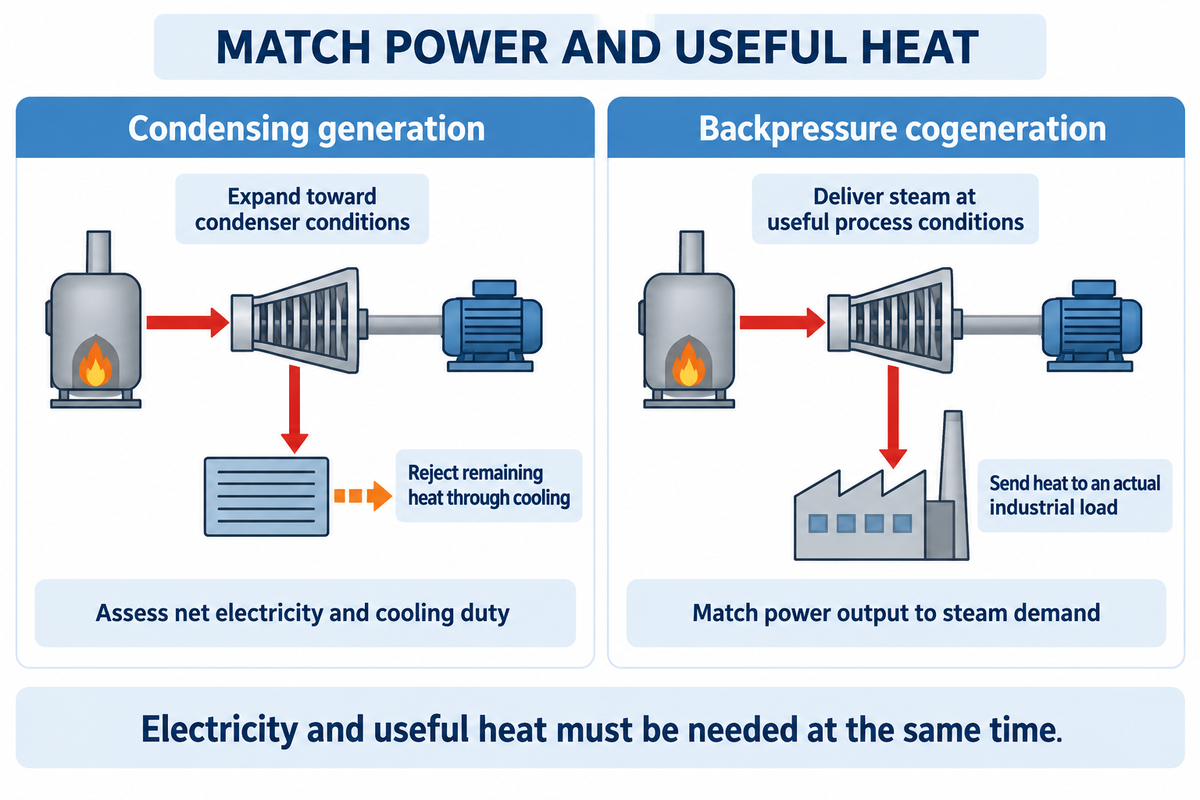
Cogeneration makes sense when a site needs both electricity and useful heat at the same time. The steam pressure, temperature and demand timing will ultimately dictate whether the heat has a use. EPA reports total combined heat and power efficiencies in the range of 60 to 80%, a measure that adds useful heat to net electricity.
The EPA calculation method distinguishes the total from the electrical efficiency. The DOE steam-turbine fact sheet describes backpressure turbines that supply process steam and extraction arrangements that split steam between process use and further expansion.
Condensing steam generation
- Expand exhaust toward condenser conditions.
- Reject remaining heat through a cooling system.
- Assess net electricity and cooling duty together.
Backpressure cogeneration
- Deliver exhaust steam at useful process conditions.
- Send that heat to an actual industrial load.
- Assess power output alongside the steam-demand profile.
For an industrial site, a boiler-and-steam-turbine route is worth considering if a steam network, biomass or process fuel shapes the project. A gas combined cycle is worth comparing if reliable gas supply and significant electricity demand justify a gas turbine and heat-recovery steam equipment. A route supplying process steam needs sufficient, stable demand for useful heat at the required pressure and temperature, matched with the generation schedule across different seasons. Compare fuel availability, operating hours and integration costs for both routes, against the load profile.
Let’s consider a food factory where process-steam demand is steady during production but heating demand is low during shutdowns. Its process engineer should compare the production schedule with the proposed turbine’s heat output, rather than multiply a full-load efficiency by every hour of the year. Summer cooling may also provide a useful load. Australian government guidance describes heat-driven absorption refrigeration. Heat-driven absorption refrigeration is a route that still requires a real cooling demand as well as an appropriate heat source. A finance model that values unwanted steam as a saving overstates the project value. Load comparison exposes this mismatch prior to ordering the equipment.
Advantages, Disadvantages and Operating Constraints
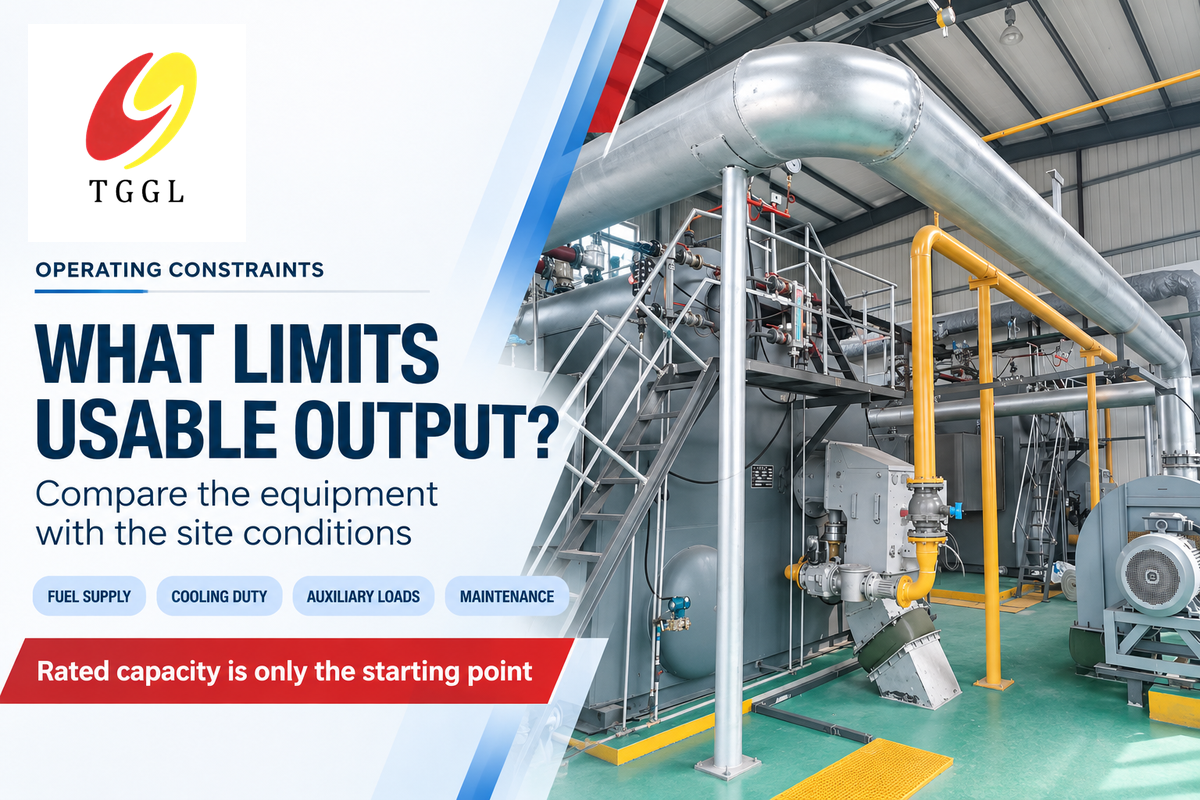
Thermal power systems can also provide controllable electricity and, in cogeneration plants, useful heat. Practical constraints include fuel supply, heat rejection, internal consumption of electricity and maintenance. The balance changes with technology. Coal-fired power stations handle solid fuel and ash, while nuclear plants and solar thermal systems have different heat-source requirements.
What are the disadvantages of a thermal power plant?
Thermal energy conversion rejects some of the input energy as heat and equipment consumes part of the electricity generated. Fossil fuel power stations also face combustion emissions and exposure to fuel-price fluctuations. Water availability and maintenance, along with cooling conditions, can constrain output, so rated capacity alone gives an incomplete view of usable power supply.
Cooling is a useful example. USGS differentiates water withdrawal from consumption. Recirculation reduces water withdrawal, but evaporation still consumes water. Warm discharge creates a separate thermal pollution question for once through systems. The environmental impact of thermal power depends on the cooling arrangement as well as the heat source.
Reviewing heat-rate improvement projects, EPRI technical executive Sam Korellis wrote in POWER in 2022: “Not all projects generated net benefits with a positive payback.”
That observation is important when plant operators consider upgrades. Enhanced heat transfer, lower auxiliary consumption and maintenance work address different losses. The benefits of these various improvements need to be evaluated from the same operating baseline; adding the advertised improvement percentages can double-count the same saving.
Thermal Power Plant Cost: Compare the Same Project Scope
A thermal power plant cost comparison requires the same technology, capacity, location, price year, and supply boundary. Equipment-only prices don’t include work that’s required for an installed project. Fuel cost then depends on heat rate and fuel price; finance, maintenance, and operation affect the cost of electricity.
For a dated scope example, EIA’s AEO2023 Table 1 lists a 418 MW single-shaft combined-cycle plant at $1,330/kW in 2022 dollars. The historical U.S. overnight estimate does not include construction interest. A current project bid must address escalation and its own site conditions; the old figure isn’t a 2026 turnkey quotation.
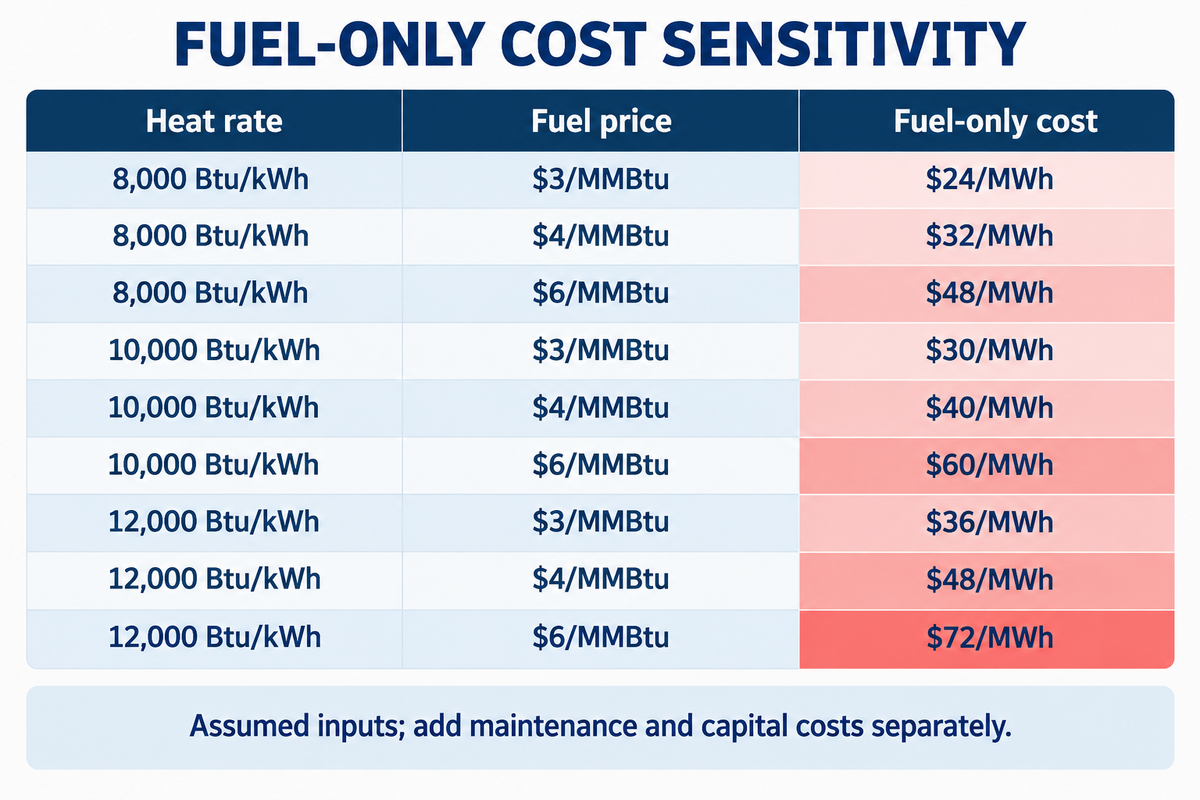
Example: a finance analyst compares a 10,000 Btu/kWh net heat rate with fuel priced at $4/MMBtu. Fuel cost is 10,000 × 4 ÷ 1,000,000 = $0.04/kWh, or $40/MWh. The table varies those assumed inputs while keeping the calculation the same. At the same fuel price, a higher heat rate increases the fuel bill for each unit of net electricity. This gives the analyst a sensitivity check before adding other costs like maintenance, capital recovery, etc. It also separates a fuel price change from an equipment performance change, which would be hard to discern if there are two suppliers’ financial models.
| Net heat rate | Fuel price | Fuel cost per net MWh |
|---|---|---|
| 8,000 Btu/kWh | $3/MMBtu | $24/MWh |
| 8,000 Btu/kWh | $4/MMBtu | $32/MWh |
| 8,000 Btu/kWh | $6/MMBtu | $48/MWh |
| 10,000 Btu/kWh | $3/MMBtu | $30/MWh |
| 10,000 Btu/kWh | $4/MMBtu | $40/MWh |
| 10,000 Btu/kWh | $6/MMBtu | $60/MWh |
| 12,000 Btu/kWh | $3/MMBtu | $36/MWh |
| 12,000 Btu/kWh | $4/MMBtu | $48/MWh |
| 12,000 Btu/kWh | $6/MMBtu | $72/MWh |
Equipment boundaries deserve the same care. The DOE turbine cost discussion covers a turbine-generator package, controls and simple installation. A boiler, cooling system, civil works and grid connection belong in the project scope as applicable and can’t disappear because a package quotation has a lower price.
From Boiler Supplier to Complete Plant: Define the Interfaces
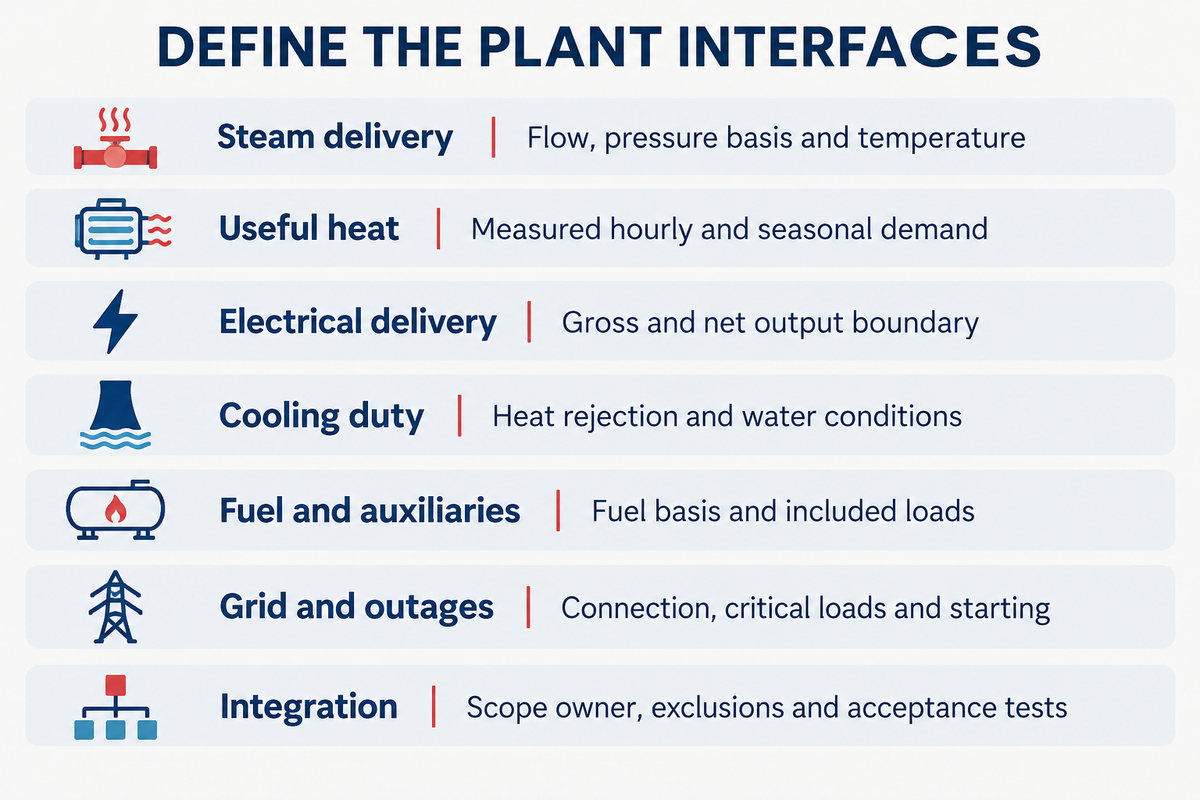
A boiler supplier, a turbine supplier and a project integrator provide various elements of a generating system. The interfaces must connect steam conditions, cooling duty, auxiliary loads and electrical operation. EPA’s project-development guidance assigns specific roles for procurement, permitting, utility interconnection and commissioning.
Taiguo supplies gas and oil water-tube steam boilers; see its SZS steam-supply specifications. Its SZS20-1.25-Y(Q) model table lists 20 t/h and 1.25 MPa. Steam mass flow and pressure describe a boiler duty; net electrical output also requires consideration of the turbine cycle, steam temperature, exhaust conditions and auxiliary loads.
Siemens Energy manufactures steam turbines as part of its industrial range. Its SST-600 package description includes a generator, oil system, piping, instrumentation and controls, with a condenser available as an extension. This package example shows why a buyer should compare the equipment list alongside the turbine rating.
Other industrial steam arrangements include oil and gas fire-tube boilers in the WNS package range and SZL biomass water-tube boilers. Fuel choice and steam duty come before model comparison.
Procurement may request the documents. The process engineer defines heat duty. The electrical engineer defines grid-connected operation and outage operation.
| Parameter | Required value and units | Why it matters | How to verify |
|---|---|---|---|
| Steam delivery | Flow in t/h, pressure with gauge/absolute basis, temperature in °C | Matches boiler outlet to turbine or process inlet | Matched supplier data sheets and steam balance |
| Useful heat demand | MW thermal and hourly/seasonal profile | Separates useful recovery from rejected heat | Measured load profile, including suitable cooling loads |
| Electrical delivery | Gross and net MW at stated conditions | Shows what remains after plant consumption | Performance guarantee and metering boundary |
| Cooling duty | Heat rejection, water flow and inlet conditions | Connects condenser requirements to site utilities | Cooling design basis and site water conditions |
| Fuel and auxiliaries | Fuel specification, HHV/LHV basis, included electrical loads | Keeps efficiency and fuel-cost comparisons consistent | Fuel analysis and auxiliary-load schedule |
| Grid and outage operation | Connection mode, critical loads and starting arrangements | Separates normal generation from backup service | Interconnection study and agreed outage tests |
| Integration and acceptance | Named scope owner, exclusions and test conditions | Prevents gaps between equipment packages | Responsibility matrix and commissioning contract |
EPA identifies independent grid operation and black-start capability as design considerations for outage service. The purchaser must define different requirements for these services.
Boundary documents make accounting visible. In the UK CHPQA scheme, Guidance Note 2 calls for energy-flow diagrams, equipment lists and monitoring details. Boiler construction has its own standards: ASME BPVC 2025 Section I is titled Rules for Construction of Power Boilers.
What Is Changing in Thermal Power Generation?
Changes in electricity supply and demand make operating flexibility a purchase consideration alongside full-load performance in thermal power projects. A thermal power project should be assessed in terms of the hours and loads that it would serve when defining the role of thermal power at a site. In a power system, thermal power can provide steady generation, variable dispatch or useful industrial heat.
The IEA’s Electricity 2026 flexibility analysis helps understand how grids balance shifting demand and supply. For a project, the expected operating schedule would affect maintenance planning, steam availability and auxiliary consumption.
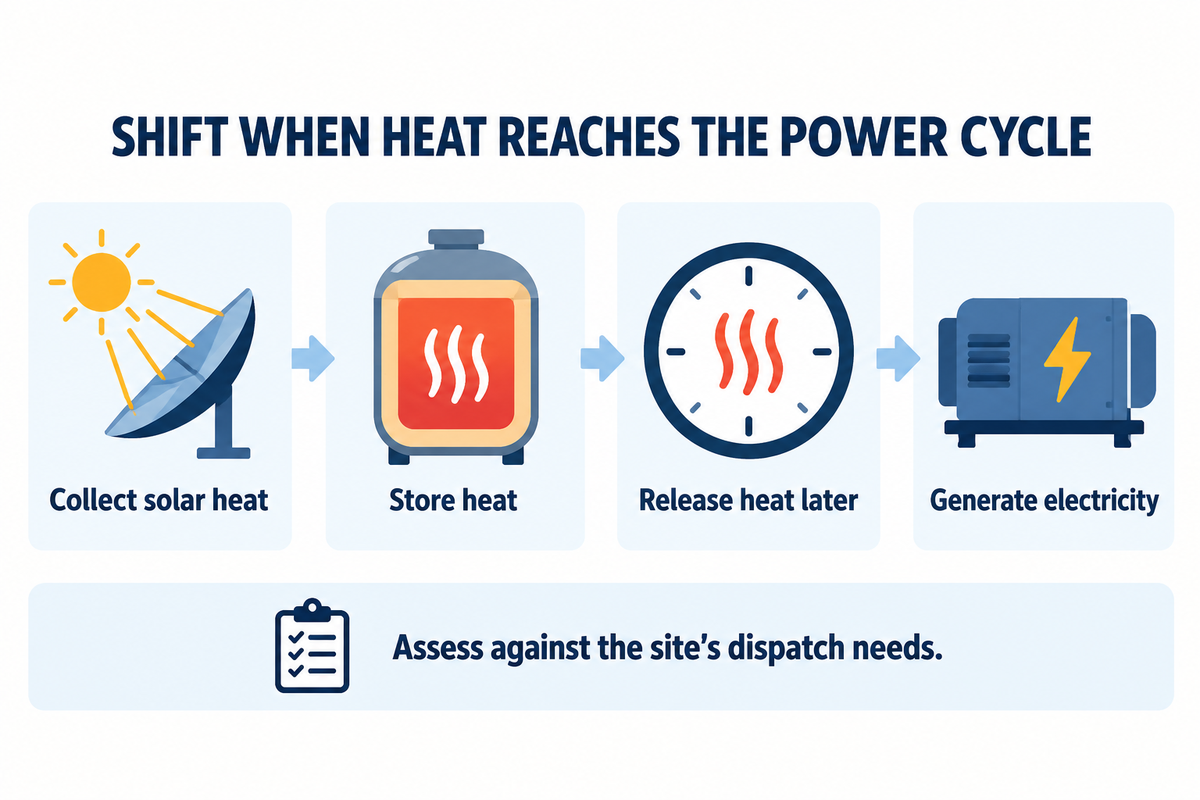
Thermal storage offers a different route in solar thermal systems. In the DOE analysis, heat is collected and stored, and released to produce electricity at a later time. While storage alters when heat reaches the power cycle, the equipment and heat transfer mechanisms remain part of the system. It should be assessed against the site’s actual dispatch needs rather than treated as a universal add-on for conventional power stations.
The data shows demand growth. The IEA estimates global electricity demand will increase on average by 3.6% per year from 2026 to 2030. Renewables and natural gas and nuclear power together are expected to meet additional global demand in aggregate over the same period. Increased electricity demand doesn’t mean the same outlook for coal-fired plants, gas-fired power plants, and every other type of power project.
For procurement, compare assumptions for performance and maintenance across expected normal duty, lower load, and outages for the same offer.
Thermal Power Plant FAQ
Is a thermal power plant the same as a coal-fired power plant?
No. Coal-fired power plants are just one type of thermal generation.
Heat-to-electricity processes are referred to as thermal, while coal is the fuel. A gas power plant, a nuclear plant or a solar thermal installation can also use heat for the production of electricity. Their fuel or heat-source systems differ, and gas-fired power can use a steam cycle or combustion gases directly.
Is nuclear power a type of thermal power?
Yes. Nuclear power stations use heat from nuclear reactions to produce steam and drive generating equipment.
Nuclear plants have their own engineering, regulatory and safety requirements. The heat source distinguishes conventional thermal power plants that burn fossil fuels from a nuclear power plant. A shared heat-to-electricity principle doesn’t mean that an industrial combustion boiler and a nuclear steam system are interchangeable.
Why is the efficiency of a thermal power plant relatively low?
A thermodynamic power cycle converts only a part of the heat input to work; the rest of the heat must leave the cycle and the equipment consumes electricity.
Those losses are the reason for a difference in net electrical efficiency and boiler efficiency. Improving power plant efficiency may involve changes to one or a combination of the following: the steam cycle, turbine, cooling system and auxiliary equipment. For example, with gross generation, steam flow and boiler operating conditions unchanged, decreasing electrical consumption of a pump increases net electrical output without affecting boiler heat transfer efficiency.
What does thermoelectric power mean in power-station statistics?
Thermoelectric power commonly means electricity generated from heat.
USGS employs the term for power generation water-use reporting, including steam generation and cooling. That usage shouldn’t be confused with a solid-state thermoelectric module.
What is thermal pollution from a power plant?
Thermal pollution is an unwanted temperature change in receiving water, for example, warming due to cooling water discharge.
Its assessment is focused on discharge conditions and the receiving environment. Evaporation, withdrawal volume and combustion emissions are separate environmental issues.
Why are some thermal power plants located near coalfields?
A coal-fired station can reduce its coal transport requirement by being situated near the fuel source.
That advantage must be balanced against water, grid connection and site constraints. It’s true for coal supply choice, not for every other thermoelectric generation option.
Why not just reheat the turbine exhaust and send it back?
In this condensing steam cycle, reheating raises temperature but does not replace pumping to restore pressure lost during turbine expansion.
In a condensing steam cycle, water is returned to a liquid and pumped to the required pressure before heat is added again. Reheat stages in a turbine cycle have a different purpose than that return path.
Discuss Your Boiler and Steam Requirements
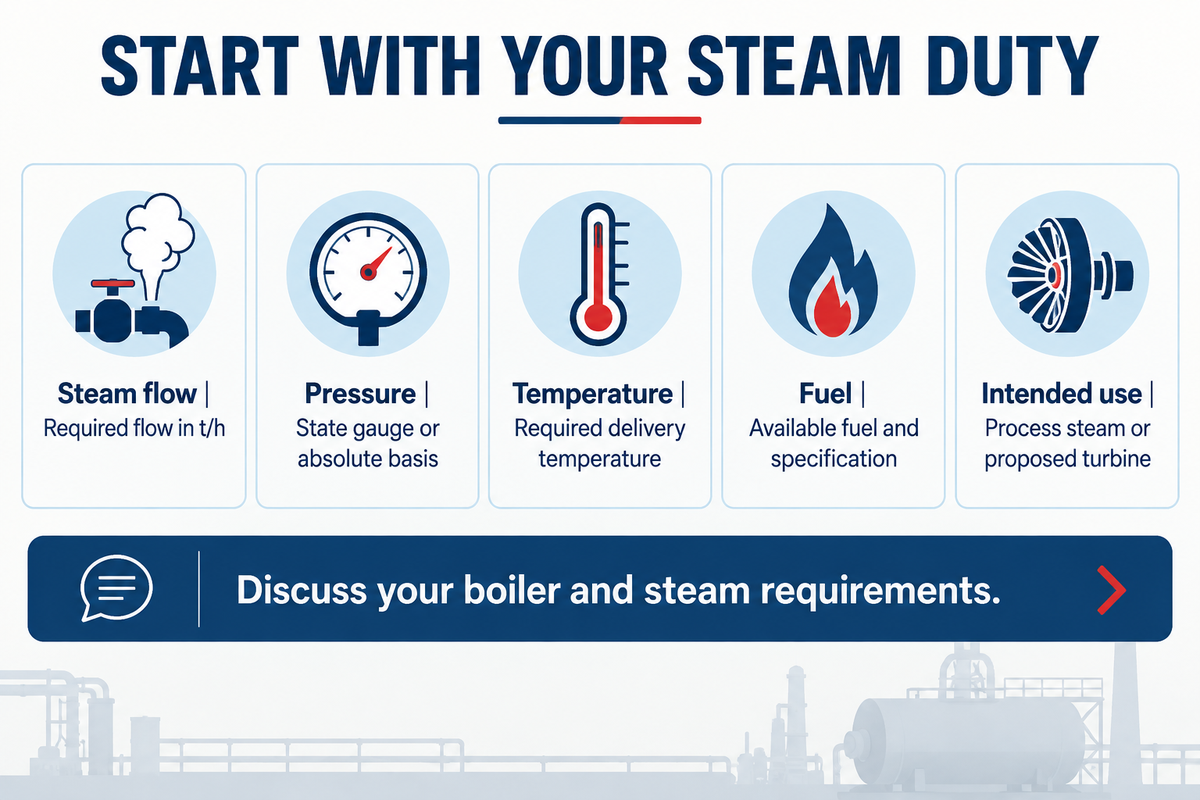
Planning the steam side of a project? Discuss the required steam flow, pressure, temperature and fuel with Taiguo, and specify whether the steam is for a process or a proposed turbine. Use the interface checklist to help identify the necessary equipment and documents for the boiler quotation.
A Steam-Supply Perspective
Taiguo’s industrial boiler range provides the steam-supply perspective in this guide. The discussion connects that equipment to the wider thermal power system so buyers can separate boiler duty, net electricity and useful heat.
References & Sources
- How electricity is generated U.S. Energy Information Administration.
- Thermoelectric Power Water Use U.S. Geological Survey.
- Thermal Storage System Concentrating Solar-Thermal Power Basics U.S. Department of Energy.
- Power-plant heat rate and efficiency U.S. Energy Information Administration.
- Catalog of CHP Technologies, Appendix A U.S. Environmental Protection Agency; efficiency definitions and footnote 116.
- Methods for Calculating CHP Efficiency U.S. Environmental Protection Agency.
- Steam Turbines for CHP U.S. Department of Energy, January 2025.
- Waste heat recovery Australian Government energy guidance.
- Utilities and Industry Continue Learnings Around Benefits of Heat Rate Improvement Sam Korellis, POWER, 2022.
- Capital Cost and Performance Characteristics, AEO2023 U.S. Energy Information Administration; Table 1, 2022-dollar basis.
- CHP Project Development Steps U.S. Environmental Protection Agency.
- CHP’s Role Providing Reliability and Resiliency U.S. Environmental Protection Agency.
- CHPQA Guidance Note 2: Scheme Description UK Government; scheme boundary and documentation requirements.
- BPVC 2025 American Society of Mechanical Engineers; Section I catalog title.
- Electricity 2026: Flexibility International Energy Agency.
- Electricity 2026: Executive Summary International Energy Agency.