Get in Touch with Taiguo

How to Choose the Right Biomass Boiler Size

Contents
show
Selecting a suitable size of biomass boiler is one of the most important steps that lead to efficient energy generation with least operational cost. Electrical heating, cooling, hot water demands for houses, office complexes, and industrial purposes will greatly depend on the right size that could meet these energy requirements. It is unarguably the guide that you must follow with regard to heating needs of the building, fuel recommendation, and when or at what season shall the load be reduced. By the lead-up to this narrative, you qualify to make an informed decision that would take you all the way to optimal efficiency and sustainability.
Understanding Biomass Boiler Systems
What is a Biomass Boiler?
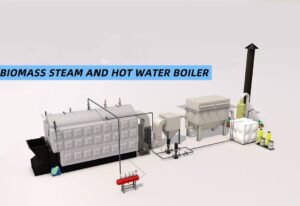
A biomass boiler is a heating system which burns organic substances like wood pelletes, chips, or logs. They heat water and provide heating and hot water for domestic, commercial, or industrial use in general. Unlike fossil fuels, such wood, biomass boilers burn renewable fuel which makes them an environmentally friendly source for heating.
The operation of a biomas boiler involves feeding fuel into the combustion chamber and setting it on fire in order to generate heat. This heat is then transferred to a water-based heating system where it is circulated through the radiators or underfloor heating in the building. Modern biomass boilers are fitted with automation technology for fuel feeding to increase efficiency and user convenience.
Zero Carbon
Biomass technology offsets CO2 emissions through the natural growth cycle of plants.
Biomass heating technology will secure an important role in carbon abatement by offsetting the CO2 emissions from combustion with that absorbed by the plants while growing, making biomass energy sources effectively zero carbon. With a reduction in the carbon-footprint, this provides a significant growth of local economies, using biomass fuel available locally and hence having a lowering effect on their greenhouse gases. It also massively reduces the necessity of imports of fossil fuels and thus provides greater energy security and sustainability.
How Biomass Boilers Work
The biomass boilers’ modus operandi is by incinerating organic materials—such as wood pellets, chips, or logs—to produce heat. This heat is transferred to hot water or steam, which can heat the building or power other industrial processes. The combustion process in such boilers supervises to the last detail to ensure effective energy production while minimizing waste and emissions.
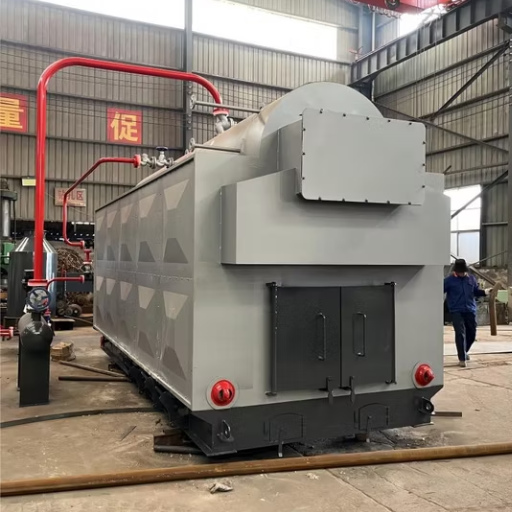
The start of operation commences with feeding biomass fuels into the combustion chamber of the water tube boiler. Once inside, the fuel is burnt for heat. In modern biomass boilers, an automated feed system is usually found inside the boilers, and the system uses sensors and controls to ensure the optimum quantity for specified combustion efficiency. The heat exchangers in the boiler, transport heat to the water, and hence the water is circulated through systems throughout houses or facilities and heat.
Ash, but simultaneously arduous for the boilers, also results in a perfect solution to the high bogey of maintenance and environmental pressure that is apt into the biomass-to-energy operations. Every biomass boiler must go through scheduled and preventive maintenance, which includes the process of cleaning up the combustion chambers in the boilers and inspecting the fuel quality. However, running safely and sustainability for heating issues, these boilers remain a near-zero emission source for climate and protect from carbon surplus.
Types of Biomass Fuels
Biomass fuels are essential for producing energy in a sustainable way. Most commonly, they include wood and wood residues, agricultural residues, dedicated energy crops, and animal waste. The availability of these biomass materials is renewable, with wide availability, making them a practical option for reducing the worlds dependence on fossil fuels.
- 1
Wood and Wood Residues
Firewood, wood chips, sawdust and pellets are materials in this category as well. These might be made from processed wood and have the Wooden Biomass burning potential. Hence, in forest regions they are predominantly put to use within biomass-fired heating systems. - 2
Agricultural Residues
Stalks, husks and shells from crops such as rice, corn, and wheat still serve as a source of biomass fuel. Today these by-products that are left en masse after every harvest are also contributing to effective waste management through utilizing them for generating energy or forward unfinished products. - 3
Dedicated Energy Crops
A wide array of plants, such as switchgrass, willow, and miscanthus, is raised especially for biomass production. Those grown bear with high growth rates and directly contain enormous amounts of energy, so they are great renewable fuels. - 4
Animal waste
Manure and organic wastes from livestock can be used for the production of biogas by anaerobic digestion. This operation also fights against the waste management scenario.
Any mixture of biomass feed-stuff sources, consisting of these types of biomass fuel against industries and households, could be mostly about reducing environmental footprints, enhancing sustainable development, and working their transitions to cleaner energy solutions.
Factors Influencing Biomass Boiler Size
Heating Demand Calculations
Biomass boiler sizing and capacity calculations largely depend on the outcome of heating demand calculations. The latter are dictated by the energy need of the building, functionality of heating system, and climate conditions in websites. Building all relevant calculations would help the boiler work best, avoiding any under- or over-performance.
One of the first principal steps is measuring how much heat the building loses quick. This is a factor of insulation, window types and general thermal envelope. Once the heat loss is estimated it becomes possible to appreciate how much energy would be required to maintain an indoors environment suitable for living during the coldest times.
⚠️ Important Note
The important consideration to think of is the intended use of the boiler. Residential use will certainly see demand fluctuation in heating patterns and hot water usage since it depends on occupant behavior. Industrial or commercial usages will, on the opposite, require consistent energy output. These are the variables that need to be considered while ensuring that the biomass boiler is adequately sized to efficiently and sustainably meet the heating requirements.
Building Insulation and Efficiency
Effective building insulation is one of the key ingredients to maximize biomass boiler efficiency. Quality insulation primarily lessens heat loss, thereby maximizing energy utilization for maintaining comfortable temperatures. Poorly insulated buildings result in high heat wastage, causing the boiler to work hard and use more fuel to the detriment of its efficiency and exorbitant fuel costs.
When this is efficiently managed, the walls, floors, and windows are soon targeted to concentrate the responding increasing insulation: cavity wall insulation, loft insulation (or attic insulation), and double or triple glazed windows could vastly reduce the amount of heating energy needed to warm a building. Another surefire—and low-tech—way, which achieves a lot, is reducing unexpected heat loss from doors and windows.
Improving the insulation can achieve consistent indoor temperatures with less energy and take off some load from the biomass boiler, thereby allowing optimal operation of the system, long-term cost savings and reduced environmental impact. The insulation upgrade is an effective heating intervention of sorts in a sustainability aspect.
Climate and Location Considerations
Climate and location bring a lot into the efficiency of energy and heat amongst other better-known parameters. In areas with cold climates, high thermal loss can be offset through effective insulation and decent heating installations. These considerations vary with relation to local climatic patterns such as temperature range, precipitation intensity, and prevailing winds, and thus energy solutions can be, and should be, custom-tailored to each environmental condition.
For instance, regions that receive a lot of snow and have below-freezing temperatures for extended periods of time usually need the airtight good practice, while triple-glazed windows are used to reduce heat loss. On the contrary, in temperate climates, passive solar or light insulation is sufficient or could need less energy. Modifiable building designs can be great to confront snow extremes and abrupt weather changes.
Furthermore, localized environmental conditions, for example, altitude or humidity, play a role in deciding appropriate materials and system designs. Systems that manage to work well in thin air may be the preference in higher altitudes, whereas the use of moisture-resistant materials in humid locations would prevent degradation. Prioritizing these aspects will see to the provision of sustainable cost-effective energy solutions that are well-matched with adjusting for the specific challenges relating to that location’s climatic conditions.
Calculating the Right Boiler Size
Step-by-Step Sizing Process
💡
Sizing Methodology
Determine Your Heating Needs: The first step in the process involves determining how much heat is needed by a home or a building. Quite commonly in hourly heat unit calculations, this is given in British Thermal Units (BTUs). Various factors for estimating the heat loads include the space size, insulation quality, number of windows, and climate zones.
Evaluate the Boiler’s Efficiency: Select the boiler that provides utility-level efficiency for the heat load you’ve estimated. So, convenience is your judgment—all choices must be aligned with the boiler’s efficiency, this being your most important parameter as already stated earlier. High-efficiency products will ensure that you have the maximum heat generated for whichever fuel you’re buying.
Match the Boiler Capacity to Your Requirements: After having calculated your heat-demanding situation, pick a boiler to or somewhat beyond the size required because getting something larger might amount to an energy waste and something smaller cannot meet your demands. A majority of boilers are always rated in their HR capacities, hence make sure the one you select would fit precisely to the BTU calculation.
Common Mistakes in Boiler Sizing
The most common mistake in boiler sizing is to pick a boiler without properly calculating the necessary heating load. It happens when users err on the assumption that if a larger plant is good, then a bigger boiler is certainly better. This only results in wasted energy and higher costs of operation. Oversized boilers often create issues such as short-cycling, which reduces efficiency and may damage the equipment’s effective use. An undersized boiler will have to struggle while at work to meet the required demand. This may cause insufficient heating and might wear out the system, too.
Another common error is to overlook some local impacts and building-specific considerations. Influence of such factors as building construction standards on insulation quality, ceiling height, and climate on boiler size selection. If these details are ignored, the heating requirements could be wrongly calculated and an improperly matched poor boiler is installed either to underperform or run inefficiently.
It would be a significant mistake to consider just boiler replacement without re-evaluating the current heating requirement. When a building undergoes changes like renovations or energy efficiency improvements over the years, the heating requirement might also get modified. A new heat load calculation will ensure the boiler selected will be suitable for the current requirements of the building, thus resulting in good efficiency and comfort.
Emission Standards and Regulations
Understanding Emission Requirements
Emissions standards are regularities made to minimize the emissions of pollutants from boilers and other heating systems. The reason they have been set is to minimize environmental damage, improve air quality, and keep in line the compliance with climate-change objectives. The actual periodic regulations may or may not look similar based on the country, state, or boiler type. It is mandatory to observe local rules in the locality where the equipment is positioned.
Modern-enough emission regulations primarily look toward curtailing nitrogen oxides (NOx), carbon monoxide (CO), and particles—these are undoubtedly the most common and damaging associations with air pollution. If required, boilers could have to integrate-the-integrated-minimal-nitrogen oxide-using burners, or any other novel equipment to conform to the emission standards. Routine servicing and monitoring could prevent upgrading and violations of acceptable emission standards in the boiler system.
Meeting emission requirements should not only be about being in compliance with the law but also about ushering in a stance of ecological responsibility. Installing advanced energy-saving equipment with proper maintenance helps reduce the environmental impact when saving potential operational costs brought about by improved efficiencies. Whenever a standard is recognized and observed, the legal obligations together with the long-term sustainability of the heating systems are ensured.
Choosing a Low-Emission Biomass Boiler
While considering a low-emission of Biomass boiler, make an effort to focus on important factors that promote efficiency and are least harmful to the eco-system. Advanced combustion technology should have priority in the make-up of the Boiler. This combustion technology reduces particulate emissions and ensures complete combustion of the fuel. This, in turn, lowers pollution making very little waste. The presence of standard certifications or compliance to regional emissions, based on the model of boilers, assures conformity with stringent environmental regulations.
The usage of biomass fuel is also important. The Boiler should be able to run on alternative, sustainable fuel options like wood pellets or agricultural residues rather than some other biomass sources to minimize the release of emissions. Properly dried, good-quality fuel ensures efficient combustion and the least emission. Among others, some boilers offer native fuel-options with the purpose of giving choice and broader horizon in the future.
Lastly, balance boiler size and efficiency with space needs they serve. Oversizing can be inefficient with respect to fuel use, and undersizing may be unable to cope with demands, thus leading to excessive emissions. Keeping the unit in good order through regular maintenance will ensure optimum comfort and welfare, without sacrificing much concern for the boiler engineering. A plant that demands considerable maintenance and provides excellent support for the task can continue to run long after proper tune-up and meeting the emissions regulation with an excellent performance.
Impact of Size on Emissions
The boiler size affects both emissions and overall operating efficiency. A small boiler can’t keep up with demand, and the boiler is then continuously operated at maximum capacity, which is very inefficient and creates higher emissions. Incomplete combustion and excessive fuel use are common causes of emissions with an undersized boiler. Right sizing is essential so the boiler can constantly meet the expected load without any hassle.
Surprisingly, however, an overly large boiler could do more harm in terms of emissions. When a boiler outstrips the load requirements, it could frequently cycle between on and off states, thereby forcing inefficient fuel use and greater wear and tear on the key components. This cycling fails to allow the boiler system to achieve its marketable operating temperature and therefore results in partially incomplete combustion and subsequent creation of very high levels of pollutants.
To deal with these issues—it is imperative that the dimensions of the boilers are made specifically matching to the intended use of the plant. Boilers that are well-proportioned and cleaned regularly will use energy at the most prime. They contribute in reducing the environmental impact, bestow a great deal with compliance and uphold the prohibition of emissions. Professional performance evaluations (or upgrades) at the time of installation can ensure the proper sizing of the boiler for minimal emissions and best performance.
Long-Term Considerations for Biomass Boiler Size

Future Expansion and Scalability
While assessing the long-term efficiency of a boiler when considering biomass, planning for expansion becomes necessary. The boiler that is just fine for present use but is adaptable for any foreseeable expansion would have guaranteed efficiency while potential business expansion is happening. Thus, without further doubt, it will not cause any replacement expenses or lead to less energy-efficient additions. Scalability, therefore, is the term often used to name the size of boiler having a capability to take care of expected increase in load without lowering its efficiency.
The changes in scalability are not part of the assessment of potential increases in energy consumption from new plants or rise in heating demand. Amenable practices involve adaptable systems integrable with pre-assembled parts or situations where any changeover/upgrade has to be permitted in the future. Incremental adjustments can respond to greater requirements and avoid potential over-sizing of tomorrow and under-sizing today. The best boiler system, therefore, is supposed to fit the long-time propositions being advised by the chief boiler subject matter expert.
Foreseeing that the chosen type of biomass boiler supports the evolution of environmental protection considering future regulations marks a significant consideration. There is eager ambitious leeway among (sub-) systems which can accommodate the insertion of novel or improved possibilities for emission control, practically ensuring sustainability and regulatory conformity with time. Thus, an engine that is scalable not only meets immediate energy queries but also grows and expands responsibly in the future.
Maintenance and Operational Costs
The operating and the maintenance cost are critical considerations for the effective utilization of a biomass boiler. Regular maintenance ensures efficient operation of the unit, minimizes downtime, and helps prolong the lifespan of the system. Key maintenance activities will involve cleaning the heat exchanger, carrying out certain inspection tasks for the combustion-chamber, and making sure that all the mechanical components are in order. These and many other efforts are directed towards ensuring optimal efficiency and minimizing unforeseen events.
The operational costs of the biomass boiler mainly depend on the type of fuel; efficiency; and the frequency of its operation. In order to maintain fuel quality biomass fuels, such as firewood pellets, chips, or logs must be harvested sensibly and stored so as to stay dry. While the use of the biomass fuel tends to favor savings over the cost of the fossil fuel. It is important to consider the market oil and gas prices in the analysis of the total cost effect when included in handling, operating, and maintaining the fuel, and using this in comparison to the system cost.
To offset the huge of maintenance work and operation in managing a biomass boiler, automatic systems can help simplify the operation by handling fuel and ash emissions. However, kicking it off will show higher costs. Ensuring that a properly performed marination occurs, and the fuel is well handled, can help contrive for a manageable pair of long-term maintenance and operational cost-benefit ratio.
Environmental Impact and Sustainability
Biomass boilers come with a hefty slashing of carbon emissions as compared to fossil fuel systems. Not only do they minimize the burning of non-renewable energy sources by utilizing organic and renewable materials grown within the circumscribed season as wood, agricultural residues, or energy crops, but the calamity that sets in with this reaping and burning phase is offset by the carbon outburst absorbed by plants during their growth cycle, thereby making biomass a low-carbon energy option when managed sustainably.
Hinged on the issue of sourcing and usage, their sustainability is up for challenge. Locally harvested biomass lessens the environmental impact due to the smaller scale of distance covered for transportation, reducing the emissions in the process. Besides, sustainable forestry practices and land management must prevail to guard against overexploitation, deforestation, and loss of habitats. Isotope/discriminant sourcing of fuel is a sine qua non to preserver the environmental benefits that come with biomass energy.
Biomass boilers have, by far, a plethora of benefits to the user; however, biomass boilers can still end up releasing minimal quantities of air pollutants, such as particulate matter, should they be improperly maintained. A well-developed filtration system along with immense pollution control will compensate for this and assure allegiance to the environmental law. In combination with sound practices, biomass has the advantage of becoming a perfect arrow in the quiver—the best counter to greenhouse gases, hence promoting renewable energy, which is fundamentally aimed at sustaining the long-term environment.
Frequently Asked Questions (FAQ)
Q: How then do I select the right size of a biomass boiler for my property?
A: The first step in getting cloud material for the sizing of the biomass boiler is to profile the heat demand of the building. This involves building maximum heat load together with average daily use. Based on insulation, floor area, hot water, and heating profiles, an approximate output for a boiler can be set in kW. Buffer tanks can be used to ensure steady supply of heat and prevent short cycling, and logistics for fuel supply and completion of the chimney are another issue. Your hitherto planned solution can benefit greatly by seeking the inmate or installer to feed back or suggest a specific sizing profile.
Q: How does the buffer tank contribute to the biomass boiler sizing guide?
A: The main purpose of the buffer tank is to store energy and cover short-term peak demands as well as prevent the boiler from continually cycling, thereby increasing the efficiency and applicability of the boiler size that is fitted in the system. Buffer tank capacity has to be correctly assessed when using a biomass boiler sizing guide, facilitating the use of a biomass boiler with smaller maximum power, although at the same time, keeping the system comfortable and fuel supply more predictable, due to delivery interruptions.
Q: How should peak demand be accounted for during biomass boiler sizing per the guide?
A: Consider peak demand under the scenario of greatest concurrent heating and hot water requirement, particularly for the coldest period. The sizing guide must cater to precautions for likely-peak loads or endorse adding a secondary heat source and / or buffer tank to handle peaks and therefore install a boiler that is not oversized. Taking into sudden peak loads that are interspersed here help ensure well-sizing of flue and the delivery systems and will thus always ensure that there will be no undersupply when demand surges during crucial times.
Q: Can one save energy using an optimal-sized biomass boiler plus buffer for fuel storage?
A: That is correct. The use of fuel can be optimized, thus eliminating the requirement of transportation and saving energy by properly sizing the boiler, fuel storage tank, and buffer tank. Moreover, biomass boilers can hardly be wasted while being properly sized and subsequently have more waste-causing energy loss due to poorly fitted oversized heating systems due to the lack of combustion efficiency. Other users save themselves money by taking into consideration all costs involving heating and sizing during the input supply planning and delivery scheduling.
Q: What is the effect of ventilation and flue requirements on a biomass boiler sizing guide?
A: Flue and ventilation requirements are integral to a biomass boiler sizing guide; these factors affect the combustion efficiency and safe running of the operation to a great extent. So, when sizing the boiler, it is necessary to make sure that the flue diameter and routing match the output of the boiler as well as that adequate fresh air supply is ensured. Improper sizing of a flue can lead to a reduction in the useful heat output, affecting the performance of the boiler; that is why such issues need to be addressed during the design and installation stages.
Q: Is there a way to get an idea on a factory basis for a containing-sized boiler with a biomass boiler’ sizing guide?
A: Biomass boiler manufacturers and installers sometimes offer free online calculators or initial consultations that provide a rough estimate as a biomass-sized boiler sizing guide. They tend to depend upon simple numbers for ease: size of property, the number of people in it, heating profile, and hot water use. This serves as a very crude boiler sizing and buffer tank capacity for your upper limit. You will need to conduct some on-site measurements for more dimension-specific precepts to create a useful set of factors for delivery and full appropriation.
Q: What effect does insulation and heat loads have on biomass boiler-sizing recommendations?
A: Quality of insulation, and profile of usage, has a significant bearing on recommended boiler sizing factor. In general, well-insulated buildings with primary heat demand under well-matched occupancy conditions require a smaller boiler and buffer storage tank. On the contrary, a bigger boiler with a larger buffer tank may be needed for a less-well-insulated or used variable-occupancy building to manage the heat loads. A sizing chart for biomass boilers is always flexible enough to vary the sizing according to these considerations to ensure proper fuel supply and efficiency.
Q: What feedback should I get from installers when using a biomass boiler sizing guide?
A: Ask installers to give detailed feedback on calculated heat loads. Ask for comments on recommended boiler outputs and associated buffer tank sizes. Further comments are needed for flue design, fuel delivery options, and estimated running costs. Ask for references or case studies for delivery and maintenance records. All such feedback would help in the validation of the biomass boiler-sizing guide recommendations and ensure that the chosen system is useable, reliable, practical for your particular fuel-supply profile, and peak-demand needs.
References
- Biomass Boilers for Space Heating
This guide from the University of Wisconsin Extension discusses sizing heating systems, including considerations for full or partial heating replacement.
Read more here - Biomass Heating Project Analysis Chapter
A detailed analysis from Michigan State University on approaches to biomass combustion system sizing and operational considerations.
Read more here - Guide for Measurement and Verification of Wood-Heating Systems
Published by NYSERDA, this guide emphasizes sizing biomass projects at no more than 60% of the peak heating load for optimal performance.
Read more here - SZL Series Biomass Fired Hot Water/Steam Boiler