Get in Touch with Taiguo

Vertical Biomass Boiler Advantages


Contents
show
Understanding Biomass and Its Importance
What is Biomass?
Biomass refers to organic material derived from plants, animals, and microorganisms that can be used as a renewable energy source. Wood, agricultural residues, animal manure, and certain waste types are just a few examples. When burned or treated, these materials emit chemical energy that in turn generates heat, electricity, or fuels.
The major point of interest concerning biomass is that a cleaner, more sustainable alternative to fossil fuels can be used. Biomass is also a renewable type of resource, unlike coal or oil. After use, it gets replenished through natural processes of plant growth and agricultural cycles. Because biomass biodiesel emits carbon dioxide, which was recently taken in by the atmosphere from the growth of the organic resources, the two, if well managed, would almost form a nearly balanced carbon cycle.
Again, biomass has far-reaching consequences as far as energy security and waste management are concerned. Biomass helps cut down on the need to pile stuff into a landfill, and it minimizes methane emission from decomposition. In support of agriculture and forestry industries, creation of jobs and the promotion of decentralized energy systems in rural areas for local production are yet other benefits. In all aspects, biomass can form a good basis for a transition to totally sustainable and environmentally friendly energy options.
Sources of Biomass Fuel
Biomass fuel cells exist in numerous natural materials that may be repeatedly grown and reproduce. One well-known category includes plant-based materials like farming crops and residues such as cornstalks, wheat straw, and rice husk. These materials are already in operation along with the farming processes. This makes them an available and easily revivable energy resources and does not come in competition with food supplies.
The other main resource for biomass fuel fires consists of wood and forestry residues. This is made up of wood and forest residues from logging activities, such as branches, sawdust, and wood chips, and fragrant and untreated timber from sustainably managed forests. These materials can then be supplied to pellet plants or be burnt directly for heat and energy. On the other hand, urban wood waste like discarded pallets and debris from construction sites evolves in turn to help produce biomass fuel.
Other major sources involve animal waste and organic municipal waste. Livestock manure and organic waste from homes or industries could be used in the production of biogas through anaerobic digestion. In this way, the entire process not only offers the production of a renewable energy source but also takes the favorable management of waste; thus, environmental pollution decreases. These various sources render biomass a feasible and sustainable alternative to fulfil energy needs.
Types of Biomass Used in Boilers
A variety of biomass fuels are used in boilers. It comes from all sorts of organically derived things. The main types include wood and wood residues. Besides, other types include agricultural residues and energy crops. Due to high energy content and availability, wood and wood residues are some of the most commonly used biomass fuels.
Agricultural residues like husks, straw, and bagasse, that is a byproduct from the processing of sugarcane, show up as biomass, too. Usually converted into fuels, these substances are used to eliminate agriculture wastes and provide a somewhat economical source of fuel. This is good logical reason the availability of these fuels in many farming locales supports the utilities in the decision to opt in.
Willow, switchgrass, and miscanthus are plants that are grown purposely for fueling. They are grown mainly because they grow quickly and provide high energy yields. Unlike agricultural or industrial wastes, energy crops are continually renewable and hence easy to grow in a sustainable manner, making them an increasingly popular source of biomass fuel for biomass boilers. They display all the way the immense versatility and sustainability of biofuels when applied to energy production.
Overview of Vertical Biomass Boilers
What is a Vertical Biomass Boiler?
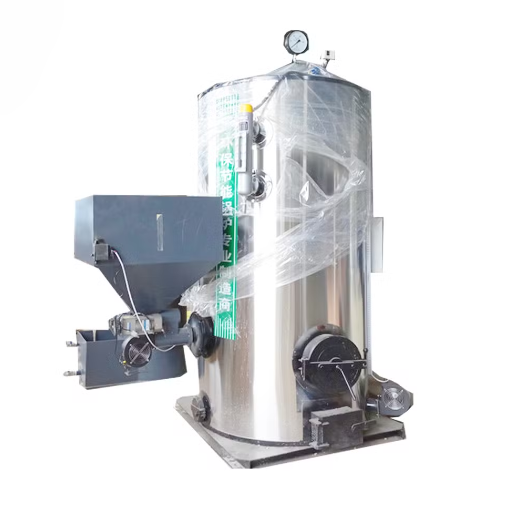
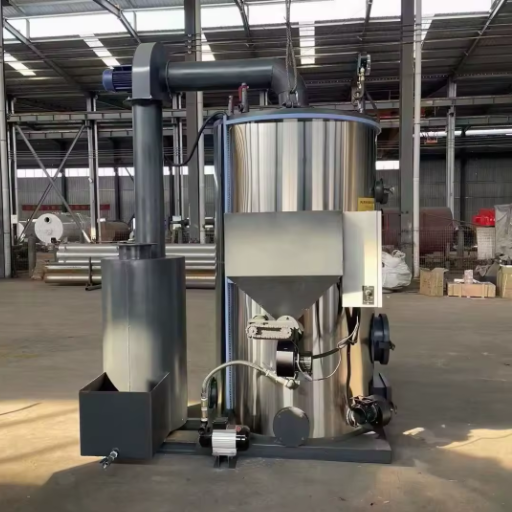
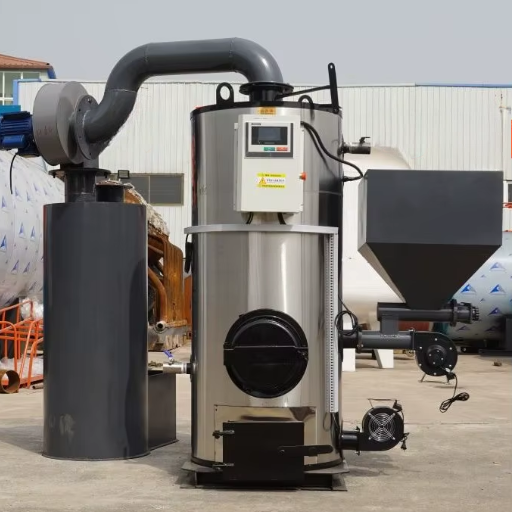
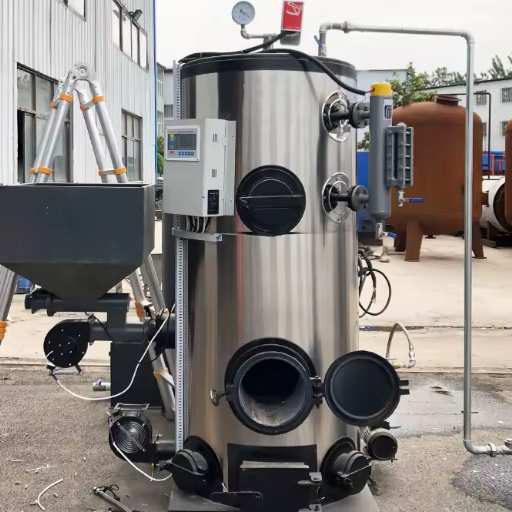
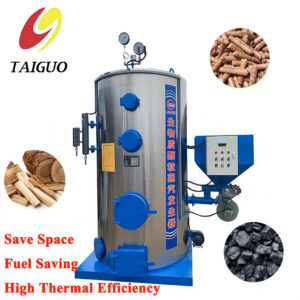
Vertical biomass boiler is a type of heating system specially designed to generate heat and energy by burning the biomass fuel, including wood pellets, energy crops, or other organic materials. Its vertical design is compact, saving more space; that is conducive to areas where one has the least floor space. It allows for better heat movement and exhaust gas flow, which brings about better efficiency in the boiler.
These boilers work by feeding the biomass fuel mechanically onto the grate. Here, it is burned to produce heat. Then, the heat produced passes through a heat exchanger which in turn heats water or air to be used in different applications like heating buildings or backing industrial processes. For more efficiency and ease of use, vertical biomass boilers come with advanced features like automatic fuel feeding and ash removal systems.
Vertical biomass boilers are considered to be a more environment-friendly option versus the conventionally abundant fossil fuel heating systems. They make use of the pure and locally available biomass resource, are therefore a totally “carbon neutral” way to reduce both carbon emission pollutants like CO2 and the dependence on the resources that are nonrenewable. The high energy efficiency and the ability to use sustainable biofuels make them an appealing option for residential and commercial space heating.
Components of a Biomass Boiler System
Points of a biomass boiler system are crucial and are established to function collectively in order to convert biomass fuel into heat energy hardly. Component parts are fuel storage, burning chamber, heat exchange, and control system. Based on the role each part plays in affecting the boiler’s proper operation and reliability.
- Fuel Storage: The storage is simply where one layers the biomass fuel, which is then electrically generated in the combustion chamber. It must provide smooth fuel flow right to the combustion chamber. It may be a hoper with small holding for domestic use or even a big silo when it is to feed industrial users.
- Combustion Chamber: The price spent on a chamber might be already saved on future savings. It means that much. To seek maximum efficiency with minimum emissions while burning the fuel, being the true essence of the work in this chamber, marks it successful.
- Heat Exchanger: This particular device shall facilitate transfer of the heat creted within combustion chamber to the water or air that can circulate within the heat surrounding system thus enabling the energy within to be utilized in a spatial or water heating pathway.
- Control System: Modern biomass boilers are considered to come with cutting-edge control mechanisms that are known to handle fuel feeding, supervise combustion, set temperatures and, thus, automate operational processes. This capability makes them more efficient, safe and user-friendly mechanisms.
Together, the various components operate together coherently in providing a sustainable and valorous heating solution, thereby making biomass boilers a promising alternative to traditional heating systems.
How Boiler Technology Has Evolved
The construction of the boiler has gone through a lot of changes over the years to improve such things as efficiency, safety, and ecological aspects. Initially, there were boilers that could only be operated manually. It was a huge headache to maintain these types of boilers due to their very simple means of operation. Another thing that did not work well in these traditional systems was their reduced efficiency and energy consumption together with more emission problems.
Moving forward from the antiquated and inefficient boilers, these boilers now incorporate technological advances such as electronic controls, automatic fuel feeds, and optimized combustion processes. These designs greatly diminish energy losses and emissions and cater for more precise control of the temperature, often for the whole dwelling. For instance, with the simple addition of sensors and programmable systems, the boilers can work in a more efficient way. The latter can readjust themselves depending on the energy demand, Consequently, the boilers are highly adaptable across a wide spectrum of markets spanning from households to industry.
Additionally, the efforts to move forward in sustainable energy solutions, such as the utilization of current renewable fuels like biomass and technological advancements in heat recovery systems, and improved design practices that apply the use of high-tech materials enable modern-day boilers not only to perform more efficiently, but more importantly to reduce greenhouse gas emissions. Development in boilers technology continues to be a stepping stone for better energy efficiency and a clean future.
Advantages of Vertical Biomass Boilers

Fuel Savings and Costs of Energy
The vertical biomass boilers offer significant fuel savings by the use of renewable biomass materials like wood chips, agricultural residues or pellets which are often cost-effective and in high availability and compared with fossil-based fuels. Also, such materials mostly remain sustainable, so these renewable setups set an excellent example for the industrial sector to reduce cost of operations while supporting environmental conservation.
Furthermore, the vertical biomass boilers are designed for high efficiency, thereby making the best energy conversion from fuel to heat. This does reduce a lot of fuel consumption compared to lesser advanced systems, enabling considerable business savings over the long term.
An asset generally found in renewable energy sources such as biomass is that the prices of these fuels are stable. Albeit fossil fuels could be faced with global market fluctuation for pricing, biomass prices are generally stable due to local supply and constant renewable nature. Such possibilities help business people forecast operating costs better and budget their allocation efficiently, in turn achieving financial sustainability and sustainability.
Energy Independence and Efficiency
A vertical biomass boiler possesses the capability of providing many advantages primarily regarding matters of locally sustained power and operational efficiency. The large lifespan is the ability to receive any locally sustenance biomass, henceforth eliminating the need of importing fossil fuels into the area. It provides energy security for businesses and communities while also supporting the local economy with regional biomass production.
In energy distribution terms, the boilers are very efficient. By burning renewable materials such as wood chips, residue from agriculture, or pellets, they produce steady heat as they have less waste. Besides combustion advances, improvements in boiler design give them enhanced combustion processes, ensuring they have better efficiency in fuel-to-energy conversion thus emitting less greenhouse gas compared to regular energy sources.
In addition, vertical biomass boilers often pertain to more compact designs, saving space and allowing even the more complicated adaptation of renewable energy solutions in urban or space-restricted environments. Individual potential costs will be higher upfront, but after that, the return investment principle produces savings on operational costs over the lifespan of the boiler to eventually shift these to be more cost-effective and highly sustainable tools to consider.
Carbon-Neutral Benefits of Using Biomass
The biomass production cycle is said to be carbon-neutral due to an internal carbon cycle. The difference here is there is an almost equal amount of carbon dioxide (CO2) released during biomass combustion and that sucked up in the plant during growth. Whereas fossil fuels produce CO2 trapped in the atmosphere over millions of years, biomass recycles carbon already in the atmosphere to help in the fight against climate change.
A significant advantage of biomass is that it is renewable. The supplies of biomass feedstock—the likes of wood, agricultural wastes, and dedicated energy crops—can be restocked quite rapidly compared to the present fossil fuel supplies. This ensures a steady and consistent energy supply, reducing dependence on nonrenewable resources. Furthermore, biomass energy systems have the ability to utilize wastes, thereby reducing landfill and methane emissions with the added advantage of further reducing their environmental impacts.
Instead, this assists in a two-fold way in land stewardship and economic growth. Practicing forest conservation while promoting agriculture for feedstock cultivation ensures that biomass systems contribute to healthier ecosystems. This organic process has resulted not only in the creation of jobs in the remote forests doing cutting, processing, and energy production but has also given them the context to be environmentally friendly as a cornerstone of sustainable development.
Comparing Biomass Boilers to Other Heating Systems
Vertical Biomass Boilers vs. Traditional Gas Boilers
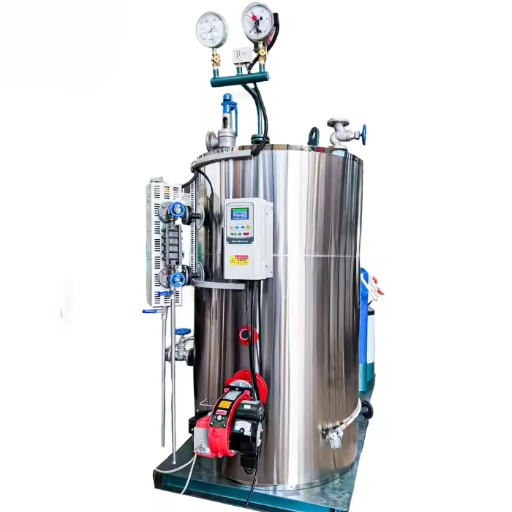
Vertical biomass boilers and traditional gas boilers serve the chief objective of heating and producing hot water; yet, they are some way apart since the basis of their fuel source, environmental impact, and operational expenses are differently structured. Biomass boilers are based on renewable organic and readily available materials that are very much a sustainable choice for the user handling them. On the other hand, using nature’s natural gas, man-made gas boilers throw those greenhouse gas emissions way out-of-whack and also tremendously depend on sources for fuel.
By using organic matter, which is a means to make a renewable source of heating, these installed systems have less environmental impact, buyers getting reduced carbon footprint over its entire lifetime. Gas boilers require the fueling of millions of tons of fuel, and therefore, the carbon image provides a really important factor in environmental degradation. Many thus see biomass boilers as a greener choice for those who wish to go green, either individually or by businesses.
Nevertheless, biomass boilers do have some disadvantages. They are larger in dimensions since they have to accommodate systems and fuel storage spaces. Therefore, they are not suitable for small dwellings. And their maintenance cycles are typically shorter as compared to gas-boilers. In contrast, gas boilers are easier to manage and may be cheaper to install. It all basically depends on where the individual prioritizes the environment, how much space is available and what long-term cost issues might arise, how easily one can achieve fuel.
Alternative Ways to Heat: The Role of Biomass
Biomass is a renewable energy derived from organic materials like wood, agricultural residues, and certain types of waste, and as an alternative to fossil fuels, it plays a significant role in various heating systems. Through combustion, it is used to emit heat to be used for various heating needs in homes, businesses, or industries. Modern biomass systems are created with high levels of efficiency wherein they start the energy generation support so long as the fuel can be in pellets, chips, or logs form.
One of the great advantages of biomass is its possible role for the reduction of GHG emissions, as when compared to fossil fuels. Since biomass enjoys a carbon neutrality status due to the almost equal amounts of carbon absorbed and released by the plants during their growth and combustion, carbon dioxide amounts are reduced substantially. Further, biomass systems often foster the use of local calorific materials and thus decrease dependence on imported fuels, which is good for the local economy.
While it is true that biomass is essential for heating, there are certain concerns that require consideration. Space necessitated for the equipment and fuel storage might be of concern for residential developments-especially small homes. Maintenance, which is usually labor-intensive, can be even more demanding when biomass systems are compared to natural gas or electric systems. Nevertheless, biomass heating is a viable and friendly option for individuals unable to obtain supplies of sustainable fuel and keen on cutting down on their carbon footprint.
Commercial Biomass Boilers and Their Applications
Commercial biomass boilers are employed to generate heat and in certain cases, power for a varied array of large-scale applications. These systems become useful to industrial or other forms of building where huge amounts of heat are consistently required, like schools, hospitals, or factories. The commercial biomass boilers can be used to provide an efficient renewable energy solution by utilizing materials such as wood chips, pellets, or agricultural residues.
Commercial biomass boilers provide the most obvious alternative by greatly reducing levels of emissions compared to systems using fossil fuels. With biomass originally derived from organic matter, carbon dioxide is naturally absorbed as it grows and through combustion, the carbon released is compensated for thereby making it a sustainable option. Fuel of this nature also is generally considered to be situated locally, undermining foreign sources of energy and stimulating regional growth.
Consequently, substantial space for fuel storage and handling, as well as regular activities to ensure safety, are required once industrial biomass boilers are installed. To meet these requirements, there may be special initial capital costs above standard systems. However, to overcome such objections through subsidies or energy tax incentives, other foreseeable opportunities might improve acceptance of biomass as an important technology for future processes.
Considerations for Implementing a Biomass Heating System
Capital Cost and Financial Investment
The supply of capital for the investment in a biomass heating system must be considered pragmatically. Such installations involve a larger upfront expense burden when compared to regular heating systems, mainly due to specialized equipment, installation processes, and infrastructure adaptations. This would mean costs for the boiler, fiduciary storage facilities for fuel biomass, and possible integration with the existing heating network.
Nevertheless, under normal circumstances, biomass fuel costs may be lower over the long term than fossil-fuel costs. Various governments and non-government organizations frequently offer grants, incentives, or tax rebates in order to incentivize the biomass implementation process.
Long-term earnings run beyond management opportunities. Such systems would definitely increase energy independence and lower exposure to variable fossil fuel price shocks. Sustainability objectives mean that such systems might seek available funding opportunities or backing for eco-friendly measures. In determining the long-term economic viability of a biomass system, it is imperative to deliberate on the life-cycle costs alongside the assorted financial incentives.
Operational and Maintenance Requirements
Biomass Systems operations, duties, and maintenance must be systematically maintained to ensure efficient, reliable, and environmental compliance operations. It is essential to institute routine checks to discern equipment wear, monitor fuel quality, and identify system performance. Proactive maintenance significantly decreases unplanned downtime, which in itself is expected to extend the operational lifespan of the register.
Key requirements for day-to-day operations entail controlling fuel supply, ensuring the proper conditions for storage, and ensuring consistency in fuel feeding mechanisms. To maintain maximum output and limited air absorption, biomass systems must be operated within the most favorable temperature and airflow conditions. It is therefore necessary to routinely clean these components, cleaning them to secure performance efficiency and prevent ash and dirt blockages.
Periods of maintenance mingled with manufacturer recommendations could amalgamate both periodic and annual servicing activities, furnishing inspec-tions of valves, sensors, and control systems for current-status condition. Documentation of maintenance and operational activities ensures accurate management of the system, highlighting operational shortcomings that would arise with troubleshooting. If all conditions are met, operators can expect to remain in control of a properly working, effective, and environment-friendly biomass system.
Choosing the Right Type of Biomass Boiler
Selecting an appropriate type of biomass boiler entails considering the energy needs, the type of available biomass, and system compatibility with your infrastructure. The featured examples include stoves, pellet boilers, and chip boilers, which cater to various scales and applications. Pellet boilers with compact size and higher- energy efficiency often appeal to small households, while chip boilers are great for large commercial and industrial installations where a bigger energy demand exists.
Other main aspects to look at include, but are not limited to, the fuel type. A biomass system can burn either wood logs, pellets (an altogether cleaner source), or chips. Wood availability should hence be a crucial factor affecting some people’s considerations on the selection of this type of boiler. Pellets may be more efficient and environment friendly but might simply cost more than chips or wood logs. In contrast, wood logs exemplify an almost-no-cost renewable option but do need much more storage space and refueling periods. Therefore, a comparison between fuel availability, storage, and other aspects presented must be made to get the most reliance on the cost-effective means from this perspective.
Following this, it would be wise to evaluate the installation and maintenance-related needs. A biomass system often tends to require much space and hence place undue demand for many other considerations concerning the setup and other necessities linked to local standards, emission control, etc. Maintenance requires regular cleaning to get rid of ashes and some other fine particle emissions, and periodic servicing is needed for ensuring the optimum working order of the asset. Evaluation of these aspects is important for the optimal selection of a biomass system agreeing to energy demand and other needs while staying ŕ la carte to the budget end environmental necessities.
Frequently Asked Questions (FAQ)
Q. What are some advantages of vertical biomass boilers compared to their traditional counterparts?
A. Some key pencil points about vertical biomass boilers are their small size, compact firebox design ideal for small spaces, and affordable fuel choices (like waste wood or woodchip) that can significantly reduce energy costs. Installation becomes a lot easier when you have a complete system integration into a biomass boiler. Modern boilers are fully automated using combustion fans, soot blowers, and an automatic ash bin while reducing the requirement for labor. They can burn various materials like pellet and wood chip or lower-grade wood and also fit with existing steam or hot water heating equipment, hence offering an assortment of benefits to renewable energy systems and energy management.
Q: How does fuel flexibility (pellets or wood chips, waste wood) influence the advantages of a vertical biomass boiler?
A: The capacities of Vertical biomass boilers are enhanced by fuel flexibility, meaning that lots of them are able to employ chips and pellets (amongst other feedstocks) as well. Such application helps decrease fuel costs with lower-grade solid fuel where pellets and wood chips are not economically viable. Using multiple feedstocks, operators benefit from a punctually chosen local fuel source depending on availability and moisture content; and support the possibility of utilizing mixed fuel in the storage system feeding an automated burner plus gasifying plant. Flexibility provides stability in energy deliverability and enhances the ROI in a fluctuation fuel market.
Q: Are vertical biomass boilers suitable for larger systems and combined heat and power applications?
A: Absolutely. Although vertical models are normally preferred for smaller units due to space constraints, vertical biomass boiler technology can be applied as part of the overall boiler tech for larger systems and CHP applications . In CHP schemes, the boiler or gasifier feeds a turbine or engine for the production of electricity and further provides steam or hot water for heating. The advantage lies in the capacity for on-site generation to help offset energy costs, with the possibility of generating electricity along with heat, resulting in significantly higher efficiency in the overall system when compared with heat-only systems.
Q: What are the maintenance and operational advantages rendered by modern vertical biomass boilers?
A: The operation of boilers of modern times is simplified by having an automatic system for feeding fuel, controlling the combustion air, and handling the ashes. Accretion is reduced by the use of soot blowers, improving the burner design and providing better control of the combustion. This makes maintenance such as cleaning more infrequent. The vertical firebox and convection surfaces have been custom-designed for the efficient transfer of heat into the outside world and allow for easy discharge of ashes into the ash bins. These features enable predictability in owners who are primarily interested in energy management.
Q: How do Moisture content and combustion behaviour affect advantages of biomass boilers?
A: Moisture content is a crucial variable in combustion characteristics and has significant implications for the benefits of a vertical biomass boiler. A higher moisture fuel implies lower net energy production; it promotes formation of soot and tar, thus increasing emissions and requiring more maintenance. Arguably, this is mitigated by a well-considered preparation of fuels, appropriate storage systems, and an intelligent selection of fuels with the correct moisture content (more so with pellets or wood chips). And rather than good combustion air distribution, additional methods may add their magic-well, some gasification or gasifier pre-treatment for more favorable performance with wetter fuels.
Q: What are environmental and policy-related advantages, including incentives such as those from the Renewable Heat Incentive (RHI)?
A: Compared to that from fossil fuels, the biggest advantage of a vertical biomass boiler based on carbon footprint is that biomass is renewable-if sourced sustainably. Systems fired by biomass can qualify for incentives such as the Renewable Heat Incentive (RHI) or other national programs, thus enhancing their cost advantage over their first cost. By using biomass other than fossil fuels in a mixed fuel application, a reduction in electric grid usage and natural gas usage can be achieved with lower net greenhouse gas emissions with appropriate control. However, users should be aware that burning biomass introduces emissions, and these emissions must be managed to keep clean air close to meeting local air quality regulations.
Q. How is ash, soot and emission removal carried out by vertical biomass boilers, as compared to other solid-fuel systems?
A. The integrated ash pail in vertical designs and lowered maintenance liberated from manual cleaning are responsible for a reduced need of man-handling. Preferably, lower soot and ash production should be permitted because the combustion control in terms of the optimized combustion fans and burners, with appropriate convective design, should preserve cleanliness. Regardless, soot blowers can help, with normal servicing maintaining most of the heat exchange surfaces clean. Further, unhealthy particulates and ash should be removed when needed filters or flue gas treatment. This will be necessary to comply with local regulations and protect air quality.