Get in Touch with Taiguo



How to Calculate Boiler Efficiency: A Step-by-Step Guide to Direct & Indirect Methods
fuel is by far the biggest cost category over the entire life of a boiler. For many facilities, it can make up over 90% of the total ownership and operating cost of the boiler. Even a 2-3% gain in boiler efficiency will free up tens of thousands of dollars for maintaining, upgrading or expanding that boiler. This is why it is so important to understand boiler efficiency through proper calculation: In numbers instead of a general feeling that “it would be nice if everything was a little bit better.”
This guide provides the most common methods: the direct method (the output) and the indirect method (the heat loss) with formulae, example calculations and practical advice from ASME PTC 4 and field experience. Whether you operate a single boiler or manage a whole boiler plant room, the following steps will help you calculate boiler efficiency, identify the major loss sources and turn the outcome into fuel cost savings.
What Is Boiler Efficiency and Why Does It Matter?
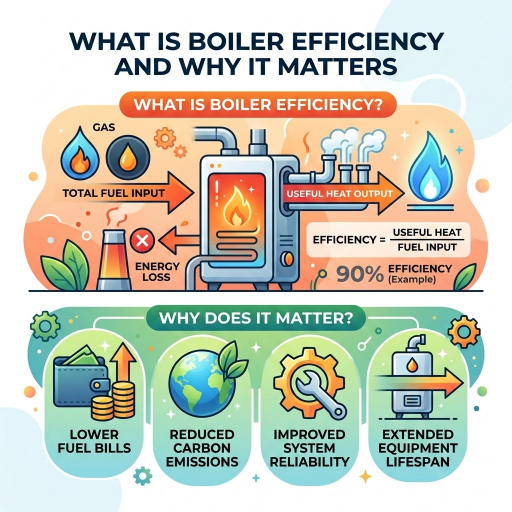
boiler efficiency is a measure of how well a boiler converts the heat energy in fuel into usable heat delivered to water or steam. It is most commonly expressed as a percentage: if a boiler achieves 85% efficiency, then 85% of the fuel’s energy ends up in the steam and the rest is lost as other losses.
That may sound straightforward but the dollar effects are enormous. According to the U.S. Department of Energy’s Federal Energy Management Program (FEMP), fuel costs represent the largest share of total costs associated with the boiler over its entire service life. An initial cost of the boiler is a small part of the subsequent total expense. Maintenance, water treatment and electricity are real expense items but fuel is a giant in comparison to all of these.
90%+
of lifetime boiler cost is fuel
1%
efficiency gain can save thousands annually
80–90%
typical range for well-maintained boilers
This is exactly why boiler efficiency calculations exist: it shows you where money is being spent. Tracking efficiency helps provide a fundamental reference point. It can be checked over time and show if performance is deteriorating and by how much before it becomes obvious in your gas bill.
Key Factors That Affect Boiler Efficiency

Multiple heat loss pathways influence the overall boiler efficiency between the burner flame and the steam header. Understanding each one is the basis for any effective efficiency calculation, because the indirect method (explained in H2-4 below) sums them all up.
| Loss Category | Typical Range | Root Cause |
|---|---|---|
| Dry flue gas loss | 3–8% | Hot exhaust gas leaving through the stack carries sensible heat |
| Moisture in flue gas | 3–5% | Hydrogen in fuel burns to form water vapor, absorbing latent heat |
| Radiation and convection losses | 0.5–3% | Heat escaping through boiler shell, doors, and poor insulation |
| Blowdown losses | 1–3% | Hot water discharged to control dissolved solids concentration |
| Incomplete combustion (unburnt fuel) | 0.5–2% | Carbon monoxide or unburnt carbon particles in flue gas or ash |
| On-off (cycling) losses | 1–5% | Pre- and post-purge airflow flushes heat from the boiler between firing cycles |
⚠️ Common Misconception
Many operators assume that the additional excess air enters the furnace and brings up the combustion. It does – to a limit. But once the amount approaches about 15% excess air, the additional air entering the furnace takes heat out through the stack and raises flue gas losses without making any difference to combustion. Adjusting the air-to-fuel ratio is one of the most cost-effective ways to control boiler efficiency, and the DOE Advanced Manufacturing Office advises maintaining the O in flue gas between 2-3% for natural gas burners.
Flue gas temperature is the other major variable. According to Spirax Sarco’s boiler house reference, every 40 F (22 C) drop in stack temperature decreases dry flue gas loss by roughly 1%. Poor insulation on the shell, steam piping, and tube surfaces increases radiation losses—more so on smaller boilers where the surface-area-to-output ratio is larger.
How to Calculate Boiler Efficiency — Direct Method (Input-Output)

The direct method is by far the simplest of the two methods summarized in ASME PTC 4.1. It answers only one question: what percentage of the heat energy that you put in ends up as useful steam? No loss breakdown is necessary. You just need to compare energy input to heat output.
The Formula
Boiler Efficiency (%) = (Heat Output ÷ Heat Input) × 100
Where:
Heat Output = Qs × (hs − hfw)
Heat Input = Qf × GCV
- Qs = quantity of steam generated (kg/hr)
- hs = enthalpy of steam at operating pressure (kcal/kg)
- hfw = enthalpy of feedwater (kcal/kg)
- Qf = quantity of fuel used per hour (kg/hr)
- GCV = gross calorific value of the fuel (kcal/kg)
Worked Example
Suppose you are a natural gas-fired industrial boiler generating 10,000 kgs/hr of steam at 10 bar gauge. Here is how your boiler efficiency would work out:
| Parameter | Value | Unit |
|---|---|---|
| Steam generated (Qs) | 10,000 | kg/hr |
| Enthalpy of steam at 10 bar g (hs) | 660 | kcal/kg |
| Enthalpy of feedwater at 80 °C (hfw) | 80 | kcal/kg |
| Fuel consumption (Qf) | 680 | m³/hr (natural gas) |
| GCV of natural gas | 8,600 | kcal/m³ |
Step 1: Calculate heat output
Heat Output = 10,000 × (660 − 80) = 5,800,000 kcal/hr
Step 2: Calculate total energy input
Heat Input = 680 × 8,600 = 5,848,000 kcal/hr
Step 3: Calculate thermal efficiency
Efficiency = (5,800,000 ÷ 5,848,000) × 100 = 99.2% — this is the combustion-to-steam efficiency measured before incorporating unmeasured losses.
💡 Pro Tip
The direct method is fast and easy, but it will tend to overestimate efficiency because individual losses aren’t measured. In practice, direct method, field-measured values for well-maintained gas-fired boilers typically range from 82-88%. If your calculation numbers are over 92%, verify your steam flow meter calibration and fuel metering since instrument error is typically to blame for inflated numbers.
How to Calculate Boiler Efficiency — Indirect Method (Heat Loss)
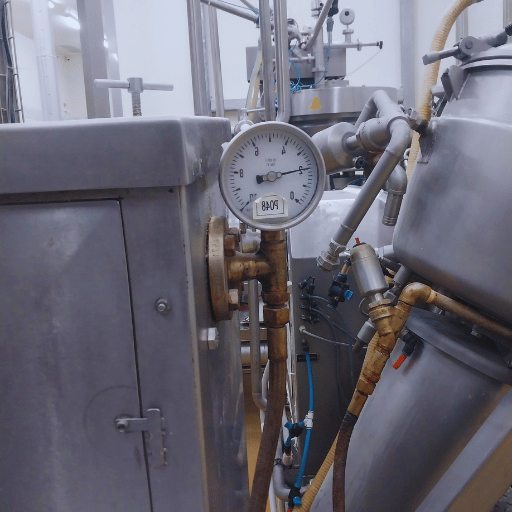
The indirect method — also called the heat loss method — provides the detailed boiler efficiency calculations method used in ASME PTC 4. Instead of directly comparing energy output to energy input, individual losses are measured and tallied, then the sum is subtracted from 100%.
Boiler Efficiency (%) = 100 − (L₁ + L₂ + L₃ + L₄ + L₅ + L₆ + L₇)
Where each L represents a distinct loss category.
The Seven Major Heat Losses
| Loss | Description | Typical % (Gas-Fired) |
|---|---|---|
| L₁ — Dry flue gas loss | Sensible heat carried away by hot flue gas at stack temperature | 3.5–6% |
| L₂ — Loss due to hydrogen in fuel | Water vapor from combustion of hydrogen absorbs latent heat | 4–5% |
| L₃ — Loss due to moisture in fuel | Inherent moisture evaporates and exits as steam in flue gas | 0–1% |
| L₄ — Loss due to moisture in air | Humidity in combustion air entering the furnace picks up heat | 0.2–0.5% |
| L₅ — Incomplete combustion (CO/unburnt) | Carbon monoxide, soot, and quantity of unburnt fuel leaving in flue gas or ash | 0.5–2% |
| L₆ — Radiation losses | Heat radiating from the boiler shell and uninsulated surfaces | 0.5–2% |
| L₇ — Blowdown + miscellaneous | Energy lost through blowdown, on-off losses from cycling purge, and unmeasured fuel losses | 1–3% |
Worked Example (Indirect Method)
Suppose that from the earlier direct method example, flue gas analysis and field measurements reveal the losses below:
| Loss Category | Measured Value (%) |
|---|---|
| L₁ — Dry flue gas | 4.5% |
| L₂ — Hydrogen in fuel | 4.8% |
| L₃ — Moisture in fuel | 0.1% |
| L₄ — Moisture in air | 0.3% |
| L₅ — Incomplete combustion | 0.8% |
| L₆ — Radiation | 1.0% |
| L₇ — Blowdown + misc. | 1.5% |
| Total losses | 13.0% |
Boiler Efficiency = 100 − 13.0 = 87.0%
Now you know more than just a single number: together, dry flue gas loss and hydrogen loss account for over 9% of the total, indicating that reducing stack temperature or harnessing flue gas heat with an economizer would provide the largest gains. This diagnostic capability is the primary strength of the indirect method over the direct method.
💡 Pro Tip
The L₂ loss (hydrogen in fuel) reflects the inherent high-hydrogen content of the type of boiler fuel-gaseous fuels like natural gas have higher hydrogen content than coal. This loss cannot be reduced through tuning. Instead, focus on L₁ (flue gas temperature) and L₅ (combustion quality), which directly change in response to burner and air control adjustments.
Direct vs Indirect Method — When to Use Each

Both methods derive an efficiency number; but each has a different use. Which method you choose depends on your reasons for running the calculation.
| Criteria | Direct Method | Indirect Method |
|---|---|---|
| What it tells you | Overall efficiency of boiler as a single number | Where each loss occurs and how large it is |
| Instruments needed | Steam flow meter + fuel meter | Flue gas analyzer, temperature probes, fuel analysis |
| Speed | Fast — minutes with calibrated meters | Slower — requires flue gas sampling and multiple readings |
| Accuracy | Moderate (meter accuracy dominates) | Higher (standard test code method per ASME PTC 4) |
| Diagnostic value | Low — no insight into loss sources | High — pinpoints which losses to reduce |
| Best for | Routine monitoring, trend tracking | Annual audits, troubleshooting, efficiency projects |
For regular performance tracking, the direct method provides a quick snapshot that can be used to compare week to week. When identifying where heat losses may be occurring—for example, before a capital project, or if the efficiency of the boiler has been 10-20% below the target number—the indirect method is a more effective diagnostic tool. Many plants use the direct method on a monthly basis and the indirect method annually, using the two analyses together to develop an overall performance picture for each boiler type.
Online boiler efficiency calculator tools offered by organizations such as the American Boiler Manufacturers Association (ABMA) and TLV can help automate the calculation once you have your field data. Still, understanding the formulas behind those calculators is what lets you catch errors and interpret results correctly.
Practical Ways to Increase Boiler Efficiency

With a clear efficiency number from either method, the next step is to analyze your losses and act on them, since raising boiler efficiency by 1 percentage point typically cuts annual fuel costs by a similar margin. The following field-proven measures target the biggest loss sources, sorted by the typical energy savings they deliver.
| Action | Potential Efficiency Gain | Relative Cost |
|---|---|---|
| Install a flue gas economizer | 3–5% | Medium-High |
| Tune burner air-to-fuel ratio | 1–3% | Low |
| Recover condensate | 2–4% | Medium |
| Add or repair insulation on boiler and pipes | 1–2% | Low |
| Implement blowdown heat recovery | 1–2% | Low-Medium |
| Clean boiler tubes (fire-side and water-side) | 1–2% | Low (maintenance) |
| Reduce steam pressure to match demand | 0.5–1% | None (operational) |
Of these, burner tuning tends to be the easiest to implement for a quick gain. A qualified combustion technician can measure excess air levels, adjust the burner’s ability to burn the fuel cleanly, and lower flue gas temperature — sometimes recovering 2–3 percentage points of combustion efficiency in a single visit. The Spirax Sarco boiler house reference notes that accurate air control is the foundation of efficient boiler operation: too much air cools the furnace, while too little creates soot deposits on boiler tubes and incomplete combustion.
⚠️ Don’t Overlook Small Boilers
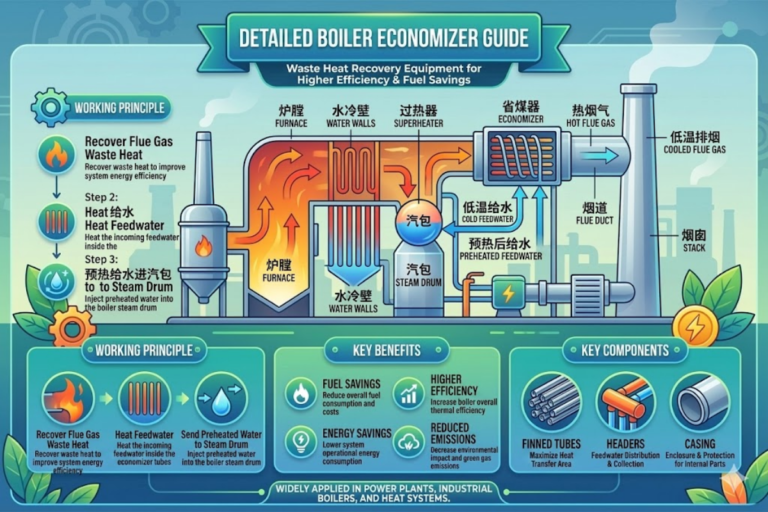
Many plant managers believe economizers only deliver value to very large steam plants. In truth, even mid-size boiler systems in the 200–500 HP range can achieve a 3–5% improvement in boiler efficiency for each 1% increase in flue gas temperature recovery—at a marginal cost that has dropped significantly during the past decade. Payback periods of 12–18 months are typical for natural gas units, indicating that improving your boiler efficiency yields not only financial benefits through lower fuel costs, but also reduces your overall environmental impact — including your facility’s carbon footprint.
An often overlooked decision when operating a boiler is the frequency with which fire side surfaces are cleaned of soot deposits. Regular tube cleaning can significantly impact fuel costs. Even one thirty-second inch of scale on the water side increases fuel demand by approximately 2%. As scale acts as an insulator that reduces the effectiveness of the heat exchanger, this increases fuel costs. Likewise, the performance of the fire side surfaces can be adversely affected as a result of soot deposit buildup, making it important to operate a boiler properly from the time of installation to right-sized, scheduled maintenance activities.
Frequently Asked Questions
What is typical boiler efficiency?
View Answer
Most well-maintained gas-fired industrial boilers run at 80–85% thermal efficiency (GCV basis). Condensing models reach 90–95%. Older or poorly maintained units often fall to 70–75%.
How do you calculate the efficiency of a boiler using ASME PTC 4?
View Answer
ASME PTC 4 exclusively prescribes the “indirect” (heat loss) procedures. You will record each radiation, dry flue gas, moisture losses, radiation, convection losses, incomplete combustion, and blowdown, and then deduct the total from 100%. This standard calls for calibrated instrumentation to quantify flue gas, measuring temperature, and fuel composition. This approach is more accurate than the direct method because it accounts for every loss pathway–even those difficult to meter directly.
Why is boiler efficiency important?
View Answer
It determines how much fuel you burn per unit of steam. Since fuel dwarfs every other boiler expense, even a 1% gain can save thousands of dollars each year.
What is the difference between combustion efficiency and thermal efficiency?
View Answer
Combustion efficiency measures how well a boiler converts fuel into heat–it simply compares stack losses (excess air, flue gas temperature). Thermal efficiency takes it a step further and considers how much of that heat ends up in the steam and hot water–taking into account radiation losses, convection losses, blowdown, and other routes. The shell radiation, blowdown, and cycling losses that occur after the flame can result in a boiler with 98% combustion efficiency and only 85% thermal efficiency.
Does boiler age reduce efficiency?
View Answer
The age of your boiler itself does not have any direct effect on the efficiency–it is all about maintenance over the life of the boiler. A 25-year old boiler that undergoes regular tube cleaning, burner tuning, and insulation maintenance can still be highly efficient at 82-85%. Yet, these older units tend to have lower high-efficiency combustion controls, aging refractory, and reduced insulation, which also lead to higher losses. If your boiler is over 20 years old, and your efficiency has fallen below 80%, then a modern high-efficiency model can cut your fuel consumption by 15-25%.
How long does it take to recoup the cost of a high-efficiency boiler?
Show Answer
Payback hinges on three things: the efficiency gap between old and new units, your fuel price, and annual run-hours. As a rough benchmark, swapping a 75%-efficient boiler for a 92%-efficient condensing model that runs 4,000+ hours per year can recoup the upfront cost in 3–5 years through fuel savings alone. Facilities burning propane or oil, or those logging more hours each year, frequently see payback in under 3 years. When you fold in lower maintenance bills, fewer unplanned shutdowns, reduced emissions compliance costs, and longer equipment life, the full economic case is usually much stronger than what a simple fuel-savings payback number suggests on its own. For large multi-boiler plants, the cumulative savings across several units can justify accelerating the replacement schedule even further.
Need a Boiler Built for High Efficiency?
Taiguo factory thermal efficiency industrial steam boilers are capable of providing over 95% thermal efficiency with low emissions. Contact our engineering group for more information to find the best fit for your project.
About This Guide
Taiguo has been producing industrial steam boilers for 20+ years, providing to process industries such as food, textiles, chemicals and building materials. Our calculation approaches and loss data are based on ASME PTC 4 standards and originate from published DOE sources. When we make relevant improvement claims, they are taken from typical ranges we observe within the industry, however your unique project characteristics are what dictate the actual result.
References & Sources
- ASME PTC 4 — Indirect Method: Stack Loss Method — California Air Resources Board
- Best Management Practice #8: Steam Boiler Systems — U.S. Department of Energy, FEMP
- Improve Your Boiler’s Combustion Efficiency — U.S. Department of Energy, Advanced Manufacturing Office
- Boiler Efficiency and Combustion — Spirax Sarco
- Determining & Testing Boiler Efficiency for Commercial/Institutional Boilers — American Boiler Manufacturers Association (ABMA)