Get in Touch with Taiguo


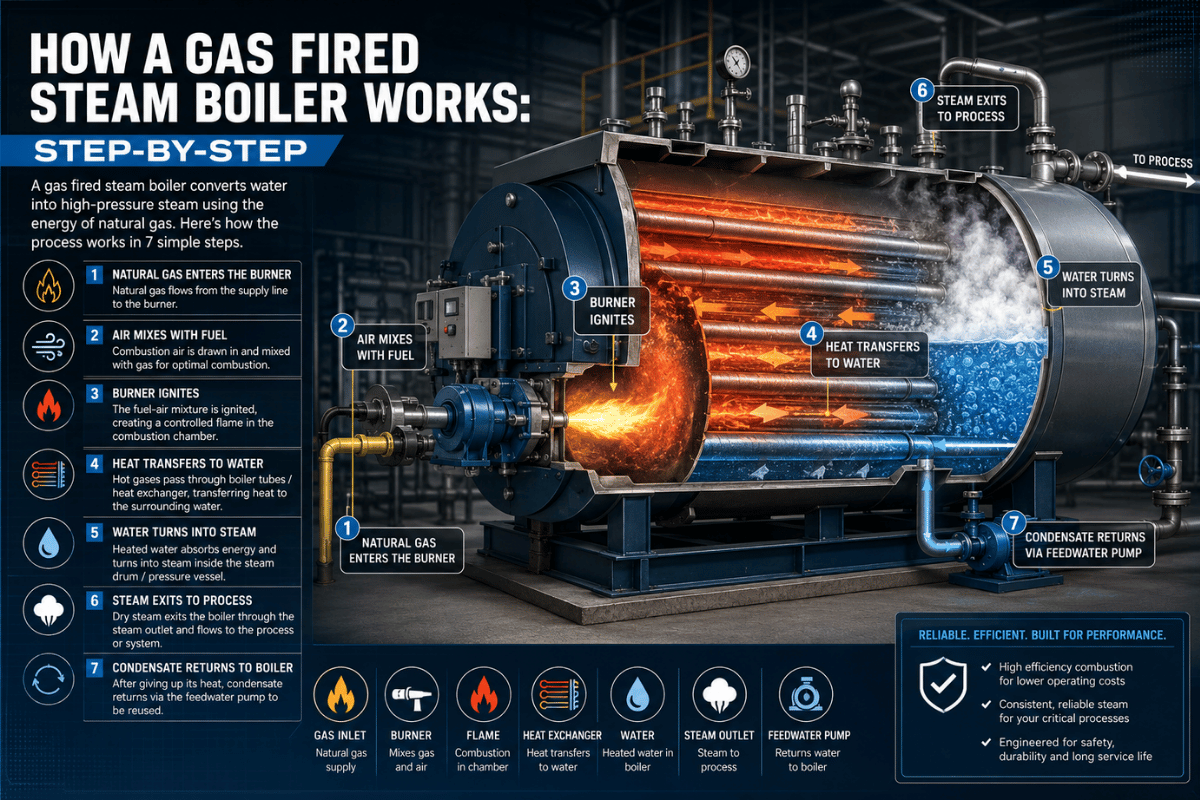
If you are asking how gas fired steam boiler works in an industrial plant, think of a pathway with regulated heat transfer, not a plain tub of hot water. Digester gas enters the burner, the boiler furnace generates a hot flame, flue gas travels down the heat-transfer pathway, heat goes into boiler water, and pressurized steam exits for use in your plant processes.
Because a gas fired steam boiler is a closed pressure vessel, the basic operational explanation is less important than supporting operational integrity. Economical steam supply relies on controlled combustion, proper water level, quality feedwater, safety mechanisms, and preventative maintenance. This manual first traces the pathway of fuel-to-steam then points out buyer responsibilities in selecting steam boiler system units designed for safe generate steam.
Quick Specs
| Main fuel | Natural gas or propane, depending on burner setup and local supply |
| Steam type | Usually saturated steam for process heat; superheated steam is a separate design choice |
| Common layouts | Fire-tube boiler, water-tube boiler, and compact steam generator designs |
| Key safety devices | Water level gauge, pressure gauge, automatic pressure-relief valve, blowdown piping, low-water control |
| Buyer check | Steam load, pressure, fuel train, water treatment, emissions limits, inspection plan |
Quick Answer: What Happens Inside a Gas Fired Steam Boiler?
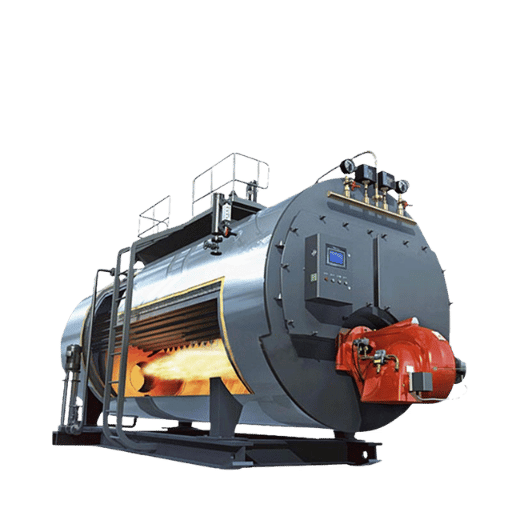
When a gas fired steam boiler is in operation, natural gas fuels the controlled burner. Flame heat up the boiler furnace and the heat transferring tub faces; then hot combustion gases move along the flue gas path via flue gas. Water inside the boiler absorbs the thermal energy from combustion, coalesces into steam steam is produced, then is introduced to the steam supply line, controlled to a specific steam pressure.
- natural gas enters the burner, through its gas trip safety controls.
- Controlled amounts of fuel and air mix in the burner head to generate a flame.
- Heat enters the boiler furnace and tube passes.
- Hot combustion gases travel along the flue gas path and transfer their heat to flue gas.
- Boiler water absorbs heat through metal surfaces.
- Water is converted to steam, separates into boiler water and steam.
- Controls maintain flame safety, steam pressure and water levels at acceptable values.
That is why a good boiler setup needs more than solid burner construction. Fuel is wasted if steam output is wet, and clean heat-transfer surfaces still matter when flue gas temperatures climb. For many food, textile, sterilization, and process duties, clean steam handling and steady fuel efficiency have to be checked together.
The 7-Stage Fuel-to-Steam Path
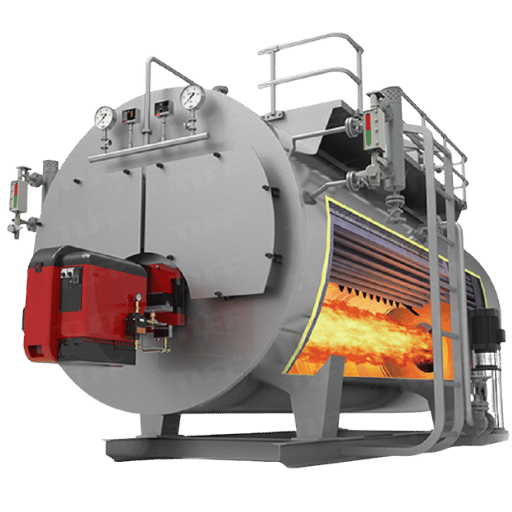
Using the 7-Stage Fuel-to-steam Pathway to evaluate a fired steam boiler simplifies the maintenance process without overwhelming the maintenance technician with too many names for the same components. Each stage performs specific tasks, weaknesses exist in each, and key questions need to be addressed.
| Stage | What Happens | Buyer Question |
|---|---|---|
| 1. Fuel train | Gas reaches the burner through valves, regulators, and safety shutoffs. | What gas pressure range does the burner need? |
| 2. Combustion air | Fan and damper settings supply oxygen for stable combustion. | Is the air setting fixed, staged, or controlled by oxygen trim? |
| 3. Furnace | Flame releases heat inside the boiler furnace. | Is the furnace sized for the burner firing rate? |
| 4. Flue gas path | Hot gas flow transfers heat through tubes before leaving the stack. | What stack temperature is expected at normal load? |
| 5. Water side | Boiler feedwater absorbs heat and begins to boil. | What feedwater treatment is required? |
| 6. Steam space | Steam is drawn from the upper steam space or separator. | How is wet steam or carryover controlled? |
| 7. Controls | Pressure, level, flame, and limit controls decide when the boiler runs or shuts down. | Which controls are tested during commissioning? |
During steady production, it is controlled automatically by automatically matching heat output to steam usage via automatic controls for boiler operates. However, while a process goes into and out of varying load stages, control system keeps the boiler work under steady conditions for your process and protects against loss of pressure, water, or fire.
Combustion, Furnace, and Flue Gas Path
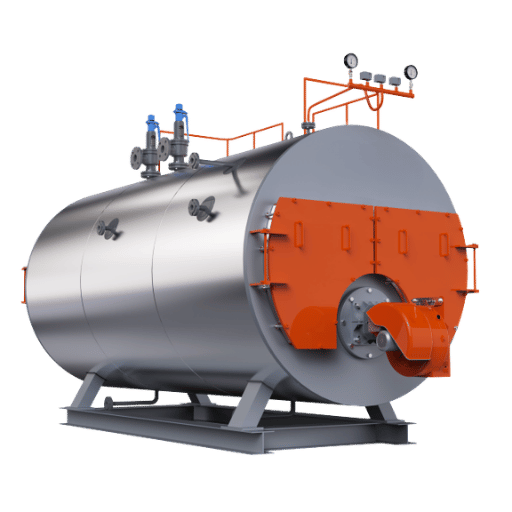
Combustion begins with a burner train designed to efficiently mix natural gas with combustion air then ignites the mixture. The resulting flames produce high-intensity heat, which is then transmitted to water through the boiler walls. However, boiler water never comes in direct contact with the flames. Instead, flue gas carriers this heat through the flue gas path for maximum absorption by the water.
U.S. Department of Energy points out gas boilers use natural gas, and an updated model burns propane – adapted for the fuel properties. Also DOE highlights: vent dampers and sealed combustion are a good two of gas fired boiler and furnace design points worth checking with an expert.
In the business: burner, air path, venting, stack – not accessories. Design the boiler based on performance around them.
Why Does Exhaust Gas Temperature Matter?
The reason why we monitor the temperature of flue gases is because that’s telling us the amount of heat lost via the flue gas that is supposed to be remaining with the boiler water. A high stack temperature, for example, might tell the technician about a clogged up heat-exchanger surface, the use of excess air over-amount, bad regulation in a burner, or a boiler load below normal and outside normal operating ranges. This indicator, however, alone does not allow one to fully inspect the boiler.
📐 Engineering NoteWhen the fired steam boilers, compare fired stack temperature @ rated load, burner turndown ratio, available economizer, and minimum gas inlet pressure. these are to be used as part of your R.F.Q. not after market tuning specs.
Feedwater, Boiler Water, and Steam Pressure
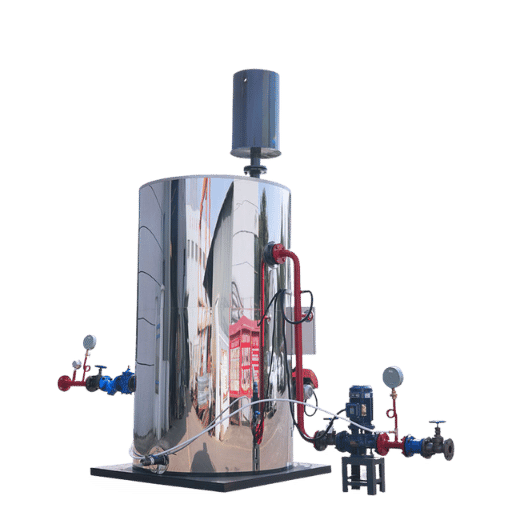
In water service, steam boiler had two roles. It had to transfer the heat out and take the heat out, leaving steam. steam above the water level can be pulled out and delivered to the plant after passing through boiler, boiler water, and steam until sufficient temperature to absorb that heat is reached.
However, if the water treatment is not good, scale accumulation takes the place, preventing good heat transfer and destroying the material (corrosion). In water level system loss, this becomes not poor quality of steam, but a device destruction.
It might be safe with oversized for the calculation but process can lead short cycling where the boiler may not burn clean.If under size, will get to pressure at the begin but may soon lose pace as the plant load increase.
How Does a Boiler Make Steam?
steam in the boiler design is created when heat from combustion travels across the metal plates and into water. Some water is flashed into steam when it comes under process pressure. From there, steam separates from the water and collects in the steam space where it can be discharged from the primary steam outlet.
In the majority of process plants this is saturated steam, not superheated steam unless designed specifically to provide for this service.
| Water-Side Factor | Why It Matters | Owner Check |
|---|---|---|
| Feedwater treatment | Controls scale, oxygen corrosion, and carryover risk. | Ask for water quality limits and chemical plan. |
| Water level | Protects heat-transfer surfaces from low-water damage. | Confirm level control and low-water cutoff testing. |
| Blowdown | Removes dissolved and suspended solids from boiler water. | Set a blowdown plan with water-test records. |
Fire-Tube vs Water-Tube Gas Fired Steam Boiler Layouts
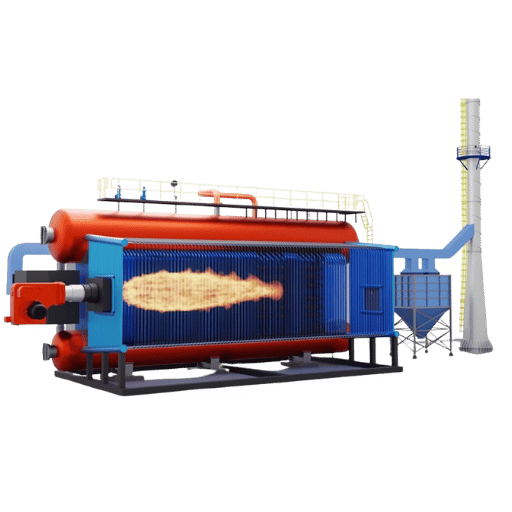
Layout modification of the pressure vessel changes gas flow in boiler. fire-tube boiler had hot flue gas within tubes that have been enveloped by water. water-tube boiler had water inside tubing in which hot air flew outside of the tubes.
It’s possible to fire them by natural gas but their application is different depending upon the specific load pattern requirement.
| Layout | Best Fit | Buyer Risk to Check |
|---|---|---|
| Fire-tube boiler | Stable process loads, packaged boiler rooms, many low-to-medium pressure steam duties. | Slow response under sharp load swings; tube cleaning access. |
| Water-tube boiler | Larger steam output, higher pressure duties, plants with faster load changes. | Higher project complexity; stricter feedwater control. |
| Compact steam generator | Smaller loads, fast steam demand, limited boiler-room space. | Steam dryness and service access under continuous duty. |
What Is the Difference Between a Fire-Tube and Water-Tube Gas Fired Boiler?
In simple terms, the difference is where the water and hot gas travel. Fire-tube equipment sends hot flue gas through tubes inside a water-filled shell. Water-tube equipment sends water through tubes placed in the hot gas stream. Fire-tube designs are often easier to package and service; water-tube designs suit higher pressure, larger steam output, or faster load response.
If Taiguo buyers are considering different boiler package configurations, naming a model is usually not the right place to start. First match steam load, operating pressure, fuel supply, installation space, and inspection access. You can review SZS steam and hot water boiler options for water-tube style projects and compare WNS oil and gas steam boiler layouts for packaged fire-tube applications.
What Controls Boiler Efficiency?
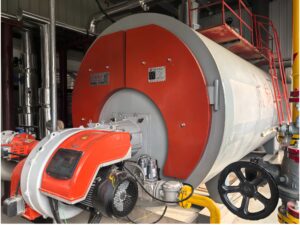
Your boiler efficiency cost depends on how much fuel heat output becomes usable steam relative to stack loss, shell loss, blowdown loss, or cycling losses. DOE’s definition of AFUE-the percentage of fuel heat actually converted into usable energy for a heating appliance- includes average and ranges of modern and older boiler efficiencies in different systems of equipment. Do not apply those ranges to a modern industrial boiler, but do use the concept to enable you to ask better boiler questions.
✔ Advantages of a Well-Matched Gas Steam Boiler
- Stable steam pressure when the load profile is known.
- Cleaner combustion than many solid-fuel boiler rooms.
- The Szumor Serefit may be ideal if there is stable process steam on hand.
⚠ Limitations to Plan For
- Fuel price exposure when gas tariffs shift.
- More boiler water treatment is needed as boiler pressure or duty cycles increases.
- Venting, combustion air, and local emissions checks.
Fuel-to-Steam Diagnostic Matrix
- The stack temperature is higher than after a few months-an indication that something has build up in terms of scale, soot, or you should adjust your burner air.
- If your water pressure is fluctuating significantly at peak production, then your boiler may be too small, the boiler burner turndown is limited, and there isn’t enough steam supply from the header.
- When wet steam shows up at the process side, you need to assess the boiler water level, the steam carryover amount and the design of your steam separator.
- Fuel consumption has increased, but your boiler output hasn’t. Maybe your return condensate system isn’t set up optimally, or maybe your blow down has to be higher or you may not have adequate economizer capacity for your process.
| Planning Field | Unit Example to Request | Why It Matters |
|---|---|---|
| Steam output | Do not round 500 kg/hr, 1,000 kg/hr, or 2,000 kg/hr duties into vague size classes. | Load estimate drives boiler size, burner range, and pipe sizing. |
| Process pressure | Ask whether the plant needs 50 psi, 100 psi, 150 psi, or another header pressure. | Pressure changes vessel rating, controls, and inspection requirements. |
| Burner input | Request burner data in kW, such as 350 kW, 700 kW, or 1,400 kW class figures. | Fuel train and combustion air checks depend on heat input. |
| Feedwater condition | Separate a 5 kW feedwater-pump case from a 15 kW pump case when reviewing the package. | Feedwater temperature changes fuel use and steaming response. |
| Stack reading | Compare logged values under matching burner load, then note the 3 kW or 7 kW fan setting used. | A rising stack temperature can point to soot, scale, or air setting drift. |
| Blowdown assumption | A 1 hour blowdown review and a 4 hour review can lead to different water-treatment notes. | Water chemistry affects both energy loss and maintenance planning. |
| Operating schedule | An 8 hour shift, 16 hour shift, and 24 hour production line do not age the boiler the same way. | Runtime affects maintenance intervals, fuel budget, and standby loss. |
| Inspection history | Ask for 1 year and 2 years of service records if the boiler is not new. | Past water treatment and control tests explain many efficiency complaints. |
| Accessory load | Separate 1 kW controls, 2 kW pumps, and 5 kW fans from the burner input. | Auxiliary power affects operating cost even when steam output is unchanged. |
| Load profile | Break the duty into 250 kg/hr, 750 kg/hr, and 1,500 kg/hr steam-use points. | Part-load behavior is often where burner cycling and wet steam first appear. |
For cost review, buyers can estimate boiler operating cost before asking suppliers for a final quotation. Use the calculator as an early planning aid, not as a replacement for a site survey.
Safety Controls and Maintenance Checks
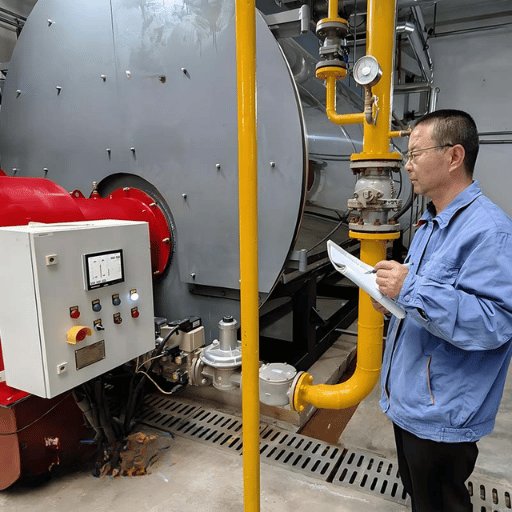
Steam power is useful because pressure stores energy. That is also why safety controls cannot be treated as optional features. ASME’s Boiler and Pressure Vessel Code is a core technical reference for the manufacture, construction, and operation of boilers and pressure vessels; ASME says the code is updated on a 2 year cycle and includes a 2025 edition.
Federal safety language for fired pressure vessels lists water level gauges, pressure gauges, automatic pressure-relief valves, blowdown piping, and other ASME-approved safety devices to protect against overpressure, flameouts, fuel interruptions, and low water level. For plant owners, that turns into a simple rule: do not buy a boiler unless the supplier can explain how these protections are selected, tested, and documented against OSHA pressure vessel standards.
- Confirm safety valve setting, capacity, and certification path.
- Ask how low-water cutoff, high-limit, and flame safeguard functions are tested.
- Review blowdown piping and water chemistry records before blaming the burner for poor steam.
- Plan inspection access around the pressure vessel, burner train, controls, and stack.
DOE’s steam system maintenance list includes draining some boiler water to remove sediment, testing low-water cutoff and high-limit controls, draining the float chamber, analyzing boiler water, and cleaning the heat exchanger. Industrial steam boiler maintenance should be handled by qualified personnel, but an owner can still know what records to ask for.
Where Gas Fired Steam Boilers Are Used in Industry
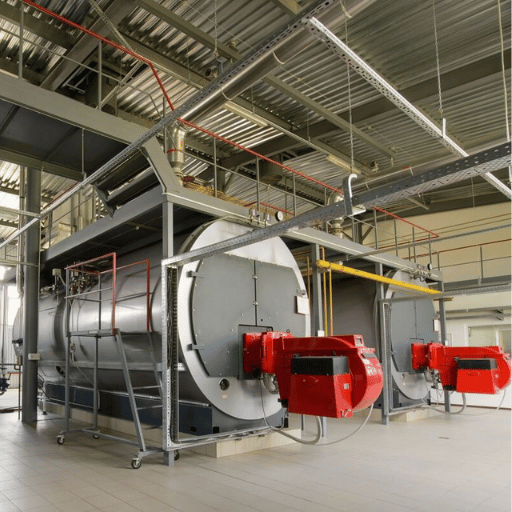
Plants use this type of boiler when a commercial and industrial process needs controlled steam production rather than only hot water or warm air. Typical duties include food processing, textile finishing, chemical process heat, sterilization, rubber vulcanization, building services, and some steam power support applications. Selection depends on steam output, pressure, operating hours, water quality, local fuel supply, and emissions limits.
| Application | Steam Need | Selection Note |
|---|---|---|
| Food processing | Clean, stable steam for heating, cooking, or cleaning steps. | Check steam quality and water treatment plan. |
| Textiles | Continuous process heat for dyeing, drying, or finishing. | Match output to shift pattern and peak load. |
| Rubber vulcanization | Pressure and heat stability for curing cycles. | Review pressure stability during batch changes. |
| Sterilization | Reliable steam supply for process equipment. | Confirm steam dryness and control response. |
If a fuel-comparison study is required, start with Taiguo’s guide to electric vs gas steam boiler selection. If the site already has gas supply and needs a fired pressure vessel, compare oil and gas fired boiler options, then size an industrial boiler for your steam load.
For sites that have a smaller steam need or limited boiler-room space, review the LHS vertical steam generator. Wider fuel-selection planning may require comparing industrial boiler types before finalizing the steam specification.
What Is Changing in Gas Fired Steam Boiler Design?
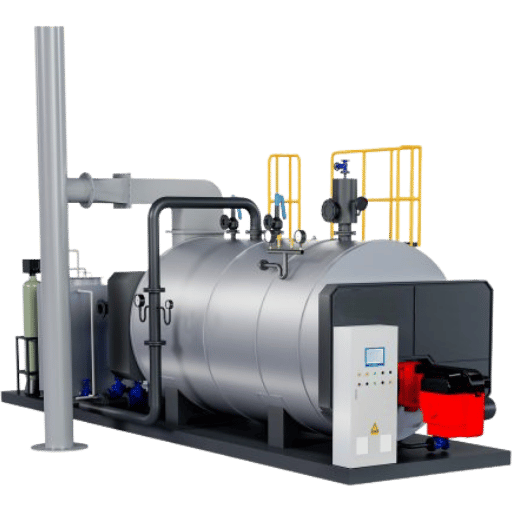
Although the basic steam process does not change with equipment improvements, most updates appear around the burner and controls: managed combustion air, flue gas heat recovery, emissions readiness, and inspection data logging. EPA’s boiler and process-heater page shows that industrial, commercial, and institutional boilers remain part of regulated stationary-source policy.
For a buyer, the outlook section turns into four RFQ questions. Can the burner meet the site’s low-fire and high-fire load? Is an economizer practical for the feedwater temperature and stack conditions? What local NOx or air-permit limits apply? Which inspection records and control logs will the plant keep after commissioning? The feedwater package also needs a pump duty specification: compare boiler feed pumps from BBP against the required flow, discharge pressure, inlet temperature and available suction conditions.
💡 Pro Tip
Ask suppliers to state what changes when the boiler runs at minimum load. Many problems appear there first: unstable flame, excess stack loss, wet steam, or short cycling.
FAQ
Q: How does a steam boiler work step by step?
View Answer
Fuel burns. Heat crosses metal surfaces. Boiler water turns into steam and leaves under pressure.
Q: Will a gas steam boiler work without electricity?
View Answer
Almost all modern gas steam boilers need electricity to run fans, burners, feedwater pumps, and controls. An older heating system may have fewer controls, but industrial buyers should not assume outage operation. Ask how the boiler shuts down, resets, alarms, and restarts when power returns.
Q: What are the disadvantages of a steam boiler?
View Answer
A boiler used for process steam is not the right fit for every low-demand building task. It brings pressure-vessel inspection, water treatment, blowdown, trained operators, and regular control testing.
Q: What is the difference between a steam boiler and a hot water boiler?
View Answer
While both steam and hot-water boilers perform as steam producers, the former operates at higher temperatures, thus making more careful consideration for efficient and attentive maintenance a necessity.
steam boilers generate steam while hot water generators only use heated water.
Q: How often does a gas fired steam boiler need servicing?
View Answer
Service will be contingent on the following conditions: code requirements; cycles of operation; quality of feed-water; configuration of the fuel train and insurer recommendations. As a minimum, ensure scheduled professional inspections prior to busy season demands and maintained records on control testing, blow down procedures, and feed-water treatment.
Q: What water treatment does a gas fired boiler require?
View Answer
Your steam boiler needs feedwater treatment most of the time for hardness, oxygen, pH and total dissolved solids. Exact treatment depends on operating pressure, rate of make-up, how much condensate is returned, and the specific local water conditions. If you’ve ordered a new gas-fired boiler, ask for required feedwater limits, blow-down rates, and the locations to sample them before you fire it up. If your water treatment is poor, you may give a good burner a black name since scale and corrosion both have a tendency to eat through the heat transfer surface of your boiler.
Q: Why does exhaust gas temperature matter?
View Answer
The gas exhaust temperature tells us if we’re losing a lot of useful heat through the stack. Notice this on a reading of burner setting, firing rate, boiler condition, and when compared with the designs for your stack and economizer.Stack temperature is an alert signal that indicates it is time for an inspection, not the actual inspection itself.
Related Articles and Tools
- industrial electric boiler options – compare when gas supply is not the best fit.
- industrial electric boiler guide – plan electric steam or hot water systems.
- biomass fired boiler guide – compare solid-fuel boiler planning factors.
- thermal oil boiler guide – review high-temperature heat transfer without steam pressure.
- contact Taiguo for boiler sizing support – prepare pressure, steam load, fuel, and water data first.
About This Technical Guide
This guide walks engineering buyers through gas-fired steam boiler operation, covering gas quality and related questions about boiler, burner control, feedwater, and inspection planning. I’ve incorporated public domain safety, emissions and efficiency standards into targeted vendor questions, specifically for steam pressure and boiler management.
Need to Match a Boiler to Your Steam Load?
Know your boiler specifications, including your hot water demand, steam pressure requirement, fuel type, and water source, when requesting advice from Taiguo. Whether you need a fire-tube boiler, water-tube boiler or a more compact steam unit will become evident with this input.
References & Sources
- Gas-Fired Boilers and Furnaces — U.S. Department of Energy
- Furnaces and Boilers — U.S. Department of Energy
- ASME Boiler and Pressure Vessel Code — ASME
- Pressure Vessels Standards — OSHA
- Industrial, Commercial, and Institutional Boilers and Process Heaters — U.S. EPA
- 30 CFR 56.13030 Boilers — eCFR
- National Board of Boiler and Pressure Vessel Inspectors — National Board