Get in Touch with Taiguo

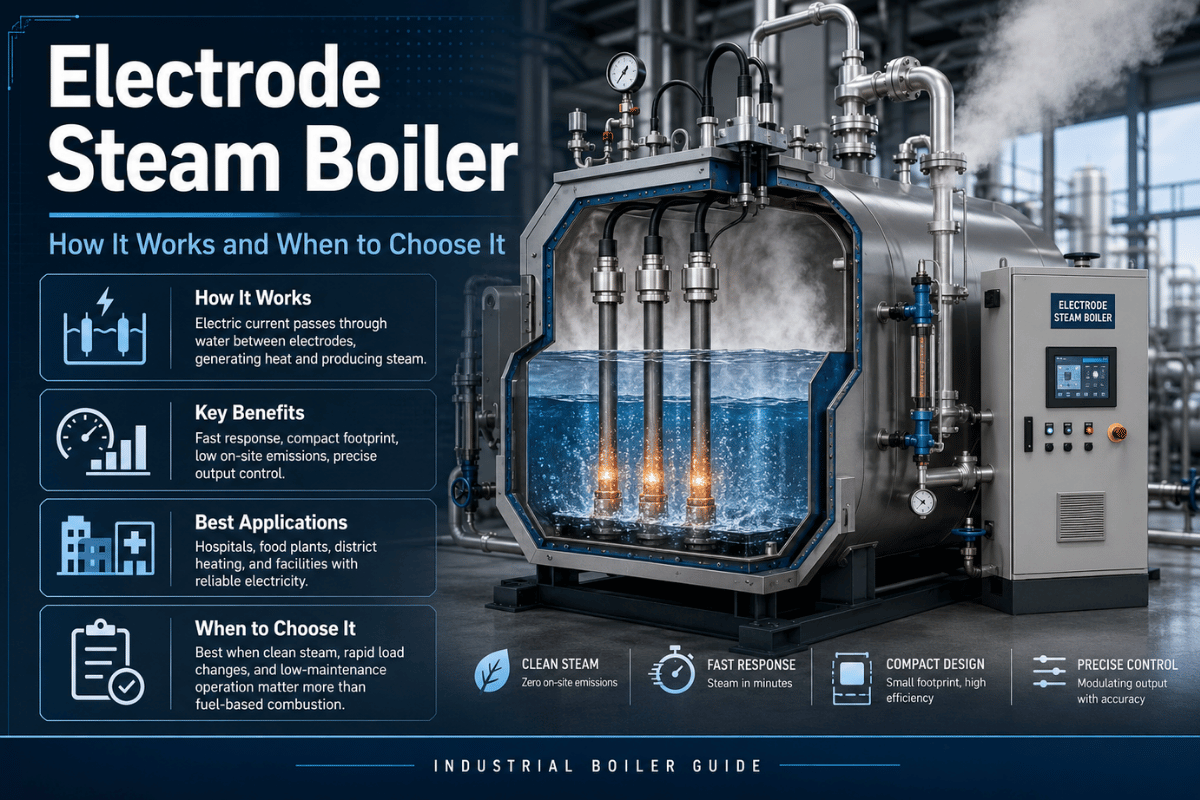
Electrode Steam Boiler: How It Works and When to Choose It

Contents
show
It is a 200 MW system of four electrode boilers (at 50 MW each), the biggest electrode boiler plant in Europe. It was chosen over combustion equipment, of course, because the same combination of benefits made it popular across industry: A virtually ideal power-to-heat conversion factor; Zero emissions at the plant; A response of less than one minute to grid frequency deviations.
In this guide we’ll talk you through: How an electrode boiler operates; What is a jet-type vs. a single electrode (immersion) boiler; What is the level of water conductivity for stable operation; An evidence based approach to know when to choose high voltage electrode boiler over standard electric resistance boiler.
Quick Specifications — Electrode Boiler
| Operating Voltage | 4.16–25 kV AC (medium voltage) |
| Efficiency | 99–99.9% (electrical-to-thermal) |
| Capacity Range | 3 kW – 102 MW per vessel |
| Operating Pressure | Up to 500 PSIG (34.5 bar) |
| Design Types | Jet-type or Immersion electrode |
| Steam Purity | Up to 99.95% (jet-type) |
| Load Response | 10–100% output; full modulation in <60 seconds |
| Applications | Process steam, district heating, grid frequency balancing |
What Is an Electrode Boiler?
What is an electrode boiler?
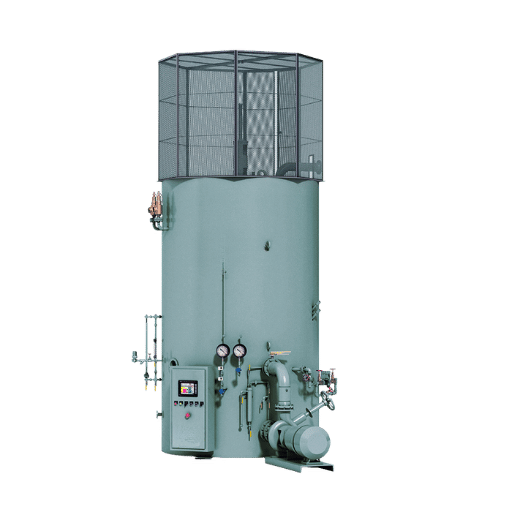
An electrode boiler is a complete all-electric pressure vessel utilizing the flow of alternating current to create thermal energy within its water contained mass. There are no electrical heating element coils and no combustion is involved in the creation of the energy; the water within the device itself acts as the electrical resistance component. The electric energy converts directly to thermal energy when current passes between submerged or jet-sprayed electrode designs; no fuel combustion is involved, no exhaust gas is created, and no heating surfaces are prone to burn-out.
It is identified as a specialized subtype under the larger industrial category of Electric Boiler.
This technology has been in commercial service since the early 1930s. What distinguishes it from lower-voltage electric heating equipment is the operating voltage: 4.16–25 kV AC, connecting directly to the medium-voltage distribution infrastructure that most large industrial facilities already carry on site. No step-down transformer is required at the boiler, and no combustion components demand periodic replacement.
They’re not only far-off bigger than the boiler space that nearly all engineers would probably assume – electrode-based commercial boilers may be ordered on single-vessel basis with capacities as high as 102 MW (or 200 MW using a number of pressure vessels for distributed energy systems), however they could also be greater effective. The Division of Power’s Lawrence Berkeley Nationwide Lab estimates that electric to warmth efficiency for such machines varies between ninety five%-99%, vs. 70%-85% for fossil-fired boilers providing a lot the identical steam result. Check out this breakdown of 10 various forms of industrial boilers to study about variations amongst all varieties of steam generation technologies.
What is an electrode in a boiler?
With an electrode boiler, the electrodes are conductive components-usually cast iron, graphite, or stainless steel-located either in or very near the water-filled pressure vessel. The typical configuration for an industrial AC electrode boiler is three phase, three electrodes, each spaced equal distances around the vessel like the points of a star. Current is drawn between electrodes by way of the water itself and heated by way of its own resistance to that flow.
In other words, the electrodes don’t get hot; they are simply the contacts through which current enters and leaves the water supply, and they are continually immersed in cooling water at no risk of dry-fire burnout.
How Does an Electrode Boiler Work?
How does an electrode boiler work?
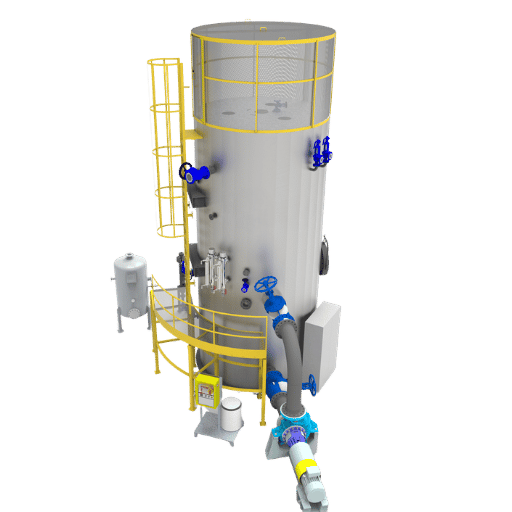
AC Current to Water. three-phase alternating current. The water between three electrodes offers electrical resistance. that resistance provides the means by which electrical energy is converted into heat – just like a resistor wire in a resistive heating element. the water itself acts as the resistor material instead of metal. The resultant hot water or steam will produce hot water/steam at the rating pressure of the equipment. Output can be controlled by regulating the surface area the water covers. the greater the surface area, the higher the output and current flow. A recent peer reviewed paper in Applied thermal Engineering (ScienceDirect,2022) demonstrated 97%measured power to heat efficiency of electrode boiler power at a district energy.
The control loop manages water level, degree of electrode submersion, and feedwater flow in order to meet real-time demand. For jet design electrode boilers, a variable speed drive (VFD) pump sends boiler water through nozzles arranged to wash the electrodes. Varying pump speed varies the available electrode surface area in the water, hence controlling boiler power. For an immersion type boiler, a level control valve adjusts water level inside an inner steam separation tank, lowering or rising to vary submersion of each electrode. This enables an electrode boiler to provide smooth and continuous power adjustment, without the sharp increases or steps characteristic of other technologies and avoiding thermal shock to vessel walls.
Engineering Note: Why Electrode Boilers Use AC, Not DC
DC current produces the electrolysis of water molecules into hydrogen gas and oxygen gas; the oxygen at the anode causes steel components of the boiler to quickly corrode and, as a gas, the hydrogen at the cathode will accumulate inside the pressurized steam space resulting in an explosion hazard. Alternating current at the three-phase frequency (50/60Hz) alternates the electrodes polarity such that ionic drift is equal, and gases are no longer produced. That is why the vast majority of electrode boilers manufactured, or in operation are designated specifically for three phase ac service; use of dc current – even for initial commission- ing is considered a design mistake resulting in vessel or personnel harm.
Jet-Type vs. Immersion Electrode Boilers
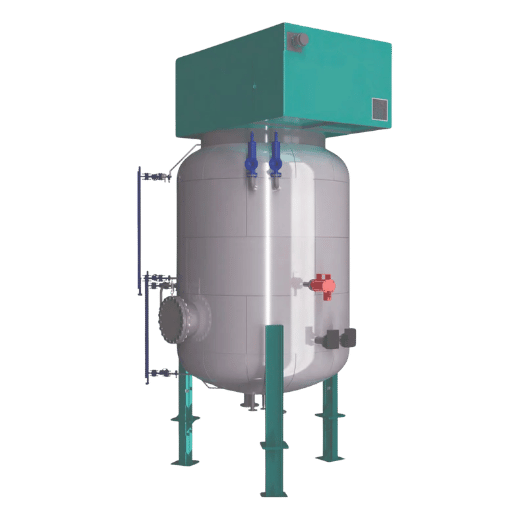
The principal designs of electrode boilers are classified in two primary designs: jet type electrode boilers and immersion type electrode boilers. Each design is differentiated based on applications to suit particular pressures, boiler sizes, or required steam purity.
What is the basic difference between electrode boiler types?
Jet-type electrode boilers use a VFD-driven pump to push pressurised boiler water through nozzles that spray across the electrode surfaces. Power output is controlled by varying pump speed and flow rate. This design achieves very high steam purity — up to 99.95% — because the controlled spray pattern limits water carryover into the steam space. Jet-type units cover the broadest capacity range: Thermon’s Vapor series spans 3,000–34,000 kW at 4.16–14.4 kV and up to 500 PSIG; Cleaver-Brooks’ MVE reaches 1–102 MW at 13.2–25 kV and 100–450 PSIG.
Immersion electrode boilers submerge the electrode assembly directly into the boiler water inside an inner vessel that is electrically insulated from the outer shell. Power is regulated by raising or lowering the water level, which changes how much electrode surface contacts the water — a mechanically simple approach with fewer moving components than jet-type designs. This configuration is used extensively for hot water generation and moderate-pressure steam in district heating. AERCO’s Sequoia series offers three immersion variants: the Sequoia (hot water), Sequoia S (steam), and Sequoia J (jet type steam), covering 2–70 MW. ZANDER & INGESTRÖM immersion units across Northern Europe operate from 5–60 MW at 6–24 kV and up to 85 bar(g).
| Parameter | Jet-Type | Immersion |
|---|---|---|
| Power Control Method | VFD pump / nozzle flow rate | Water level in inner vessel |
| Capacity Range | 3 kW – 102 MW | 2 MW – 70 MW+ |
| Steam Purity | Up to 99.95% | Standard (suitable for most industrial applications) |
| Typical Application | High-pressure process steam | Hot water and district heating |
| Moving Components | VFD pump and nozzles | Level control valve only |
| Voltage Range | 4.16–25 kV | 4.16–24 kV |
Electrode Boiler vs. Resistance Electric Boiler
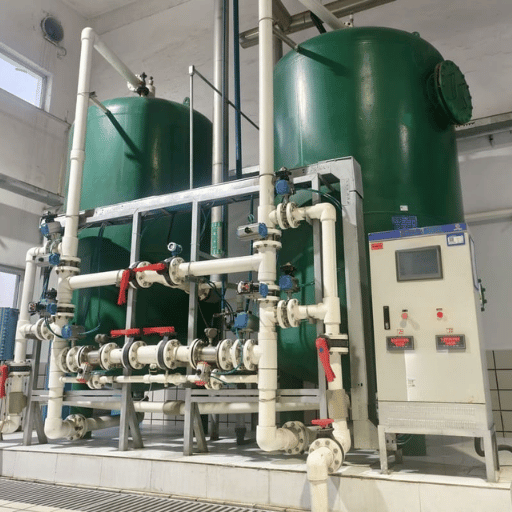
What is the difference between electric and electrode boilers?
But for industrial purchasing there is confusion when distinguishing between Electrode boilers and Resistance boilers, because one of them has physical resistance elements and the other doesn’t but because many customers are purchasing boilers, the consequences in procurement if the buyer picks the wrong technology are real. A Resistance Electric boiler uses a contained electrical heating element (a resistance element immersed within or around) the target fluid. They use low-voltage (380 – 690 volts) power supplies and are very practical and cost-effective at capacities of up to around 5,500 kilowatts (kW). Electrode boilers conduct electric current through the target fluid itself, without the need for physical resistance elements. They require a higher voltage (4.16 kilovolts and above), but are extremely cost-effective as capacity increase and provide tens of MWs continuously flexible load adjustment.
Both type’s are offered from the Taiwan based company Taiguo, The LDR Series resistance steam boilers range from 36-1,400 kW with efficiencies of 95%, while their sister model WDR Series resistance steam boiler with corrosion-resistant stainless steel heating elements covers 375 to 4,500 kW at 99% efficiency.
| Parameter | Electrode Boiler | Resistance Electric Boiler |
|---|---|---|
| Supply Voltage | 4.16–25 kV (medium voltage) | 380–690 V (low voltage) |
| Practical Capacity | 3 kW – 102 MW | 36 kW – 5,500 kW |
| Efficiency | 99–99.9% | 95–99.6% |
| Startup Time | Hot start: <1 min; cold start: 5–10 min | 3–5 min (small units) |
| Turndown | 10–100% rated output; modulation in <60 s | Step-control (e.g., 33/66/100%) |
| Water Quality Demand | High — conductivity-critical | Standard |
| Dry-Fire Risk | None — electrodes are water-cooled | Yes — element burnout on low water |
| Grid Infrastructure | MV supply (≥4.16 kV) required | Standard LV supply (380–690 V) |
The Electrode vs. Resistance Selection Matrix
Use the following If/Then guidelines for selecting your optimum technology:
- If capacity exceeds 5 MW AND the facility has 4.16 kV medium-voltage supply — electrode boiler is the preferred option.
- If capacity is below 500 kW — resistance electric boilers offer lower infrastructure cost and simpler operation at small scale.
- If steam purity greater than 99% is needed (for pharmaceutical production or for Food Service Industry applications with clean room or for sterilisation processes). (Jet-Type units go up to 99.95%)- select the Electrode boiler.
- If it’s important for the boiler to be able to continuously modulate load or follow process demand. select the Electrode boiler.
- If the facility has no medium voltage power and the infrastructure upgrade cost (transformer purchase and installation) would be exorbitant then the resistance boiler option is the most practical choice, unless they do upgrade the electrical infrastructure for a number of reasons.
- 500 kW–5 MW grey zone: conduct a site infrastructure audit — availability of medium-voltage supply is the deciding factor in this range.
Advantages and Limitations of Electrode Boilers
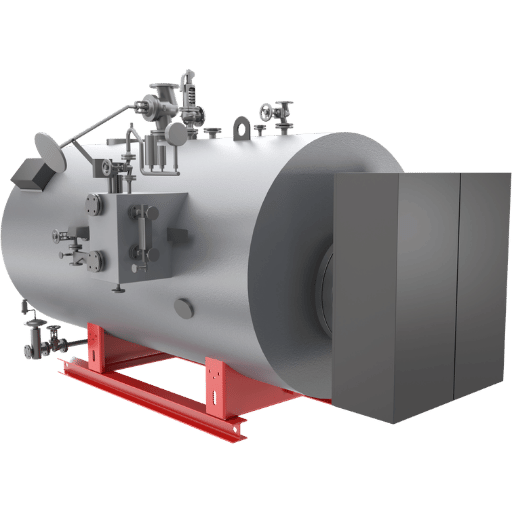
So electrode boilers are well suited for large-medium sized plants but have infrastructure limitations and requirements that are key to a good specification.
| Advantages | Limitations |
|---|---|
|
|
Common Specification Error
Specifying an electrode boiler for applications less than 100 kW seems to be a recurring oversight when switching to electricity for steam generation in facilities. Medium-voltage power requirements, which include transformers, high amperage switchgear, and cabling infrastructure overhead, are significant enough at this capacity to substantially increase the total installed cost with no performance benefit in returnance. resistance electric boilers achieve comparable steam quality and purity to electrode technology, however for capacities less than one megawatt, they achieve this at a fraction of the capital cost, without the stringent water quality treatment that electrode technology requires.
Water Quality and Conductivity Management
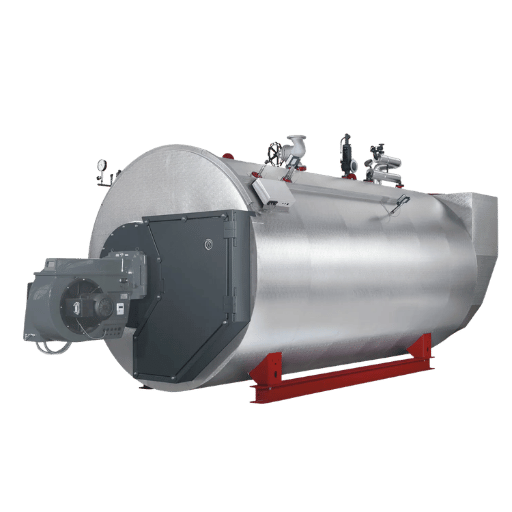
Conductivity of water within an electrode boiler is the single most critical variable in electrode boiler operation.
Unlike in resistance electric boilers in which the heating element is physically insulated from the water, an electrode boiler utilizes the water’s conductivity to regulate current flow and ultimately heat generation. Beyond simply reducing the overall efficiency, the deviation of conductivity can lead to output fluctuations, premature boiler shut down, and in extreme circumstances, irreversible electrical damage to the pressure vessel itself.
Operating Parameters
According to WAT Manufacturing’s water treatment O&M document-often cited as the primary published reference for electrode boiler water treatment-the recommended operating conductivity for water contained in an electrode boiler falls between 2,000 and 4,000 µS/cm, with an incoming feedwater quality of no more than 2 µS/cm.
The system’s total alkalinity should not exceed 400 ppm when porcelain insulators are in place.
Note: Specific conductivity ranges will vary depending on electrode material, configuration of vessel, and operating voltage; these are for reference purposes.
| Conductivity Condition | Operational Effect | Risk |
|---|---|---|
| Too low (<500 µS/cm) | Insufficient current — boiler cannot reach rated output | Performance |
| Target (2,000–4,000 µS/cm) | Stable power delivery; predictable modulation | Normal |
| Too high (>5,000 µS/cm) | Overcurrent trip; foaming; arc-over risk — potential damage to boiler shell, electrodes, and connected switchgear | Damage |
| Scale buildup (neglected treatment) | Scale insulates electrode surfaces; reduces current transfer — field data indicates 15–25% output loss in severe cases | Performance |
Pre-Commissioning Water Quality Checklist
- Install deionizer or RO to producing feedwater <2 uS/cm
- Install boiler water conductivity meter on recirculation circuit
- Configure boiler auto blowdown tied to conductivity set point, not timer
- Verify total alkalinity on start up; target <400ppm (porcelain insulators)
- Log conductivity during start-up, at 1h, 4h, and 24h (after initial steam generation)
- Develop routine visual inspection program for electrodes with OEM; generally part of annual outage plan
Industrial Applications: Where Electrode Boilers Deliver Reliable Steam Output
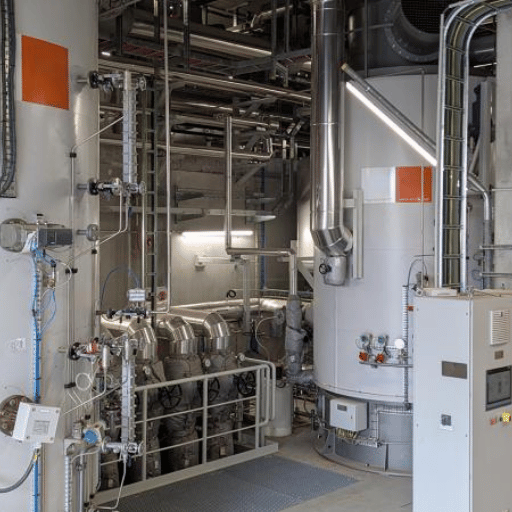
In the industrial applications in which clean generation and medium voltage capability are important design considerations for primary steam and electric heating applications in place of traditional combustion sources, the following five examples account for the majority of Electrode boiler use.
Power Generation — Grid Regulation and Backup Steam
The market deployment of 250+ MW of electrode steam boiler capacity within Germany solely for secondary grid regulation ensures it can absorb excess renewable power to generate steam – substituting fossil fuels at customer sites in turn. An example, a 7 MW unit at Germany’s Currenta chemical complex, Leverkusen (see lead image), can supply saturated steam to industry at 32 bar (g) with 380°C from a superheated outlet, while being a secondary regulation service provider. Cold start and hot standby capability for auxiliary steam purposes offers up to 5-10 minutes response times and nearly instant dispatch respectively.
District Heating — Grid-Scale Heat Production
In Helsinki, the Hanasaari energy block utilizes four 50 MW electrode boilers, resulting in a capacity of 200 MW, and it is Europe’s largest electrode boiler, with the accompanying 1,000 MWh of thermal energy storage. About 40% of the growth in district heating network extensions incorporate electrode boilers, used primarily to cover peak loads and perform grid balancing functions as power-to-heat technology. See also: steam boilers vs. thermal fluid options in the district energy landscape.
Food and Beverage — Clean Steam for Sterilisation
With steam quality purity of 99.95% from electrode hot water boilers, jet-type electrode steam boilers comply with contamination standards set by sterilization of food,CIP, and beverage distillation.The global electrode boiler industry represents approximately 25 percent of sales into the chemical industry,and about 15-20 percent into the food and beverage industries.
Healthcare — Autoclave and HVAC Humidification
Hospitals need on-demand, clean steam for autoclaves, steriliser and building HVAC humidification. Electrode boilers take the combustion plant out of hospital buildings and critical care environments, eliminating the fire hazard and making code compliance easier, and providing the small vessel footprint required to be installed in a small mechanical room where a flue stack can’t.
Chemical and Paper Manufacturing—Process Steam Under Emissions Control
At industrial sites within regulated emissions zones – with limitations on combustion permits or carbon pricing that makes using gas costly – are utilizing electrode boiler for primary process steam. A 5 MW to 15 MW electrode steam boiler was installed on a manufacturing plant site in Germany, with others planned in Italy and Estonia, into a direct injection into existing steam headers to decrease its Scope 1 emissions and gain revenues from services programs.
Application Scenario: Power Plant Auxiliary Steam
Grid instability becomes more acute for the combined-cycle plant operator as wind penetration levels rise regionally. Curtailed wind energy becomes available at virtually zero spot prices at high-wind times while auxiliary steam demand at the plant remains a constant. Instead of limiting plant output or accepting the waste of curtailment energy, the operator adds a 15 MW electrode boiler powered from the plant’s existing 11 kV infrastructure.
In return, the boiler takes on curtailed wind, supplies auxiliary steam at 100-500 PSIG, and supplies response capacity to the frequency regulation market, thereby transforming a grid stability problem into a tangible profit center.
Electrode Boilers and the Industrial Electrification Trend [2025–2026 Outlook]
![Electrode Boilers and the Industrial Electrification Trend [2025–2026 Outlook]](https://taiguo-steamboiler.com/wp-content/uploads/2026/05/8-12.png)
Commercial electrode boiler procurement market has changed significantly over last decade, evolving from a niche peak-load management product for Nordic hydro-markets into a mainstream category of industrial heat, in response to demand for decarbonisation, green energy integration and the commercial opportunities created by grid services via power-to-heat (P2H).
“When there is too much power in the grid, the boiler will automatically regulate up, achieving its full thermal capacity in 30 seconds, helping to stabilise the grid frequency.”
– Martin Løvland, Technical Director, PARAT Halvorsen AS, Norway, writing in Modern Power Systems (2018)
The EU’s Recovery and Resilience Facility (RRF) – a €672.5 billion funding programme that member states must fully implement by August 2026 – will support P2H initiatives within each national decarbonisation plan. As a result, electrode boiler uptake is surging across municipal district heating networks in Northern and Eastern Europe, with major active projects identified in Denmark, Finland, Germany, Italy, and Latvia.
Several commercial market research analyses predict that the overall industrial electric boiler market size will increase to approximately $19.8 billion by 2034, up from roughly $9.4 billion in 2025. The submarket comprising solely of electrode boilers is growing at an accelerated rate – estimations vary between 5-10% CAGR across sources – due to rapid industrial electrification and growing requirements for grid flexibility that resistance boilers cannot achieve at desired levels. Electrode boilers are presented as a highly efficient electrification route for large process heat requirements within the National Renewable Energy Laboratory (NREL) Industrial Decarbonization Roadmap (2022), with existing installations documented at up to 335 MMBtu/hr.
Interested in Total Cost of Ownership for Fuel-Switching? The TCO of an electric boiler can vary considerably depending on fuel choice. Read: Electric vs. Gas Steam Boiler: Industrial TCO Comparison. Broader Market: For more about the Industrial Electrification path, please read: Industrial Electric Heating: Decarbonization Pathways.
Frequently Asked Questions
About this Guide: Taiguo Boiler’s engineers have been producing industrial electric steam boilers for the past 50+ years. The engineering data found throughout this article have been gathered from several sources including U.S. government laboratory reports (DOE/LBL, NREL), scientific, peer-reviewed research papers (ScienceDirect, MDPI Energies), trade association whitepapers (DBDH, ASME), original equipment manufacturers (OEMs) product manuals, and authoritative articles from professional media sources (Modern Power Systems). Single-source citations include any perceived limitations.
It should be understood that Taiguo produces resistance-type electric boilers (e.g., the LDR and WDR Series) – the data included here that relate to electrode-type boilers refers to the technology as a whole, rather than a presently manufactured Taiguo Product.
References
- U.S. DOE / Lawrence Berkeley National Lab. IAC Decarbonization Tipsheet 3: Replace conventional boiler with electric boiler. 2022. industrialapplications.lbl.gov
- NREL. Industrial Decarbonization Roadmap. DOE/GO-102022-5724. September 2022. docs.nrel.gov
- Energy 360 / Heat Tech & Sustainability; Power to Heat Conversions in Smart District Energy. ScienceDirect, October 2022. sciencedirect.com
- MDPI Energies – Flexibility From electric Boiler And Thermal Storage Interaction To Multi Energy System. Vol.13(1) 2020.mdpi.com
- ScienceDirect. The effect of electric boilers and heat storages in the Nordic electricity market. 2025. sciencedirect.com
- DBDH. Medium voltage electrode boilers: The road to zero CO2 2023 dbdh.org
- WAT Manufacturing. Electrode Boiler 750-272: Installation, Operation and maintenance Manual. 2013. Watmfg.com
- Wikipedia. Electrode boiler. en.wikipedia.org
- Løvland, M. (PARAT Halvorsen AS). “Electrode boilers and the energy transition.” Modern Power Systems, 2018, July. modernpowersystems.com
- ASME. Boiler And Pressure Vessel Code Section I — Power Boilers. asme.org
Related Articles
- → Complete Industrial Electric Boiler Buyer’s Guide
- Electric vs. Gas Steam Boiler: Industrial TCO Comparison
- → Industrial Electric Heating: Decarbonization Pathways [2025]
- 10 Types of Industrial Boilers: What to Compare?
- → Taiguo Industrial Electric Boiler Product Overview