Get in Touch with Taiguo

Wood Preservation Autoclave: A Process, Quality, and Buyer Guide

Contents
show
Pressure-treatment process, quality evidence, plant integration, and procurement
A wood preservation autoclave is the pressure-treatment cylinder inside a larger timber impregnation plant. It can run a programmable vacuum-and-pressure sequence. The finished wood is acceptable only when the timber, preservative, process controls, sampling and test results, all support the end use.
Short Answer: A Vessel Is Only One Part of the Treatment System
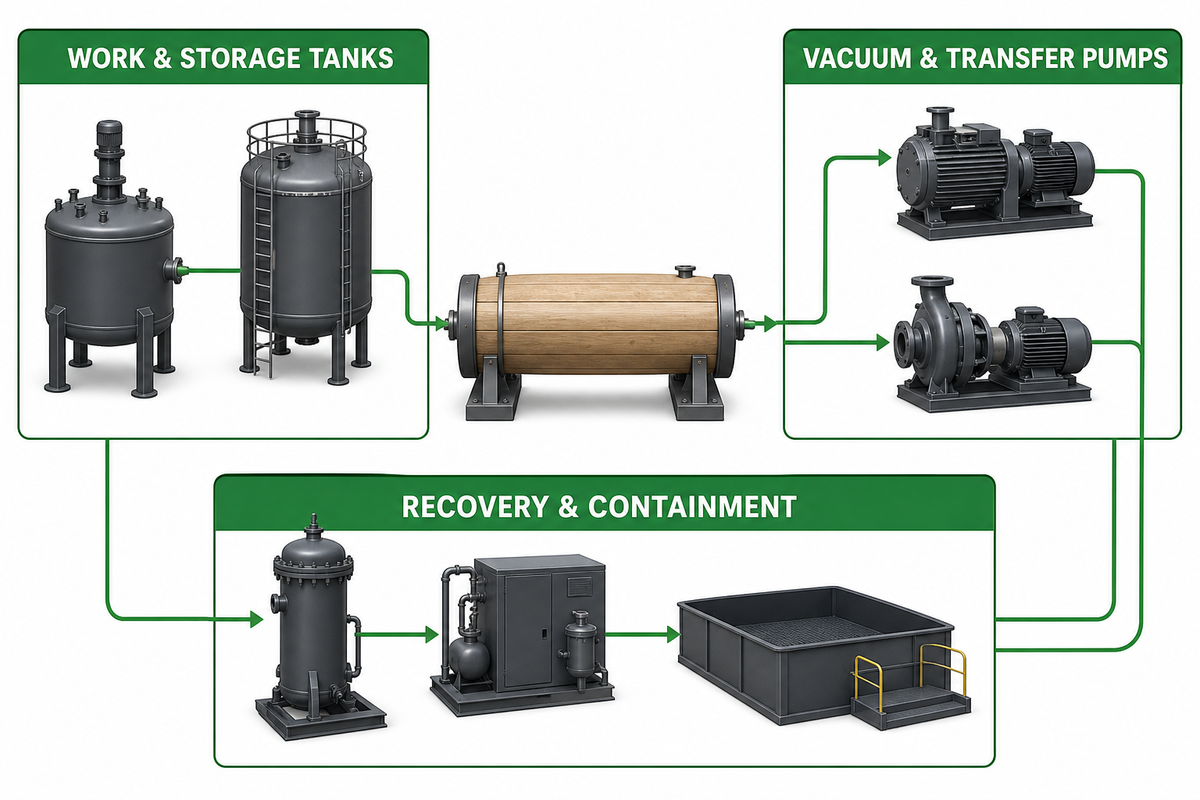
The cylinder is a sealed pressure vessel connected to the wider treatment plant, including work and storage tanks, vacuum and transfer pumps, valves, controls, recovery equipment, rails or carts, and containment. An initial vacuum removes air from accessible wood voids, preservative enters the vessel, and controlled pressure assists liquid movement into treatable zones. Recovery and final-vacuum stages then return liquid and reduce free solution before unloading.
This is preservative impregnation and not laboratory sterilization or composite curing. The process target isn’t simply “pressure reached.” It’s treated timber that meets the penetration, retention, condition, and traceability requirements established for its end use.
Autoclave wood treatment begins with a defined material and exposure requirement. Wood impregnation links that requirement to preservative control and test evidence. An autoclave treatment line is useful only when the complete wood treatment equipment can protect wood against the biological hazard named by the specification rather than promise unlimited durability.
A wood impregnation autoclave doesn’t inject a fixed recipe deep into the wood by force alone. The treatment of wood remains limited by treatability, therefore the goal is a controlled uptake, not an unsupported claim that every load will become wood resistant to fungus or insect attack.
Map Timber and Preservative Variables Before Setting a Cycle
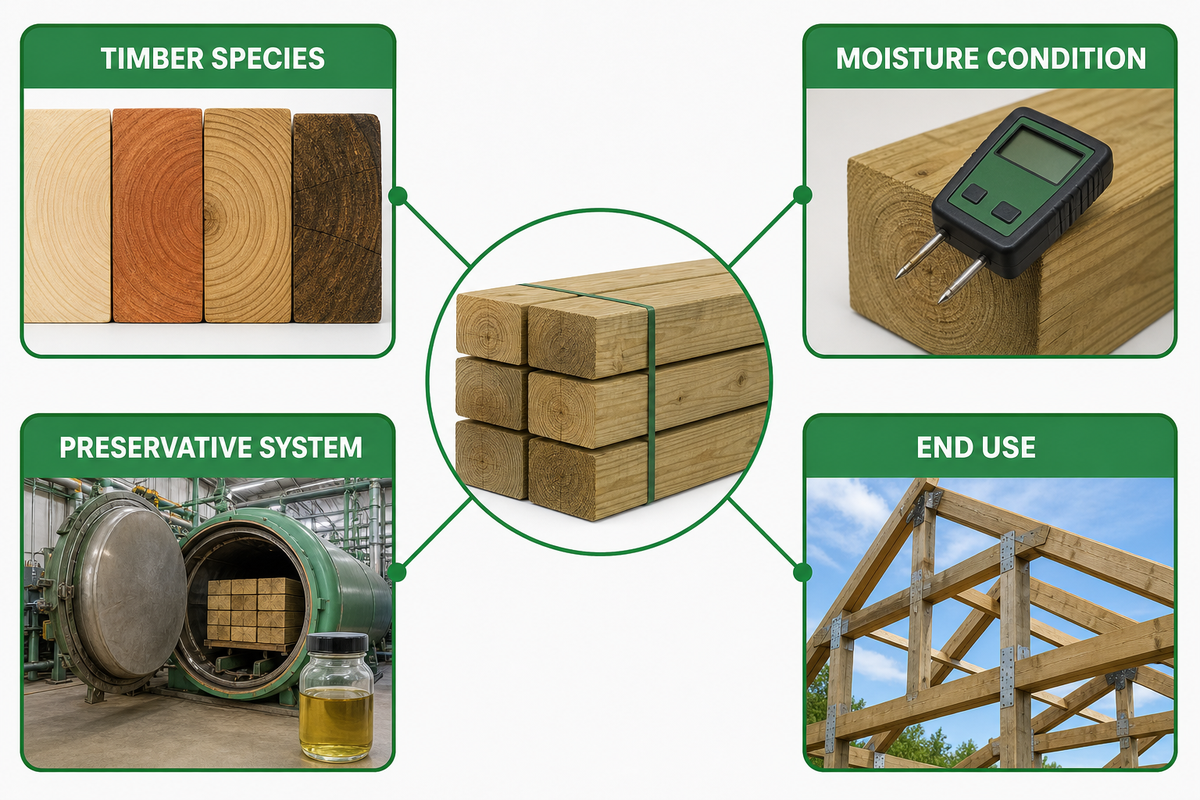
USDA Wood Handbook explains that factors that influence treatment include species, heartwood and sapwood distribution, penetrability, and moisture condition. The American Wood Protection Association’s Use Category System relates service conditions with wood species, preservative, treatment, and inspection requirements.
Use the Treatment Input Map to communicate treatment requirements to your vessel supplier prior to requesting a cycle or quote:
| Input | Why it changes the decision | Evidence to provide |
|---|---|---|
| Species | Treatability varies by species. | Botanical or commercial species designation |
| Sapwood/heartwood mix | Heartwood is often harder to penetrate. | Typical cross-section and mix |
| Moisture range | Moisture affects available void space and consistency. | Method, locations, and measured range |
| Cross-section and length | Dimensions affect penetration path and load geometry. | Minimum, maximum, and dominant sizes |
| Preparation | Incising or other preparation may be required for refractory timber. | Machining and incising specification |
| Preservative system | Chemistry affects compatibility, recovery, and controls. | Supplier data and local authorization |
| Use category | Exposure determines the required treatment outcome. | Market, end use, and governing standard |
| Penetration and retention | These are product outcomes, not vessel settings. | Test method and acceptance limits |
| Batch and shift target | Defines handling, tank, and recovery demand. | Packs per batch and batches per day |
More pressure isn’t a universal cure for poor penetration. USDA and industry guidance note that refractory species may require preparation such as incising; changing the pressure hold without diagnosing the timber can waste time or damage product while leaving the underlying limitation unresolved.
Lumber dimensions and the final use of the wood belong in the same review. The autoclave operator should not assume that longer high pressure can make poorly prepared material resistant to every form of decay or extend its lifespan without qualifying test evidence.
Run the Vacuum-Pressure Sequence as a Controlled Material Balance
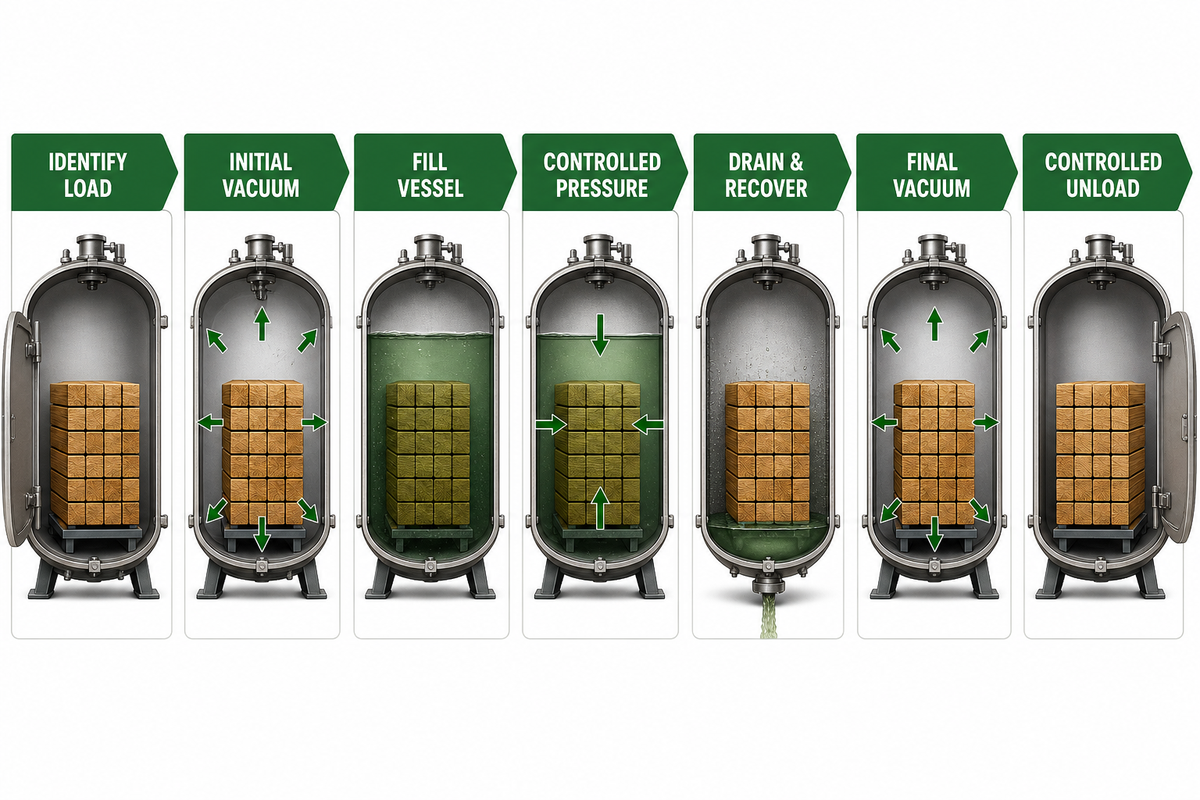
A useful treatment-cycle record shows what moved, when it moved, and whether the plant was operated within its validated limits. The following is an example of a functional cycle:
- Note the charge, timber, dimensions, moisture, observations, pack arrangement, and lot identity.
- Note the level and stability of the initial vacuum. Track initial-vacuum time and leak behavior.
- Fill the vessel and confirm source tank, preservative identity, solution condition, and transferred quantity.
- Apply and record controlled pressure. Record the pressure trace and liquid uptake without treating either as finished-product proof.
- Drain and recover, reconciling returned liquid, abnormal loss, and valve sequence.
- Apply final vacuum when the validated process dictates it to control free solution and post-treatment dripping.
- Unload into controlled handling while preserving containment, traceability, dwell, and release status.
During the autoclave wood treatment cycle, the operator uses the autoclave to remove air from the wood’s accessible voids. With air removed, the preservative enters inside the autoclave; pressure then helps the solution permeate treatable zones without implying that it can saturate every cavity.
Some suppliers have referred to this as heat and pressure processing, but temperature control must follow the preservative and the validated process, not a high-temperature recipe. A preservation system isn’t a wood dryer, and its impregnation equipment shouldn’t be assessed as if it were resin-curing machinery.
Plant controls should make deviations visible. Smooth trace can still be present with uneven timber uptake, and a material-balance anomaly may indicate a leak, incorrect valve position, errant measurement, or retained liquid.
Separate Cycle Completion from Treated-Wood Conformance
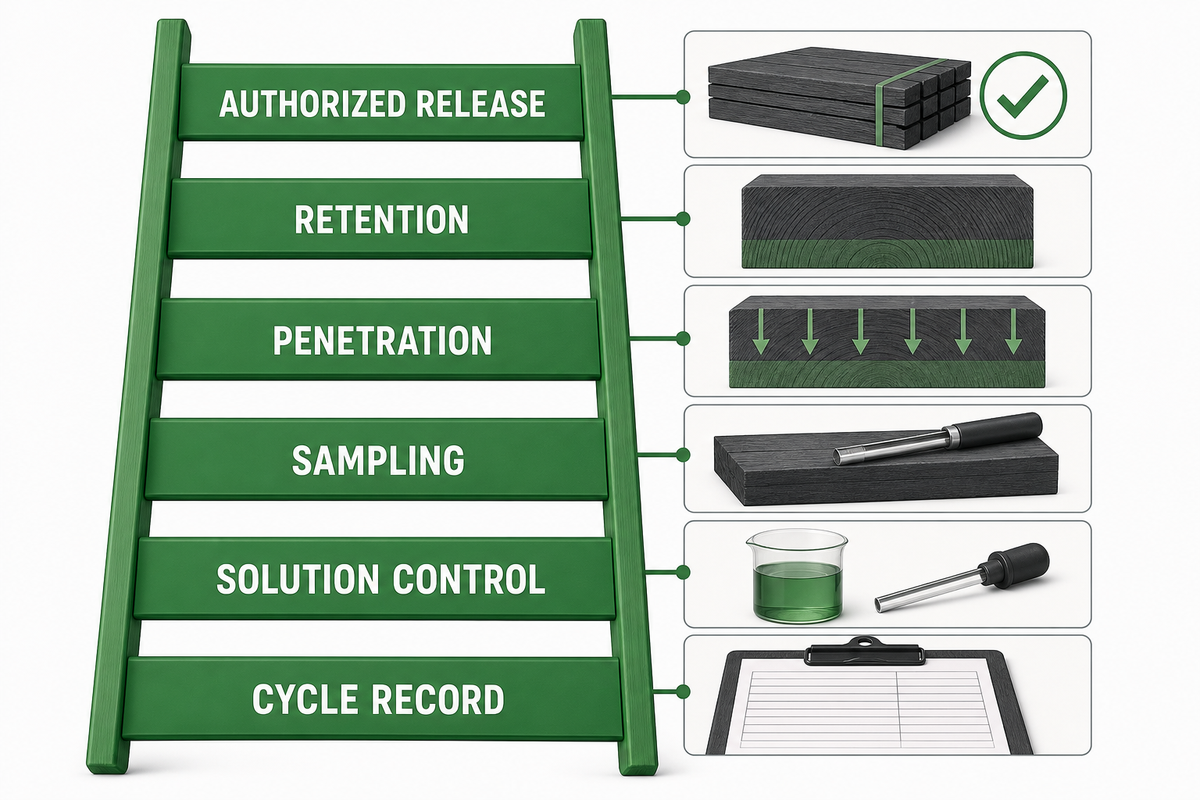
The Process-to-Conformance Evidence Ladder prevents a common acceptance error: treating the controller graph as the final quality certificate. USDA guidance says adequate penetration and retention are needed for the relevant species, preservative, and method; AWPA separates use selection from manufacturing and quality-control requirements.
The evidence also needs to show how excess solution was recovered, if solution concentration was adjusted/diluted according to an approved procedure, and how fungal or insect infestations relate to the specified exposure. These records support a safer end product; they do not justify an “environmentally friendly” or “permanently protected” claim.
| Level | Evidence | What it proves | What it does not prove |
|---|---|---|---|
| 1 | Instrument calibration | Measurements are traceable within the stated calibration scope. | Timber met product requirements. |
| 2 | Vacuum and pressure trace | The programmed equipment sequence ran. | Preservative penetrated required zones. |
| 3 | Solution identity and assay | The process fluid was controlled. | Every piece received the required loading. |
| 4 | Charge identity and load map | Records belong to a defined timber lot. | The sampling plan was representative. |
| 5 | Penetration checks | Preservative reached specified zones in sampled material. | Retention is adequate unless separately determined. |
| 6 | Retention determination | Sampled wood contains the required preservative level under the stated method. | The entire lot is conforming without valid sampling. |
| 7 | Deviation and retest record | Exceptions were controlled and resolved. | An undocumented deviation was harmless. |
| 8 | Lot release | An authorized decision linked results to disposition. | Suitability for an unspecified use. |
| 9 | Traceability package | Buyer can reconstruct material, cycle, tests, and release. | Compliance outside the named jurisdiction and standard. |
Size the Whole Plant Around the Usable Load Envelope
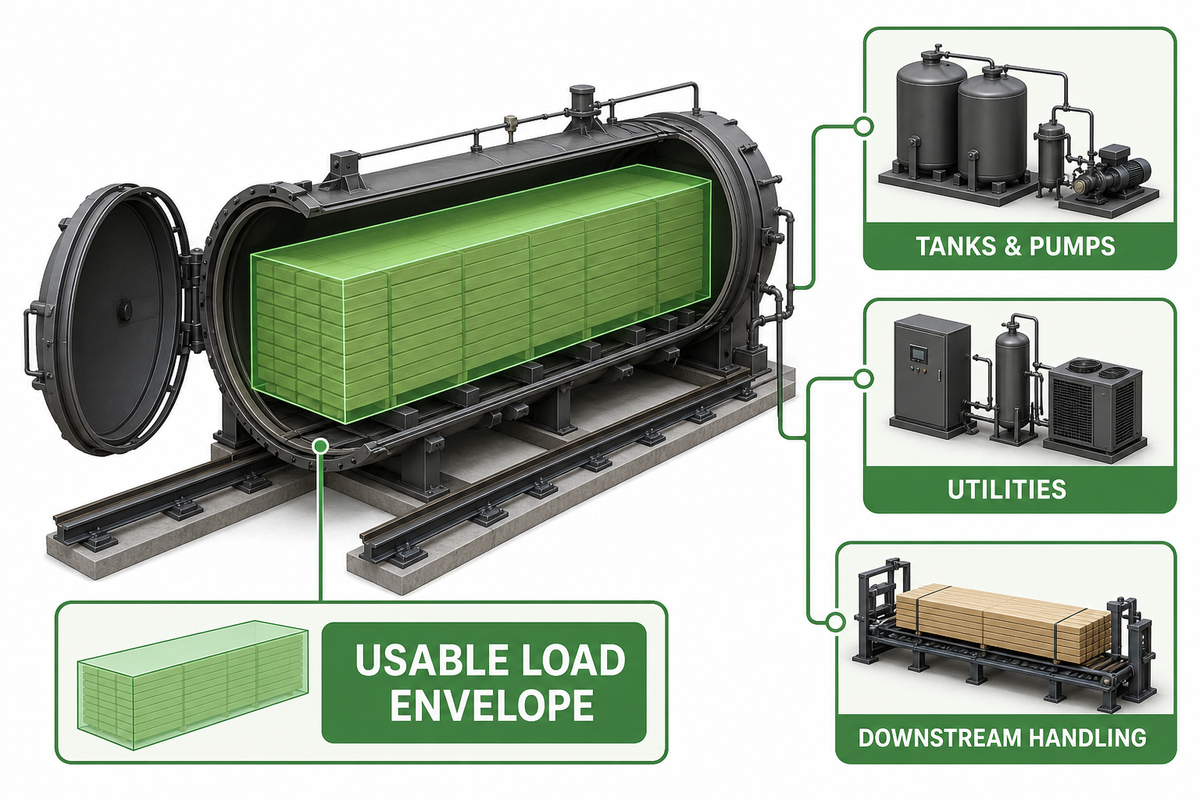
Chamber diameter and shell length are relatively easy to compare, but they don’t define saleable output. The Whole-Plant Sizing Boundary starts from the actual timber pack, cart, and door clearance, and usable chamber length. It follows preservative and material through the entire plant.
The boundary covers treatment autoclave, impregnation tank, transfer machinery, and regular maintenance access. It also includes downstream space where wet wood products drain before release; ignoring that area can turn a cost-effective vessel into a slow plant.
Use this hidden-bottleneck map when comparing proposals:
| Boundary | Hidden constraint | Buyer check | Role at risk |
|---|---|---|---|
| Load | Door, cart, spacers, and unusable end space reduce nominal volume. | Request a scaled load drawing. | Plant manager |
| Work tank | Insufficient working volume delays fill or leaves no operating margin. | Review full liquid balance. | Engineering |
| Storage | Make-up and recovered solution compete for capacity. | Define minimum, normal, and maximum levels. | Operations |
| Transfer | Pipe losses and pump duty extend non-treatment time. | Compare measured fill and drain time. | Plant manager |
| Vacuum | Leaks or undersized extraction slow every charge. | Specify leak and pull-down tests. | Maintenance |
| Handling | One cart set can leave the vessel idle during loading. | Time loading and unloading separately. | Finance |
| Containment | Drip dwell and drainage can occupy the only safe staging zone. | Map drainage and contained storage. | Environment, health and safety |
| Quality release | Sampling and test turnaround hold finished inventory. | Model release time, not only cycle time. | Quality and finance |
| Utilities | Power, water, ventilation, or waste handling limits concurrent operation. | Obtain a connected and peak-load schedule. | Owner |
UK Health and Safety Executive guidance for industrial timber-treatment plants emphasizes containment, draining, venting, maintenance, and competent operation. Local law and the destination pressure-vessel jurisdiction still govern the project; this engineering guidance isn’t a substitute for a local compliance review.
For details about chamber configurations and the equipment boundary, see the Taiguo autoclave for wood preservation page. The product page owns commercial specifications; this guide focuses on the decisions and evidence around them.
Buyers who need broader vessel context can review the industrial autoclave range and the industrial autoclave guide. Process settings aren’t transferable between industries: composite autoclave manufacturing and rubber vulcanization involve different materials, objectives, and acceptance evidence.
Troubleshoot from Timber to Solution to Equipment
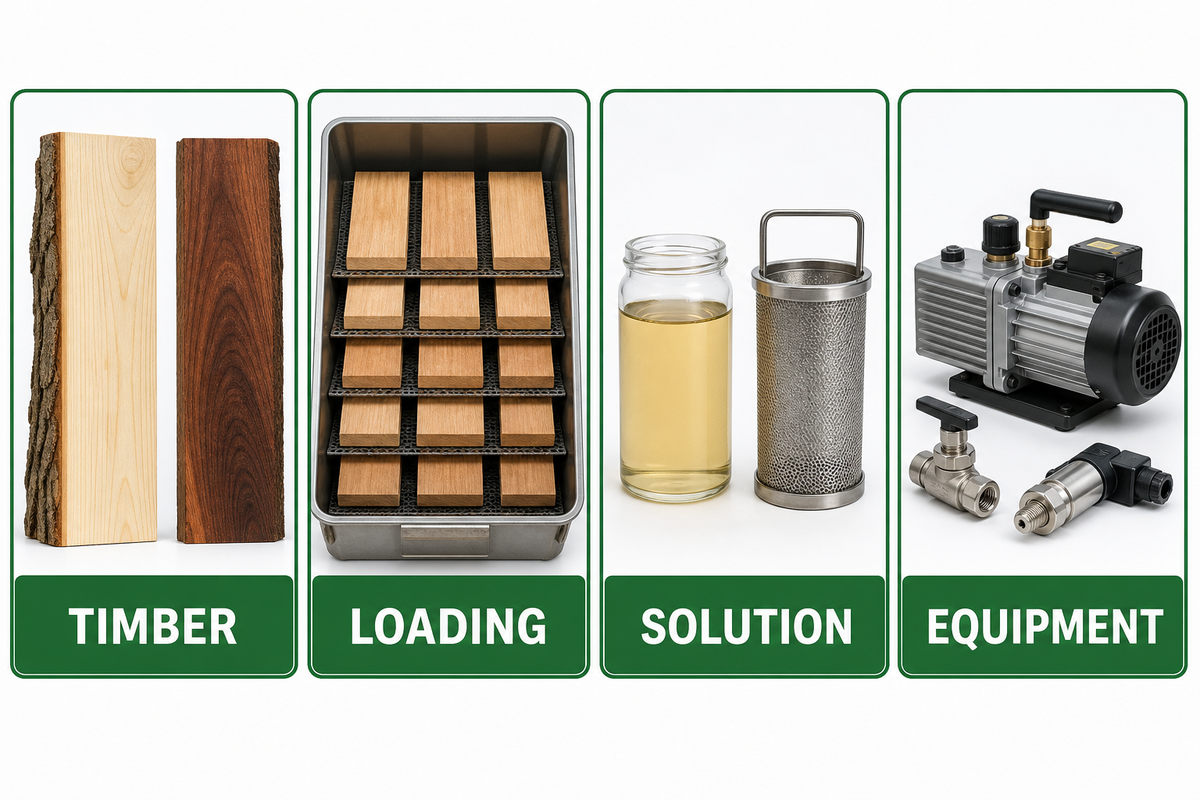
The Timber-Solution-Equipment Diagnostic Tree begins with treatment evidence rather than immediately extending pressure time. That order prevents a machine adjustment from hiding a timber, loading, or solution problem.
For wooden structures located outdoors, discrimination of biological degradation from water damage and ultraviolet weathering is required. Preservative treatment can mitigate insect or fungal risks, but it doesn’t make a wood product immune to all degradation mechanisms.
| Symptom | Check first | Then isolate |
|---|---|---|
| Low uptake | Species, heartwood fraction, moisture, dimensions | Vacuum integrity, pressure delivery, liquid balance |
| Uneven penetration | Load mix, preparation, pack geometry | Flow path, sampling position, instrument consistency |
| Excess dripping | Drain, final-vacuum, dwell, post-treatment handling | Valve sequence and recovery performance |
| Solution loss | Tank levels and transfer reconciliation | Leaks, trapped liquid, calibration, carry-out |
| Slow cycle | Fill, drain, pull-down, loading and release times separately | Pump, pipe, vacuum, handling, and laboratory bottlenecks |
| Lot-to-lot variation | Incoming timber and solution condition | Recipe control, operator actions, sensor drift, sampling |
Specify Evidence Before You Compare Suppliers
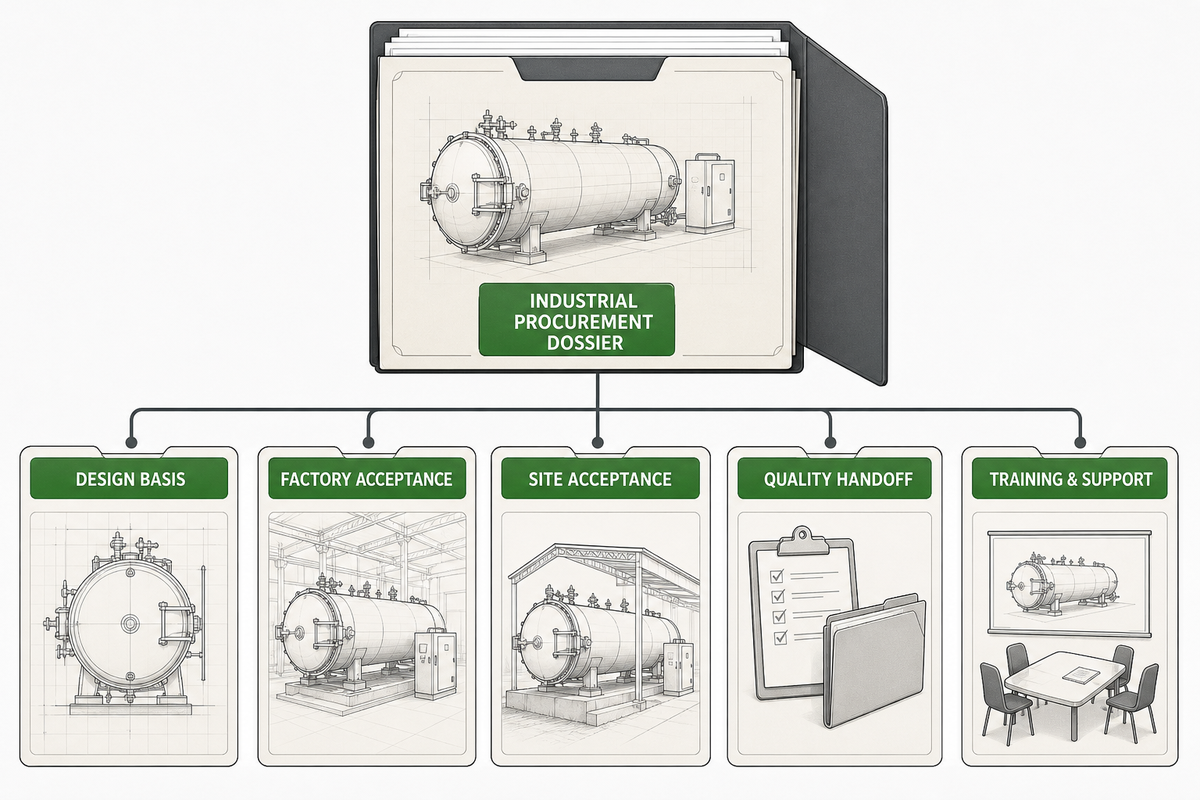
A Wood Autoclave Acceptance Pack should be available prior to bids being normalized. Otherwise, one supplier may quote a vessel, another a treatment system, and a third a partly commissioned plant, three prices that cannot be compared honestly.
Acceptance language should name the protective function, applicable preservative, measurable outcome, operating controls, and evidence before releasing the lot, rather than rely on vague “high safety” or “long-lasting” promises.
- For the request-for-quotation basis, state the timber envelope, preservative, required output, site utilities, automation, containment, and jurisdiction.
- Design documentation should cover the applicable pressure-vessel basis, materials, weld and inspection records, relief philosophy, piping and instrumentation, and control narrative.
- Factory acceptance should cover document review, calibrated instruments, interlocks, alarms, valve sequence, leak testing, and a defined representative-load or agreed simulation.
- Site acceptance should cover installed utilities, containment, dry and wet commissioning, training, production-load evidence, deviations, retest, and handover.
- Quality handoff should name sampling locations, penetration and retention methods, traceability, release authority, and records retention.
Don’t ask for “all international certificates.” Name the destination jurisdiction, governing product standard, pressure-vessel requirements, preservative authorization, and acceptance method. The US Environmental Protection Agency notes that wood-preservative active ingredients are regulated and periodically reviewed; equipment selection doesn’t replace chemical and end-use compliance.
What to Send Taiguo for a Useful Technical Review
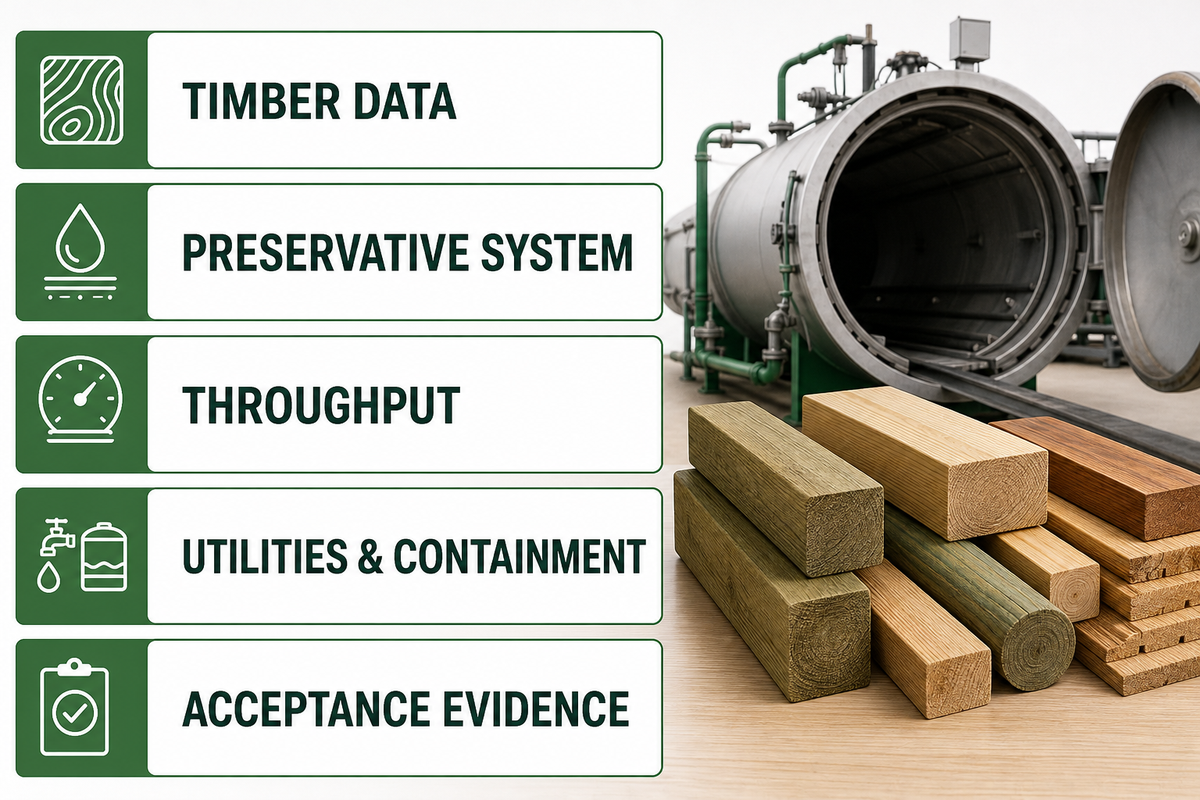
Provide information about the timber species, size range, pack dimensions, moisture range, preservative system, use category, required penetration and retention, batch size, daily throughput, utilities, containment concept, automation preference, destination jurisdiction, and acceptance evidence. If the values are unknown, indicate them as open decisions instead of filling in guessed cycle settings.
Discuss Your Timber Treatment Requirements
Frequently Asked Questions
Can you autoclave wood?
Yes, but industrial wood treatment isn’t the same as the laboratory sterilization of items. A wood preservation autoclave is a pressure treatment cylinder utilized with vacuum pumps, preservative tanks, transfer pumps, controls and recovery systems, and handling equipment. The validated process depends upon the wood, preservative, use category, product size, and governing standard.
What chemical preserves wood?
There isn’t a single preservative that applies to all markets and uses. Systems may contain water- or oil-borne formulations dependent upon end use and local authorization. Selection of the preservative system is dependent upon the treater, preservative supplier, and governing specification. The vessel supplier is to confirm chemical compatibility and suitability with the plant.
Is one pressure and time recipe suitable for every timber load?
No. Species, sapwood and heartwood distributions, moisture content, dimensions, preparation, load arrangement, preservative, solution condition, equipment capability, and required penetration and retention, can affect the validated process.
What proves that pressure-treated wood meets the requirement?
A completed cycle record shows the recorded sequence; it does not prove treated-wood conformance. Conformance requires the specified sampling, penetration checks, retention determination, solution controls, lot traceability, calibration, deviation handling, and an authorized release decision.
How does this guide avoid competing with the Taiguo product page?
The product page owns equipment configurations, specifications, and inquiries. This guide owns the educational task: treatment variables, evidence, whole-plant sizing, troubleshooting and acceptance planning.
References & Sources
- USDA Forest Service: Wood Preservation chapter
- USDA Forest Products Laboratory: Wood Preservation
- American Wood Protection Association: Use Category System
- American Wood Protection Association: Standards organization
- UK HSE: Industrial timber treatment plants
- US EPA: Overview of wood preservative chemicals