Get in Touch with Taiguo

Timber Treatment Plant: A Complete Planning and Buying Guide

Contents
show
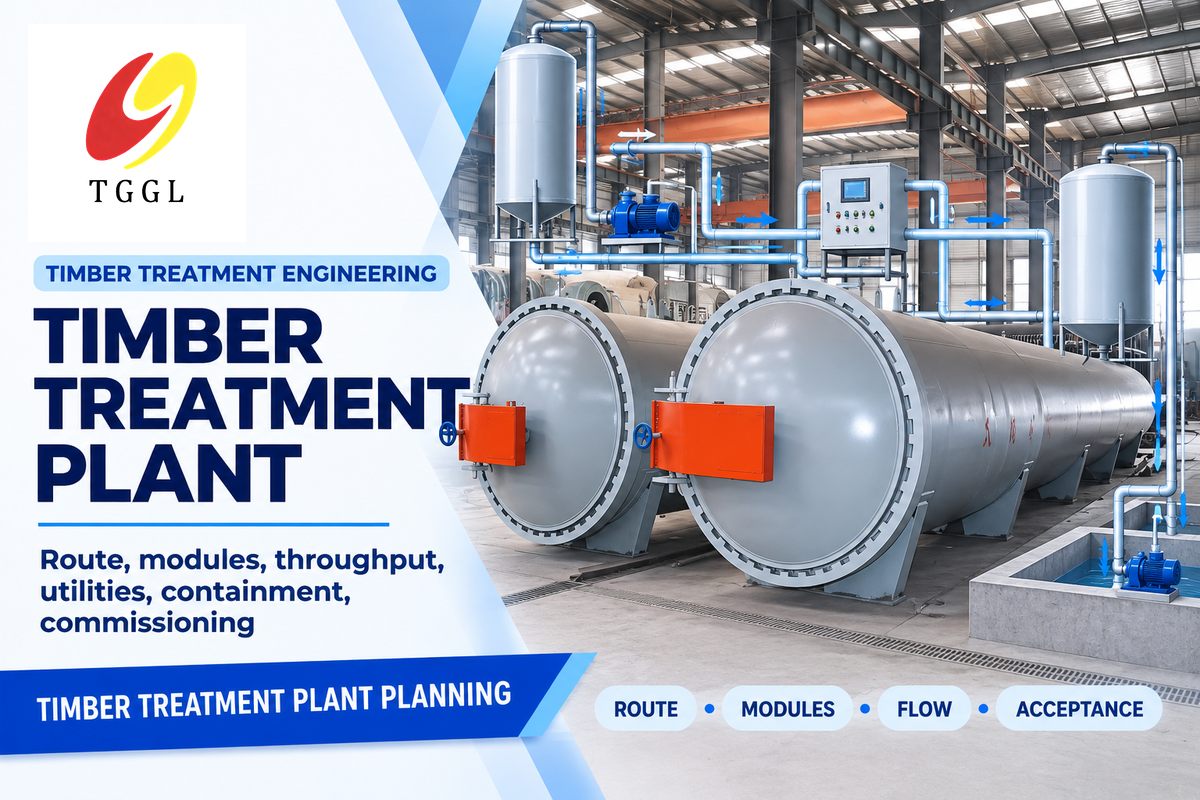
A timber treatment plant isn’t just a pressure cylinder with pumps attached. It’s an integrated production system. It receives and prepares timber, transports it through the controlled treatment route, recovers chemicals, addresses dripping, records quality, and releases finished product. One missing interface may allow the vessel to run while the plant still doesn’t consistently and safely deliver product.
A complete wood treatment plant therefore requires a defined wood treatment process, from incoming inspection to finished-goods release. Buyers who need vessel configurations can also review Taiguo’s industrial autoclave solutions before translating the plant boundary into equipment specifications.
This guide helps project owners compare timber treatment solutions and define that complete system before asking plant suppliers for quotations. It describes choices available for the treatment route, modules of the plant, practical capacity, utilities, layout, containment, commissioning, and acceptance. No matter if the project involves pressure treatments, wood impregnation, or some other route, the treatment vessel is just one part of the facility. For a detailed explanation of vacuum-pressure cycles and vessel-focused selection, use our separate wood preservation autoclave guide.
The central buying rule: define the wood outcome, jurisdiction, plant boundary, and evidence requirements before comparing cylinder diameter, automation level, or price.
What Equipment and Interfaces Define the Plant Boundary?
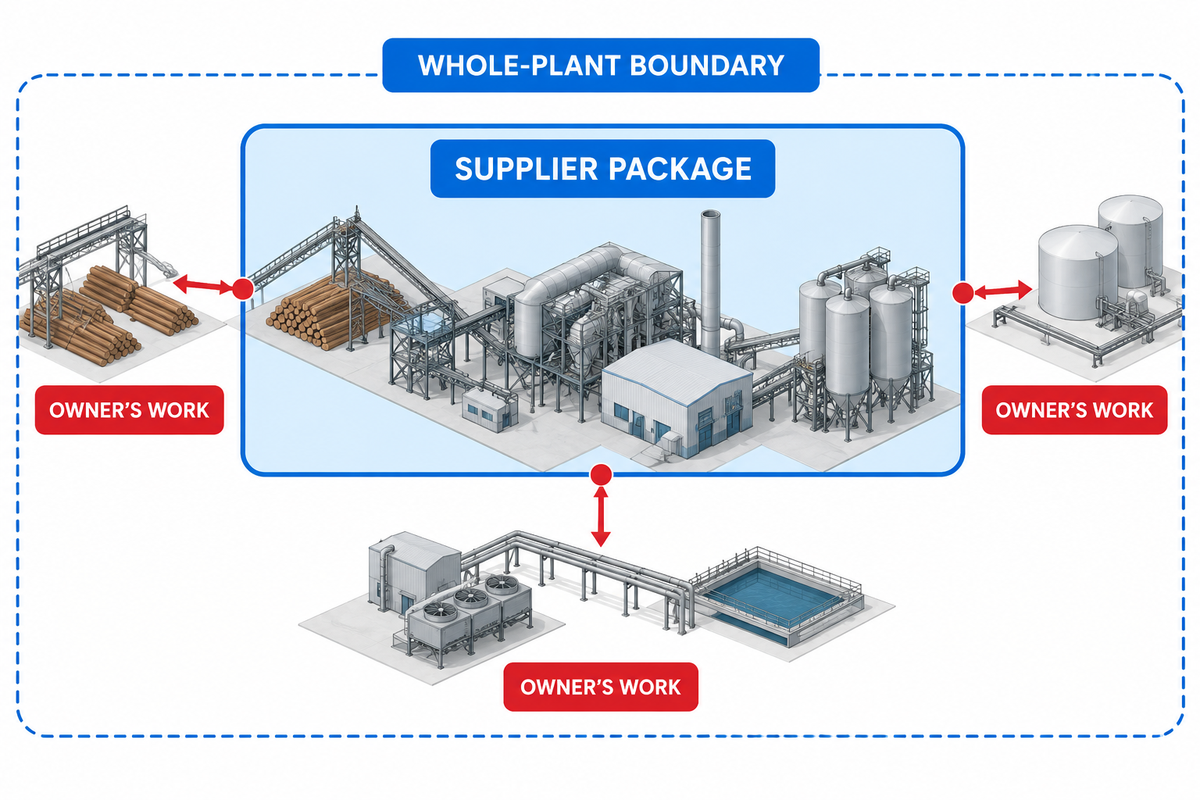
The first helpful document is a Whole-Plant Boundary Map. It reflects the limits of the supplier’s package and the owner’s work and reveals all the interfaces between the two. Without it, two “complete plant” quotations can describe very different scopes. Environment and Climate Change Canada’s facility recommendations provide a useful reference for mapping design and operating interfaces in wood-preservation facilities. The HSE industrial timber-treatment guidance treats containment, preservative storage, dripping areas, mechanical handling, and pressure safeguards as connected plant responsibilities.
| Plant-zone category | Typical functions | Buyer questions |
|---|---|---|
| Timber intake and preparation | Receiving, grading, moisture checks, machining, incising, pack formation | Which timber species, dimensions, moisture range, and charge geometry must be accepted? |
| Conditioning and handling | Drying or conditioning, carts, rails, conveyors, forklifts, staging | Who supplies the carts, rails, foundations, loading devices, and safety zones? |
| Chemical system | Bulk storage, work tanks, mixing, dosing, transfer, filtration, recovery | Which preservative supplier requirements and material-compatibility limits govern the system? |
| Treatment system | Vessel or chamber, vacuum and pressure equipment, valves, instruments, PLC | What is the usable load envelope, design basis, control philosophy, and code documentation? |
| Post-treatment | Drain-down, drip capture, fixation or drying where applicable, finished storage | How long must loads remain controlled, and where can recovered liquid return? |
| Quality and release | Charge records, solution checks, sampling, penetration or retention checks, disposition | Which records prove that a charge met the governing product specification? |
| Environmental and safety controls | Primary and secondary containment, ventilation, relief, interlocks, hygiene, emergency response | Which controls are required by the destination jurisdiction and the selected chemistry? |
| Maintenance and support | Isolation, lifting access, spares, calibration, software backup, service records | Which tasks require shutdown, specialist support, or supplier intervention? |
Exclusions must be indicated in the boundary map, as well. A supplier may provide a preassembled treatment skid but exclude timber incising machines, civil works, bulk tanks, fire protection, laboratory equipment, wastewater handling, or connection to utilities. Where timber incising is specified, the scope should define the incision pattern and who validates it. “Turnkey” is meaningful only if all of the supplier/owner interfaces are documented.
Which Treatment Route Should Guide Equipment Selection?
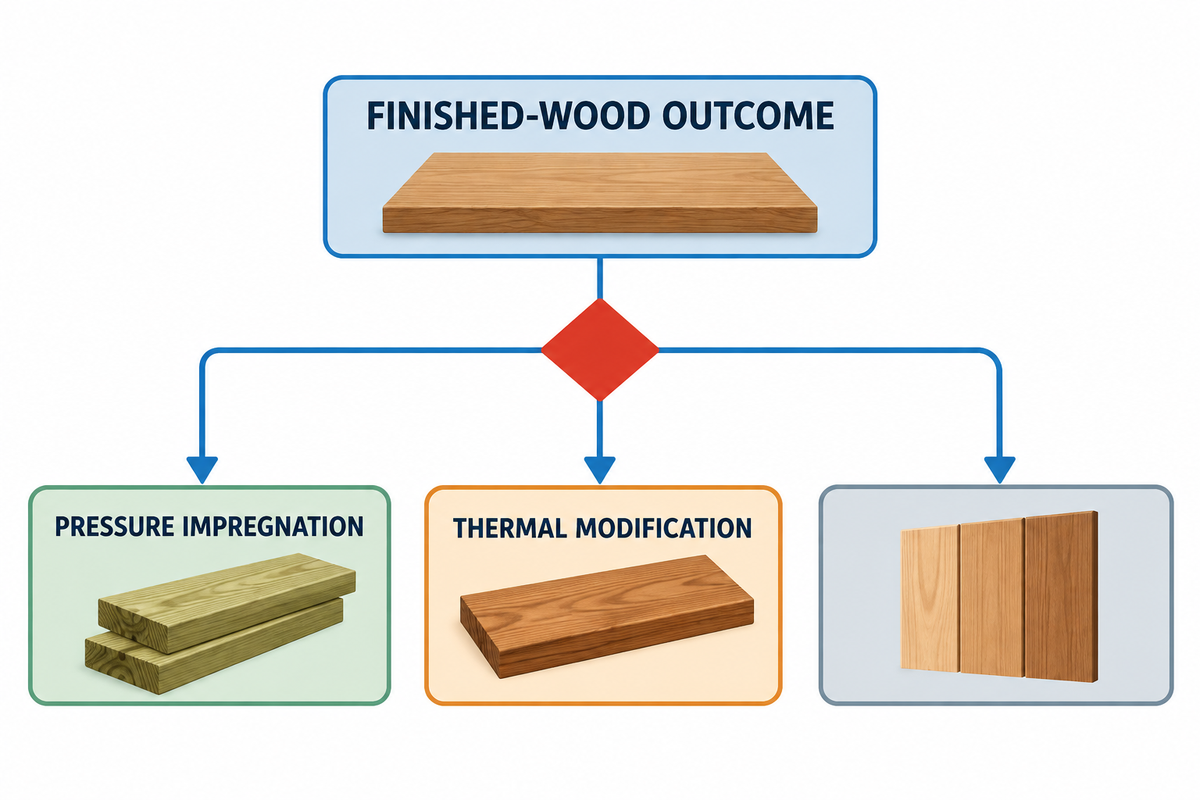
Start with the required finished-wood performance, not a preferred machine. For the Treatment Route Gate, the following questions need to be answered in sequence:
- What’s the end use and exposure condition?
- Which product or project specification governs acceptance?
- What species of timber, what combination of heartwood/sapwood (if any), what dimensions and what level of moisture are to be processed?
- Which performance property must change: biological durability, fire performance, dimensional stability, color or another defined property?
- Which preservatives or processes are authorized for the destination country and the intended operation date?
- What inspection, marking, certification or release program, if any, applies to the finished product?
The USDA Forest Service notes that preservative effectiveness depends on the preservative, adequate penetration and retention, wood species, and treatment method; heartwood is generally harder to treat than sapwood. That is why one recipe should not be assumed to fit every species or charge. Refer to the governing standard and preservative supplier for the actual project, instead of referring to a cycle from another plant. See the USDA wood-preservatives chapter.
Pressure impregnation, double-vacuum or low-pressure processes, dipping or spraying, thermal modification, and phytosanitary heat treatment address different issues. High-pressure operation may help deep penetration in treatable zones, but the final outcome relies on the species, preparation, chemistry, and the governing specification. Thermal modification of wood changes properties by virtue of controlled heat; it isn’t automatically a substitute for a preservative or fire retardants required by an exposure or flame-performance specification. Similarly, a chamber capable of heating packaging doesn’t in itself allow the operator to apply an ISPM 15 mark. In the United States, the APHIS wood packaging programs link marking with an accredited inspection system.
Authorization evolves. For example, the U.S. Environmental Protection Agency’s final decision on the use of pentachlorophenol established a phase-out schedule and limited the period for which the chemical could be used. A plant planned for the future should be evaluated against the rules that will govern it when it’s placed in service, not against historical products. Review the EPA cancellation decision.
Which Plant Modules and Interfaces Are Required?
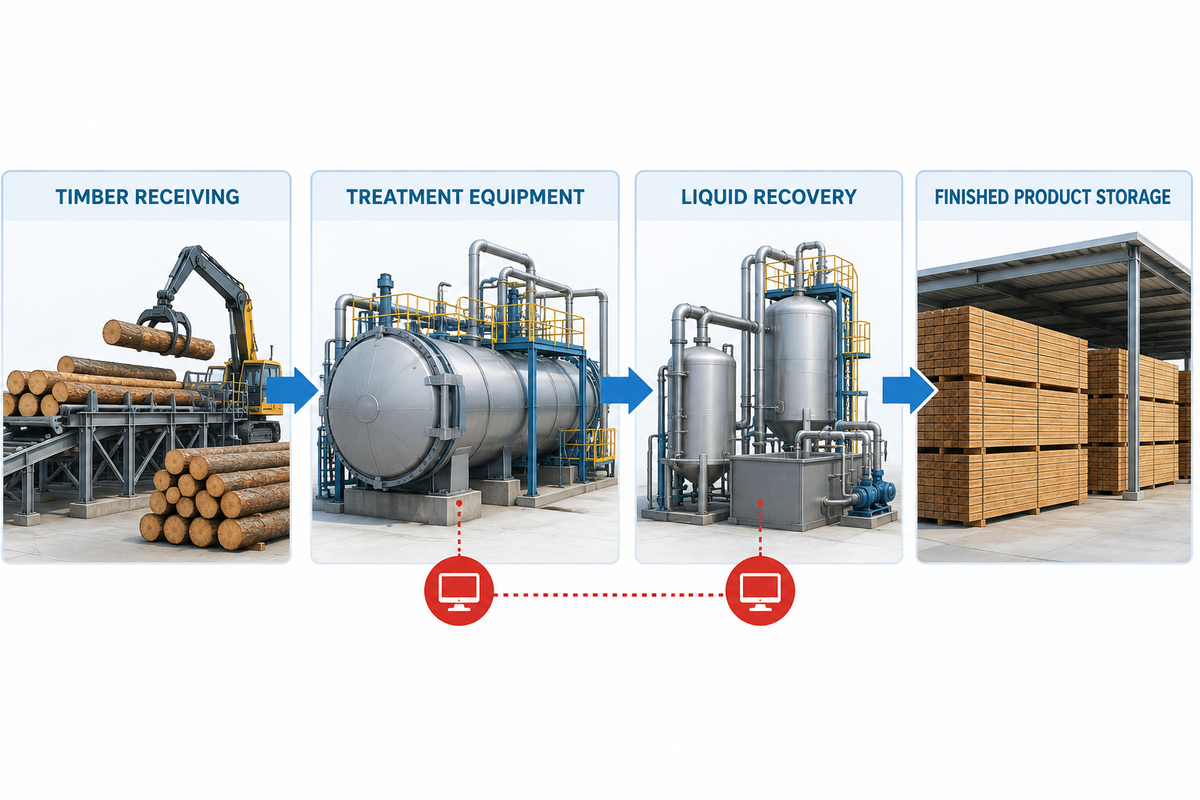
A complete module list turns the boundary map into an engineering scope. The HSE industrial timber-treatment guidance also connects storage, treatment, dripping, handling, controls, and maintenance across the plant boundary. For a pressure-impregnation plant, buyers usually need to resolve the timber preservation equipment and interfaces in the following groups:
The industrial autoclave selection guide provides a broader comparison of pressure-vessel; this plant guide focuses on upstream and downstream modules that make the vessel productive.
- Load preparation: grading, measuring moisture, machining, incising where timber/specification require it, spacers, pack restraint, and charge identification.
- Material Movement: Containers/Bogies, Rails, Transfer Cars, Conveyors, Rollers, Forklifts, Staging Bays, Doors, Guards, Exclusion Zones.
- Liquid Management: Delivery Connection, Bulk Storage, Work/Mixing Tanks, Dosing/Agitation/Filtration, Transfers, Pumps/Recovery/Sampling, and Inventory Reconciliation.
- Treatment equipment: Cylinder, Door and Locking System, Vacuum Pump, pressure Pump, Heat Exchanger, Valves, Level and pressure Instruments, Relief Routing, and controls.
- Post-treatment controls: Drain-Back and Drip, Inclined Staging (if applicable), Fixation or Accelerated Drying (if the approved process uses it), and Quarantine/Release of Finished Goods.
- Evidence System: Recipe Authority, Operator Permissions, Charge Sheets, Alarm/Deviation Records, Instrument Calibration, Solution Tests, wood Sampling, Release Records.
Options for plant-level equipment extend beyond pressure plants to incising, dosing, automated handling, controls, and traceability, as grouped in the LIGNA 2025 exhibitor listing for treatment equipment. The Wood Protection Association describes multiple application technologies. Review WPA application technologies.
Size Throughput From the Bottleneck, Not the Cylinder
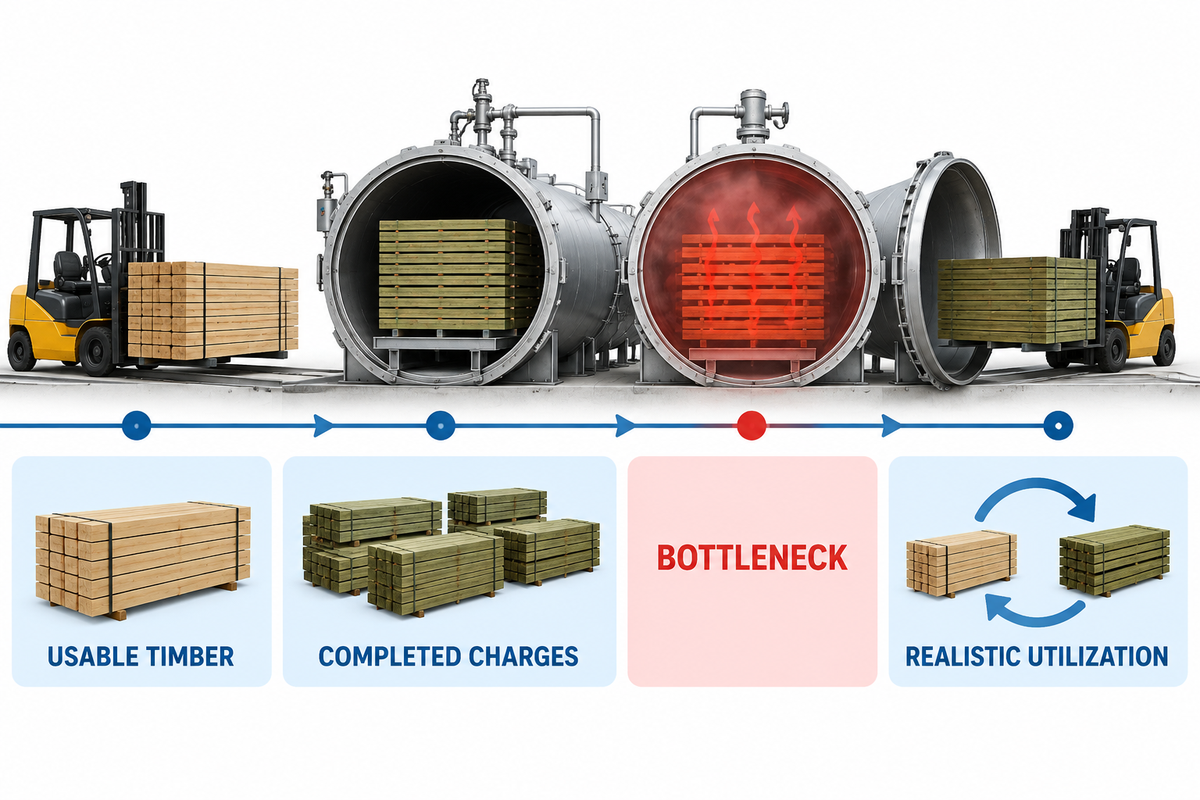
A large vessel doesn’t necessarily indicate high throughput. Use a Throughput Bottleneck Model that begins with a representation of timber per charge, and then takes into consideration the entire operating loop. The USDA wood-preservatives chapter explains that species, treatability, penetration, and retention requirements vary, so those inputs belong in representative charge assumptions.
Planning output = Usable timber per representative charge × Completed charges per operating period × Realistic utilization
“Usable timber” should represent the actual lumber, poles, or other product within a charge, excluding carts and spacers, rather than the empty volume of cylindrical shells. “Completed Charges” should reflect the time needed for all process activities within the operating loop, including loading, door operation, vacuum, filling, pressure, draining, final vacuum, unloading and changeover, as well as treatment residence time. Utilization must account for cleaning, maintenance, sampling, faults, labor and planned operating days.
| Possible bottleneck | Evidence to request |
|---|---|
| Loading and unloading | Timed representative-load trial, handling layout, shared-forklift assumptions |
| Vacuum, fill, pressure, drain, recovery | Pump curves, pipe sizes, valve sequence, liquid volumes, measured cycle trace |
| Mixing and dosing | Batch size, preparation time, concentration-control method, changeover plan |
| Drip or fixation residence | Controlled-area capacity and release rule |
| Quality checks | Sampling frequency, laboratory turnaround, hold-and-release workflow |
| Maintenance and staffing | Planned availability, shift pattern, spares, intervention response |
One automated installation had a reported capacity of 8,500 board feet per charge, a 60–80 minute cycle, and a planned 19 charges per 24-hour day, according to a Timberline project report using vendor figures. The report also describes automated staging, drip trays, changeover flushing, and overnight handling. Read the project example.
A trolley-system change increased throughput by about 15%, according to a treatment-industry article that also reports loading/offloading bottlenecks. See the optimization examples.
What Utilities, Layout, and Material Flow Does the Plant Need?
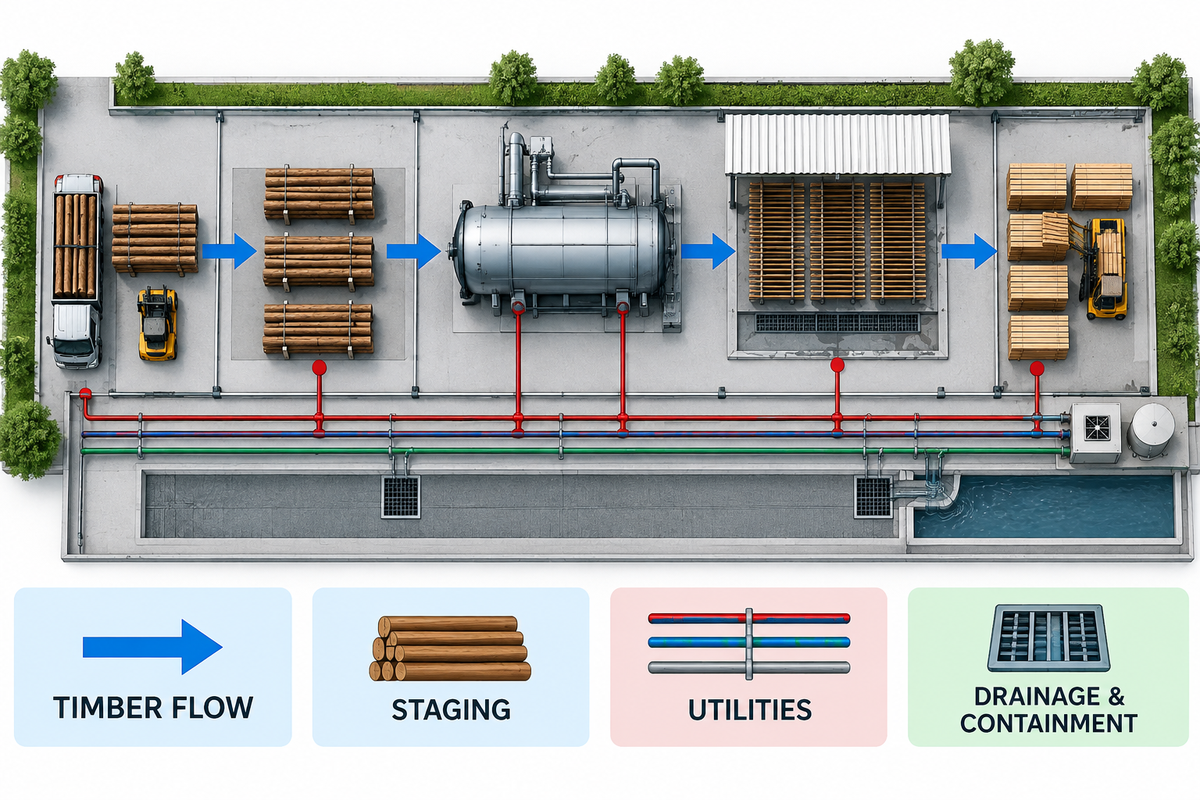
Prior to freezing the design, issue a Utility and Layout Input Sheet to suppliers. Record voltage, frequency, connected and peak loads, water supply and pressure, product conditions, heating or steam conditions where applicable, compressed air and gas, ventilation, drainage, communications, fire protection, backup power, ambient conditions, altitude, local design conditions, and site constraints. The HSE industrial timber-treatment guidance links mechanical handling and containment to safe plant operation, making both part of layout review.
If a route requires a separate heat source, compare its duty and control boundary with the plant, and don’t choose it standalone. The steam boiler vs thermal fluid heater guide covers the main differences between heat sources.
Then, show one-way material flow from untreated receipts to released finished goods. Show untreated timber, chemical handling, active treatment, dripping/quarantine and finished goods. The layout may require different handling envelopes for sawn wood products and utility poles. Show vehicle and pedestrian routes, door swing and withdrawal paths, maintenance lifting space, rail elevations, foundations, tank access, sampling points, bunds, sumps, and potential future expansion areas.
A review of the layout is also a capacity review. A fast treatment sequence cannot recover time lost to one shared forklift, a blocked rail, an undersized staging bay, or a drip area that fills before the next charge is released. Ask suppliers to annotate their capacity calculation on the layout to identify the assumed resource at each transfer.
What Safety, Containment, and Environmental Controls Are Needed?
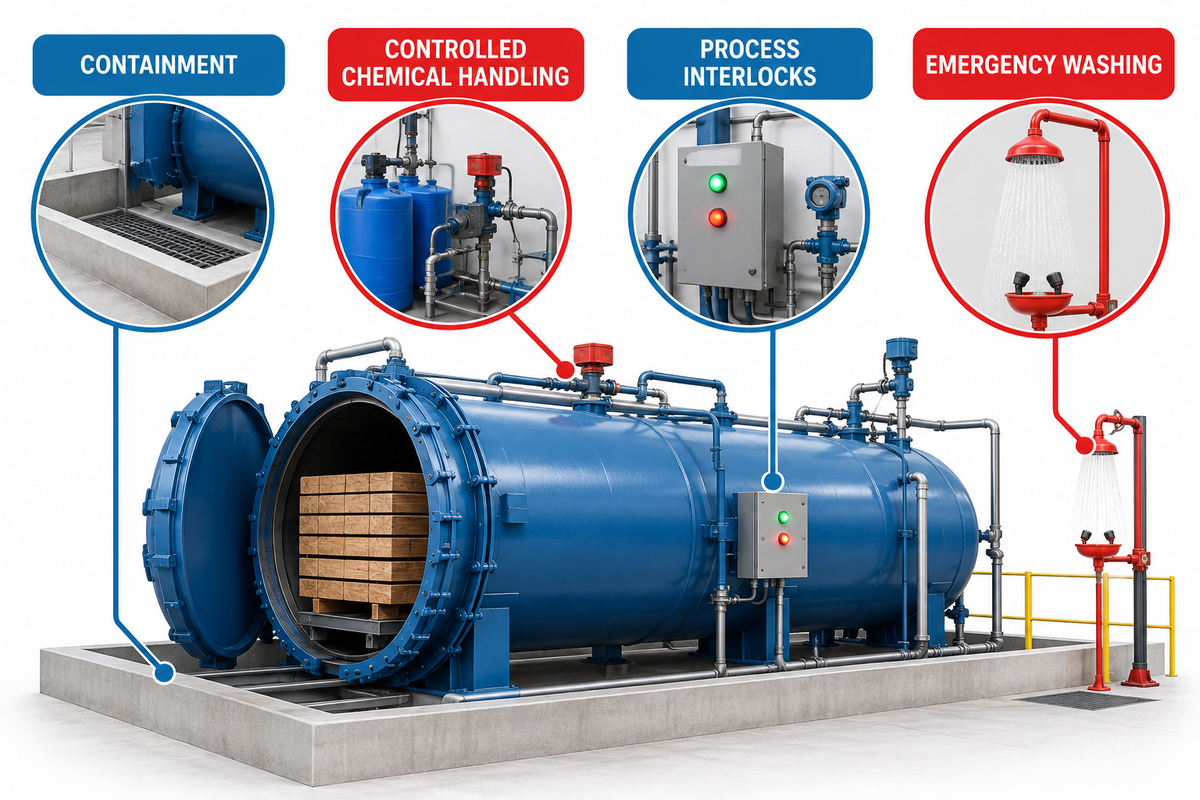
This section is a due-diligence framework, not legal advice. Use the latest requirements for the destination jurisdiction, preservative, pressure system, emissions, waste streams and worker exposure. The selected preservative’s label and safety data sheet are essential project inputs.
The UK Health and Safety Executive relates safe operation to adequate design and construction, maintenance, and competent plant operators. Its industrial timber-treatment guidance discusses containment for the processing plant, preservative storage, and dripping area; secondary impervious bunding; automated chemical handling; vessel venting; mechanical handling; relief valves; pressure/liquid indication; and door controls. These are relevant questions even in jurisdictions where the UK laws don’t apply. See the HSE guidance.
Your hazard review should cover, at minimum:
- Closed or controlled chemical delivery, mixing, transfer, sampling, and recovery systems;
- Compatible materials, overfill prevention, leak detection, primary/secondary impervious containment and recoverable drainage;
- Controlled dripping areas, controls for contaminated wheels and footwear, hygiene facilities, personal protective equipment, and emergency washing;
- Door-lock and process interlocks, pressure and liquid indication, safe relief routing and venting, lockout, guarding, and maintenance access;
- Spill response, fire response, waste classification, emissions, inspections, training and retained records.
For used or refurbished equipment, determine which chemicals (if any) contacted each cylinder, tank, sumps, pipes, drip pads, carts, and other handling devices. This matters when a legacy plant used copper, copper oil, or another formulation, because residues and legal duties cannot be inferred from the current recipe alone. In the USA, 40 CFR 261.35 presents an example where certain former chlorophenolic operations require documented cleaning or replacement across the wider process system. Eliminating a chlorophenolic operation doesn’t remove the legal responsibility.
Build a Quotation and Acceptance Package
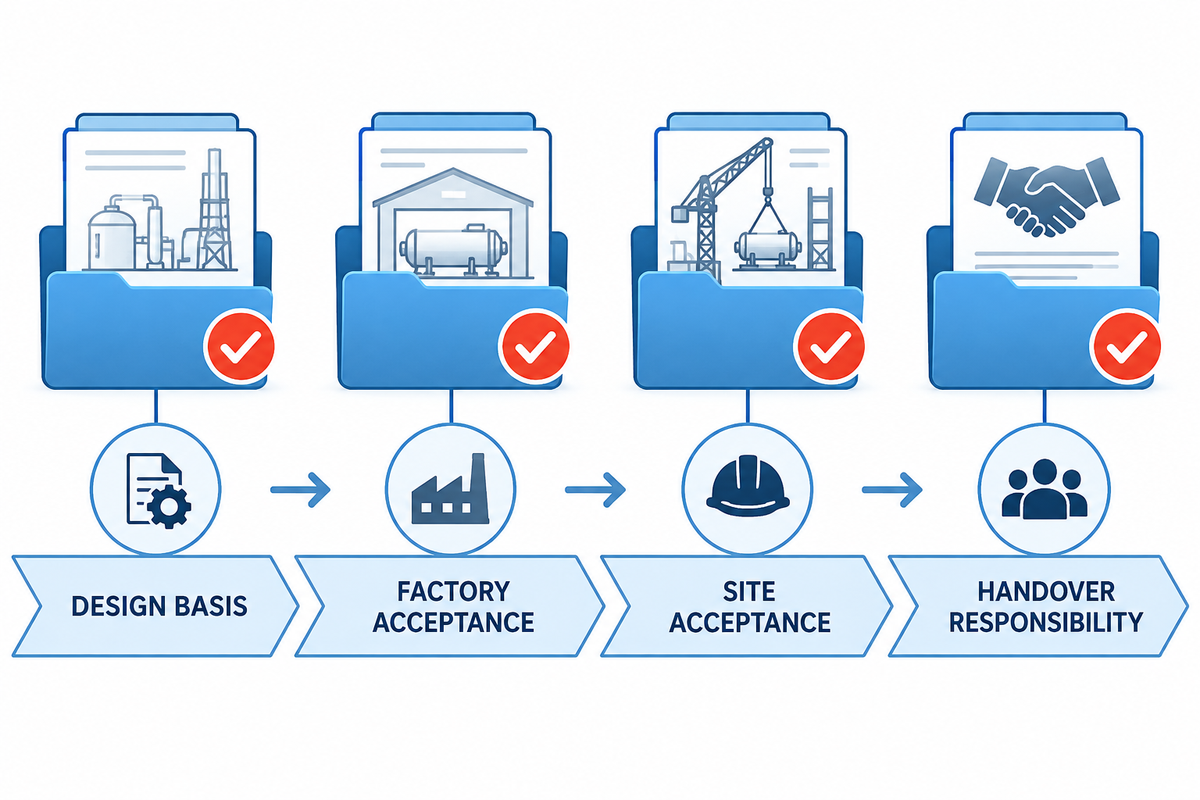
A request for quotation asks for more than the size of the cylinder. Give every bidder the same timber and load envelope, treatment route, preservative information, output basis, utility conditions, site constraints, destination codes, automation expectations, documentation language, training and spare-parts needs, test supplies, trial and retest responsibilities, and commercial exclusions. The HSE industrial timber-treatment guidance supplies a regulator-backed reference for the safety and containment requirements that should appear in the acceptance scope.
Use a “Plant Acceptance Evidence Ladder” so “tested” doesn’t mean four different things:
- “Design and fabrication evidence” includes drawings, calculations, materials, welding and/or NDE documentation, pressure documentation, instrument lists, Cause and Effect matrices, software backups, manuals, and certificates required by the contract.
- Factory functional acceptance: inspection of fabrication, valve/instrument checks, interlocks, alarms, sequence simulation, data recording, leak/pressure tests within the agreed scope, and punch-list closure.
- Installed site acceptance: foundations and alignment, utilities, containment, guards, communications, dry runs, wet runs, safety functions, calibration, training, and installed-document turnover.
- Representative production evidence: an agreed timber/load, authorized process basis, complete charge record, deviations, sampling, penetration/retention or other product checks where the governing specification requires them, and a defined release decision.
Explain who supplies timber and chemicals, who approves processes (on what basis), how many trials are included, what happens after a failed trial, and who pays for corrective action and re-tests. Equipment suppliers should prove the scope they control; treated-wood conformity still depends on timber, chemistry, process authority, sampling, and the operator’s quality system.
Which Manufacturers Offer the Commissioning Support Your Plant Needs?
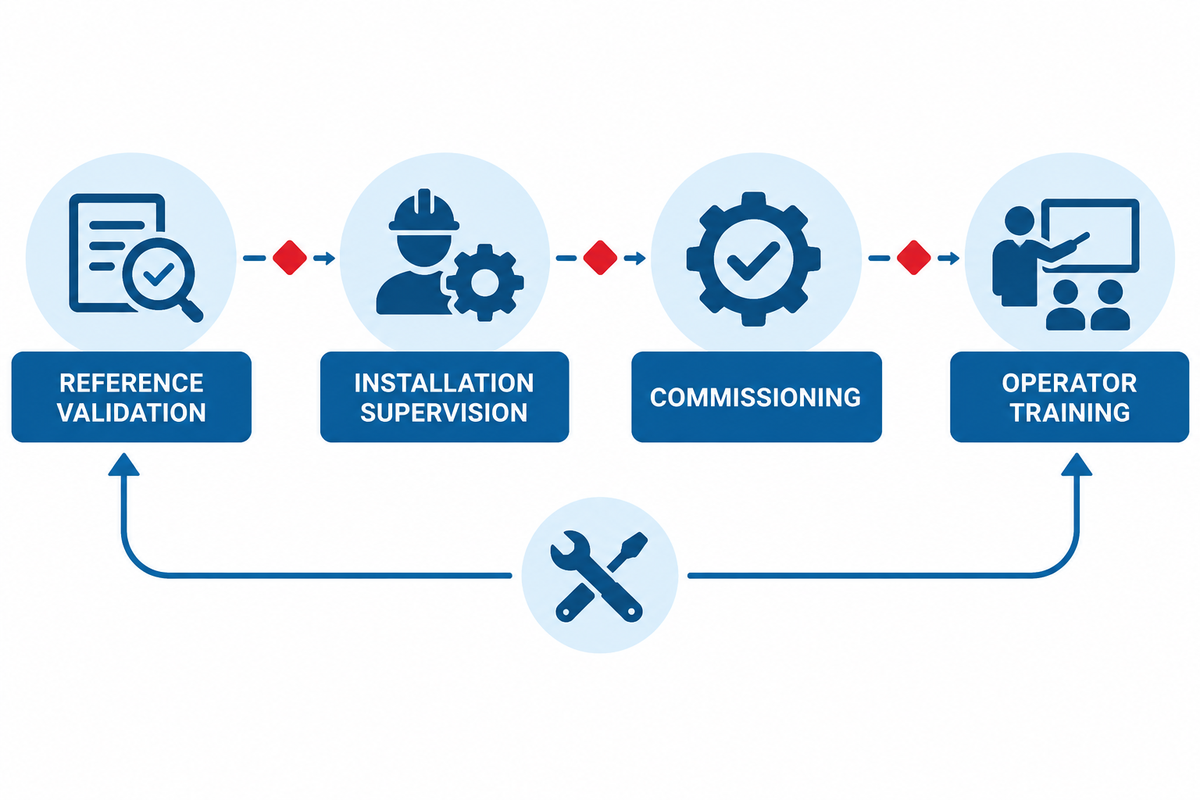
Reference installations are useful only when their operating conditions are comparable to yours. Ask whether the cited plant processes similar species, such as southern yellow pine where relevant, plus comparable dimensions, chemistry, charge geometry, output, automation, utilities, climate, and regulatory setting. A large reference in different service may indicate fabrication capability, but not your production result or consistent results under your conditions. HSE guidance also links safe operation to maintenance and competent operators, so supplier support should be checked against those lifecycle responsibilities.
Compare suppliers across five ownership questions:
- What manufacture and installation activities are performed in-house and which are outsourced?
- Who owns PLC source code, recipes, remote-access credentials, backups, and cybersecurity boundaries?
- Who provides supervision, commissioning staff, and training in local languages for operation and maintenance?
- What critical spares ship with the plant, and what are the response times after handover?
- Who is responsible when equipment function passes but a representative production trial does not?
The supplier review should state who supervises installation, leads commissioning and operator training, supplies documentation, and supports maintenance of vessel integrity, tanks, pipework, pumps, doors, seals, and charging equipment.
What to Send Taiguo for a Useful Technical Review
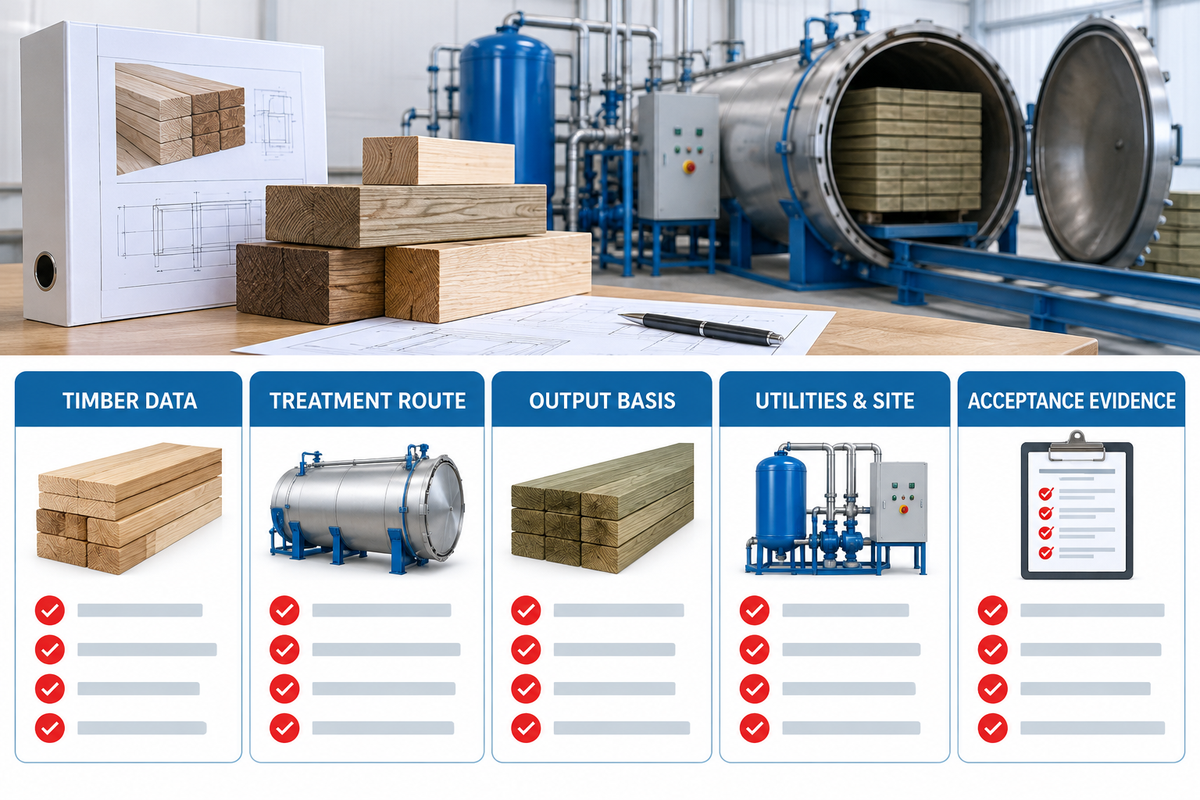
A technical review is faster and more specific when the input pack has: The USDA wood-preservatives chapter supports collecting species, moisture, penetration, and retention inputs before a process is specified.
- timber species, source, dimensions, moisture range, annual product mix and pack/charge geometry;
- finished use, exposure condition, governing product specification, and jurisdiction of destination;
- selected or candidate treatment route and preservative-supplier information;
- required daily/annual output with shifts, operating days, utilization assumption, and expansion target;
- Available utilities, site plan, building constraints, climate/design conditions, drainage and containment.
- Automation, traceability, remote-support, docs, training, spares, FAT, SAT, and representative load.
Taiguo Boiler has manufactured industrial pressure and thermal equipment since 1976. The team can review a project for impregnating timber and clarify which technical inputs are still missing before a quotation is prepared, including how the selected process keeps preservative retained in the wood under the governing acceptance method.
For project specific reply, send the input pack through Taiguo contact page or by using the specification button below.
Discuss Your Timber Treatment Plant
Frequently Asked Questions
What equipment is included in a complete timber treatment plant?
A typical plant includes timber receiving and preparation, load handling, treatment or modification equipment, chemical storage and mixing where preservatives are used, pumps and associated pipework, controls, liquid recovery, drip handling, containment, quality checks and finished product storage. The limit is determined by the treatment route, timber, chemistry, output and site constraints. A pressure vessel alone isn’t a complete production plant and quotations should identify all owner-supplier interfaces and exclusions.
How do you calculate timber treatment plant capacity?
Start with useable timber volume or mass in a representative charge. Don’t use nominal vessel volume. Multiply this by validated charges per shift, shifts per day, operating days, and a realistic utilization assumption. Determine the throughput-limiting step and improve that constraint. Require every supplier to state and justify assumptions and support statements with timed, representative tests.
Which timber treatment route should a buyer choose?
Choose from the required finished-wood outcome and applicable specification. Pressure impregnation is appropriate when an authorized preservative needs to reach specified treatable zones, such as products intended for ground contact where the specification requires it. Thermal modification changes properties through controlled heat and serves different applications; it does not automatically replace preservative treatment against decay. Timber species, dimensions, moisture, end use, chemical authorization, destination rules, and product-release evidence should be fixed before equipment is selected.
What should a timber treatment plant acceptance test prove?
Acceptance should demonstrate more than an empty vessel reaching pressure. Factory testing should verify defined fabrication records, instruments, interlocks, alarms, sequences, leaks, and functions. Site testing should verify installation, utilities, containment, safety functions, and wet operation. A representative production load should connect the authorized process basis, equipment record, deviations and sampling, wood checks, and the release decision. The contract should assign correction, retest, and handover responsibility.
How is this guide different from the wood preservation autoclave guide?
The autoclave guide explains the treatment cylinder, vacuum-pressure sequence, timber variables, cycle evidence, and vessel-focused buying questions. This guide starts at a higher level. It explains how the facility is integrated, where route and plant boundaries are set, which module limits throughput, how utilities and containment fit the plan, and how suppliers are compared through quotation, commissioning, and acceptance.
References and Sources
- USDA Forest Service, Chapter 15: Wood Preservatives
- UK HSE, Industrial Timber Treatment Plants
- US EPA, Overview of Wood Preservative Chemicals
- US EPA, Pentachlorophenol Cancellation Decision
- eCFR, 40 CFR 261.35
- USDA APHIS, Wood Packaging Treatment Programs
- Environment and Climate Change Canada – Wood Preservation Facility Recommendations
- Wood Protection Association, Application Technologies