Get in Touch with Taiguo

Pharmaceutical Autoclave Guide: From URS to Validated Production

Contents
show
Pharmaceutical autoclaves are steam sterilizers for which production fitness relies on a validated load-specific process, rather than a chamber temperature alone. They become suitable for a defined pharmaceutical manufacturing purpose when the equipment, utilities, control system, load configuration, cycle, test, and quality evidence and approvals function as one traceable system.
Loads must be specified prior to chamber volume or supplier quotations, and routine evidence requirements must be defined. Deferring questions during commissioning makes changes more costly and scheduling less forgiving.
Decision rule: define the load family, failure mode, cycle strategy, utilities, evidence, and acceptance criteria before comparing equipment prices.
What a Pharmaceutical Autoclave Must Prove
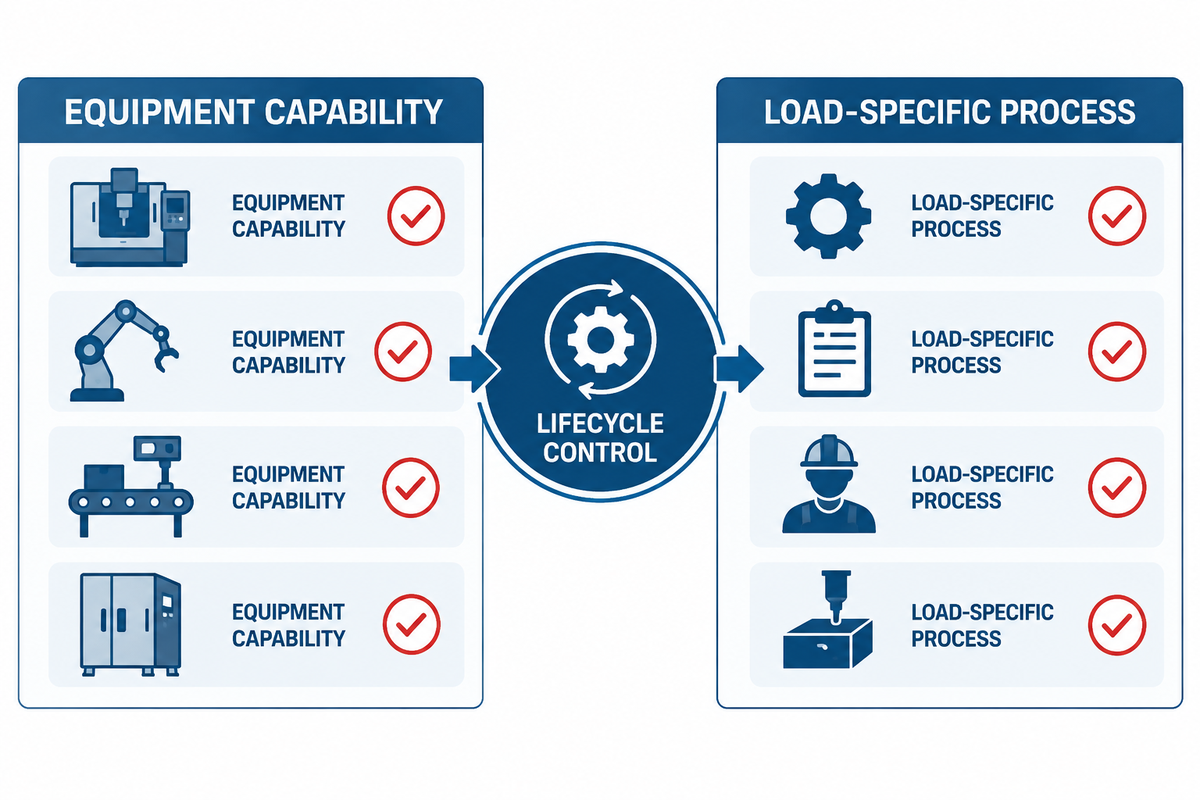
The equipment supplier may prove that a chamber, door system, and controls, instruments, and cycles meet the agreed specification. The pharmaceutical manufacturer must prove the process works for the load in a controlled state. This boundary follows FDA sterilization process-control guidance, which asks for validation evidence alongside routine control and monitoring records.
This creates three connected but separate obligations:
- Equipment capability means the system can create and control the required conditions in its operating range.
- Load-specific process performance means steam can reach difficult locations, provide the approved dose, and leave load accepted.
- Lifecycle control means calibrated instruments, approved recipes, access, records, alarms, deviations, and changes are controlled.
Neither a pressure-vessel certificate nor a factory test proves sterility for a customer’s product or load. Likewise, a successful biological indicator result cannot explain an incomplete physical cycle record. FDA process-control guidance expects validation evidence, defined tolerances, monitoring, calibration, training, periodic assessment, and control of software where it affects the process.
How a Pharmaceutical Autoclave Actually Sterilizes a Load
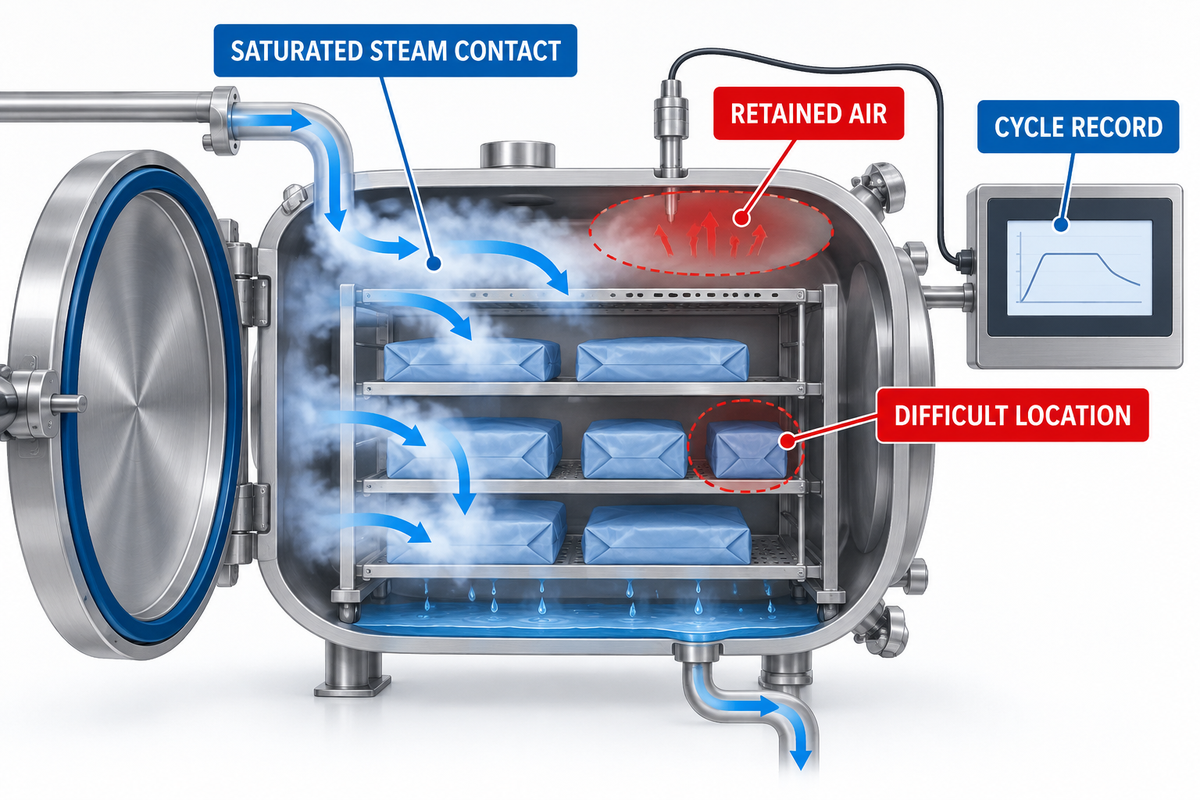
A pharmaceutical company autoclave uses saturated steam to transfer heat. Steam contacts a cooler surface and condenses, releasing energy to the surface. Pressure, as part of the conditions inside a closed chamber, supports the steam. But, it isn’t the sterilizing agent.
The reliable contact of steam is the most critical factor. Retained air can obstruct the contact of saturated steam with the item to be cooled, e.g. the lumen of a hose, dense component assemblies, a filter housing, etc. Effective contact of saturated steam is as critical as the temperature indicated by the chamber.
The proof chain is therefore broader than one number:
- the load pattern is defined and repeatable;
- Air is removed by means appropriate to the load;
- steam of suitable quality reaches the required locations;
- the selected monitoring points meet approved criteria;
- The load is acceptable after exhaust, drying and cooling; and
- The complete cycle record, alarms, deviations and approvals are retained.
Before the performance qualification, the worst-case scenario should be considered, e.g. the incorporation of air, the means of removing it, the penetration of steam, the placement of thermocouples, biological indicators, and other activities to be performed to ensure that the requirements of a cycle are being met, as defined in the ISPE cycle-development discussion.
Why Specify the Load Before Chamber Size?
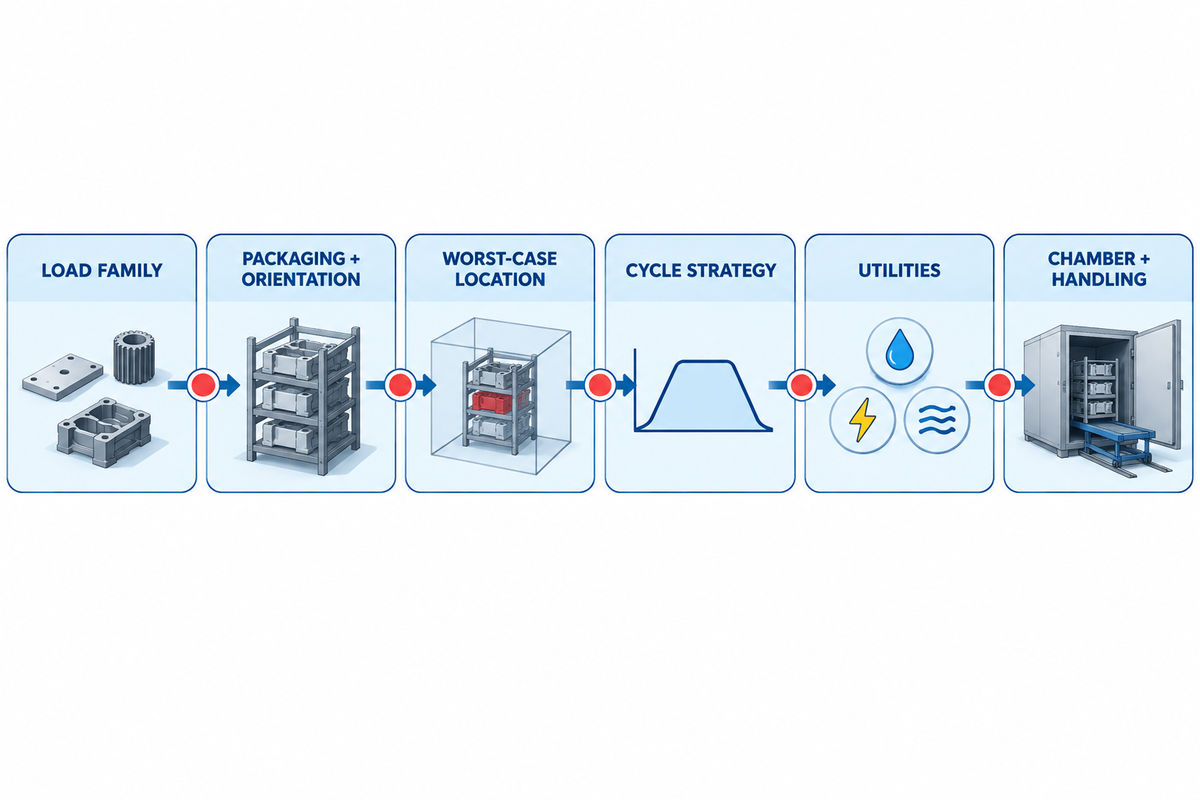
Chamber capacity is a concern, but shouldn’t be the primary consideration. Two loads that occupy the same volume may require different cycles, instruments, cooling and acceptance criteria. The ISPE cycle-development discussion likewise treats the load configuration and its hardest-to-sterilize locations as inputs to cycle development, not consequences of chamber size.
| Load type | Primary challenge | Questions to settle before the URS |
|---|---|---|
| Porous or wrapped goods | Removing air and penetrating the pack | What is the densest configuration? How is dryness judged? Which location is hardest to heat? |
| Liquids in containers | Slow heat-up, pressure balance, cooling, and container integrity | Which fill volume and container are worst case? How will boil-over, breakage, and cooling be controlled? |
| Components and utensils | Shadowed surfaces, orientation, and condensate retention | Which assemblies must be opened or disassembled? How are parts supported and drained? |
| Filters and hoses | Air removal and steam access inside the flow path | Which endpoints require temperature measurement? Does the assembled path trap air or condensate? |
| Glassware | Breakage, drainage, and orientation | Is the glass suitable for high temperature steam and how is it restrained? |
| Laboratory media | Heat penetration, boil-over, and cooling | Which fill volume and closure represent the slowest heating case? |
| Stainless steel parts | Mass, shadowed surfaces, and retained condensate | Which arrangement creates the cold spot and how will it drain? |
| Mixed production loads | Different heat-up and drying behavior | Can one sterilization cycle be justified or must the load be separated? |
| Biohazardous waste | Variable density, containment, and exhaust treatment | What may enter the load? How is containment preserved? What disposal rules apply? |
Materials that are heat and moisture sensitive require different methods. Product-contact materials may impose residue, corrosion and drying requirements. The description of the load should include the material, mass and dimension, packaging, orientation, maximum density, minimum and maximum batch size, and the condition that the material may be in after the cycle.
A vertical autoclave or compact laboratory sterilizer may be appropriate for research and support functions, while a front-loading, double-door autoclave machine may be more suitable for controlled material flow in a production function. These terms describe configurations and don’t prove pharmaceutical suitability. Whether the unit is automatic or fully automatic, buyers request load-specific steam sterilization evidence, stainless steel material records (if any) and/or safety features, a pressure gauge or independent instruments, and controlled cycle data.
What Makes a URS Ready for Qualification?
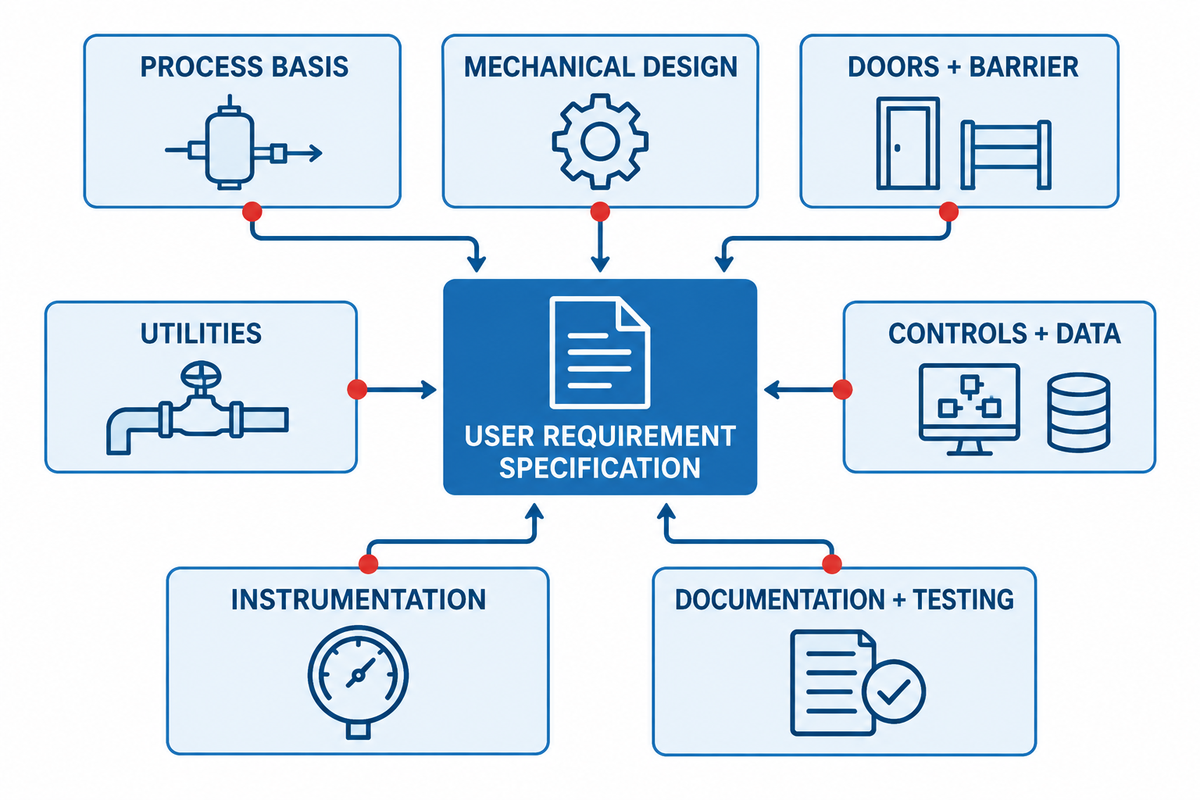
A user requirement specification (URS) should describe what the user needs, not how the user will obtain it. For example, a URS could state “GMP compliant.” This isn’t what the user needs, but rather, how the user obtains it. GMP isn’t a requirement, but rather an umbrella under which compliance is achieved. The compliance specification may state “The system shall record chamber temperature and pressure at the defined interval, retain the record under controlled access, and generate a reviewable alarm when a specified limit is exceeded.”
A practical pharmaceutical autoclave URS usually covers these groups:
- Process Basis: load families and throughput, cycle types, and heating, exhaust, drying, and cooling needs.
- Mechanical Design: chamber dimensions, materials, surface finishes (if relevant), drainability, insulation, pressure boundaries, loading equipment, and maintenance access.
- Door and barrier: Single or double doors, interlocks, seals, arrangements, emergency releases, and room pressure implications.
- Utilities: Conditions and quality of steam, air, water, electric, drainage, ventilation, heat rejection, condensate.
- Controls and Data: recipes, user roles, audit trails, alarms, electronic records, backups, time synchronization, interfaces, and cybersecurity.
- Instrumentation: measurement ranges, accuracies, calibrations, independent verifications, qualification sensors, and traceability.
- Documentation and Testing: drawings, material records, software documents, manuals, calibration certificates, FAT and SAT protocols, spares, qualification support and training.
Create the first column of a traceability matrix by describing a verification method for each critical URS requirement. The lifecycle structure in the WHO validation guidance connects user requirements and design with installation, operation, performance qualification, and controlled change.
Which Cycle Fits the Worst-Case Load?
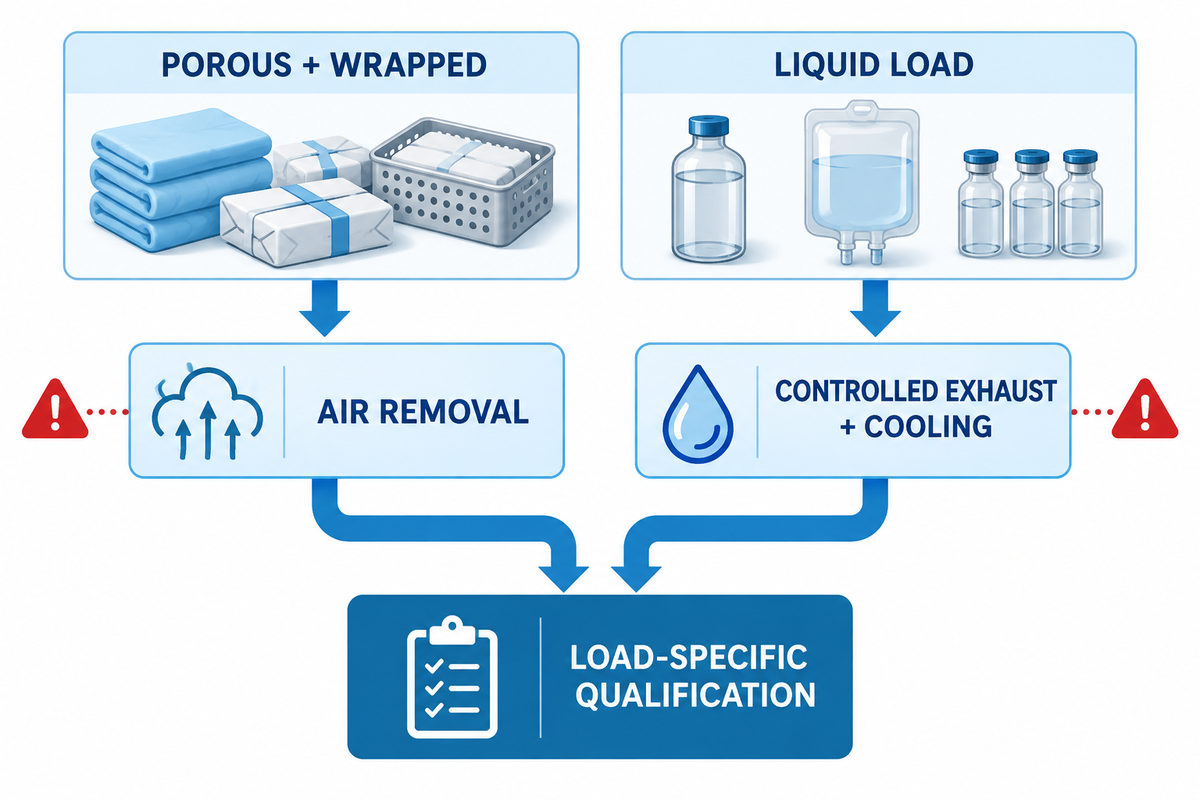
Gravity displacement allows steam to push denser, cooler air toward the drain. It can be used on relatively simple, open and unwrapped loads, as long as the load study proves adequate air removal and heating. Pre-vacuum cycles remove air before steam exposure, and are generally considered for porous, wrapped or geometrically difficult loads.
Consider two loads. A wrapped porous assembly may require several air removal pulses and steam-penetration evidence, as well as a drying phase. A liquid load may require controlled exhaust and cooling to prevent boil-over and vessel failure. Giving both loads the same nominal exposure temperature doesn’t ensure cycle risks are the same.
Cycle development establishes key requirements such as conditioning, exposure, exhaust, and drying, as well as determination of load patterns and monitoring locations and acceptance rules. Performance qualification challenges the approved process by applying defined worst-case loads. That sequence is consistent with the ISPE validation approach, which places load-specific cycle development before PQ execution. It shouldn’t be the first time the team discovers that a package traps air, for example, or that a container can’t tolerate an exhaust profile.
Do
Do not
Which Utilities and Room Interfaces Affect Autoclave Performance?
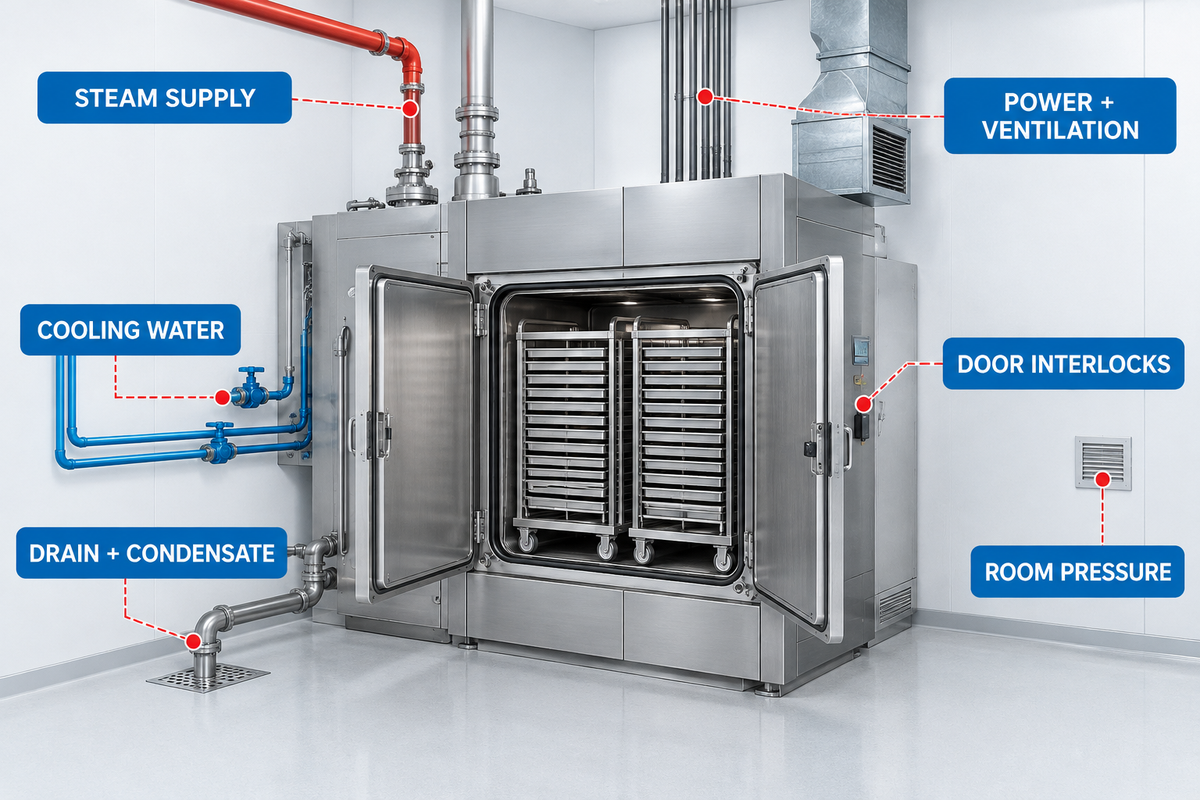
An autoclave can meet its factory specification, and still not perform to specification at site due to insufficient specification of drainage, cooling water, power, ventilation and/or room interfaces.
Non-condensable gases can be a major factor in steam contact. Poor drainage can result in a load being generated that contains water and/or a load that’s slow to heat up. Establish the boundary for the steam supply early. This involves definition of the quality of the fluid being condensed and the load generated, the peak demand the system must meet, the routing of the condensate, and design of piping and insulation. The high-pressure steam system and sterilizer must be assessed as integrated systems.
Document staff and material flows, door interlocks, wall seals, service access, and pressure differentials for a double-door unit. Also, consider the effects of loss of utilities. Cooling can cause a net transfer of heat into the room and require a large water capacity. The installation review should include the movement path and safe discharge of equipment, maintenance clearance for floor loading, and access for calibration of process controls.
Move From FAT to PQ Without Losing Traceability
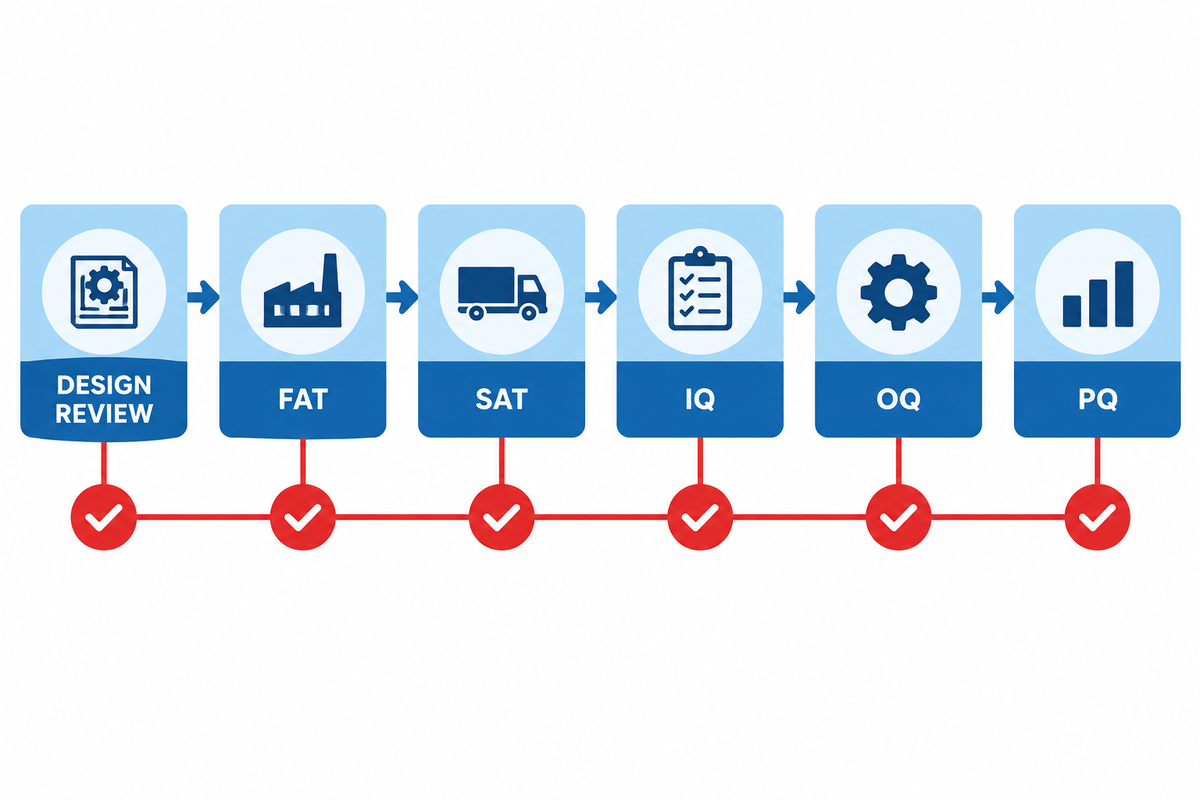
- Design review: confirm that drawings and functional descriptions address the approved URS.
- FAT: test agreed equipment functions at the supplier before shipment, record deviations, and identify tests that must be repeated at site.
- SAT: verify the delivered and installed system, site utilities, interfaces, safety functions, and shipping-related conditions.
- IQ: document that the installed equipment, components, instruments, software, utilities, and documents match the approved design.
- OQ: challenge operating functions, alarms, interlocks, ranges, recipes, security, and chamber performance under approved protocols.
- PQ: demonstrate reproducible performance with defined production-representative and worst-case loads.
Test data should be reused when the context of its use (conditions, acceptance criteria, approval, origin, etc.) is similar. Changes in load configuration or process system modifications may alter the applicability of factory data and require retests.
Control of contamination involves Sterilization as part of a larger system under the WHO guidance for sterile pharmaceutical products. Qualification follows a lifecycle from requirements and design through installation, operation, performance, and change control as described in the WHO Validation guidance.
What Evidence Supports Acceptance?
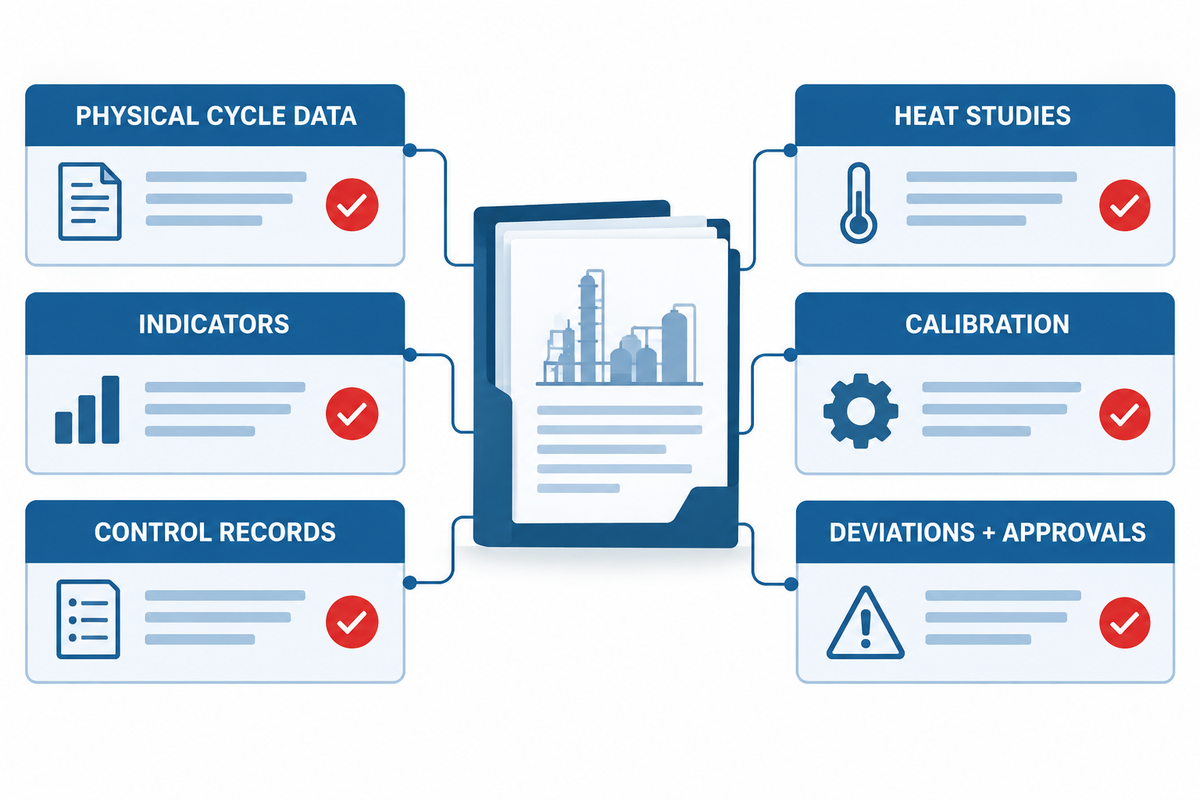
Evidence should be provided rather than allow one indicator to stand in for the process.
- physical cycle data from calibrated instruments;
- heat-distribution and heat-penetration studies where applicable;
- chemical and biological indicator results used under approved procedures;
- steam and utility evidence appropriate to the process;
- calibration status and traceability;
- control-system configuration, access, audit trail, alarm, and backup records;
- load identity and configuration;
- deviations, impact assessments, corrective actions, and approvals; and
- ongoing review, maintenance, requalification, and change-control records.
Acceptance criteria should include method, location, limit, and number of runs, if any, and the name of the individual or function that’s accepting the criterion. Acceptance criteria should distinguish a critical failure from an administrative correction, and deviations from acceptance criteria should be reviewable by the team.
For regulatory context, review the FDA pages on sterilization process controls and sterilization-process validation documentation. Apply current requirements and site procedures with qualified quality and validation personnel.
Compare Vendors on Lifecycle Evidence, Not Purchase Price Alone
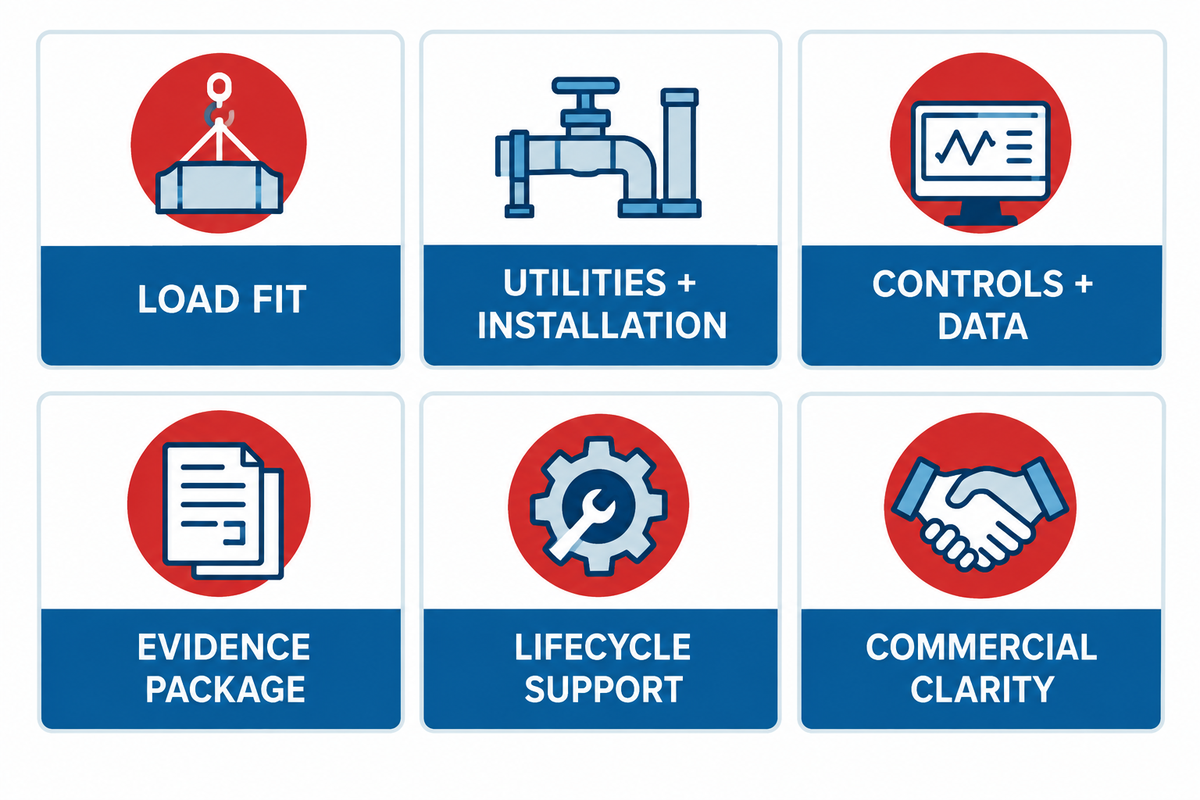
Competing terminology for the same equipment is found in An autoclave sterilizer, steam autoclave, sterilizer autoclave, and steam autoclave sterilizer. The purchase specification needs to define the equipment’s function.
In production, a steam sterilizer or a machine autoclave requires more than a display and automatic sequence. The control philosophy should state which variables are adjustable, who’s authorized to change them, and how changes are documented.
Improving air removal from wrapped instruments may use a vacuum pump process. A gravity process may use displacement, but each process must demonstrate steam penetration and sterilization practices.
Validated setpoints belong on approved recipes. The design envelope for the temperature and pressure range has setpoints belonging on approved recipes. A safety valve protects pressure equipment; it doesn’t address microbial lethality or efficient sterilization.
Laboratory sterilization and production steam sterilization systems can vary in documentation, barrier arrangement, data integrity, and productivity expectations. A small part of laboratory equipment shouldn’t be used as default design basis for a production line.
Terms such as lab autoclave, lab equipment, sterilizer machine, and equipment for laboratory can be found in broad searches. Load, throughput, utility, control and evidence requirements should be found in the RFQ.
Water and steam quality, cycle times, and stainless steel steam-contact surfaces can all impact project scope. None of those in isolation prove that the process controls the defined microorganism.
Excluding utilities, installation interfaces, control documentation, qualification support, and training from a bid can result in a high-risk project with the lowest bid. Compare bids with one scope table.
Ask each supplier to list client responsibilities, include what’s included and excluded, assumptions, changes required, the format of documents, test and acceptance criteria, lead time, and change order triggers. Also require a list of proposed instruments and controls, calibration evidence, software, deliverables, and FAT, site services, and qualification support.
Taiguo Boiler is in the business of industrial boilers, pressure vessels and industrial autoclave. For pharmaceutical applications, confirm the materials, hygienic design, controls, documentation and validation-support requirements. The industrial autoclave cost estimator is useful to initiate equipment discussions, however a pharmaceutical budget should include utilities and support for qualification and lifecycle.
A useful RFQ scorecard weights five areas; load fit, utility and installation fit, controls and data integrity, evidence package and lifecycle support. Price and lead time should also be included, however they shouldn’t be weighted to close a gap for a critical requirement.
Discuss Your Autoclave Requirements
For a review of the project scope, use the contact page and include the load families, throughput and utilities, door arrangement, controls and expected validation deliverables.
Frequently Asked Questions
What is the standard temperature for a pharmaceutical autoclave?
There’s no single temperature that validates all pharmaceutical autoclave loads. Conditions commonly referred to as steam are starting points in the development and qualification of product and load-specific procedures for pharmaceutical autoclave loads, under approved site procedures. The approved cycle must address the load material and packaging, geometry, challenge of air removal, heat penetration, exposure, exhaust, and acceptance criteria. A displayed chamber temperature can’t prove that the hardest-to-heat location in the load received the required process.
How long does a pharmaceutical autoclave cycle take?
For throughput planning, the complete door-to-door cycle for a validated load family must be used, rather than exposure time, alone. Total turnaround for an autoclave load includes conditioning, air removal, heat up, equilibration, exposure, exhaust, drying, and cooling. Logic to release the door controls and/or load handling may also be included. A dense porous load and a liquid load may require very different profiles.
Can every pharmaceutical material be autoclaved?
No. Steam exposure to materials can create condensation and subsequent stress from exhaust and cooling. Heat-sensitive and moisture-sensitive materials can be damaged. Polymers, electronics, sealed containers, and packaging that are incompatible with products can be damaged or can cause a loss of steam contact. Compatibility must be assessed for the material, assembly, container-closure system, orientation of load, and the state desired to be achieved by the process.
How is pharmaceutical autoclave sterilization verified?
Verification is the use of complementary means to ensure that the load configuration is approved, cycle data is calibrated, heat studies are performed, adequate chemical or biological indicators are employed, utility evidence is reviewed, alarms and deviations are assessed, and the process is released for use. No single means replaces the review of the complete validated process.
What should be included in an autoclave RFQ?
State requirements for load families, configurations, throughput, usable chamber size, cycle needs, utilities, room interfaces, controls, data and audit trail, instrumentation, documentation, FAT and SAT, qualification support, training, spares, warranty, and service. State assumptions and exclusions. Include verification methods and acceptance owners for critical requirements. This will allow requests for quotation to be compared for the same lifecycle scope.