Get in Touch with Taiguo



Natural gas vs lpg vs diesel steam boiler selection starts with a blunt plant question: can your site receive, burn, permit, store, and service this fuel for the next 10-15 years? Natural gas is usually shortlisted first when a pipeline is already in place. LPG follows when the plant cannot get pipeline gas but still wants gaseous combustion. Diesel usually becomes the backup or remote-site choice. Taiguo’s oil and gas fired boiler range covers all three fuels, so the practical question is less “which boiler is best?” and more “which fuel risk can the plant control?”
Quick Specs
| Fuel | Best fit | First check before RFQ |
|---|---|---|
| Natural gas | Plant has pipeline supply and steady steam load. | Gas pressure, gas quality, local gas train code, and NOx limit. |
| LPG / propane | No pipeline gas, but a clean gaseous fuel is preferred. | Tank location, vaporizer sizing, regulator train, and fuel delivery contract. |
| Diesel / No. 2 oil | Remote sites, backup duty, seasonal steam, or short operating windows. | Tank volume, sulfur content, atomization method, and spill-control plan. |
Natural Gas vs LPG vs Diesel Steam Boiler: The Short Answer

Your site selects a natural gas steam boiler when there is no debate on having a reliable and appropriately-priced natural gas pipeline nearby with no permit issues. Pick an LPG boiler when propane delivery access makes more sense to the plant than working to expand the pipeline. Select a diesel boiler when on-site fuel storage capacity, need for backup power, or remote location requirements outweigh the clean, simple-fire benefits of gaseous fuel.
The answer is not clear without site math. Two 2 t/h food plants may need different boiler solutions if one sits beside a natural gas main and the other is in a remote industrial park. Steam capacity, maximum steam pressure, yearly load hours, delivered fuel price, and local emissions rules can all tip the scale toward another fuel.
An industry engineer might say: “Never buy the burner first before the fuel basis has been firmly established. We want all boiler RFQ’s to state fuel, gas pressure or fuel oil viscosity, steam output capacity, steam pressure at boiler outlet, control voltage, local emissions regulations or permit parameters, and the projected operating load profile. If the fuels, capacities, pressures, load, voltage, etc., are not included in the bid document, there will be expensive surprises later when changes to the burner, gas trains, or control panels are needed.”
The 9-Input Fuel Selection Matrix
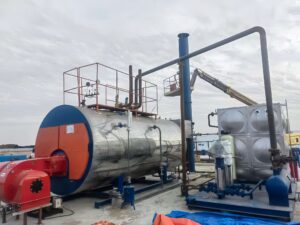
The 9-Input Fuel Selection Matrix can turn a potential fueling war into a useful boiler manufacturer-comparison document. Score each of the elements below before issuing a boiler purchase request. Don’t be blinded by the initial boiler price if future changes to the fuel storage or piping or permit will raise the installed price.
| Fuel type input | Natural gas | LPG / propane | Diesel / light oil |
|---|---|---|---|
| 1. Supply path | Pipeline utility or industrial gas station. | Truck delivery to pressurized LPG tank. | Truck delivery to atmospheric oil tank. |
| 2. Storage footprint | Low, if pipeline capacity is already approved. | Tank, safety clearance, regulator, and often vaporizer space. | Tank, bund, pump skid, filter, and spill controls. |
| 3. Delivered energy cost | Normalize utility bill to $/MMBtu or $/GJ. | Normalize delivered propane price to $/MMBtu or $/GJ. | Normalize diesel price by gallon or liter energy content. |
| 4. CO2 factor | 52.91 kg CO2/MMBtu. | 62.88 kg CO2/MMBtu for propane. | 74.14 kg CO2/MMBtu for diesel/distillate. |
| 5. Burner train | Gas burner, pressure regulator, shutoff valves, leak test, interlock. | LPG gas burner, vaporizer/regulator, different injector tips. | Oil burner, pump, nozzle, atomization air or steam, oil filter. |
| 6. Low-load behavior | Good with matched turndown and gas pressure. | Watch vaporization at cold ambient temperature. | Watch atomization and smoke at very low load. |
| 7. Permit friction | Often simpler on SOx and PM; NOx still needs burner data. | Clean visible combustion, but NOx still depends on burner setup. | Sulfur, PM, tank, and spill questions are more visible. |
| 8. Backup value | Poor if the pipeline is the single fuel path. | Good when LPG truck delivery is reliable. | Strong for emergency steam and remote sites. |
| 9. Service risk | Needs local gas burner and gas train service. | Needs LPG vaporizer, regulator, and burner service. | Needs oil pump, nozzle, ignition, and storage maintenance. |
Advantages
Natural gas has lower storage needs and also a lower EIA CO2 rating among all three choices. The propane- (LPG-) fueled boiler ensures clean gas firing is available without need for pipelines. The diesel-fired boiler stores easily and can be maintained on site indefinitely to ensure power backup during long-term utility interruptions.
Limits
A project may fail due to a weak natural gas pipeline or unreliable pipeline pressure to the boiler plant. An LPG fuel system needs storage capacity and tank vaporization assessment. Diesel fuel adds storage tank and pipe systems, often requires more emphasis on maintenance and filtering (especially at the burner) as it can contribute to the dreaded sulfur problem, particularly under low-load firing conditions.
Fuel Availability and Storage: Pipeline Gas, LPG Tank, Diesel Tank
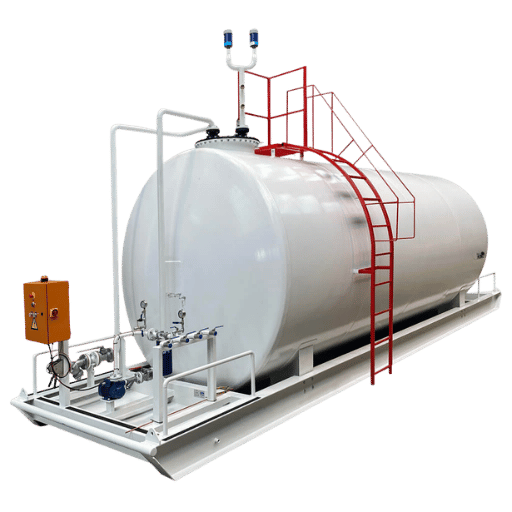
Often, fuel selection is determined before boiler efficiency discussions even occur. A natural gas boiler requires pressure supply into the boiler plant room, pipeline or at minimum, the regulator set capacity needs to be matched with a boiler’s required natural gas pressure and rate at maximum steam output. LPG also requires appropriate onsite storage and a gas training plan and regulator setup matched to flow demand. Diesel requires a large tank to be sited and adequately prepared for storage, and then a well-designed set of pipe and filters to keep dirty water and contaminants out of the oil.
Taiguo names natural gas, diesel, LPG, heavy oil, and biogas as fuels for their oil and gas fired boiler family of WNS oil gas steam boilers, SZS steam and hot water boilers, and LHS vertical steam generators. A boiler must specify its intended fuel in its RFQ, since the burner choice affects the furnace sizing checks, control logic, and boiler room arrangement.
Why is LPG not the same as natural gas?
LPG mostly contains a propane or butane mix whereas pipeline natural gas is predominantly methane. Those differ greatly in heating value, specific gravity, air required, and shape and size of burner ports. Although the boiler shell might accommodate either fuel type, the burner, injector tips, regulator, pressure switch, flame safeguard and damper set points need to be reassessed.
The EPA’s section on LPG combustion specifies that a vaporizer may be required for commercial and industrial use, as well as the need for alternative fuel injector tip sizes and air-fuel ratio settings when compared to natural gas. That’s why a buyer shouldn’t ask their boiler supplier to “simply switch to a different fuel” once the boiler is ordered.
Operating Cost: Normalize $/MMBtu, Boiler Efficiency, and Steam Load

Fuel costs become worthwhile only when they are based on the same unit of energy. They should be expressed as $/MMBtu or $/GJ, taking into account for boiler thermal efficiency and annual steam quantity needed. Don’t make an attempt to compare the cost of gas per meter, LPG per kilo and diesel per litre; this is not a comparison of fuel costs.
Fuel Cost Formula
Annual fuel cost = annual useful steam energy demand / boiler efficiency x delivered fuel price.
DOE’s steam cost benchmark also states that heat input per 1,000 lb of saturated steam changes with steam pressure and feedwater temperature. That can shift the fuel bill when comparing a 7-bar laundry boiler with a 16-bar process steam boiler.
| Cost input | Use in calculation | Common mistake |
|---|---|---|
| Fuel price | Convert all fuels to $/MMBtu or $/GJ. | Comparing $/m3 gas with $/kg LPG and $/L diesel. |
| Boiler efficiency | Use supplier test basis, not a brochure-only number. | Ignoring feedwater temperature and steam pressure. |
| Annual load hours | Multiply by real production schedule: 8 h/day, 16 h/day, or 24 h/day. | Buying for peak load, then running at 25% load all year. |
| Auxiliary power | Add fan, feedwater pump, oil pump, vaporizer, and control power. | Treating fuel price as the whole steam cost. |
For 2026 plans, EIA’s May 12, 2026 Short-Term Energy Outlook forecast Henry Hub natural gas at $3.50/MMBtu in 2026 and $3.18/MMBtu in 2027. That is not the same as delivered factory gas, but it shows why buyers should ask for a local tariff and run a sensitivity case before selecting fuel. Taiguo’s boiler operating cost calculator can help with that first pass.
How should I compare natural gas and LPG operating costs?
These figures must be put on a similar delivered energy basis and also include cost for fuel tank or pipeline, and also divide by usable output per boiler. If the installation requires extending pipeline over a long distance, the installed fuel cost of natural gas will increase. When LPG has to be transported over a long distance by tank or when a larger vaporizer is needed to compensate, steam costs will increase, even though boiler costs might be the same.
Burner and Combustion Differences: Wobbe Index, Atomization, and Controls
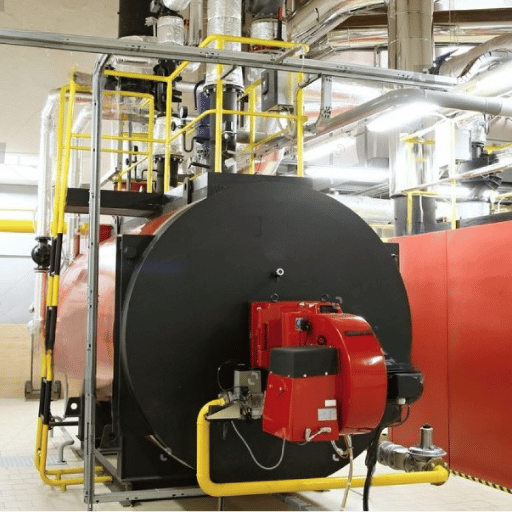
Interchangeability for gaseous fuels involves more than the heat content; FERC defines interchangeability as the capability to substitute one gaseous fuel for another for a particular combustion purpose without considerable differences in safety, efficiency, and output, along with emissions; it highlights the Wobbe Index as a well-known criterion which is closely associated with heat energy content, and gravity.
For a steam boiler buyer, the field lesson is simple: natural gas and LPG can both be burned in gas-fired hardware, but they do not use the same burner basis. LPG may need different orifice sizes, injector tips, fuel-to-air settings, and vaporizer review. A diesel burner follows another path because it must atomize liquid fuel before combustion.
Why Burners Cannot Simply Be Swapped Between Natural Gas and LPG
Natural gas and LPG differ in methane, propane, and butane content, so the same burner opening can deliver a different heat input. A supplier has to check gas pressure, Wobbe Index, air demand, regulator range, valve sizing, and flame proving. The boiler furnace may be suitable, but the gas burner package still needs its own approval.
Engineering Note
A dual-fuel burner is not the same as a temporary fuel exchange. Ask the supplier whether the quoted burner includes separate gas and oil firing hardware, automatic control system logic for changeover, independent safety interlocks, flame proving for each fuel, and commissioning steps for each firing mode.
Can a natural gas boiler run on LPG without modification?
Generally not safely. Some boiler bodies can work with both fuels, and some burners have conversion kits, but the gas valve train, orifice, regulator, air setting, pressure switch, and flame test must be set for LPG as the base fuel. Treat it as an engineered conversion, not a hose swap.
Emissions and Compliance: NOx, CO2, SOx, and Permits
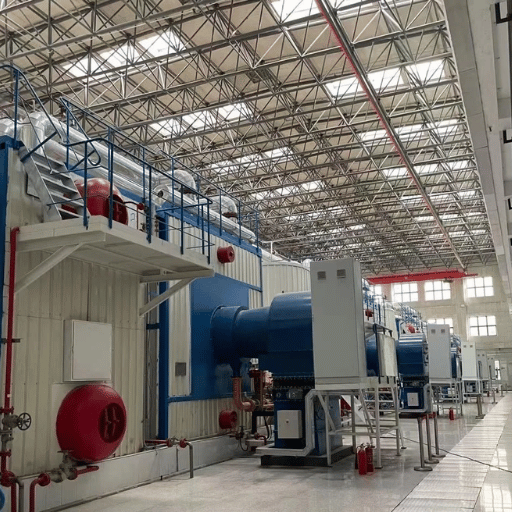
Natural gas often has the easier emissions path, especially when pipeline-quality gas has low sulfur and low particulate matter (PM). LPG also gives clean visible combustion, though EPA notes that NOx, CO, and organic compounds still vary with burner design, burner adjustment, boiler parameters, and flue gas venting. Diesel or light oil can be practical, but sulfur, PM, tank rules, and spill controls become more visible.
| Emission topic | Natural gas | LPG / propane | Diesel / light oil |
|---|---|---|---|
| CO2 coefficient | 52.91 kg/MMBtu | 62.88 kg/MMBtu | 74.14 kg/MMBtu |
| NOx driver | Thermal NOx near burner flame zone. | Burner setup, excess air, temperature, residence time. | Thermal NOx plus fuel nitrogen concerns for heavier oils. |
| SOx driver | Trace sulfur and odorant. | Sulfur in LPG supply. | Fuel sulfur content is central. |
| Control options | Low-NOx burner, flue gas recirculation where specified. | Low-NOx burner and FGR may be used; soot limit must be checked. | Low-NOx burner, oil quality control, and maintenance discipline. |
Do not use AP-42 emission factors as permit limits. EPA published those factors as averages rather than standards, so they belong in early screening before asking the supplier for burner emissions at the target steam flow and oxygen correction basis. Taiguo’s industrial boiler emission standards guide is a good internal starting point before local authority review.
Code and Standard Checkpoints Before the Fuel Decision
Fuel selection is not only a burner choice. A buyer should confirm the pressure boundary, burner safeguards, fuel-gas piping, LPG storage, diesel storage, emissions path, and energy-management records before signing a boiler contract. The final governing documents depend on the country and local authority, but the checkpoints below show where the engineering review usually starts.
| Checkpoint | Public source to discuss with the local reviewer | Why it changes the boiler RFQ |
|---|---|---|
| Pressure vessel basis | ASME BPVC Boiler and Pressure Vessel Code | ASME BPVC context affects steam pressure, pressure vessel documents, inspection records, and nameplate expectations. |
| Automatically fired burner safeguards | ASME CSD-1 controls and safety devices | ASME CSD-1 discussions can affect flame safeguard, low gas pressure switch, interlock, and valve proofing details. |
| Fuel-gas piping | NFPA 54 / ANSI Z223.1 | NFPA 54 review can affect gas train, regulator, venting, and shutoff-valve placement. |
| LPG storage and handling | NFPA 58 Liquefied Petroleum Gas Code | NFPA 58 review can affect LPG tank location, vaporizer room, transfer point, and emergency shutoff plan. |
| U.S. industrial boiler air rules | 40 CFR Part 63 Subpart DDDDD | CFR Part 63 context can affect fuel recordkeeping, emissions testing, tune-up scope, and compliance schedule. |
| Diesel and oil storage safety | OSHA 29 CFR 1910.106 via eCFR | OSHA review can affect tank location, flammable liquid handling, transfer pump layout, and maintenance access. |
| Energy management records | ISO 50001 energy management | ISO 50001 users should track fuel input, steam output, blowdown, feedwater temperature, and load hours. |
Reliability: Remote Sites, Backup Fuel, and Dual-Fuel Operation
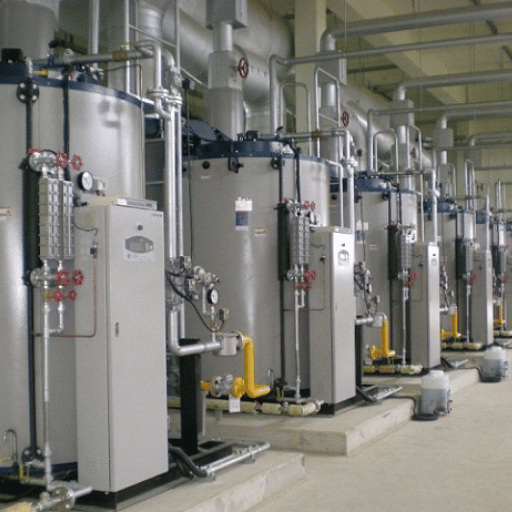
Reliability is where diesel still earns a place in many projects. If a plant cannot lose steam during a pipeline outage, it may specify natural gas first and diesel as the backup. If a plant is far from a gas utility and needs steam quickly, diesel can make sense while an LPG or biomass plan is developed. Where emissions limits are tight, natural gas or LPG may stay primary while diesel serves emergency duty only.
| Fuel-Readiness Ladder | Readiness check | Buyer action |
|---|---|---|
| 1. Pipeline-only natural gas | Confirm gas capacity at peak t/h steam output. | Ask utility for pressure and interruption terms. |
| 2. Natural gas with LPG standby | Check vaporizer rate and LPG tank autonomy. | Request dual gas train review. |
| 3. Natural gas with diesel standby | Check separate oil pump, nozzle, and oil line purge. | Specify dual-fuel burner in the first RFQ. |
| 4. LPG-only | Review tank size for 1 day, 3 days, and 7 days of steam. | Ask LPG supplier for delivery lead time. |
| 5. Diesel-only | Review fuel age, filter change plan, and tank water checks. | Set a maintenance calendar. |
| 6. LPG plus diesel | Check two storage systems and two fuel permits. | Compare installed cost, not boiler cost only. |
| 7. Biogas-ready gas boiler | Check methane content, moisture, H2S, and gas treatment. | Ask supplier for fuel analysis limits. |
| 8. Future biomass fallback | Different boiler family and ash handling needs. | Compare with biomass-fired boiler options. |
| 9. Fully automatic remote monitoring | Check alarms for flame failure, low gas pressure, low oil pressure, and water level. | Specify signals before panel design. |
If backup fuel is part of the plan, read the oil gas dual fuel boiler guide before asking for a single-fuel quote. Changing from single-fuel to dual-fuel after the order can affect burner lead time, skid layout, and commissioning scope.
RFQ Specs to Send a Steam Boiler Supplier

A supplier cannot quote a fired steam boiler accurately from fuel name alone. Send the process data and the fuel data together. For early sizing, the industrial boiler sizing calculator can turn process demand into an estimated capacity before the technical RFQ is finalized.
| RFQ field | Example value to send | Why it matters |
|---|---|---|
| Steam output | 2 t/h, 4 t/h, 10 t/h, or 20 t/h. | Sets boiler model, burner capacity, and fan size. |
| Steam pressure | 0.7 MPa, 1.25 MPa, 1.6 MPa, or 2.5 MPa. | Affects pressure vessel selection and safety valve basis. |
| Fuel choices | Natural gas primary, diesel standby. | Sets burner and fuel train from day one. |
| Gas pressure or oil data | Gas pressure in kPa or bar; diesel viscosity and sulfur. | Prevents burner mismatch. |
| Feedwater temperature | 20 C raw water or 85 C deaerator outlet. | Changes fuel input and steam cost. |
| Emission limit | NOx mg/Nm3 or ppm at stated O2. | May require low-NOx burner or FGR. |
| Boiler type | Wet back fire tube boiler or water tube boiler. | WNS and SZS serve different capacity and pressure bands. |
| Voltage and controls | 380 V / 50 Hz / 3 phase; PLC required. | Sets panel, motor, and automatic control system details. |
| Boiler room footprint | Door width, ceiling height, stack route, tank area. | Affects skid layout and delivery split. |
| Water quality | Hardness, TDS, silica, treatment method. | Fuel type does not remove water-treatment duty. |
| Industry and process | Food industry, textile dyeing, packaging, chemical heating. | Load swings differ by process. |
| Backup requirement | 8 hours, 24 hours, or 72 hours of emergency steam. | Sets diesel tank, LPG tank, or dual-fuel burner basis. |
On Taiguo’s oil and gas boiler page, fuel options range from natural gas, diesel, LPG, heavy oil, and biogas. Capacities range from 0.5-75 t/h and pressures from 0.7-4.9 MPa. Those looking to compare WNS, SZS, and vertical generators should first specify steam output and steam pressure, then fuel data.
Spec Type Examples for the RFQ Sheet
The values below are example fields to confirm with the plant and supplier, not universal design limits. They help make the RFQ measurable before a boiler model is selected. For a 1000 kg/h project, ask the supplier to state 85°C feedwater, 50 Hz or 60 Hz power, and the 3% O2 basis used for any NOx claim.
| Spec type | Example value | Why the supplier asks |
|---|---|---|
| Steam output | 1000 kg/h or 2000 kg/h | Sets boiler size and burner firing rate. |
| Feedwater temperature | 20°C raw water or 85°C deaerated water | Changes fuel input per kg of steam. |
| Ambient design point | -10°C winter start or 40°C boiler room | Affects LPG vaporization and fan selection. |
| Fan motor | 5.5 kW or 7.5 kW | Helps size electrical supply and starter panel. |
| Feedwater pump | 1.5 kW or 2.2 kW | Confirms auxiliary power and standby needs. |
| LPG vaporizer | 50 kg/h or 100 kg/h | Prevents low gas pressure during peak firing. |
| Diesel day tank | 500 kg or 1000 kg | Sets autonomy during backup steam duty. |
| Service clearance | 800 mm side access and 1.5 m front access | Keeps burner and tube access workable. |
| Stack route | 8 m indoor route or 15 m outdoor stack | Affects draft loss and support design. |
| Power frequency | 50 Hz or 60 Hz | Prevents motor and panel mismatch. |
| Oxygen correction basis | 3% O2 or 6% O2 | Keeps NOx comparison on the same basis. |
2026 Outlook: Fuel Flexibility, Low-NOx Burners, and Biogas Readiness
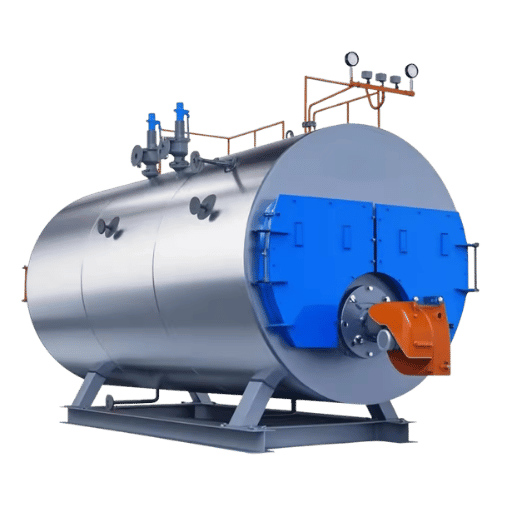
For 2026 purchasing, the fuel flexibility is shifting from a luxury feature to a risk control strategy. Buyers of natural gas have a watchful eye on pricing and supply projections. LPG buyers are monitoring contractual deliveries and storage capacity. Diesel users are wondering if this is still the primary fuel or should transition to a backup, once cleaner fuel is readily available.
Three boiler specifications age well: leave room for a low-NOx burner package if permitting is uncertain, ask about dual-fuel burner pricing at the start, and provide any biogas or renewable gas analysis before assuming a standard natural gas burner will accept it. Biogas can carry moisture, H2S, CO2, and variable methane, so the burner and gas train need a fuel analysis first.
Retrofit, Liquefied Natural Gas, and CNG Questions
A retrofit project needs tighter fuel wording than a new boiler room. If a buyer asks whether an industrial gas fired boiler can later move from pipeline gas to industrial LPG, CNG, LNG, or liquefied natural gas supply, the supplier should check Wobbe Index, gas pressure, valve sizing, burner approval, and controls before quoting. A biomass boiler is a different fuel family, so it should be compared as a separate project. For plants that report energy work under ISO 50001 or similar systems, high efficiency claims should be tied to measured steam output, fuel input, and feedwater temperature rather than a single brochure value.
A future fuel strategy should not hide today’s steam need. If the site needs steam in 12 weeks, a diesel or LPG boiler may be faster than waiting for a new natural gas pipeline project. If the site runs around the clock for the next ten years, pipeline natural gas with an efficient boiler room may repay more than a fast install. For a broader equipment comparison, read Taiguo’s industrial steam boiler selection guide and boiler efficiency calculation guide.
Supplier-Ready Decision Path
Begin your assessment with fuel availability, not with boiler manufacturers’ catalogs. Next, analyze the fuel cost per MMBtu, fuel storage requirements, boiler efficiency, emissions, burner servicing needs, and associated backup risks. Once this foundational information is clear, you can submit a concise RFQ to suppliers and request proposals for a base-case scenario along with a backup-fuel alternative.
Often, the optimal solution for plants is a combination of fuels: natural gas as the day-to-day fuel with diesel as a backup, or LPG as the primary fuel with plans for a natural gas conversion as pipeline access becomes approved.
FAQs
Is LPG or diesel better for a remote steam boiler site?
Diesel wins when fuel autonomy is the main risk. LPG wins when truck delivery is stable, the tank yard is approved, and the plant wants gaseous-fuel combustion.
Which fuel produces lower NOx emissions?
There is no one-number winner. Natural gas often has a favorable path, but NOx depends on flame temperature, excess air, residence time, burner design, burner tuning, and controls. LPG can need extra care under some low-NOx conditions because the fuel has different combustion behavior from methane-rich pipeline gas. Diesel can meet a limit with the right burner and maintenance plan, but oil quality and atomization matter. Ask for guaranteed NOx at the stated oxygen basis, the stated load point, and the exact fuel. Then ask whether the guarantee changes at 25%, 50%, and 100% load.
Does fuel type affect boiler water treatment?
No. The water side still needs treatment.
What causes an LPG boiler to trip on low gas pressure?
Common causes include undersized vaporizer capacity, tank pressure drop during cold weather, regulator freeze, blocked filters, poor regulator setting, or fuel demand above the delivery rate. A pressure switch trip protects the burner. The fix is not to bypass the switch; check the LPG supply chain, vaporizer rate, regulator train, and peak steam load. On a cold morning, LPG vaporization can fall just as the plant asks for full steam, so the symptom may look like a burner fault even though the upstream fuel system is the real limit.
Should diesel be the primary fuel or backup fuel?
Use diesel as backup when cleaner daily fuel is available. Use it as primary fuel only when remote logistics, schedule, or site rules point that way.
What information should I send a steam boiler supplier before requesting price?
Send steam output, steam pressure, fuel choices, gas pressure or oil data, feedwater temperature, water quality, local emission limit, voltage, site altitude, boiler room size, chimney or stack plan, and backup requirement. Add photos or drawings if the boiler room already exists. With those inputs, a supplier can compare a gas fired boiler, LPG boiler, oil boiler, or dual-fuel package without guessing the fuel train. Missing fuel data is one of the fastest ways to get two prices that cannot be compared. One supplier may assume single-fuel natural gas; another may assume dual-fuel gas and diesel; a third may include LPG vaporizer items. Put the fuel basis in writing before judging price.
What are the four types of boilers?
Common industrial groupings include fire tube boiler, water tube boiler, electric boiler, and thermal oil boiler. Fuel choice sits inside that larger selection.
How much CNG equals a gallon of diesel?
For a steam boiler RFQ, do not convert by container volume alone. Convert CNG and diesel to the same energy basis, such as MMBtu or GJ, then adjust for boiler efficiency and burner duty. Vehicle-fuel equivalents can mislead a boiler project because the final steam cost also includes feedwater temperature, steam pressure, auxiliary power, and service needs.
What is your need for steam pressure and volume for your processes?
Send the supplier both figures. Steam pressure sets the pressure vessel and safety valve basis. Steam volume, often stated as t/h or kg/h, sets boiler capacity, burner size, fan size, and feedwater demand. A 1 t/h laundry boiler and a 10 t/h food industry boiler can both burn gas, LPG, or diesel, but they are not the same purchase.
Related Taiguo Guides
- Gas vs oil fired boiler comparison
- Gas vs oil boiler comparison
- Low-NOx boiler technology
- WNS oil gas steam boiler complete guide
- Thermal oil boiler product range
References
- U.S. Energy Information Administration, Carbon Dioxide Emissions Coefficients by Fuel.
- U.S. Energy Information Administration, Short-Term Energy Outlook, May 12, 2026.
- U.S. Department of Energy, Benchmark the Fuel Cost of Steam Generation.
- U.S. Environmental Protection Agency, AP-42 Chapter 1: External Combustion Sources.
- Federal Energy Regulatory Commission, Policy Statement on Natural Gas Quality and Interchangeability.
- NFPA, NFPA 54 / ANSI Z223.1 National Fuel Gas Code.
- NFPA, NFPA 58 Liquefied Petroleum Gas Code.