Get in Touch with Taiguo

YYQW Gas/Oil Fired Thermal Oil Boiler
Gas Fired Thermal Oil Boiler — YY(Q)W Industrial Thermal Fluid Heater
Horizontal three-pass coil thermal oil boiler delivering 120 to 10,000 kW of stable, high-temperature heating at low pressure. Designed and manufactured by Taiguo boiler, a Grade A industrial boiler manufacturer since 1976, supplying industrial facilities in over 100 countries.
Get Instant Quote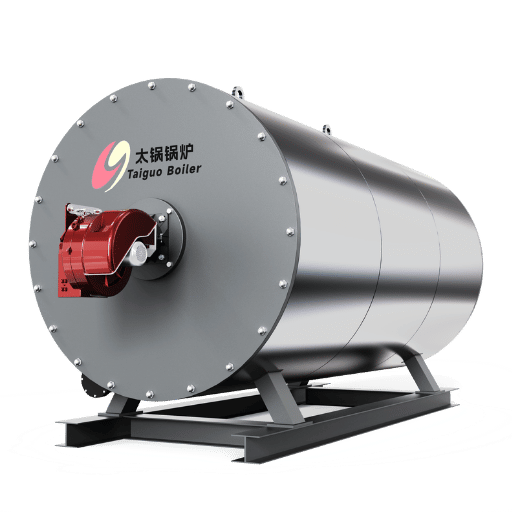
350°C
Max Outlet Temperature
10,000 kW
Max Thermal Capacity
85%
Thermal Efficiency
1976
Founded — 50 Years
What Is a Gas Fired Thermal Oil Boiler?
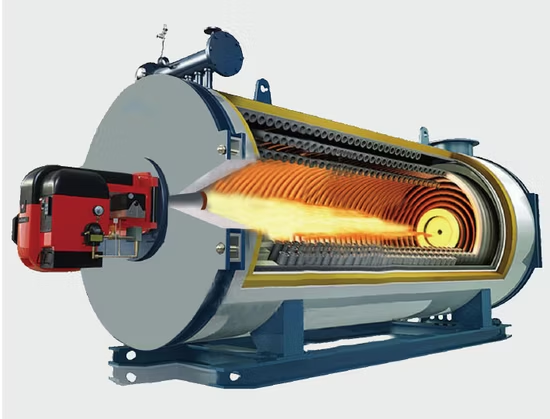
A gas fired thermal oil boiler is an industrial heating system that uses thermal oil- instead of water or steam- as the heat transfer medium. Heated oil flows through a closed-loop system where a gas- or oil-fired burner heats the oil inside coil tubes, and an oil circulation pump pushes the heated oil to process equipment throughout the plant. After releasing its thermal energy at the heat users, the cooled oil cycles back to the boiler to be heated again, over and over.
What makes this type of thermal fluid heater unique among a typical steam boiler or hot water boiler is its performance: its ability to deliver high-temperature heating at low pressure. Since thermal oils stay liquid even at 300-350C, the system runs at just 1.1 MPa- well below the 2.5+ MPa steam systems need for that temperature range. As a direct result of this low pressure feature, installation of such systems can be simpler, require fewer regulatory steps, and have lower operating costs.
Taiguo’s YY(Q)W series is a horizontal forced-circulation thermic fluid heater that can be used in industrial heating systems. With a function of an indirect heating system: the thermal oil absorbs heat from the combustion chamber, carries it to jacketed reactors, heat exchangers, drying chambers, etc, and then cycles back. No steam drum, no condensate recovery, no water treatment chemicals- just clean, precise temperature delivery.
Closed-Loop System
thermal oil is pumped around in a sealed loop. No makeup water, no blowdown, no flash-steam losses- the same charge could be used for years with the right maintenance.
Low Pressure, High Temperature
Obtains low pressure to 350C at just 1.1 MPa design pressure. As steam systems would require 4+ MPa to reach the same temperature range, this translates into thinner pressure vessels, fewer regulatory hurdles, and thus lower costs.
Precise Temperature Control
Automatic burner modulation ensures outlet temperature within 1C. Critical to processes such as chemical reactor heating or textile dyeing where temperature fluctuation causes product quality issues.
YY(Q)W Series Thermal Oil Heater — Technical Specifications
Eight models in the YY(Q)W series range from 120 kW to 10,000 kW of thermal capacity. Each model has the same horizontal three-pass coil construction: first pass radiant heating in the combustion chamber, second pass convection section hot flue gases, and third pass a final heat recovery section before reaching the stack. This design maximizes heat transfer area and ensures complete combustion in the first pass.
Model Range & Thermal Capacity
| Model | Power (kW) | Pressure (MPa) | Max Temp (°C) | Efficiency (%) | Dimensions L×W×H (mm) | Weight (t) |
|---|---|---|---|---|---|---|
| YY(Q)W-120Y(Q) | 120 | 1.1 | 350 | 75 | 1,600×1,020×1,520 | 1.5 |
| YY(Q)W-1000Y(Q) | 1,000 | 1.1 | 350 | 85 | 3,300×1,670×2,486 | 5.0 |
| YY(Q)W-2400Y(Q) | 2,400 | 1.1 | 350 | 85 | 5,080×2,200×3,180 | 9.8 |
| YY(Q)W-3000Y(Q) | 3,000 | 1.1 | 350 | 85 | 5,983×2,420×3,404 | 15.5 |
| YY(Q)W-4700Y(Q) | 4,700 | 1.1 | 350 | 85 | 7,285×2,570×3,760 | 21.5 |
| YY(Q)W-6000Y(Q) | 6,000 | 1.1 | 350 | 85 | 7,800×3,050×3,800 | 25.0 |
| YY(Q)W-7000Y(Q) | 7,000 | 1.1 | 350 | 85 | 8,200×3,050×3,800 | 27.5 |
| YY(Q)W-10000Y(Q) | 10,000 | 1.1 | 350 | 85 | 10,000×3,500×4,000 | 32.0 |
Design Features — Horizontal Three-Pass Coil Structure
Inside, coil tubes employ small-diameter multi-head steel tubes configured into a round-coil heating surface. Such geometry reduces thermal stress relative to straight-tube designs, makes the best use of floor space, and allows for homogeneous heating throughout the oil system. Additionally, the large combustion chamber allows for complete combustion of whatever fuel is used: natural gas, diesel, heavy oil, or LPG. Aluminum silicate board insulation surrounds the entire boiler package, resulting in heat loss of less than 2%.
Four different fuel choices support the YY(Q)W adapting to the local energy market: natural gas for cleaner combustion where pipeline access exists; diesel for remote, isolated terrains; heavy oil when minimal costs are a priority; and LPG where mobility is an issue. Possible dual-fuel burner configurations enable installations that switch between gas or oil mode, paying a seasonal price premium.
ASME Certificate
CE PED 2014/68/EU
ISO 9001:2015
Grade A Boiler License (China)
How the Thermal Oil Boiler System Works
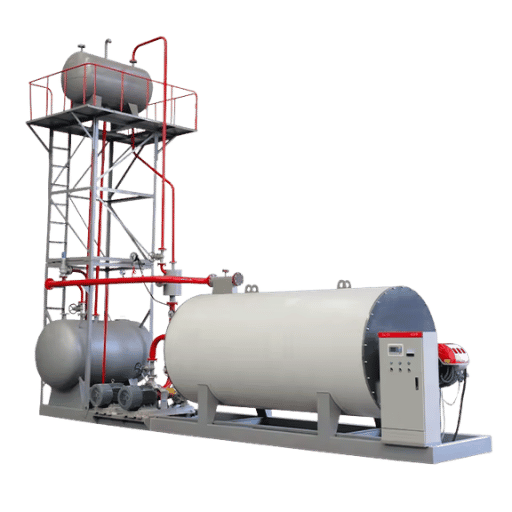
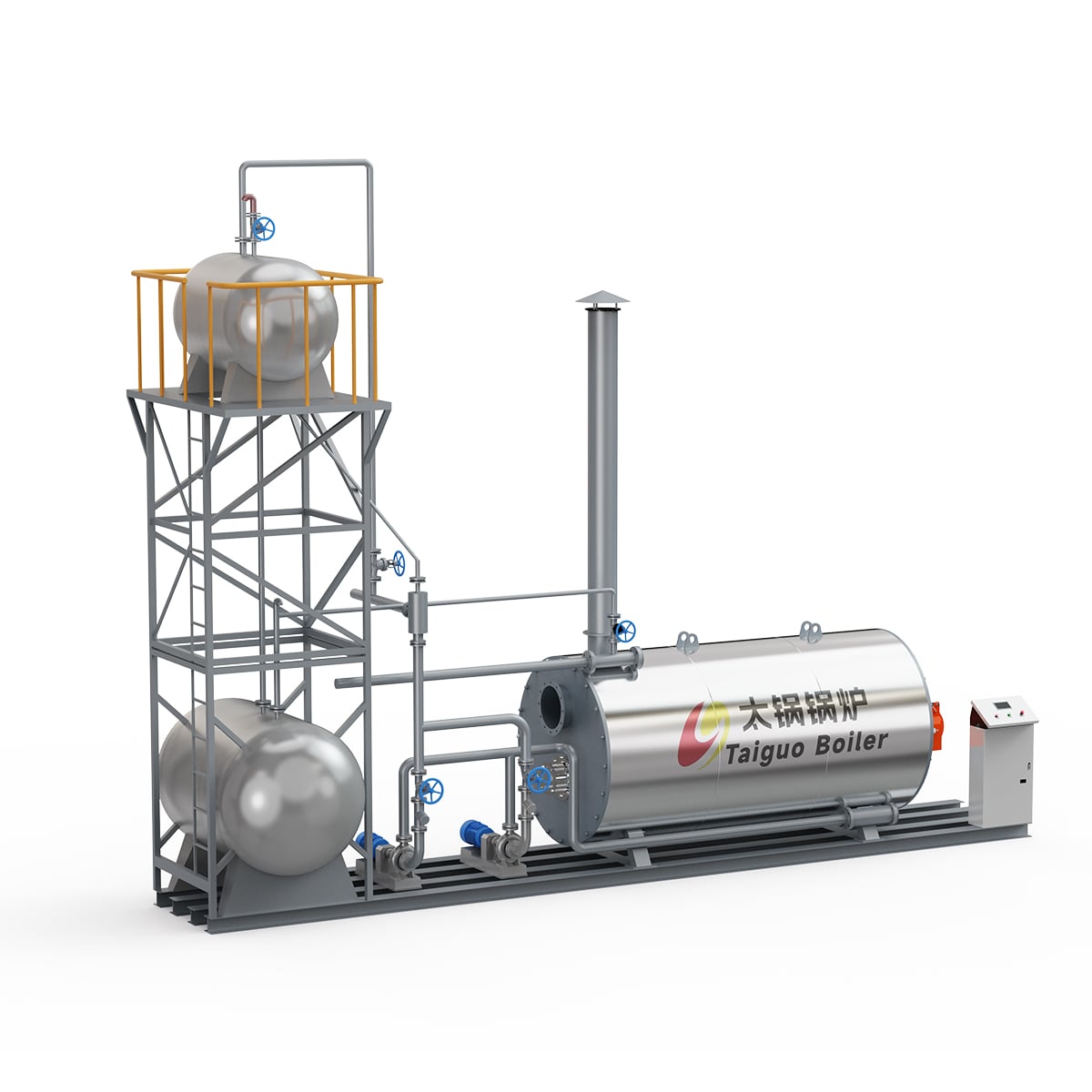
A complete thermal oil boiler system consists of five core system components flowing in a continuous, closed heat transfer loop. A technical understanding of each part of the system enables the plant engineer to specify the appropriate system type and to debug the technology when in operation.
-
01
Burner & Combustion Chamber
Gas or oil flows out of the burner and burns directly in a large, cylindrical combustion chamber located at the coil assembly’s center. Positive-pressure combustion in the combustion chamber maintains complete combustion of the fuel – the flue gas then exhausts at a steady controlled stack temperature, measured absent an economizer, between 180-220C. Each burner will modulate its firing rate in relation to the commanded outlet temperature for oil.
-
02
Heating Coils (Heat Source)
Flue gases from the combustion chamber pass three times over the coil tubes. Thermal oil flows within these tubes across the flame – the force of the passing gas heats the thermal oil. Extended oil path length reduces overall fuel consumption because of effective heat transfer.
-
03
Oil Circulation Pump
All thermal oil circulating in the closed loop system is pumped by a high-temperature centrifugal oil pump; this is the heart of the system. Pump selection depends on flow rate, pressure, and pumped oil viscosity at operating temperature. Generally, the installed pump operates from 175-350 C continuously.
-
04
Expansion Tank
As the thermal oil heats up, thermal expansion occurs (by approximately 10-15%) between ambient and 350 C. An expansion tank accommodates this volume increase, mitigates excess pressure buildup in the piping, and provides a space for dissolved gases to be vented out. N2 gas blanketing of the expansion tank is an optional mechanism to eliminate the oxidation of the thermal oil.
-
05
Heat Users & Return
Hot thermal oil passes along insulated piping to one or multiple various process vessels (Jacketed Reactors; shell and tube heat exchangers; calender rolls, hot air ovens, etc) for heat transfer. Cooled oil then returns from the process vessel back to the boiler for reheating via the return manifold. No oil is consumed in the entire processing system, there are no off-gases polluting the environment, and the charge of thermal oil can be maintained in volumes and quality for a period of 5-8 years before replacement.
YYQW Gas/Oil Fired Thermal Oil Boiler Accessories
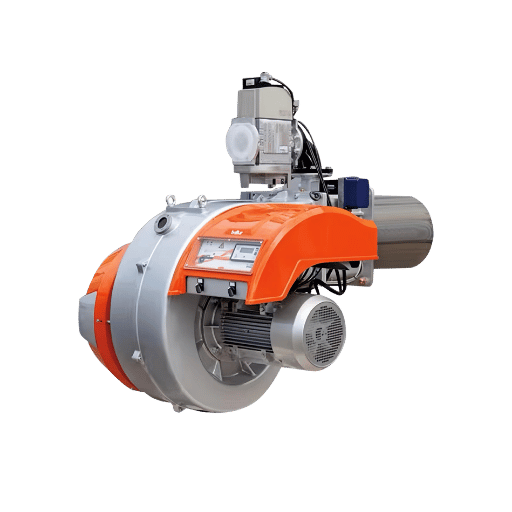
Burner

Chimney

Electric Control Cabinet
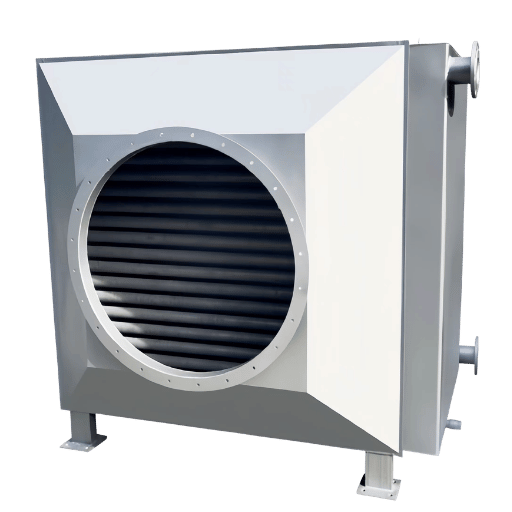
Energy Saver

Feed Water Pump
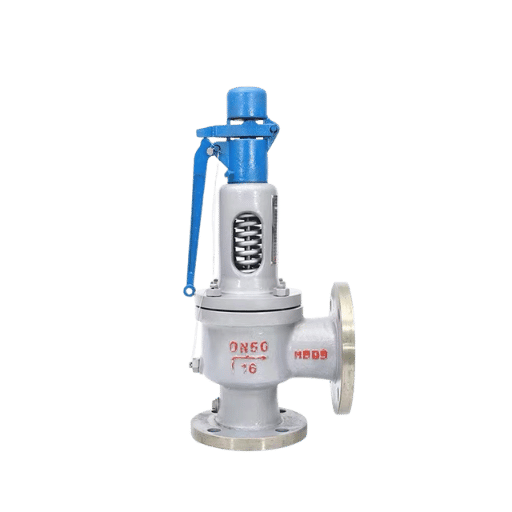
Safety Valve
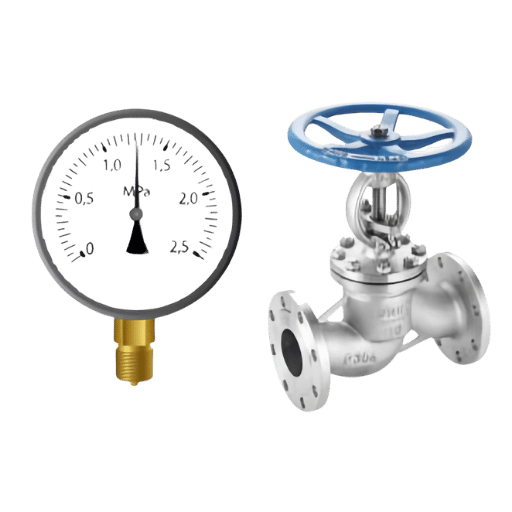
Valves & Gauges

Water Softener
Advantages of Thermal Oil Boilers Over Steam Systems
Plant owners frequently compare thermal oil boiler to steam boilers when selecting a heating system. Both technologies transfer heat—but they do so in fundamentally different ways, which have a direct impact on operating costs, maintenance requirements, and processing quality
| Parameter | Thermal Oil Boiler | Steam Boiler |
|---|---|---|
| Operating Pressure at 300°C | 1.1 MPa (liquid phase) | 8.6 MPa (saturated steam) |
| Water Treatment Required | None | Continuous softening, deaeration, chemical dosing |
| Corrosion Risk | Minimal — oil does not corrode steel | High — oxygen pitting, scale buildup, acid attack |
| Temperature Control Accuracy | ±1°C via burner modulation | ±5–10°C (pressure-dependent) |
| Heat-Up Time (cold start) | 45–60 minutes | 20–30 minutes |
| Condensate Recovery System | Not needed | Required — steam traps, condensate tanks, return pumps |
| Regulatory Inspections | Less frequent (low pressure) | Annual or biannual (high-pressure vessel) |
What is the total Cost of Ownership?
thermal oil systems tend to be most economical for applications above 200C. With no need for water treatment chemicals, blowdown losses, condensate recovery equipment and the frequent inspections dictated by high-pressure steam codes a thermal oil boiler has the potential to cut a significant sum off the annual operating costs. One downside? Steam boilers heat from cold faster, which makes them better for some processes (food sterilization, humidification), but makes a maximum blowdown less critical compared to oil systems.
In reality, many of the plants that moved away from superheated steam to thermal oil heating for their process lines enjoy substantial reductions in down-time, more consistent precise temperature quality due to oil systems’ virtually eliminating chemical deposition on walls, and a longer system lifespan due to lack of corrosion inside the system. It’s just a matter of selecting the right heating technology for the process requirements, rather than following the steam-led path of least resistance.
Industrial Applications — From Chemical Plants to Food Processing
thermal oil boilers find application in virtually every industry requiring tightly controlled, high-temperature process heating without the water-related problems and hazard concerns of steam. Taiguo’s YY(Q)W series has become the gold standard for industrial plants across more than 100 countries, serving the following applications.
Chemical & Petrochemical
Reactor jacket heating, distillation column reboilers, and polymer processing. thermal oil boilers comfortably deal with the 250-350C range necessary for many chemical reactions, while maintaining safe low pressures – critical for installations using flammable chemicals.
Textile Dyeing & Finishing
Stenter frame heating, dye bath temperature control, and fabric drying. Precise temperature control of thermal oil systems ensures color consistency from batch to batch – a common complaint with less stable heating systems.
Food & Beverage
Cooking kettles, fryer heating, spray dryer air heating, and sterilization. thermal oil can deliver indirect heating without the risk of steam condensate contamination, achieving food safety standards at heat duties to 300C.
Asphalt & Building Materials
Asphalt mixing plant heating, bitumen storage tank heating, and concrete curing. Rugged YY(Q)W units withstand the arduous dust-laden environment of construction material plants with minimal maintenance requirements.
Rubber & Plastics
Extrusion die heating, vulcanization press heating, and mold temperature control. As thermal oil delivers highest temperature stability, conversion of residual carbon into end use carbon black avoids damage to the base material.
Plywood & Wood Processing
Hot press platen heating for plywood, MDF and particleboard production. Several press stations in a single plant may be heated from one thermal oil boiler system, simplifying plant construction.
For facilities without gas pipeline access, Taiguo also manufactures biomass boilers and electric thermal oil heater units — giving plant managers a wider range of boiler solutions matched to local fuel availability.
Project References & Performance Data
Problem:
A resin making plant was looking to replace its coal-fed boiler with a cleaner, more controllable heating system for six reactor vessels operating at 280C. Its current arrangement suffered from rapid temperature fluctuations of 8C causing substantial batch quality variation and feedstock wastage.
Application:
Two YY(Q)W-3000 systems running on natural gas, piped to a common thermal oil header with individual variable flow control provided to each reactor vessel. Each thermal fluid heating system employs dedicated forced circulation.
Results:
Better temperature stability to 1.5C in the reactor jacket. A reduction in batch rejections during the initial operating quarter. Gas switch away from coal removed the ash removal crew and their attendant servicing issues. Overall, the boiler application out-performed the forecast industrial pay-back period.
“The temperature stability alone justified the investment. We went from adjusting reactor temperatures manually every 20 minutes to just setting it and monitoring.” — Plant Operations Manager
Problem:
A large dyeing and finishing mill operating a fleet of 12 stenter frames needed the most advanced available heating technology. Its former hot water boiler was limited to 180C, meaning expensive supplementary electric heaters were required to reach the 200-240C target temperatures, leading to extremely high electricity costs.
Application:
A centralized YY(Q)W-6000 gas-fired thermal oil heater was installed to deliver 200-240C heat across all 12 production lines. The major thermal oil circuit was designed with a predetermined flow rate, and each pump was sized to deliver constant circulation round the clock, regardless of the number of active stenter lines.
Results:
The thermal oil system fully replaced the electric supplementary heaters, resulting in huge savings on electricity costs in the drying section. The natural gas-fired system provided a much lower cost per kW of heat. Thanks to the built-in capacity of the YY(Q)W-6000, production was able to expand to a third shift just six months after installation without requiring any system upgrades.
Problem:
Harsh ambient conditions—including dry dust and temperatures exceeding 45C in the summer—necessitated a heavy-duty, commercial-grade heater for the aggregate handling plant. The operation required a system capable of running 24/7 with zero issues and minimum technical support.
Application:
Installed a YY(Q)W-2400 diesel-fired thermal fluid heater equipped with an air preheater for waste heat recovery. The system heats bitumen storage tanks as well as the asphalt drum mixer via separate thermal oil loops. All main circulation pumps were explicitly rated for constant operation in a severe desert environment.
Results:
The unit clocked over 4,000 hours in its first operational year with only one scheduled maintenance shutdown. The integrated air preheater captures flue gases to preheat combustion air, successfully raising the thermal oil delivery efficiency above 86%. Following this success, a second identical unit was ordered for a new plant site.
Safety Standards & Certifications
Proper designing and manufacturing process must be adhered so that the heating equipment operates effectively and safely. All equipment is manufactured by Taiguo under following multiple level quality controls built in the international quality standards.
Manufacturing Certifications
ASME U Stamp — Pressure Vessel Code
CE PED 2014/68/EU — European Pressure Equipment
ISO 9001:2015 — Quality Management
China Grade A Boiler Manufacturing License
D1/D2 Pressure Vessel License
Built-In Safety Systems
High-temperature cutoff: Each unit disables the fuel flow when the oil outlet temperature is above the preset level. This helps avoiding buildup and coking in the equipment leading to damage.
Whenever the oil in the system drops to a preset level the volume is detected and the system is shutdown before the circulation pump runs dry. (from leakages or overflow of expansion tank)
A relief valve is provided on the front end of the pressure system which is an overload mechanical valve that opens when high pressure is detected in the piping lines, preventing pipe or pump failure.
A flame failure device monitors the burner operation using either UV or ionization flame detection. Once the flame is lost, the control system closes the fuel supply preventing unburned fuel buildup.
A flow switch confirms that oil has been circulated before it is fired. This prevents the burner from firing dry leading to an overheated coil, leading to an oil leak or coil breakdown.
A manual emergency shut down disables all systems such as burner, motor and fuel supply.
An expansion tank can be wrapped with a Nitrogen blanket to inhibit oxidation of oil at high temperature but increase the reliability and extend the thermal oil service life, and frequent oil changes can be reduced. All the safety system is wired to a PLC control panel with alarms logging and remote support.
After-Sales Service & Global Support
End to end support from Taiguo boiler from project consultation to entire operation life cycle. A boiler manufacturer with 50 years of production history and exporting to more than 100 countries, Taiguo boiler keeps a spare service team on standby to deliver heating solutions worldwide.
Project Consultation
Project consultation with heat balance calculation, system scheme recommendation and model recommendation based on your specific process parameters and requirements.
Design Customization
Design customization for non-standard application including special fuel type, higher working pressure and site limited space constraint.
Installation & Commissioning
Installation & commissioning with our engineer on site. Complete system commissioning including burner tuning, safety system testing, oil circulation testing as well as training provided to operators.

Spare Parts Shipment
Spare parts shipment with shortest lead time from our 60000 m2 factory in Henan Province, China: burner nozzles, pump seals, control valves, safety valves and other genuine spare parts.
Online Remote Support
Online remote technical support with feedback within 24 hours: remote troubleshooting with video call, walk your operators to find solution and fix the problem with remote consultant when onsite support is not available.
Preventive Maintenance
Preventive maintenance program-regular check plan for oil quality, coil condition, burner inspection, safety system calibration to ensure your hot oil heater in best condition.
Frequently Asked Questions
What is a thermal oil boiler and how does it work?
A thermal oil boiler is an industrial heating system that uses thermal oil as the heat transfer medium instead of water or steam. The oil circulates through a closed-loop system: a burner heats the oil inside coil tubes, an oil circulation pump pushes the heated oil to process equipment, and the cooled oil returns to the boiler to be reheated. Because thermal oils remain in liquid phase at high temperatures, the entire system operates at low pressure (typically 1.1 MPa) while delivering heat up to 350°C. This closed-loop design eliminates water treatment, blowdown losses, and condensate recovery entirely.
What is the difference between a thermal oil boiler and a steam boiler?
The main difference is the heat transfer medium. Steam boilers use water that changes phase (liquid to vapor), requiring high operating pressures — often 1.0–2.5 MPa or higher. Thermal oil boilers use heat transfer oil that stays in liquid phase, operating at low pressure even at 300–350°C. This means thermal oil systems avoid water treatment costs, eliminate corrosion in the system, require less maintenance, and deliver more precise temperature control. Steam boilers suit applications needing direct steam contact; thermal oil boilers are better for indirect, high-temperature process heating. Overall, thermal oil systems typically require less maintenance and lower long-term operating costs.
What fuel types can the YY(Q)W thermal oil heater use?
Supported fuels include natural gas, diesel, heavy oil, and LPG. Dual-fuel burner configurations are available for plants needing fuel flexibility.
What is the maximum operating temperature of a thermic fluid heater?
Maximum outlet temperature reaches 350°C. Mineral-based thermal oils handle 280–320°C, while synthetic oils reach 350°C or higher. Automated burner modulation holds temperature within ±1°C.
How do I calculate the right thermal oil boiler capacity for my plant?
Start with your total process heat demand in kW or kcal/h. Add 10–15% margin for heat losses in piping and the expansion tank. Factor in whether you need simultaneous heating of multiple process users. For example, a textile dyeing plant running four stenter frames at 180 kW each would need at least 720 kW plus margin — pointing to the YY(Q)W-1000 model. Our engineering team can run a detailed heat balance calculation for your specific layout.
What maintenance does a thermal oil boiler system require?
Routine maintenance includes daily checks of oil levels, oil pressure, and burner flame quality. Monthly tasks cover cleaning strainer filters, inspecting the oil circulation pump seals, and checking expansion tank oil levels. Annually, have the thermal oil tested for viscosity, acid number, and flash point — degraded oil reduces efficiency and creates safety risks. The coil interior should be inspected every 2–3 years for carbon deposits. Compared to steam boilers, thermal oil systems require no water treatment, no blowdown procedures, and no condensate recovery maintenance.
What safety features are included in an industrial thermal oil heater?
Standard safety features on the YY(Q)W industrial thermal oil heater include: high-temperature cutoff switch, low oil level alarm and automatic shutdown, over-pressure relief valve, flame failure detection with automatic fuel shutoff, flow switch to prevent dry-fire conditions, and an emergency stop system. The expansion tank is equipped with a nitrogen blanket option to prevent oil oxidation at high temperatures. All safety systems meet ASME and CE PED requirements.
How much does a gas fired thermal oil boiler cost?
FOB prices for gas fired thermal oil boilers typically range from $6,000 to $30,000 depending on thermal capacity. A 1,000 kW unit generally falls in the $8,000–$12,000 range, while a 6,000 kW system may cost $18,000–$25,000. Final pricing depends on fuel configuration, control system specification, accessories (economizer, air preheater), and destination country requirements. Contact our team for a detailed quotation based on your process parameters.
What industries use thermic fluid boilers most frequently?
Thermic fluid boilers are widely used across chemical processing (reactor heating, distillation), textile manufacturing (dyeing, drying, finishing), food and beverage production (cooking, sterilization, drying), asphalt mixing plants, rubber and plastics manufacturing (extrusion, molding), plywood and MDF production, and pharmaceutical processing. Any industry requiring controlled high-temperature heating without the pressure hazards of steam is a candidate for thermal oil heating systems.
What is the thermal efficiency of a YY(Q)W oil/gas fired boiler?
The YY(Q)W series achieves a rated thermal efficiency of 85% in standard configuration. With an optional economizer or air preheater for waste heat recovery, efficiency can reach 90–92%. The horizontal three-pass design maximizes heat transfer surface area, and the large combustion chamber ensures complete fuel combustion — both contribute to high efficiency figures. Actual efficiency depends on fuel quality, burner tuning, and whether flue gas heat recovery equipment is installed.