
Свяжитесь с Taiguo


Блоки AAC — это лёгкие кладочные блоки из цемента, извести, песка или золы-уноса и газообразователя, которые проходят автоклавную обработку паром под высоким давлением. Они весят до трёх раз меньше глиняного и зольного кирпича, но это преимущество в массе не делает стену автоматически прочнее или дешевле. Сравнивая автоклавный газобетон с традиционным глиняным кирпичом или кирпичом из золы-уноса для строительного проекта, фактически одновременно оценивают три отдельных показателя — плотность, прочность на сжатие и стоимость готовой стены, — и на самом деле ни один материал не превосходит остальные по всем трём параметрам. Мы последовательно разбираем каждый параметр, используя данные рецензируемого лабораторного исследования 2025 года и сведения из стандартов, чтобы вы могли выбрать лучший материал, а не лучшего продавца.
Плотность блока AAC составляет около 550-650 кг/м³ против 1,800-2,000 кг/м³ у глиняного кирпича и 1,950-2,050 кг/м³ у зольного кирпича. В том же лабораторном исследовании 2025 года прочность AAC на сжатие составила 5.01 Н/мм², что ниже показателей глиняного и зольного кирпича, испытанных в одной партии. То же исследование показало, что готовая стена из AAC обходится на 29% дешевле стены из глиняного кирпича и на 36% дешевле стены из зольного кирпича с учётом раствора и трудозатрат.
Ключевые факты вкратце
- В контролируемом лабораторном исследовании 2025 года блоки AAC показали худшие, а не лучшие результаты по сравнению с глиняным и зольным кирпичом.
- Прочность зольного кирпича на сжатие составляет от 3.5 до 30 Н/мм² в зависимости от марки.
- Во многих коммерческих блоках AAC зола-унос уже используется как источник кремнезёма.
- Реальная экономия при использовании AAC проявляется в стоимости готовой стены: требуется меньше блоков и раствора, а кладка выполняется быстрее, хотя цена отдельного блока не обязательно ниже.
- В открытом доступе крайне мало данных о пригодности зольного кирпича для разных климатических условий по сравнению с блоками AAC или глиняным кирпичом.
Краткие характеристики: блоки AAC, глиняный и зольный кирпич
| Характеристика | Блок AAC | Глиняный кирпич | Зольный кирпич |
|---|---|---|---|
| Плотность в сухом состоянии | 550-650 кг/м³ | 1,800-2,000 кг/м³ | 1,950-2,050 кг/м³ |
| Прочность на сжатие | 3.5-5.0 Н/мм² (минимум для класса I — 3.5) | 3.5-10.5 Н/мм² (зависит от класса) | 3.5-30 Н/мм² (10 классов марок BIS) |
| Теплопроводность | 0.10-0.24 Вт/(м·К) | 0.7-1.0 Вт/(м·К) | Опубликованных данных мало; часто приводится значение около 0.5-0.8 Вт/(м·К) |
| Стандартный размер изделия | 600 × 200 × 100-300 мм | 230 × 110 × 75 мм (зависит от региона) | 230 × 110 × 75 мм (обычно соответствует размеру глиняного кирпича) |
| Типичное применение | От ненесущих стен до несущих стен среднеэтажных зданий | Традиционные несущие и фасадные стены | Несущие стены, особенно вблизи угольных электростанций |
Приведённые ниже диапазоны составлены по данным Paul, Dey & Dhar (2025), IS 2185 (Part 3), IS 12894 и продукции JK Cement. Коммерческие показатели могут различаться в зависимости от марки, региона и производителя (подробные сведения об источниках приведены в соответствующих разделах).
Что такое блоки AAC, глиняный и зольный кирпич?
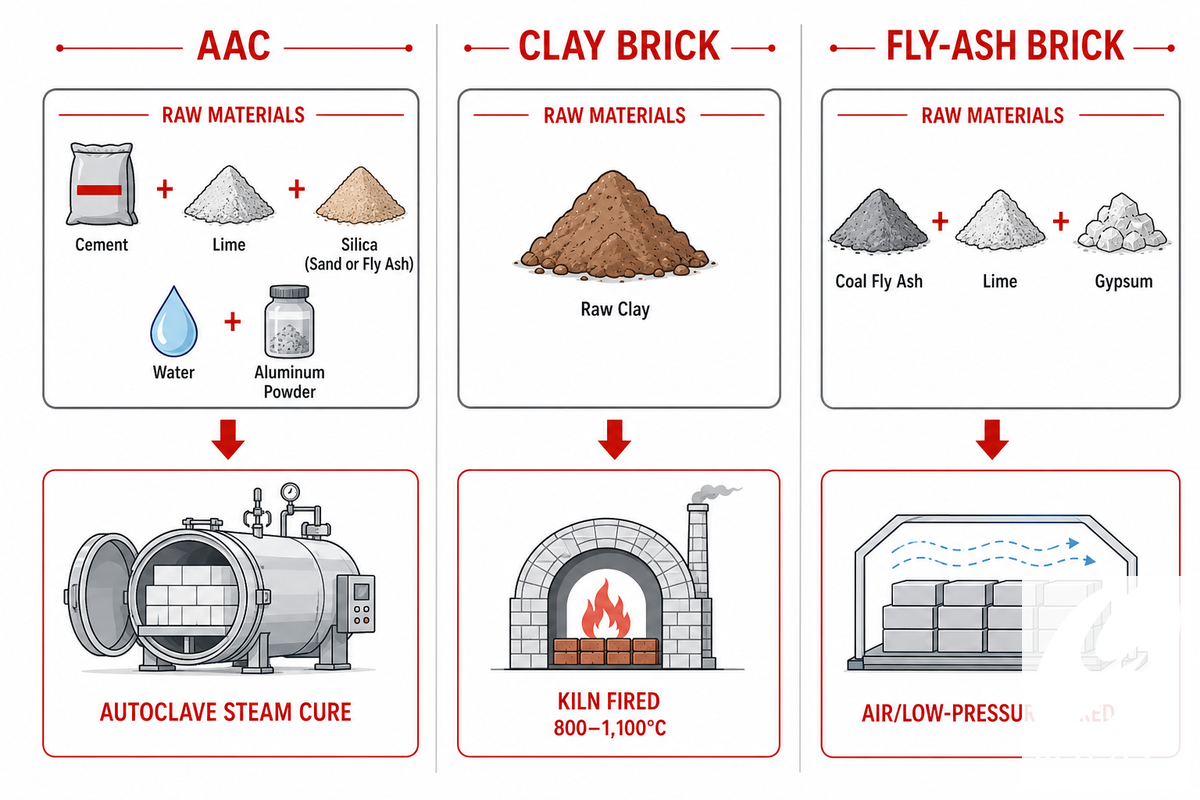
Блоки AAC изготавливают из цемента, извести и кремнезёма (песка или золы-уноса), а затем обрабатывают паром, получая лёгкое пористое кладочное изделие. Глиняный кирпич обжигают в промышленной печи при 800-1,100°C для образования керамической связки. Зольный кирпич прессуют из угольной золы-уноса и извести, после чего отверждают на воздухе или при низком давлении без обязательной обработки в автоклаве (согласно исследованию University of Illinois по производству AAC из золы-уноса).
Блок AAC, известный как автоклавный газобетон, представляет собой сборное кладочное изделие из портландцемента, извести, источника кремнезёма (кварцевого песка или золы-уноса), воды и небольшого количества алюминиевой пудры, которая вступает в реакцию с выделением газообразного водорода и образует поры перед обработкой паром под высоким давлением в автоклаве. AAC как семейство продукции не ограничивается одним рецептом: в рамках этой базовой формулы существуют различные типы блоков AAC и других материалов AAC, причём различия между изделиями AAC обычно определяются классом плотности, а не принципиально иным видом бетона; это важно учитывать, если поставщик предлагает несколько вариантов AAC. Глиняный кирпич формуют, а затем обжигают в традиционной промышленной печи при температуре от 800 до 1,100C для образования керамической связки. Зольный кирпич прессуют или формуют из золы-уноса — порошкообразного побочного продукта сжигания угля при выработке электроэнергии, — смешанной с известью, гипсом и в некоторых случаях цементом. Зольный кирпич не требует автоклавной обработки и может отверждаться на воздухе либо при низких давлении и температуре.
Блоки AAC невозможно спутать с обычными бетонными блоками: традиционные бетонные кладочные блоки (CMU) — это плотные, монолитные, непоризованные изделия, тогда как лёгкость AAC полностью обусловлена автоклавно-отверждённой ячеистой структурой; их объединяет лишь слово «бетон» в названии, но не функция в ограждающих конструкциях здания и не конструкционные или теплотехнические характеристики.
Есть и ещё одна деталь, которую многие руководства для покупателей удобно обходят стороной: блоки AAC и зольный кирпич не обязательно являются взаимоисключающими материалами. Согласно ASTM C1693, источником кремнезёма может быть как кварцевый песок, так и зола-унос, и предприятия в угледобывающих регионах очень часто используют золу-унос вместо добываемого песка просто потому, что она доступна поблизости и поэтому дешевле. Таким образом, сравнение «AAC и зольного кирпича» нередко сводится к сравнению «изделия из золы-уноса, обработанного паром» с «прессованным изделием из золы-уноса», а не «совершенно нового первичного сырья» с «переработанными отходами», как может показаться сначала. В действительности их различает не происхождение материалов, а процесс отверждения: именно автоклав выделяет AAC среди остальных. Настоящим исключением из этой тройки является глиняный кирпич, в котором нет ни золы-уноса, ни обработки паром.
⚠️ Примечание о сфере примененияЭто руководство посвящено стандартным кладочным блокам и кирпичам AAC. В нём не рассматриваются панели из армированного автоклавного газобетона (RAAC) — отдельные конструкционные изделия со встроенной арматурой, применяемые в перекрытиях и кровлях и привлёкшие внимание в Великобритании после выявления разрушения стареющих панелей общественных зданий. Риски, связанные со сроком службы и армированием RAAC, относятся к отдельной инженерной теме и отличаются от вопросов, касающихся сравниваемых здесь неармированных кладочных блоков.
Ещё одна особенность структуры категории AAC заключается в том, что она охватывает несколько видов продукции. В этом руководстве рассматриваются блоки, однако свойства и характеристики AAC распространяются также на армированные стеновые панели и панели AAC, спроектированные для устройства перекрытий и кровель, с железобетонными конструктивными элементами и встроенной стальной арматурой, которая не требуется обычным блокам AAC. Если поставщики объединяют блоки и панели AAC в одну категорию, иногда небрежно называя её «блоки и панели» или «панели и блоки», помните о различиях: крупноформатный блок или толстое изделие для ненесущего заполнения стены обладает совсем иными расчётными характеристиками, чем панель перекрытия AAC или несущая кровельная панель, рассчитанная на перекрытие конструкционного пролёта. При выборе систем перекрытий запрашивайте характеристики «панельного класса» или «конструкционных панелей», а не «блочного класса», поскольку такие параметры, как несущая способность при изгибе и защитный слой арматуры, отличаются от применимых к блокам.
Сравнение плотности: насколько легче AAC?
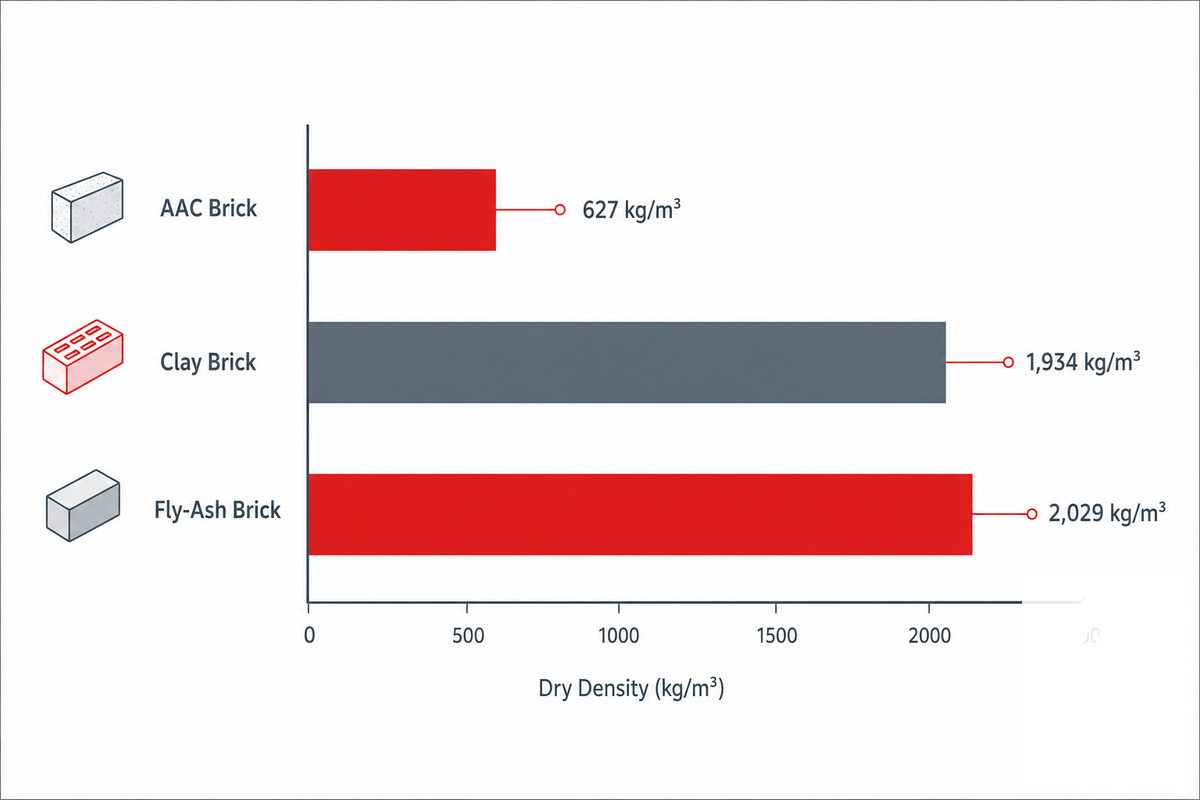
При плотности около 627 кг/м³ блок AAC весит примерно втрое меньше глиняного кирпича (1,934 кг/м³) и зольного кирпича (2,029 кг/м³), согласно результатам испытаний одинаковых образцов размером 230×110×75 мм в рамках контролируемого лабораторного исследования 2025 года. Эта разница в массе — главное конструкционное преимущество AAC.
Рассмотрим конкретные данные о том, насколько блок AAC действительно легче аналогов: он примерно в 3 раза легче как глиняного, так и зольного кирпича; это было экспериментально подтверждено в 2025 году в ICFAI University Tripura при контролируемых лабораторных испытаниях материалов на образцах одинакового размера. Изделия размером 230 110 75 мм весили соответственно 1.19 кг, 3.85 кг и 3.67 кг, причём блок AAC оказался значительно легче остальных. При пересчёте этих значений на единицу объёма (исходя из одинакового объёма изделий 0.0019 м³) плотность блока AAC составляет около 627 кг/м³, зольного кирпича — 2,029 кг/м³, а глиняного кирпича — около 1,934 кг/м³; таким образом, AAC более чем в 3 раза легче обоих материалов, а разница между зольным и глиняным кирпичом только по массе составила 30 процентов!
| Материал | Масса в сухом состоянии (изделие 230×110×75 мм) | Расчётная плотность | Масса относительно AAC |
|---|---|---|---|
| Блок AAC | 1.19 кг | ~627 кг/м³ | базовый уровень |
| Глиняный кирпич | 3.67 кг | ~1,934 кг/м³ | в 3.08 раза тяжелее |
| Зольный кирпич | 3.85 кг | ~2,029 кг/м³ | в 3.24 раза тяжелее |
Этот единственный лабораторный результат соответствует ожидаемым характеристикам коммерческого AAC: JK Cement указывает «типичную» плотность AAC в сухом состоянии от 550-650 кг/м³, куда хорошо вписывается измеренное значение ~627 кг/м³. Отдельные опубликованные диапазоны шире (в некоторых источниках указывается 300-800 кг/м³, в других — 450-950 кг/м³), поскольку в разных странах установлены разные классы плотности AAC: существуют классы от 350-450 кг/м³, предназначенные только для ненесущих перегородок, и классы до 750-850 кг/м³ для тяжёлых несущих или противопожарных стен. Противоречащие друг другу значения плотности у разных поставщиков, вероятно, означают, что сравниваются несопоставимые материалы (разные классы AAC), а не то, что допущены ошибки, поэтому вместо вопроса «Какова плотность?» следует спросить: «Какой это класс AAC?»
Внутренняя структура AAC лежит в основе всех последующих показателей и объясняет свойства AAC, из-за которых масса бетона или обожжённого кладочного материала столь значительно различается у этих трёх материалов. Блоки имеют малую массу именно потому, что их структура удерживает больше воздуха, чем минерального вещества, и благодаря сниженной массе они применяются там, где ограничивающим фактором является постоянная нагрузка на конструкцию. Следствием низкой плотности AAC является малая постоянная нагрузка. Стена из блоков AAC создаёт около 1/3 постоянной нагрузки от аналогичной стены из глиняного или зольного кирпича, поэтому AAC получил широкое распространение в качестве заполнения конструкций в сейсмических районах и верхних этажей среднеэтажных зданий.
💡 Совет специалиста
Сравнивая показатели плотности AAC у разных поставщиков, обязательно запрашивайте класс плотности по IS 2185 (Part 3) или ASTM C1386. Значения «550 кг/м³» и «класс AAC 3 (450-550 кг/м³)» могут показаться близкими, но находятся на противоположных границах класса, влияющего как на цену, так и на прочность.
Прочность на сжатие: какой материал действительно выдерживает большую нагрузку?
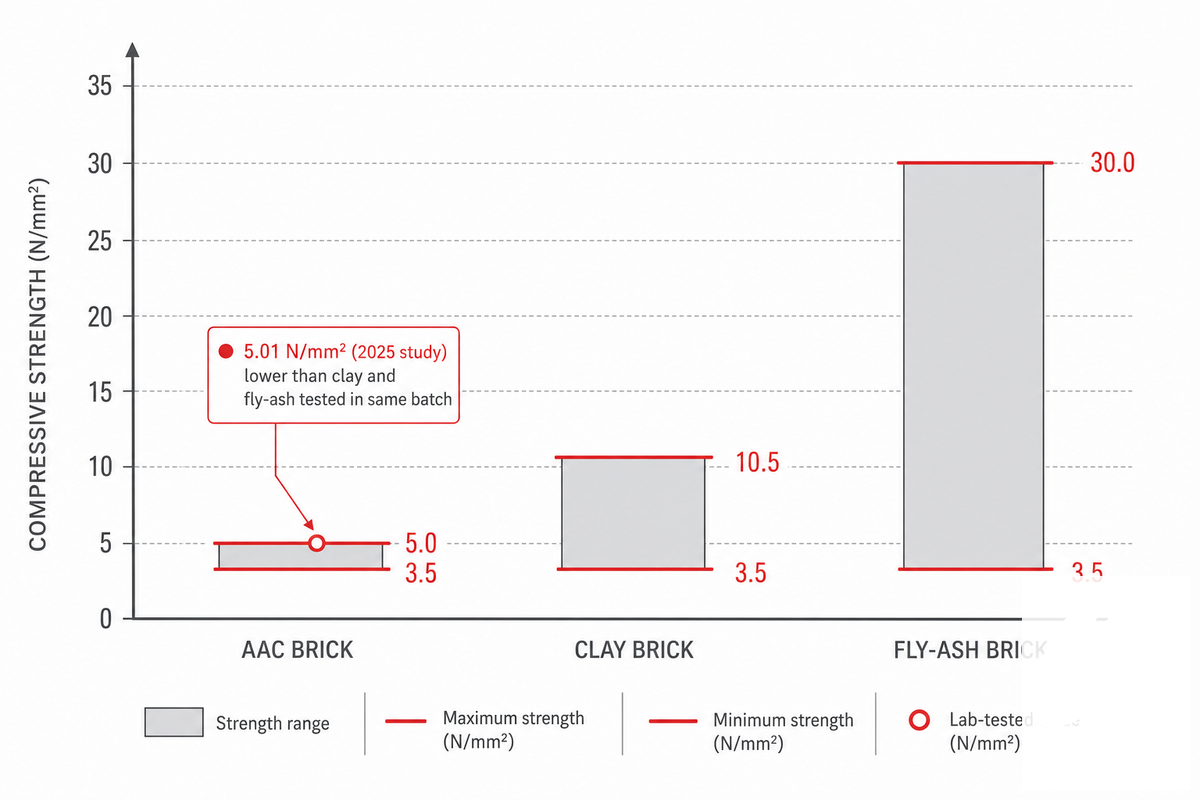
В контролируемом лабораторном испытании 2025 года прочность блока AAC на сжатие составила 5.01 Н/мм², что соответствует минимальному значению 3.5 Н/мм² для класса I по IS 2185, но ниже показателей глиняного и зольного кирпича, испытанных в одной партии (результаты сопоставлены с обзором продукции из автоклавного газобетона, подготовленным NIST). Прочность AAC «достаточна», но не «лучше всех».
Рекламные заявления об AAC расходятся с лабораторными данными о прочности на сжатие. В упомянутом выше лабораторном испытании 2025 года прочность блока AAC на сжатие составила 5.01 Н/мм², чего вполне достаточно для выполнения требования Индийского стандарта к кладочному кирпичу на уровне 3.5 Н/мм² (IS 1077) и отнесения изделия к классу I по IS 2185 (Part 3). Однако исследователи совершенно ясно сформулировали результат этого сравнения: «прочность блока AAC оказалась ниже по сравнению с двумя другими разновидностями». Иными словами, в рамках тех же испытаний на одной и той же установке глиняный и зольный кирпич показали более высокую прочность на сжатие, чем блок AAC. Это противоречит заявлениям на многих сайтах строительных материалов, где подразумевается, что AAC обладает более высокой прочностью на сжатие, чем глиняный кирпич. Честнее сказать, что прочность AAC «достаточна», а не «выше», поскольку его основные преимущества заключаются в другом — массе, теплоизоляции и скорости монтажа.
Прочность — важная оговорка: для зольного кирпича Индийский стандарт IS 12894 устанавливает 10 марок от 3.5 Н/мм² до 30 Н/мм², каждая из которых определяется по средней прочности на сжатие во влажном состоянии. Поэтому один лабораторный результат, каким бы тщательно контролируемым ни было испытание, не может характеризовать «зольный кирпич» как общую категорию продукции. Зольный кирпич низкой марки по прочности может быть очень близок к AAC, тогда как высокомарочный несущий зольный кирпич может быть в шесть раз прочнее. Прочность глиняного кирпича также варьируется от 3.5 до 10.5 Н/мм² в зависимости от обжига, сырья и месторождения глины. Если поставщик называет единственное значение прочности для любого из этих трёх материалов без указания конкретной марки или класса, это следует считать поводом начать подробный опрос, а не окончательным ответом.
📐 Инженерное примечание — упрощённое сравнение несущей способности стен
Возьмём участок стены длиной 1 метр и толщиной 200 мм (поперечное сечение 1,000 мм × 200 мм = 200,000 мм²). При минимальной прочности AAC класса I по IS, равной 3.5 Н/мм², характеристическая осевая несущая способность составляет 3.5 × 200,000 = 700,000 Н (700 кН). Применение типичного для каменной кладки частного коэффициента безопасности около 3.5 согласно IS 1905 даёт допустимую рабочую нагрузку около 200 кН на метр стены. Для такой же стены из глиняного кирпича средней марки с прочностью 7 Н/мм² характеристическая несущая способность примерно удваивается и достигает ~1,400 кН, а допустимая рабочая нагрузка — около 400 кН/м. На практике обычные стены заполнения и перегородки в малоэтажных зданиях редко несут более 50-80 кН/м, поэтому даже более низкий предел AAC значительно превышает фактические потребности большинства жилых и лёгких коммерческих стен. Это упрощённый пример, а не замена расчёта инженера-конструктора для конкретного проекта.
Почему более лёгкий материал слабее? По своей сути прочность AAC является прямым следствием большого количества микроскопических пор, которые обеспечивают малую массу, но неизбежно уменьшают объём твёрдого материала, сопротивляющегося сжимающей нагрузке в поперечном сечении. Глиняный и зольный кирпич значительно плотнее и содержит мало пустот, поэтому в восприятии нагрузки фактически участвует больше материала; научные исследования подтверждают связь прочности ячеистых бетонов на сжатие с плотностью, хотя она не является строго линейной и требует осторожной интерпретации, поскольку плотность обычно служит прогностическим показателем внутри конкретного семейства материалов, но не при сравнении разных типов материалов, поэтому вывод «X кг/м³ означает, что материал должен быть в X раз прочнее или слабее Y» неверен.
Теплотехнические характеристики и энергоэффективность
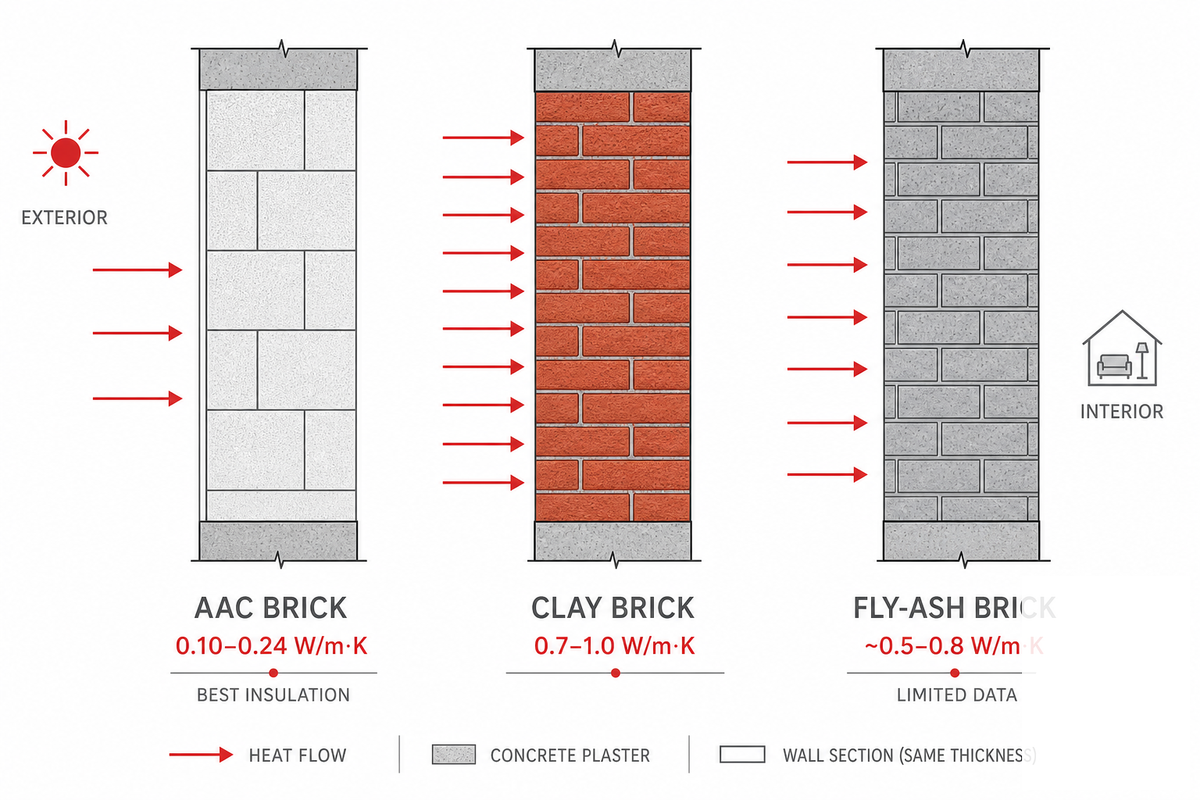
По теплоизоляционным свойствам блоки AAC значительно превосходят оба альтернативных материала, причём это обеспечивается той же пористостью, которая снижает прочность AAC на сжатие. Теплопроводность блоков AAC составляет 0.10-0.24 Вт/(м·К) против 0.7-1.0 Вт/(м·К) у глиняного кирпича — по теплопроводности при одинаковой толщине это примерно в четыре-шесть раз лучше, чем у сопоставимой стены из AAC. Натурные испытания подтверждают теплотехнические характеристики AAC на практике. В одном опубликованном примере стена AAC толщиной 8 дюймов во Флориде продемонстрировала суммарное сопротивление теплопередаче R, равное 11, и, по словам инженера строительной компании, работала лучше типичной каркасной стены R-30 благодаря более высокой теплоаккумулирующей способности AAC (то есть способности материала накапливать тепло; AAC медленно нагревается и медленно остывает), которая сглаживает повышение температуры в течение дня, а не просто препятствует передаче тепла.
Зольный кирпич хуже всего документирован с точки зрения теплотехнических характеристик не потому, что они низкие, а потому, что по сравнению с более полно изученными блоками AAC и глиняным кирпичом в открытом доступе опубликовано мало стандартных показателей теплопроводности зольного кирпича. Типичные значения в литературе находятся в диапазоне 0.5-0.8 Вт/(м·К), то есть между AAC и глиняным кирпичом, как и следовало ожидать с учётом его промежуточной плотности, однако этот диапазон следует считать ориентировочным, пока поставщик не предоставит протокол испытаний конкретного материала.
Ошибка в теплотехнических характеристиках создаёт реальный риск для холодильного склада или фармацевтического здания с температурой -20°C и стеной толщиной 200 мм: выбор недостаточного класса теплоизоляции AAC может повысить ежегодные энергозатраты системы HVAC на 15-20%, поскольку блоки неподходящего диапазона плотности просто не обеспечат сопротивление теплопередаче, необходимое объекту с регулируемой температурой. На практике промышленные заказчики, выбирающие материал для такого применения, должны письменно подтвердить точное значение в диапазоне 0.10-0.24 Вт/(м·К) (см. тот же обзор продукции AAC от NIST) применительно к местной климатической зоне, а не просто принимать типовой паспорт характеристик. Taiguo проектирует сертифицированные по ISO 9001 и ASME автоклавные системы именно с такой точностью классов плотности, опираясь почти на 50 лет поставок теплотехнического оборудования промышленным заказчикам, для которых такая ошибка недопустима.
Лёгкие конструкции из AAC повышают энергоэффективность здания далеко не только на уровне наружных ограждений. Наиболее практическое преимущество теплоизоляции AAC заключается в уменьшении требуемой мощности и стоимости системы HVAC. Более герметичное здание с высокой теплоаккумулирующей способностью позволяет использовать систему HVAC меньшего размера. В одном документированном случае применения конструкций AAC было отмечено, что здание настолько долго сохраняло пониженную температуру внутри, что успевала накопиться влажность, которую система кондиционирования примерно на тонну меньшей мощности, чем для дома с каркасными стенами, уже не могла вернуть к равновесному уровню; потребовалась система с управлением по гигростату, которая помогла стабильнее поддерживать комфорт в доме при меньшей совокупной стоимости владения, хотя для этого систему HVAC необходимо проектировать с учётом теплотехнических свойств AAC, а не только по эмпирическим правилам для обычных каркасных стен.
Сравнение стоимости: цена материала и стоимость готовой стены

Стоимость AAC по сравнению с традиционным строительством из глиняного и зольного кирпича, пожалуй, является важнейшим фактором при принятии решения о покупке, однако сравнение одной лишь цены за штуку может вводить в заблуждение. В исследовании 2025 года даже исходные цены за штуку уже были в пользу AAC: зольный кирпич стоил ₹14.00 за штуку, глиняный — ₹12.00, а блок AAC — всего ₹6.50 за штуку (региональные цены в Индии; самый дешёвый из трёх вариантов ещё до учёта остальных факторов). Когда исследователи учли затраты на рабочую силу и раствор для строительства целой комнаты (площадью 3.6 m × 3.6 m), здание из AAC оказалось на 29 процентов дешевле аналогичного здания из глиняного кирпича и на 36 процентов дешевле здания из зольного кирпича.
Три фактора увеличивают эту разницу сильнее, чем одна только цена за штуку. Во-первых, AAC выпускается в виде крупноформатных блоков — стандартный блок имеет длину 600 mm, тогда как обычный глиняный «кирпич» — около 230 mm, поэтому для возведения стены той же площади требуется гораздо меньше элементов. Во-вторых, блоки AAC укладывают на тонкий слой полимерного клея толщиной 2-3 mm, а не на толстый слой цементного раствора толщиной 10-12 mm, что резко сокращает объём материала для швов. Наконец, зачастую крупнейшей составляющей расчёта становятся затраты на рабочую силу: блок AAC настолько легче, а его размеры настолько больше, что за день каменщик может выложить из блоков AAC в три-четыре раза большую площадь стены, чем из традиционного кирпича, поэтому по мере увеличения проекта сокращение сроков монтажа обеспечивает быстро нарастающую экономию.
⚠️ Важно: в разных регионах сопоставимо соотношение затрат, а не абсолютная сумма
Приведённые выше показатели 29%/36% отражают модель затрат одной лаборатории для конкретного регионального рынка Индии, поэтому фактические суммы в рупиях несопоставимы с вашими ценами. Однако логика остаётся неизменной в любом регионе: меньшее количество блоков, более тонкие швы и более быстрая кладка — именно поэтому экономия на готовых стенах из AAC обычно прослеживается в исследованиях затрат по большинству стран независимо от местной стоимости материалов и труда. Актуальные региональные цены приведены в нашем справочнике цен на блоки AAC по классу и региону.
Экологичность и воплощённый углерод: место зольного кирпича

Игнорирование этого различия — дорогостоящая ошибка для промышленного заказчика, стремящегося получить баллы экологической сертификации при строительстве склада со стенами толщиной 200 mm: общие заявления об «экологичности» без документального подтверждения фактической доли вторичного сырья могут лишить проект до 15% баллов сертификации LEED или IGBC, поскольку органам сертификации требуется конкретный показатель содержания золы-уноса, а не рекламная формулировка (этот переход к документально подтверждённому содержанию вторичного сырья отслеживается в отчёте о мировом рынке AAC). Taiguo решает аналогичную задачу прослеживаемости со стороны оборудования: наши автоклавные системы, сертифицированные по ISO 9001 и ASME, предусматривают документирование данных цикла, чтобы комплект документов промышленного заказчика выдержал проверку органа сертификации, а не оказался несостоятельным через 12 месяцев. Главное экологическое преимущество зольного кирпича заключается в предотвращении образования отходов: для его изготовления используют угольную золу-унос — мелкодисперсный порошок, остающийся после сжигания угля для выработки электроэнергии, — которая в противном случае отправилась бы на полигон или в золоотвал, создавая значительную нагрузку с учётом объёмов её образования (около 35 миллионов тонн в год на кирпичных предприятиях и соответствующих электростанциях Индии). Другой вид кирпича оказывает прямо противоположное воздействие на окружающую среду — непосредственный расход топлива (800-1,100C в печах) и утрата плодородного верхнего слоя почвы, — поэтому регуляторы уделяют всё больше внимания такому «истощению ресурсов».
Здесь вновь проявляется упомянутое ранее сходство сырья. Поскольку в типичном промышленном производстве AAC источником кремнезёма служит зола-унос, а не кварцевый песок, и блок AAC на основе золы-уноса, и зольный кирпич вполне могут продвигаться под одинаковым лозунгом об использовании отходов, причём единственное существенное экологическое различие между ними заключается в расходе энергии на автоклавную обработку по сравнению с отверждением зольного кирпича при атмосферном или низком давлении. Обработка AAC паром требует значительного нагрева под высоким давлением в течение 8-to-12 часов и связана с существенными энергозатратами по сравнению с большинством обычных способов производства зольного кирпича. Для обоих материалов отсутствует общедоступное нормализованное значение воплощённого углерода, позволяющее выполнить точный расчёт CO на один блок; это пробел в исследованиях, а не следствие небрежности, поэтому к конкретному значению воплощённого углерода для любого из этих материалов, предложенному третьей стороной без ссылки на анализ жизненного цикла, следует относиться скептически.
Если позиционировать их как экологичные бетонные изделия в сравнении с обычным бетоном и другими традиционными строительными материалами, то и AAC, и зольный кирпич позволяют направлять бетонные отходы на полезное использование вместо захоронения и сокращают потребление добываемых заполнителей по сравнению с обычными строительными материалами, что является реальным, а не рекламным экологическим преимуществом перед плотной традиционной бетонной кладкой.
Хорошо документировано направление развития политики: программы сертификации экологичного строительства предоставляют всё больше баллов материалам из вторичного сырья, включая материалы на основе золы-уноса, а многие государства вводят требования, согласно которым всё большая доля золы-уноса с электростанций должна использоваться в строительных изделиях, а не просто отправляться на захоронение. Это регуляторное давление примерно в равной степени благоприятствует зольному кирпичу и AAC на основе золы-уноса — оно стимулирует весь рынок «кладочных материалов на основе золы-уноса», а не определяет выбор между зольным кирпичом и AAC на основе золы-уноса.
Оптимальные условия для каждого материала: климат, тип нагрузки и область применения
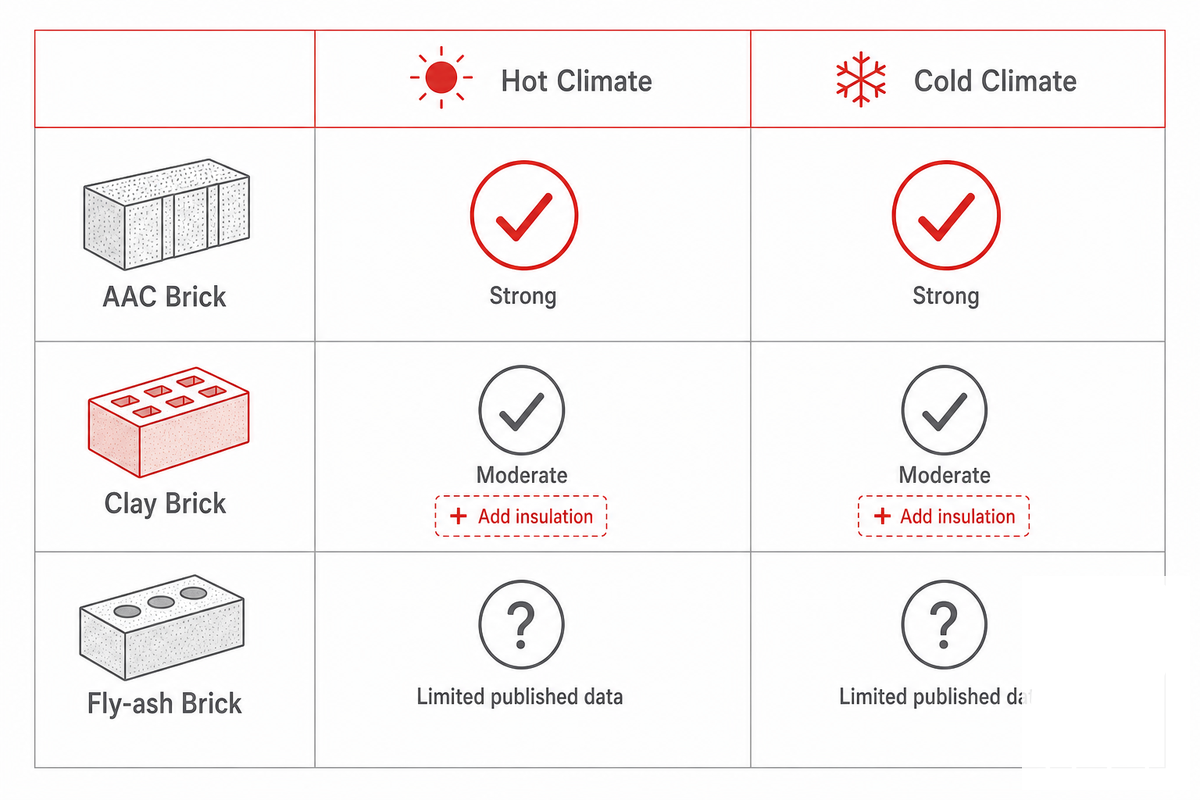
Благодаря ячеистой теплоизоляционной структуре AAC лучше всего проявляет себя в условиях экстремально жаркого или холодного климата. Глиняный кирпич подходит для большинства климатических условий при наличии достаточной теплоизоляции стен. Зольный кирпич, вероятно, показывает сходные результаты, однако опубликованных данных о его эксплуатации в конкретных климатических условиях по-прежнему меньше, чем по двум другим материалам (см. обсуждение строителями эксплуатационных характеристик ячеистого бетона на реальных объектах).
Именно в экстремальных климатических условиях блоки AAC раскрывают свои преимущества: их ячеистая структура обеспечивает эффективную теплоизоляцию как в жару, так и в холод. Производитель рекомендует использовать их во всех климатических условиях без дополнительной теплоизоляции; это заявление было проверено на примере прибрежного дома во Флориде, где тепловая инерция AAC, согласно приведённым данным исследования, значительно снизила нагрузку на кондиционирование даже в жарком и влажном климате. Глиняный кирпич, хотя на бумаге уступает по теплоизоляции (0.7-1.0 W/m·K против 0.10-0.24 у AAC), обладает высокой тепловой инерцией и исключительно хорошо зарекомендовал себя при длительном атмосферном воздействии, поэтому остаётся надёжным вариантом для любого климата. При условии, что конструкция стены компенсирует более низкие теплоизоляционные свойства и содержит необходимый объём дополнительной теплоизоляции для соблюдения строительных норм, на глиняный кирпич можно положиться в большинстве климатических условий.
Главный объективный пробел в отношении зольного кирпича состоит в том, что общедоступных данных о его характеристиках в конкретных климатических условиях явно меньше, чем по двум «настоящим» видам кирпича; кроме того, основные сайты о строительных материалах, изученные при подготовке этой статьи, не публикуют отдельных страниц с часто задаваемыми вопросами о применении зольного кирпича в жарком или холодном климате, хотя такие страницы есть для AAC. Это не означает, что зольный кирпич плохо ведёт себя при необычных климатических экстремумах, а лишь указывает на недостаток документированных сведений, поэтому для зоны с необычными климатическими экстремумами лучше запросить у поставщика конкретные эксплуатационные данные, полученные в местных условиях, а не полагаться только на сходство плотности двух материалов.
Выбор материала для ограждающих конструкций также влияет на повседневную практику кладки блоков и возведения стен каменщиками на объекте. Несъёмная опалубка из теплоизоляционного бетона и другие системы лёгких блоков конкурируют в той же нише, однако блоки AAC достаточно легки, чтобы один каменщик мог укладывать их без помощника, и легко пилятся обычной ручной пилой без специального инструмента; шурупы и гвозди держатся в них менее надёжно, чем в плотной кладке, что действительно важно при монтаже на стенах из AAC после прокладки электрики и сантехнических коммуникаций, хотя аккуратно выполнять такое штрабление в более плотном глиняном и зольном кирпиче сложнее. Именно эта удобообрабатываемость в сочетании с отличными характеристиками при обогреве и охлаждении делает AAC распространённым стандартом там, где приоритетны скорость строительства и тепловой режим, а не несущая способность.
Характеристики AAC также зависят от квалификации монтажников и качества работ. Это наиболее недооценённая в реальных условиях оговорка к паспортным характеристикам, применимая ко всем трём материалам: эксплуатационные показатели на объекте зависят от качества работ не меньше, чем от собственных свойств материала. По словам инженеров и подрядчиков, для AAC необходимы паропроницаемый тонкослойный кладочный состав и подходящая финишная штукатурка; неоштукатуренная и неотделанная стена из AAC во влажном климате будет впитывать воду (при погружении предельное водопоглощение составляет 30-35 процентов по массе) и не достигнет номинальных характеристик, несмотря на достаточную собственную прочность блоков на сжатие. Аналогичным образом стена из глиняного кирпича с небрежно выполненными швами или стена из зольного кирпича без надлежащего контроля при кладке может не соответствовать заявленной прочности. При оценке готовой стены следует учитывать не только паспортные характеристики материала, но и качество выполненных работ.
Как производят каждый вид кирпича и почему автоклав определяет класс AAC
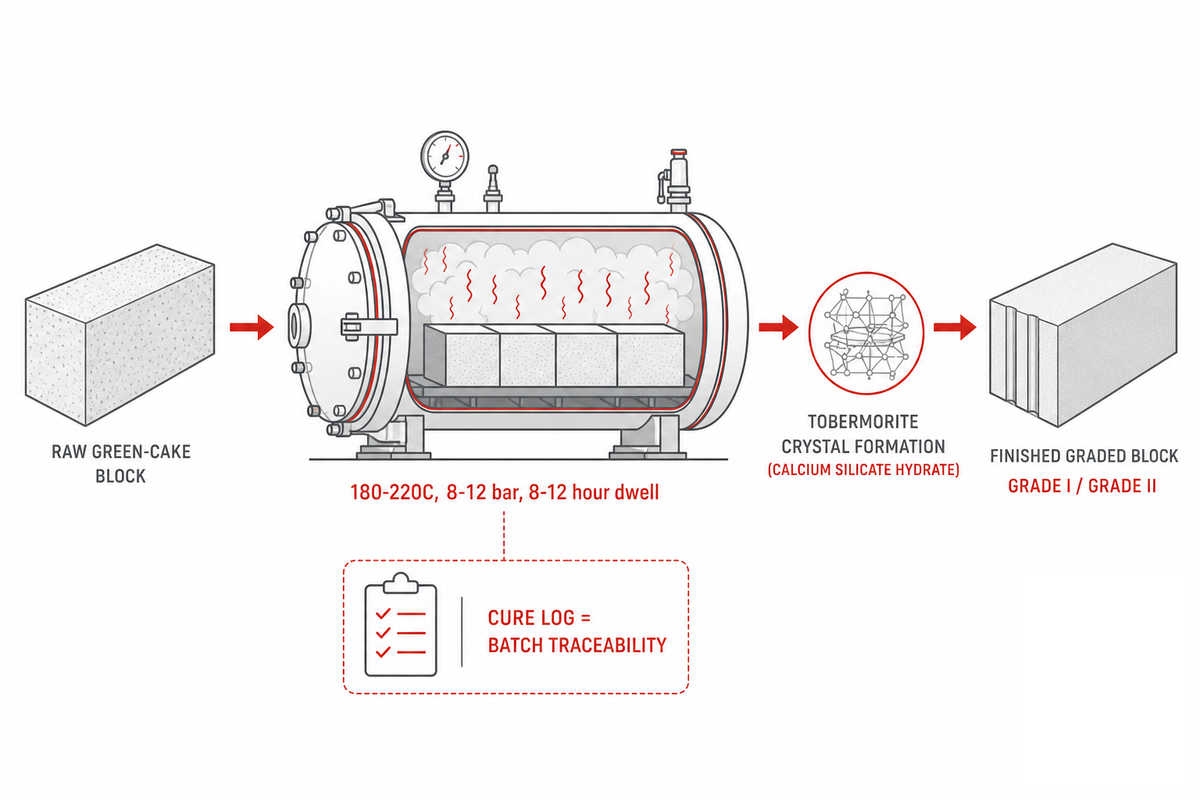
Глиняный кирпич обжигают при 800-1,100°C до спекания частиц глины с образованием керамической связи. Зольный кирпич прессуют и подвергают отверждению при низкой температуре в течение 7-14 дней. Смесь для AAC дозируют, после чего обрабатывают в автоклаве высокого давления при 180-220°C в течение 8-12 часов с образованием структуры тоберморита, обеспечивающей прочность материала.
Из трёх технологических процессов производство глиняного кирпича является самым простым. Сырую глину добывают, формуют и обжигают при температуре от 800 до 1,100°C (от 1,472 до 2,012°F), после чего материал приобретает прочность благодаря керамической связи, возникающей при спекании составляющих его частиц глины. При производстве зольного кирпича золу-унос, известь, гипс и иногда цемент смешивают под давлением, а затем подвергают отверждению, обычно при температуре окружающей среды или в паровой среде с низкой температурой (ниже, чем для AAC), в течение от 7 до 14 дней. Ни глиняный, ни зольный кирпич не требует крупных капиталовложений в оборудование, работающее под давлением, которое необходимо для производства AAC.
Из трёх вариантов производство AAC требует наиболее капиталоёмкого оборудования. Фактический класс блока определяется на стадии автоклавной обработки, а не при первоначальном составлении смеси. После дозирования смеси, предварительного отверждения и резки проволокой сырые блоки поступают в автоклав, где подвергаются воздействию пара под давлением при температуре от 180 до 220°C (от 356 до 428°F), давлении от 8 до 12 bar и выдержке от 8 до 12 часов. Именно в это время известь реагирует с золой-уносом или песком с образованием тоберморита — структуры гидросиликата кальция, которая является основным компонентом, обеспечивающим прочность на сжатие и стабильность отверждённого AAC. Любое отклонение или сокращение времени выдержки приведёт к получению блока, который будет легче и менее прочным, чем предусмотрено его классом плотности, независимо от точности дозирования смеси.
📐 Инженерное примечание
Поскольку прочность AAC формируется исключительно в автоклаве, при оценке поставщика покупателям следует запрашивать фактический журнал температуры, давления и времени выдержки конкретной партии, а не только плотность готовых блоков и результаты испытаний на прочность. Поставщик, не способный предоставить данные автоклавного цикла конкретной партии, не может полностью подтвердить, почему эта партия достигла (или не достигла) номинального класса. Как производитель сосудов, работающих под давлением и используемых для обработки AAC, мы включаем регистрацию данных цикла в стандартную комплектацию наших автоклавов для блоков AAC, поскольку прослеживаемость партий отличает предприятие, стабильно отгружающее продукцию класса I, от предприятия, которое этого не обеспечивает.
«Даже небольшое колебание давления в автоклаве или продолжительности цикла отражается на результатах испытания прочности на сжатие уже на следующий день. Мы считаем 8 часов минимально допустимым временем выдержки в цикле автоклавной обработки AAC — при меньшей продолжительности фаза тоберморита не успевает полностью сформироваться, независимо от указанного состава смеси».
Какой материал выбрать? Система принятия решения
Ни один материал не лидирует одновременно по плотности, прочности и стоимости. AAC превосходит другие варианты по плотности, теплоизоляции и зачастую по стоимости готовой стены. Глиняный и зольный кирпич лидируют по исходной прочности на сжатие, но создают примерно втрое большую постоянную нагрузку, чем AAC. Выбор следует делать с учётом того, какие два из трёх свойств действительно необходимы проекту, — этот вывод напрямую подтверждает контролируемое сравнительное исследование 2025 года.
Треугольник из 3 факторов: плотность, прочность и стоимость
Выбор между этими тремя вариантами сводится к тому, что мы называем треугольником «плотность — прочность — стоимость». Ни один материал не лидирует сразу по всем трём свойствам. AAC является лидером по плотности, обеспечивающей все сопутствующие преимущества в теплоизоляции и скорости строительства, а исследование 2025 года, неоднократно цитируемое в этом руководстве, показывает, что он часто лидирует и по стоимости готовой стены, однако это достигается за счёт снижения исходной прочности по сравнению с глиняным или зольным кирпичом. Глиняный и зольный кирпич представляют противоположный компромисс: они прочнее, а зольный кирпич также имеет убедительное экологическое преимущество благодаря переработке промышленных отходов в полезный строительный материал, но создают примерно втрое большую постоянную нагрузку, чем AAC, и требуют более трудоёмкой кладки. Можно лидировать по двум показателям из трёх, но не по всем трём одновременно.
| Характеристика | Блок AAC | Глиняный кирпич | Зольный кирпич |
|---|---|---|---|
| Плотность в сухом состоянии | ~627 kg/m³ | ~1,934 kg/m³ | ~2,029 kg/m³ |
| Прочность на сжатие | 3.5-5.0 N/mm² | 3.5-10.5 N/mm² | 3.5-30 N/mm² |
| Теплопроводность | 0.10-0.24 W/m·K | 0.7-1.0 W/m·K | ~0.5-0.8 W/m·K |
| Водопоглощение | 30-35% по массе | Ниже, зависит от режима обжига | Умеренное, зависит от класса |
| Стоимость готовой стены относительно AAC | Базовый уровень | +29% | +36% |
| Стандартный размер блока | 600×200×100-300 mm | 230×110×75 mm | 230×110×75 mm |
| Способ отверждения | В автоклаве, 180-220°C | Обжиг в печи, 800-1,100°C | На воздухе/при низком давлении, 7-14 дней |
| Оптимальный климат | Экстремально жаркий или холодный | Большинство климатических условий при наличии теплоизоляции | Недостаточно данных — уточняйте у поставщика |
| Экологическое преимущество | Меньше воплощённой энергии на m³ | Наибольший расход энергии на обжиг | Предотвращает захоронение угольной золы-уноса |
| Оптимальное применение | Приоритет скорости и теплоизоляции | Приоритет несущей способности и атмосферостойкости | Несущие конструкции рядом с угольными электростанциями |
✔ Преимущества AAC
- Примерно 1/3 веса сопоставимых материалов, что снижает нагрузку на фундамент и стальные конструкции
- Монтаж стены в 3-5× быстрее в расчёте на квадратный метр
- Предел огнестойкости 4 часа и эффективная теплоизоляция (0.10-0.24 W/m·K)
- Согласно исследованию 2025 года, AAC обеспечивает экономию 29%-36% на стоимости готовой стены по сравнению с альтернативными материалами.
- Легко пилится, сверлится и штрабится ручным инструментом
⚠ Ограничения AAC
- Согласно строгим испытаниям, проведённым в 2025 году, его прочность на сжатие составила 5.01 N/mm², тогда как у обоих альтернативных материалов — зольного и глиняного кирпича — она была несколько выше.
- Высокое водопоглощение (30-35%) из-за открытой ячеистой структуры требует паропроницаемой и правильно нанесённой наружной отделки
- Для него необходимы тонкослойный клей и специально обученные каменщики; при выборе AAC обойтись цементным раствором не получится.
- В плотном кирпиче гвозди и шурупы закрепляются надёжнее. Однако в пористых блоках AAC они могут держаться хуже, поэтому для тяжёлых принадлежностей или навесных элементов могут потребоваться анкеры.
- Не рекомендуется для подземных конструкций или эксплуатации в агрессивной морской среде
| Если для вас приоритетны… | Выберите | Потому что |
|---|---|---|
| Минимальная постоянная нагрузка / строительство в сейсмической зоне | Блок AAC | Вес около 1/3 от веса альтернатив снижает нагрузку на фундамент и сейсмическую инерцию |
| Максимальная прочность одного блока на сжатие | Зольный кирпич высокого класса или глиняный кирпич | Прочность зольного кирпича высоких классов достигает 30 N/mm², что значительно превышает типичный верхний предел AAC |
| Минимальная общая стоимость готовой стены | Блок AAC | Меньшее количество блоков + более тонкие швы + более быстрая кладка стабильно перевешивают цену за штуку |
| Самые короткие сроки монтажа с минимальным количеством мокрых процессов | Блок AAC | В 3-5× более высокая скорость кладки напрямую сокращает сроки строительства |
| Максимальная прочность при экологичном использовании отходов | Зольный кирпич | Позволяет избежать захоронения золы-уноса, сохраняя прочность значительно выше диапазона AAC |
Перспективы отрасли: как меняется спрос на AAC и зольный кирпич

Ошибиться со сроками здесь — реальный риск и распространённая проблема для промышленного заказчика, заключающего договор на поставку сроком 5-10 лет: требования сертификации могут меняться быстрее, чем предусматривает долгосрочный контракт, поскольку организации, присваивающие рейтинги экологичного строительства, пересматривают пороговые значения содержания вторичного сырья по циклу, который рынок не контролирует. Taiguo поставляет оборудование, сертифицированное по ISO 9001 и ASME, в 100+ стран и наблюдает, как промышленные заказчики сталкиваются именно с таким рассогласованием сроков, когда план снабжения золой-уносом для проекта со стенами толщиной 200 mm действует дольше, чем стандарт, на основании которого он был разработан. В предстоящие 5 лет это соотношение, вероятно, будет меняться под воздействием экологической политики, а не только экономической эффективности. В регионах, где производство электроэнергии сильно зависит от угля, регулирование зольного кирпича ужесточилось, а стимулов направлять зольные отходы из накопителей в производство строительных материалов стало больше. Инициативы экологичного строительства, такие как LEED, теперь также присваивают значительное количество баллов за использование продукции из переработанной золы-уноса, хотя десять лет назад это не было нормой. Поэтому проекты, запланированные на следующие от 5 до 7 лет, скорее всего, смогут получать баллы соответствующей системы экологической оценки за изделия из золы-уноса, включая зольный кирпич и AAC на основе золы-уноса.
(Только в информационных целях.) Объём мирового рынка AAC оценивается в 12 миллиардов долларов, а ожидаемый среднегодовой темп роста в предстоящие 10 лет составляет 6.3%. Среднегодовой темп роста рынка зольного кирпича в Северной Америке составил почти 8.7%. Однако не следует выбирать материалы на основании доли рынка и темпов его роста. Выбор в большей степени зависит от того, какие материалы позволят получить баллы сертификации или выполнить требования строительных норм либо стандартов. Если проект планируется сертифицировать по какой-либо системе оценки экологичного строительства, например LEED, необходимо уточнить у органа сертификации требования к содержанию золы-уноса в выбранном материале и необходимым сертификатам. Требования к содержанию золы-уноса пересматриваются гораздо быстрее, чем растёт рынок.
Часто задаваемые вопросы
Вопрос: блок AAC лучше кирпича?
Посмотреть ответ
Всё зависит от того, что для вас важнее. AAC примерно на 1/3 легче глиняного кирпича и кирпича из летучей золы, а готовая стена из него обычно обходится дешевле с учётом затрат на раствор и рабочую силу — поэтому этот материал чаще всего выбирают в сейсмоактивных районах и для объектов с короткими сроками строительства. Однако в ходе фактических лабораторных испытаний 2025 года прочность AAC на сжатие (5.01 N/mm²) оказалась ниже, чем у глиняного кирпича и кирпича из летучей золы, поэтому, если главным приоритетом является несущая способность как таковая, качественный глиняный кирпич или кирпич из летучей золы на бумаге будет прочнее. Единственного «лучшего» материала не существует: преимущества по прочности, массе и скорости строительства сопровождаются противоположными компромиссами.
В: Каковы недостатки блоков AAC?
Посмотреть ответ
Недостатки блоков AAC обусловлены их структурой с открытыми порами. Они уступают глиняному кирпичу и кирпичу из летучей золы по несущей способности, поэтому перед применением в конструкциях с высокой нагрузкой необходимо выполнить инженерный расчёт. AAC поглощает больше воды, чем эти материалы (примерно 30-35% по массе при погружении), поэтому его необходимо надлежащим образом защищать паропроницаемой наружной отделкой. Для кладки блоков AAC также требуются тонкослойные полимерные клеевые составы, а крепёж держится в них менее надёжно, чем в других видах каменной кладки, из-за чего может потребоваться специальный крепёж, рассчитанный на AAC. Кроме того, монтаж блоков AAC должны выполнять специалисты, работающие именно с AAC, а не обычные каменщики по глиняному кирпичу, хотя сами по себе эти недостатки не являются причиной отказываться от материала.
В: Можно ли использовать блоки AAC в регионах с экстремальными погодными условиями?
Посмотреть ответ
Да. Структура блоков AAC с открытыми порами обеспечивает высокий уровень теплосопротивления как в холодном, так и в жарком климате. Это подтверждают практические данные, в том числе пример установки 8-дюймовых блоков AAC во Флориде: стена толщиной 8 дюймов по своим характеристикам не уступала, а иногда и превосходила обычную деревянную каркасную стену с сопротивлением теплопередаче R-30 благодаря большей тепловой массе, сглаживающей суточные колебания температуры, и сопротивлению тепловому потоку. Блоки AAC продемонстрировали устойчивость к ветру скоростью свыше 130 миль/ч; существуют также технические решения для повышения сопротивления ветровой нагрузке за счёт увеличения толщины стены. Единственная климатическая проблема блоков AAC связана с влагой, а не с температурой; во влажных и/или дождливых условиях требуется хорошо герметизированное, но паропроницаемое отделочное покрытие, предотвращающее поглощение влаги.
В: Нужно ли штукатурить блоки AAC?
Посмотреть ответ
На практике — да. Если пористую структуру AAC оставить открытой, она будет поглощать воду, поэтому внутренние и наружные стены из AAC обычно покрывают паропроницаемой штукатуркой, декоративной штукатуркой или гипсовым составом. Следует использовать отделочную систему, рассчитанную на деформации и паропроницаемость AAC, а не тяжёлую штукатурку на цементной основе (согласно рекомендациям ASTM C1693 по отделочным системам).
В: Как проверить качество кирпича на строительной площадке?
Посмотреть ответ
Четыре простых полевых испытания позволяют выявить большинство проблем с качеством до укладки блока в стену: при «проверке на звук» два изделия ударяют друг о друга — высокий звон указывает на качественный обжиг или автоклавную обработку, а глухой звук говорит о проблеме; при «испытании падением» изделие, сброшенное с высоты 4 футов, не должно треснуть или разбиться; при визуальной проверке оценивают отсутствие трещин и правильность геометрии — кромки должны совпадать, а на поверхности не должно быть видимых трещин; при «водно-весовом испытании» один блок погружают в воду — прирост его массы должен составлять лишь около 15%. Для блоков AAC следует также запросить режим автоклавной обработки партии, поскольку прочность этого материала формируется именно в ходе данного процесса и не может быть определена визуально.
В: Каков срок службы блоков AAC по сравнению с глиняным кирпичом и кирпичом из летучей золы?
Посмотреть ответ
Глиняный кирпич имеет самую долгую историю применения из этих 3 материалов и является единственным, химический состав которого после обжига не ухудшается, — построенные из него несколько веков назад сооружения стоят до сих пор. Срок службы AAC при надлежащей отделке и защите от влаги обычно оценивают почти в 100 лет. Опыт практического применения кирпича из летучей золы является самым коротким из 3 материалов, поскольку он последним получил широкое коммерческое распространение, хотя его плотная малопористая структура позволяет предположить, что в нормальных условиях срок его службы сопоставим со сроком службы глиняного кирпича. Долговечность всех 3 материалов оказалась на удивление сопоставимой, причём технология строительства и защита от влаги имеют гораздо большее значение, чем собственные свойства материала.
Рассматриваете AAC для следующего проекта?
При выборе AAC, глиняного кирпича или кирпича из летучей золы следует помнить, что сам материал — это лишь половина дела; марочная прочность AAC задаётся режимом автоклавной обработки. Taiguo Boiler — производитель сосудов, работающих под давлением, обладающий почти 50-летним опытом и реализовавший проекты более чем в 100 странах. Мы сертифицированы по ISO 9001, ASME и CE и можем изготовить автоклав в соответствии с любыми стандартами, действующими в вашем регионе.
Обсудить подбор размера автоклава для AAC с нашими инженерами →Почему мы написали эту статью
Taiguo производит автоклавы для обработки блоков AAC, поэтому мы оцениваем компромисс между плотностью, прочностью и стоимостью с точки зрения производства, а не рекламных брошюр. Именно поэтому в начале этого руководства приведено контролируемое лабораторное сравнение, в котором AAC показал меньшую прочность, чем глиняный кирпич и кирпич из летучей золы, — факт, который незаметно опускают некоторые конкурирующие руководства для покупателей, предпочитая повторять упрощённое утверждение, будто AAC просто «прочнее и дешевле». Материал проверен технической группой Taiguo Boiler.
Литература и источники
- Физико-механические свойства блоков из автоклавного газобетона как альтернативы традиционному кирпичуPaul, Dey & Dhar, Research on Engineering Structures & Materials, 2025
- IS 2185 (Part 3): Бетонные кладочные изделия, блоки из автоклавного ячеистого (газированного) бетонаBureau of Indian Standards
- IS 12894: Технические требования к кирпичу из измельчённой топливной золы и известиBureau of Indian Standards
- ASTM C1693: Стандартные технические требования к автоклавному газобетону (AAC)ASTM International
- Исследование влияния золы кукурузных початков на кирпич из летучей золы (контрольный показатель прочности на сжатие по IS 12894)Materials Today: Proceedings, ScienceDirect
- Руководство по эксплуатации объектов из армированного автоклавного газобетона (RAAC)UK Government
- Автоклавный газобетон (AAC): примеры практического примененияThis Old House Magazine
- Объём рынка блоков AAC (автоклавного газобетона)Global Market Insights
Статьи по теме
- Характеристики, размеры и классы блоков AAC: полное руководство по IS 2185
- Руководство по ценам на блоки AAC: стоимость за м³ в зависимости от класса и региона
- AAC и традиционный бетон: прочность, стоимость и преимущества каждого материала
- Блоки из автоклавного газобетона: полный процесс производства
- Лёгкие фундаментные блоки: характеристики AAC и ячеистого бетона
- Промышленные автоклавы для производства блоков AAC